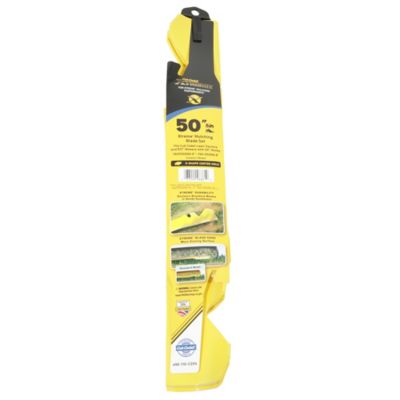
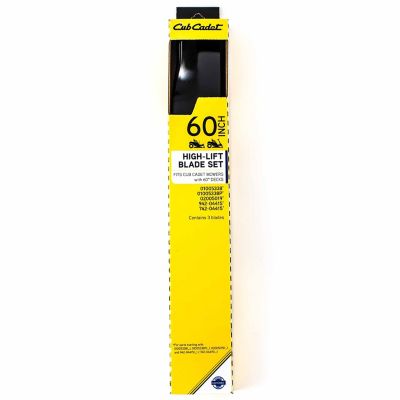
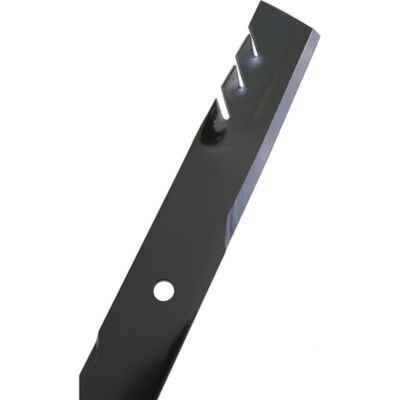
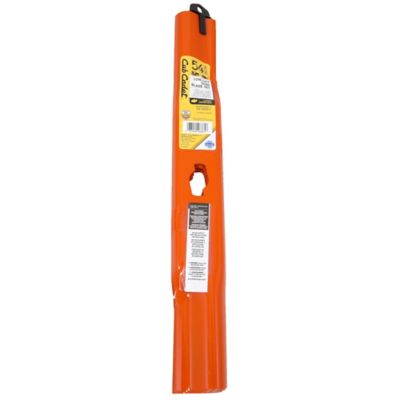
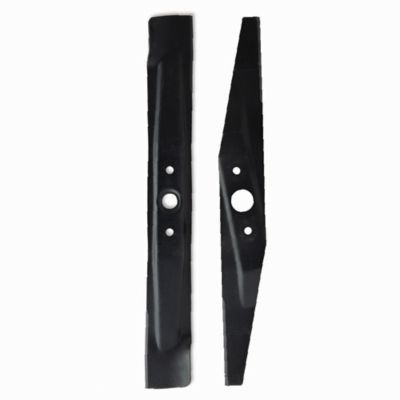
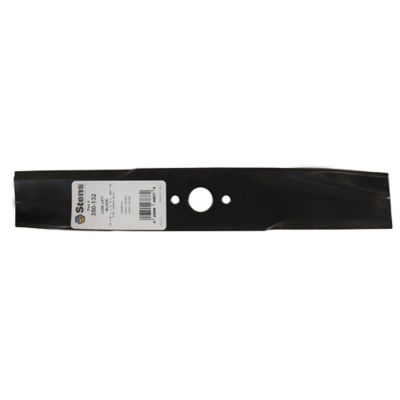
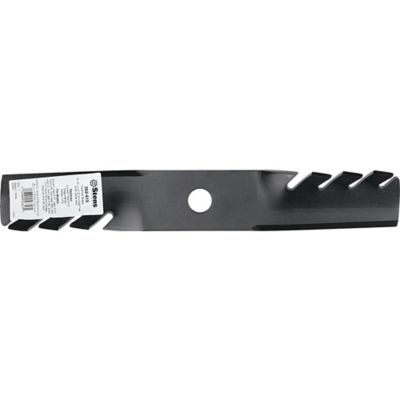
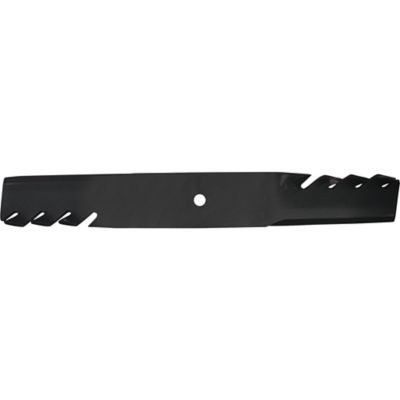
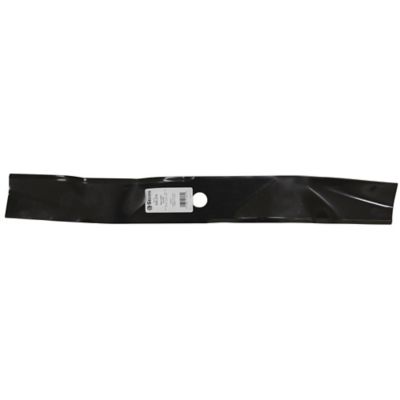
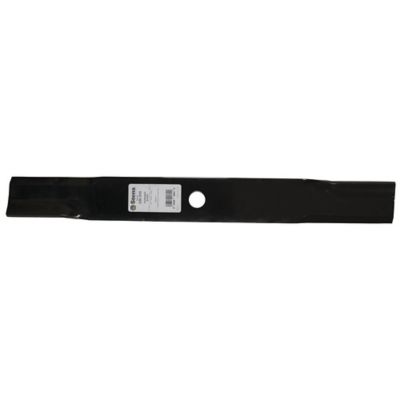
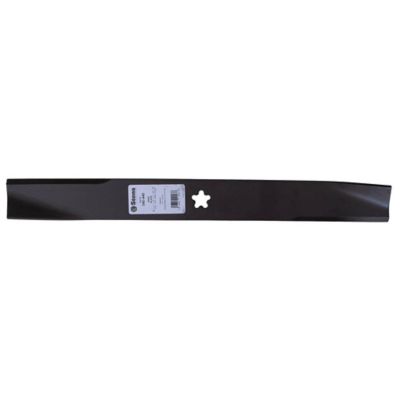
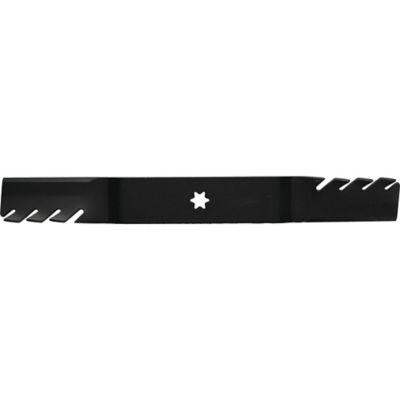
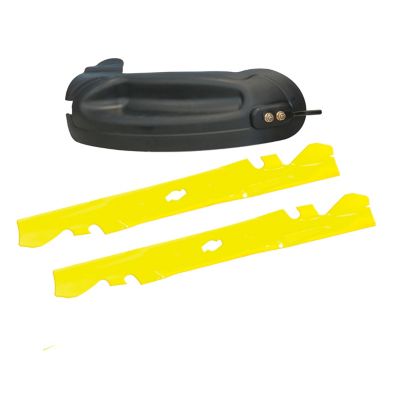
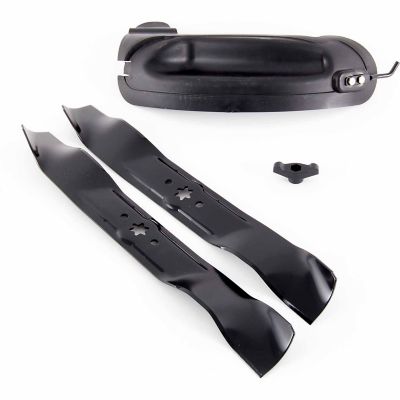
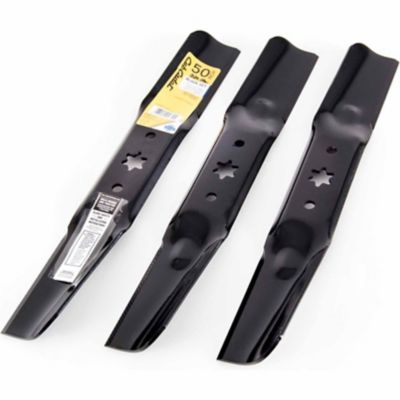
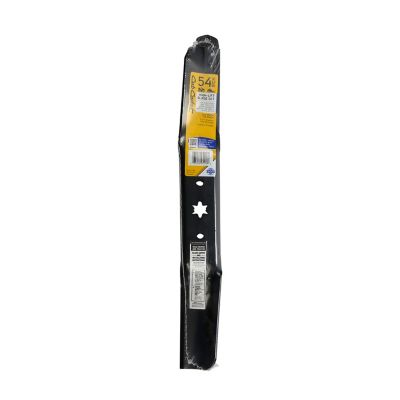
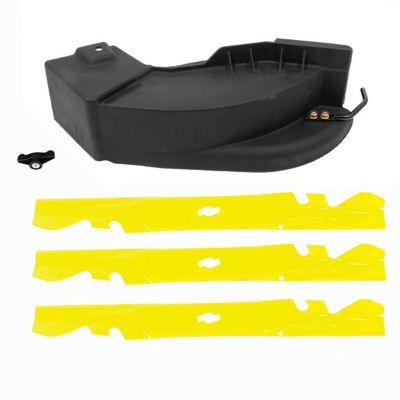
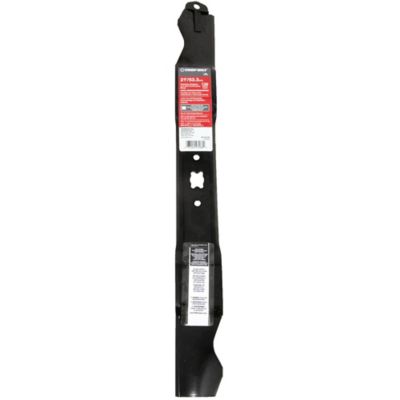
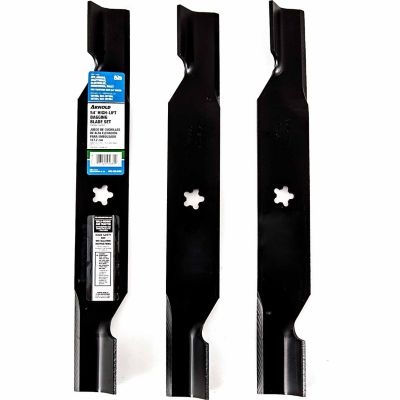
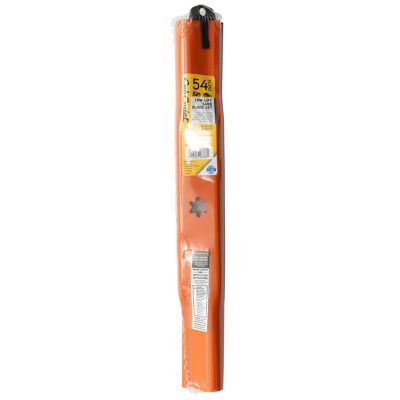
Mower blades for residential lawns help determine how evenly grass gets cut and where the clippings go afterward. Whether the job is a small front yard, a fenced backyard or a broad stretch of grass between the house and the shed, the right blade starts with the mower’s design and the way the lawn is maintained. Standard blades generally provide a straightforward cut and move clippings toward the discharge opening, making them a common choice for routine mowing with a compatible deck. Mulching blades have curved cutting surfaces and profiles that help keep clippings moving beneath a properly equipped deck for additional cutting. Those smaller pieces settle into the lawn more readily, returning plant material to the soil without leaving as much loose grass on top when mowing conditions and clipping volume allow. High-lift blades have taller trailing sails that generate stronger airflow, helping carry clippings through a compatible discharge chute or bagging system. They can suit homeowners who prefer to collect clippings rather than leave them across the yard, though the mower must support that blade style and its power demands. Low-lift blades create less upward airflow and can be a better match for certain sandy properties, where pulling abrasive soil into the cutting chamber adds wear. Toothed mulching blades feature raised, notched sections that influence clipping movement, but tooth shape alone does not establish compatibility or guarantee finer results. A blade described as serving several mowing functions still depends on the deck, discharge setup and any required mulching attachments. There is no single blade style that fits every residential lawn or every mower. Grass density, the amount being cut and the preferred clipping method all matter. For a yard bordered by a walkway and a vegetable patch, clipping control may be the main concern; across a larger open lawn, an even cut and steady discharge may take priority. Residential mower blades are meant for grass and compatible mulching tasks, not brush clearing, chopping branches or grinding through debris hidden along a fence line.
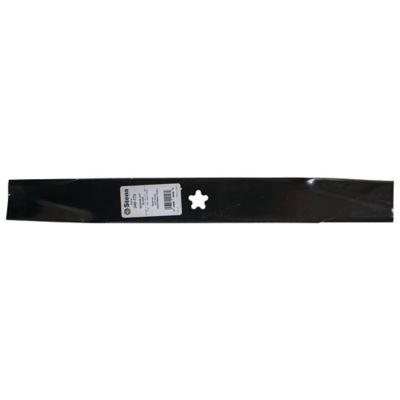
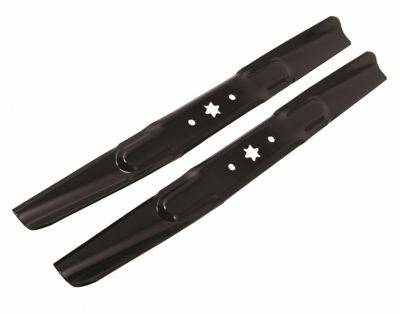
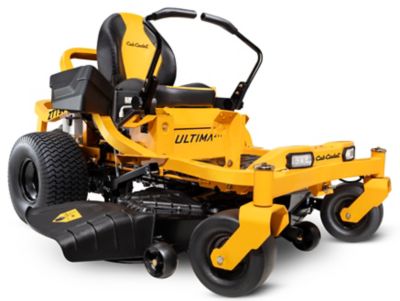
Fit matters just as much as blade style, and a mower’s deck width is only part of the picture. Replacement mower blades need the correct length, center-hole shape, mounting dimensions, thickness and offset for the machine. A round center opening, a star-shaped opening and other mounting patterns are not interchangeable simply because two blades look about the same size. Some assemblies also depend on additional holes, adapters or hardware that locate the blade correctly beneath the deck. The mower’s model information and the manufacturer’s replacement specifications provide a stronger starting point than a rough measurement of an old blade. A deck’s stated cutting width describes its overall mowing path, not necessarily the length of an individual blade. That distinction is especially important on riding mowers and residential zero-turn mowers, where several blades work together to cover the full deck. Their lengths and positions provide the intended cutting coverage and clearance, so a blade that is slightly longer is not a harmless substitute. For walk-behind equipment,
push mower blades also need to match the blade adapter, deck clearance and approved mowing configuration. Blade rotation and installation orientation matter, too; the cutting edge and raised sail must face the direction specified for that mower. A blade mounted upside down can fit onto the spindle yet cut poorly and interfere with proper clipping movement. Switching from side discharge to bagging or mulching may involve more than changing the blade, since some decks require a matching chute, plug or other attachment. Extra lift is not automatically an improvement if the deck or engine is not designed for it. On equipment with multiple blades, a matched set helps keep cutting action and airflow consistent across the mowing path. These details matter whether the mower handles a narrow strip beside the driveway or makes long passes around a country home. Correct fit lets the blade do its job without turning a routine replacement into a clearance, vibration or discharge problem.
Most residential mower blades are made from steel, often heat-treated carbon or alloy steel selected to balance edge retention with resistance to cracking and deformation. Blade thickness, steel treatment and overall shape all affect how the blade handles its intended workload; weight alone does not tell the whole story. Painted or coated surfaces can help protect exposed steel, but the cutting edge still faces constant contact with grass and abrasive grit. Even a properly matched blade needs attention as that edge wears. A sharp, balanced edge cuts grass more cleanly, while a dull edge can leave ragged tips and an uneven-looking finish. Nicks from contact with stones, thinning along the sail and wear around mounting holes deserve more attention than ordinary surface scuffs. A bent, cracked or heavily worn blade calls for replacement rather than attempts to straighten or weld it. Sharpening, when permitted by the manufacturer, needs to preserve the specified cutting angle and blade balance; grinding one end more heavily than the other can introduce vibration and strain mower components. Homeowners who would rather leave that work to a mower service shop can still keep track of blade condition between service visits. Any inspection or maintenance belongs with the mower shut down, all movement stopped and the power source disconnected as directed in the operator’s manual. Packed clippings beneath the deck can restrict airflow, and plant material left against steel can hold moisture, so a clean cutting chamber supports both blade care and clipping movement. Replacement blades also benefit from protected storage that keeps sharp edges away from children and prevents contact with other tools. Around the yard, taking a moment to remove toys, loose wire and fallen branches helps protect the mower and the people nearby. A suitable residential mower blade works alongside sensible mowing height, a clear deck and equipment maintained to the manufacturer’s specifications. That combination supports a clean-looking lawn, whether the regular mowing route winds past the porch steps, circles a few shade trees or stretches out toward the back fence.