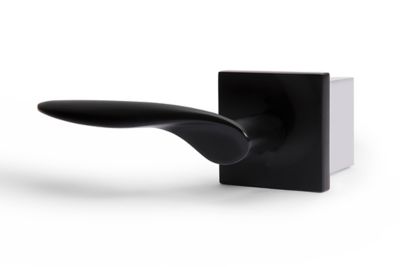
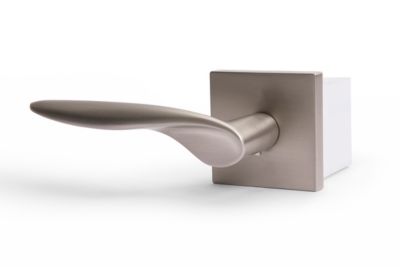
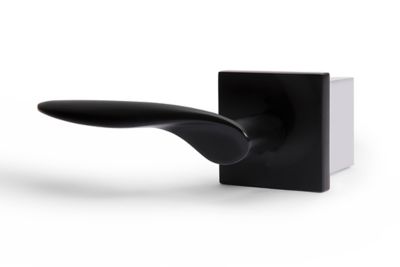
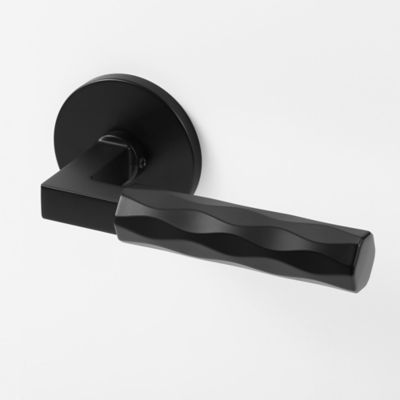
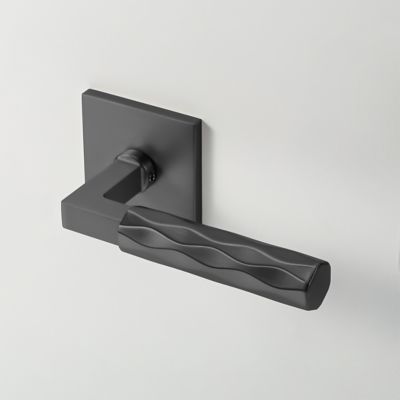
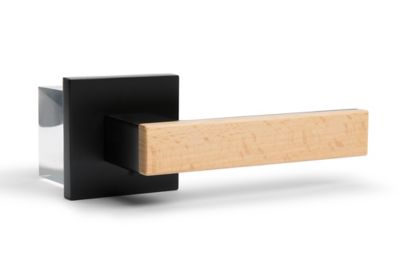
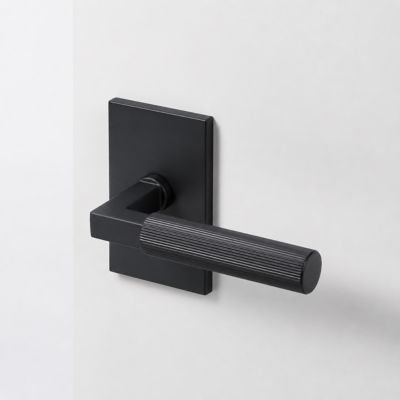
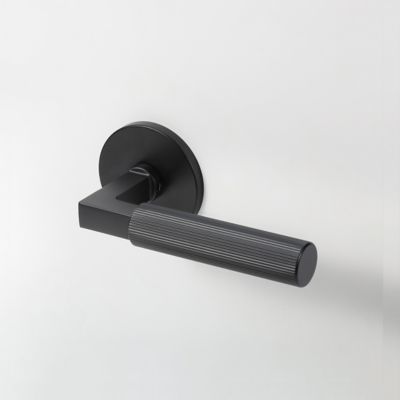
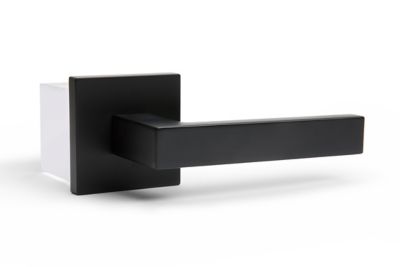
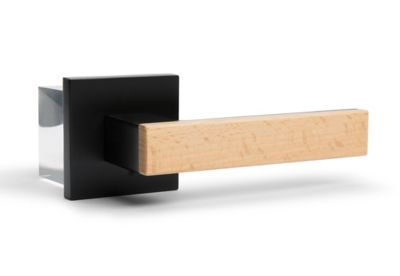
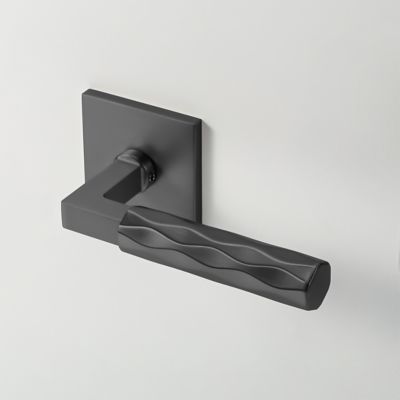
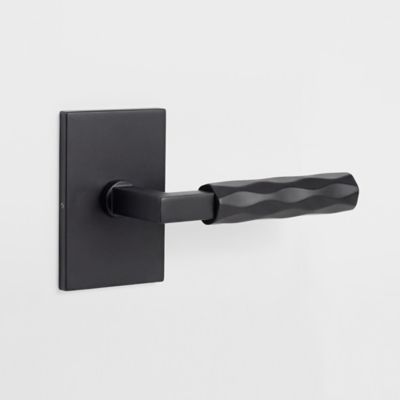
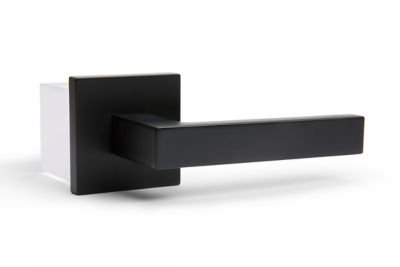
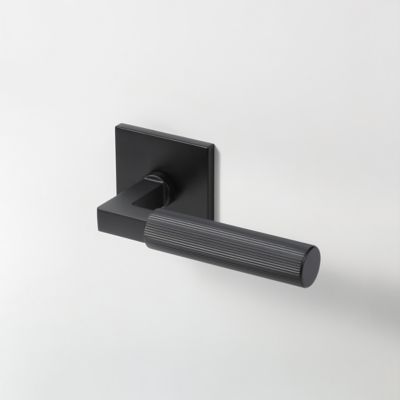
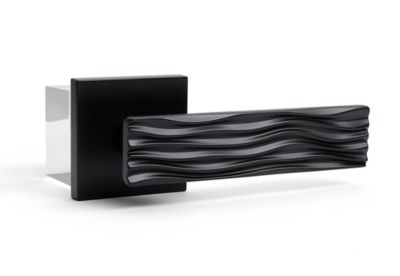
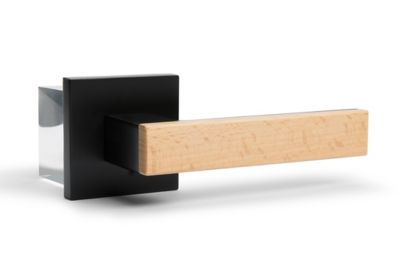
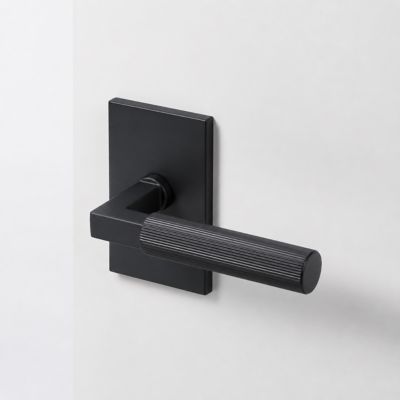
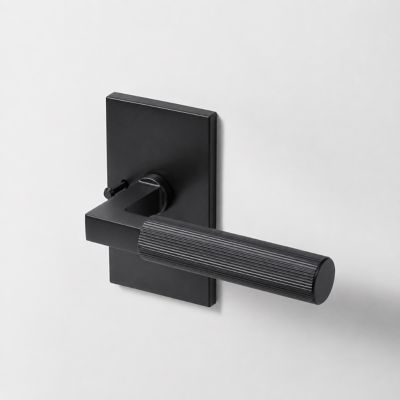
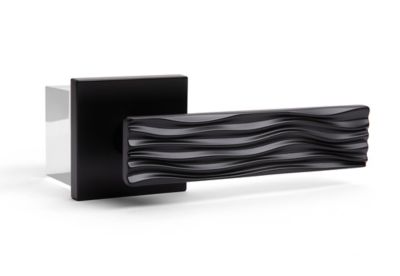
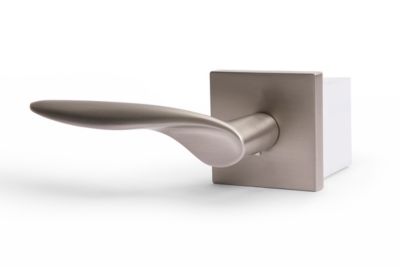
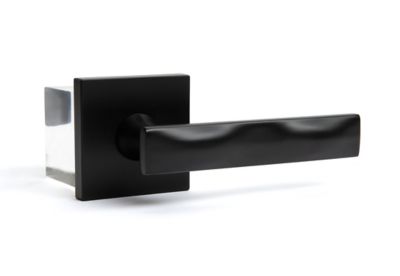
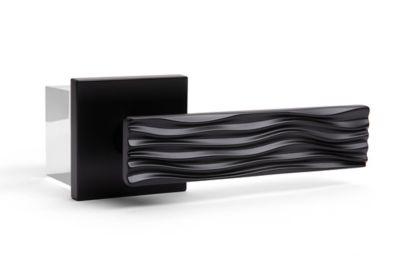
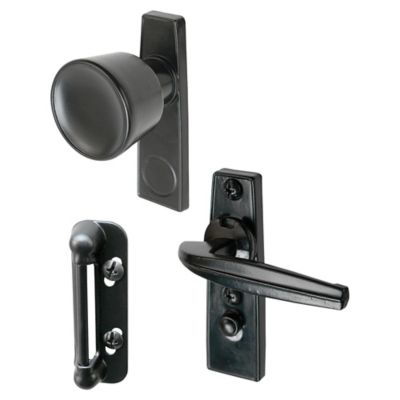
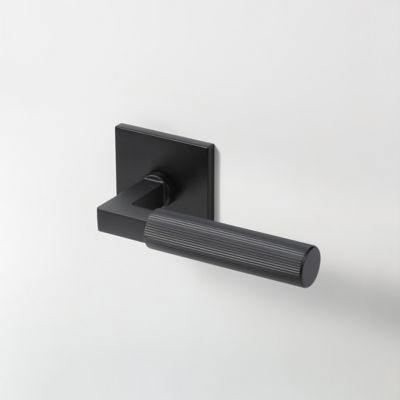
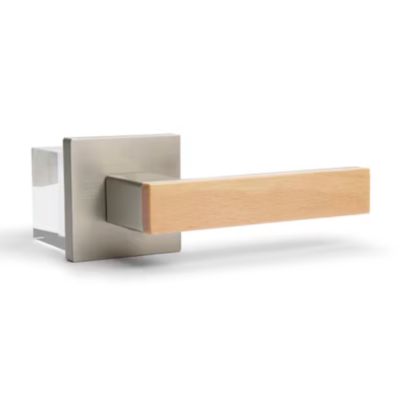
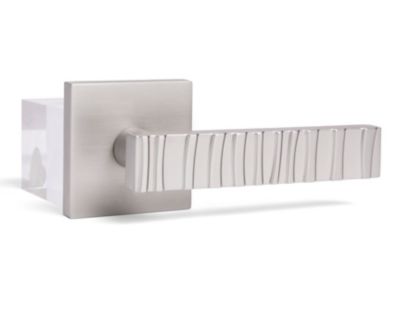
Modern black door handles bring a clean, settled look to doors without making a room feel dressed up for company. Their dark finish gives pale paint, natural wood and simple trim a clear point of contrast, while straight levers and neatly rounded shapes keep the overall look uncluttered. On a farmhouse hallway, a black handle can tie in with dark light fixtures or cabinet hardware; in a mudroom or home office, it can give a plain door a more finished appearance. Within the broader range of
black door handles, modern styles tend to favor straightforward lines, compact mounting plates and fewer flourishes. That leaves room for the grain of a wood door or the shape of a paneled door to stand out. A slim lever creates a different impression than a broad, squared handle, even when both have the same color. Round mounting plates soften an angular handle, while square plates carry that crisp outline through the whole assembly. Matte and satin black finishes also have different appearances, with sheen affecting how light, fingerprints and everyday marks show on the surface. Matching every metal finish in a room is not necessary, but repeating black in a few places can make the space feel connected. Materials beneath the finish matter, too. Door hardware may incorporate brass, zinc alloy, steel or stainless steel, with different materials serving the handle, internal mechanism and mounting components. The base metal, protective finish and construction all contribute to how the handle stands up to repeated contact. For a household with busy mornings, muddy chores and doors opening throughout the day, the feel of the grip and the smooth return of the lever matter just as much as the appearance. A handle should suit the room, but it also needs to feel right in the hand each time someone heads through the doorway.
Fit and function separate a good-looking handle from one that belongs on a particular door. An interior bedroom door, a pantry door and an exterior entry each call for a different setup, even when the visible hardware looks much the same. Passage handles operate a latch without a locking function, making them a practical match for hallways and closets where privacy is not needed. Privacy handles provide an inside locking function for spaces such as bedrooms and bathrooms, generally with an emergency release on the outside. Keyed entry hardware serves a different purpose, and its locking function should be considered alongside the deadbolt, frame and strike reinforcement rather than treated as the whole security setup. Fixed handles, sometimes called dummy handles, provide a grip without operating a latch and suit certain closet or paired-door arrangements. These differences are easy to overlook when the finish is the main attraction. The measurements behind the handle matter just as much. Door thickness, existing hole size and backset—the distance from the door edge to the center of the main handle hole—determine whether an assembly fits the opening. Many residential doors have a 2-3/8-inch or 2-3/4-inch backset, but an existing door still deserves a careful measurement rather than an assumption. The latch faceplate also needs to suit the recess in the door edge, and the latch must meet the strike plate cleanly when the door closes. Lever direction is another consideration: some handles are reversible, while others are made for a particular handing. A lever that points the wrong way or crowds nearby trim can make an otherwise simple replacement frustrating. Clearance matters around adjoining walls, screen doors and closely spaced locks as well. On an older door, the size of the mounting plate can determine whether marks from the previous hardware remain visible, so the footprint deserves attention along with the handle’s shape.
Day-to-day use gives modern black door handles their real test. A comfortable lever offers useful leverage when carrying a laundry basket, bringing in groceries or moving between the house and an attached workspace, though grip shape and operating effort vary by design. Rounded edges can feel more comfortable against the palm than sharply defined corners, and a handle with enough space behind it leaves room for fingers to wrap around naturally. For anyone with limited hand strength, a lever may be easier to operate than a round knob, but accessibility requirements depend on the complete hardware and installation. Handles intended for exterior doors also need a finish and construction suited to exterior exposure; an indoor handle is not automatically the right fit simply because its color matches. Where frequent operation is expected, published cycle testing, application ratings and warranty terms can help clarify the demands the hardware is built to handle. Good care is usually straightforward. A soft cloth and a mild cleaning solution, when permitted by the manufacturer, can remove fingerprints and everyday grime without scouring the surface. Abrasive pads, harsh cleaners and solvents can damage some black finishes, and cleaning residue should not linger around the mounting plate or latch opening. Any lubricant should be appropriate for the mechanism and applied according to the maker’s directions rather than sprayed broadly over the finish. A loose handle, dragging latch or door that needs a hard shove often points to an adjustment issue worth addressing before extra strain builds up. Tight mounting hardware helps, but overtightening can interfere with operation, and a sagging door may need hinge attention rather than a different handle. Thoughtful coordination goes beyond the grip itself: hinges, strike plates, exposed screws and nearby locks all contribute to the finished appearance. Together, the right proportions, suitable function and proper fit let modern black hardware bring a consistent look to a single doorway or a whole run of rooms, while keeping the everyday business of opening and closing doors simple.