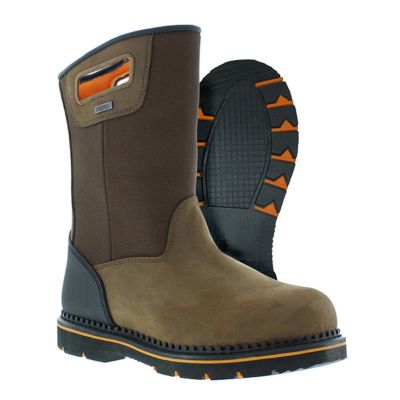
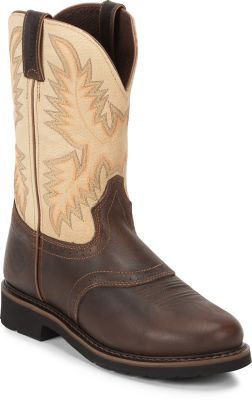
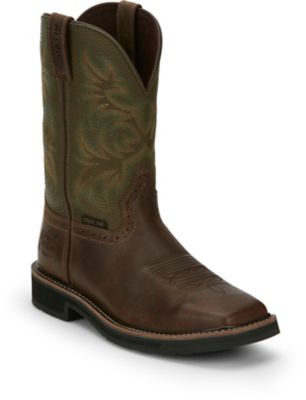
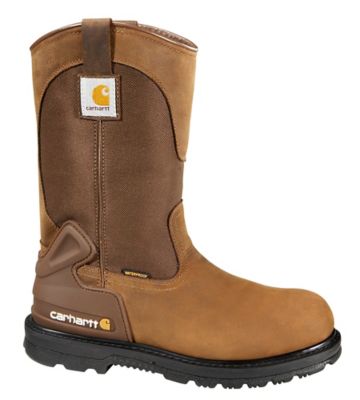
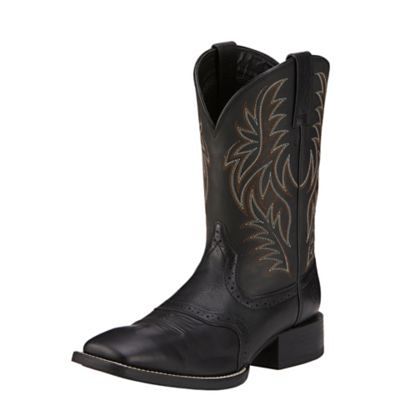
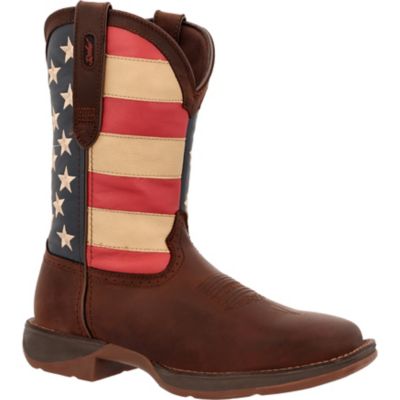
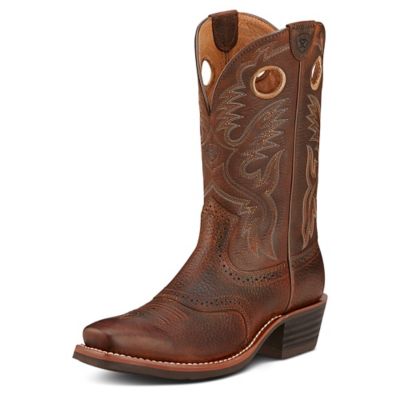
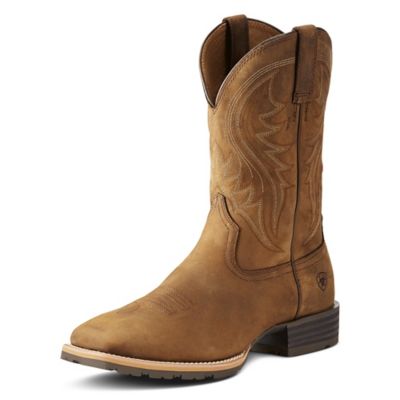
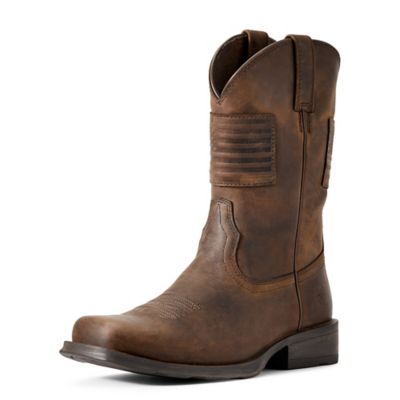
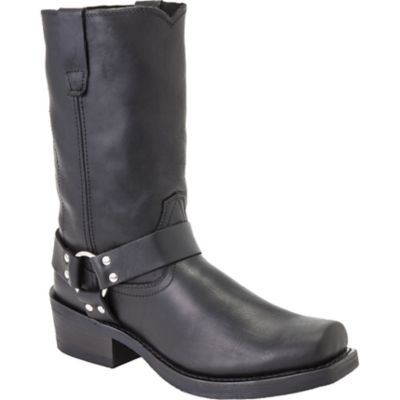
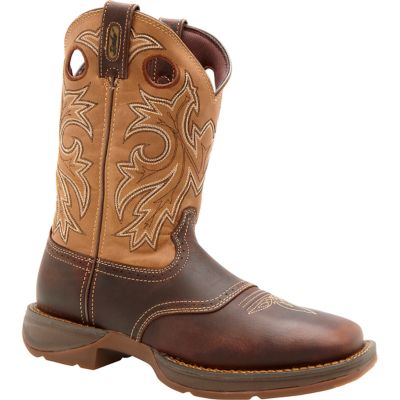
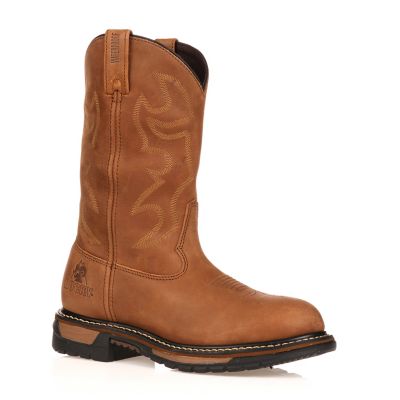
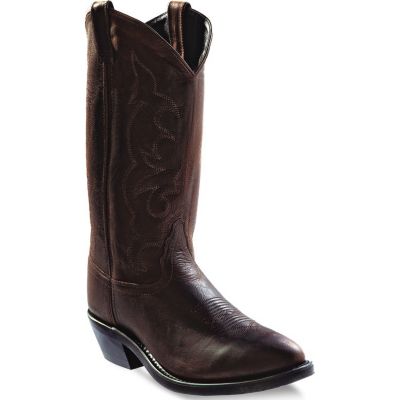
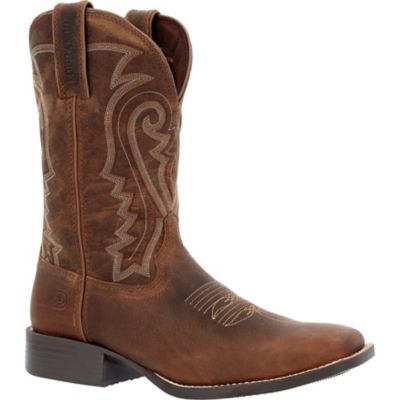
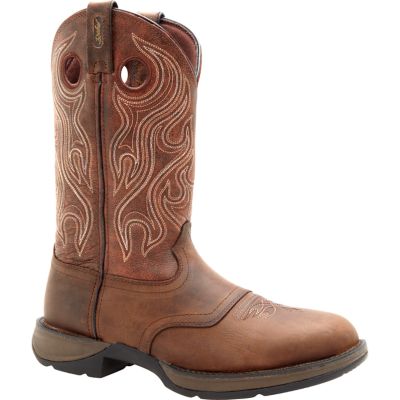
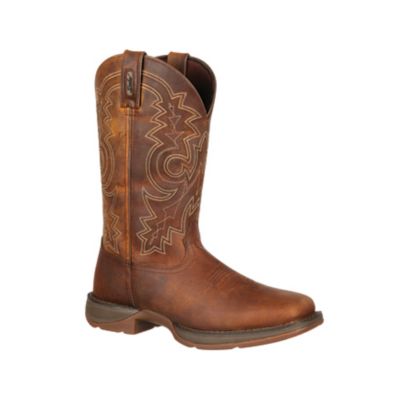
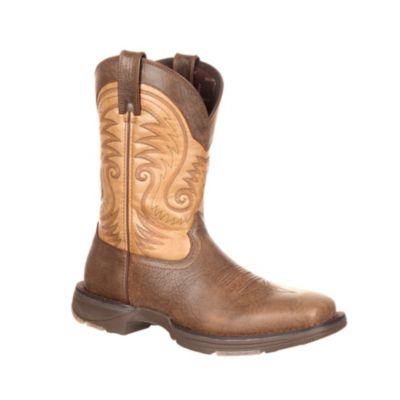
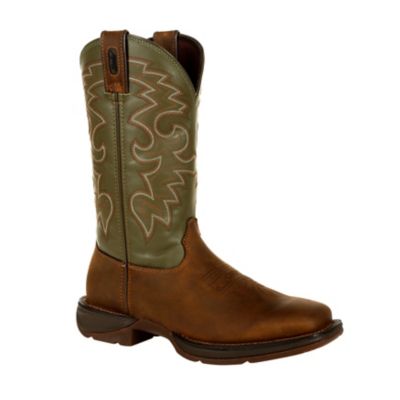
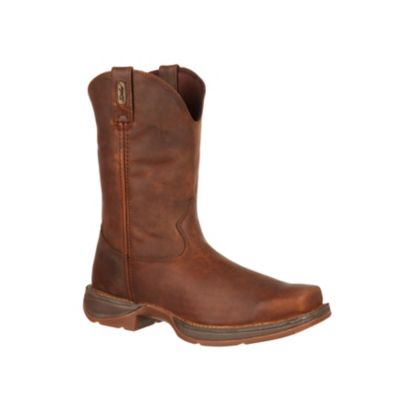
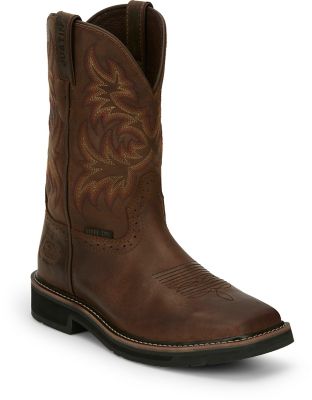
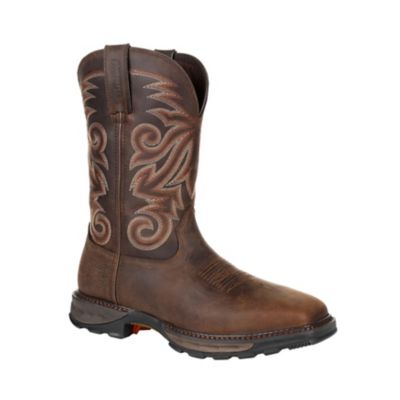
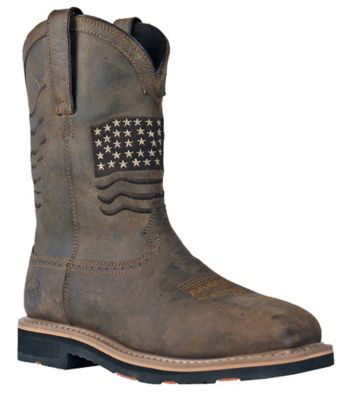
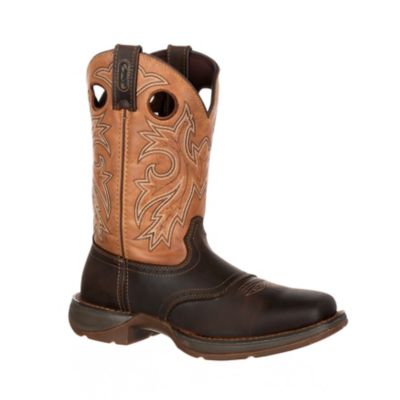
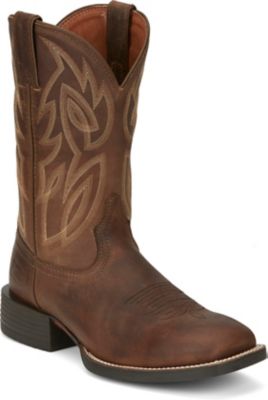
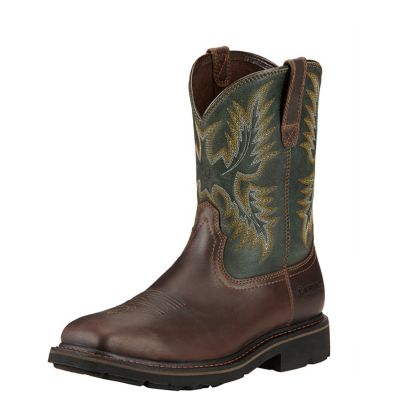
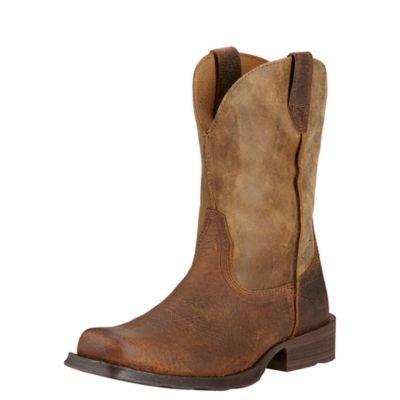
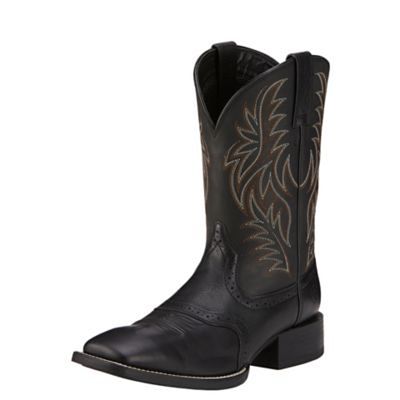
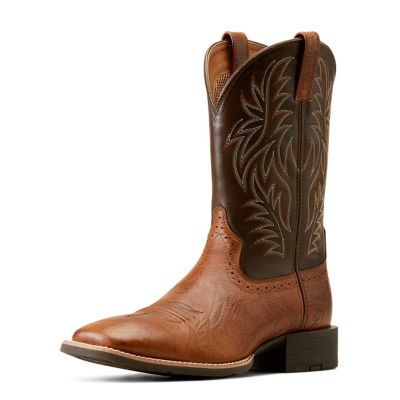
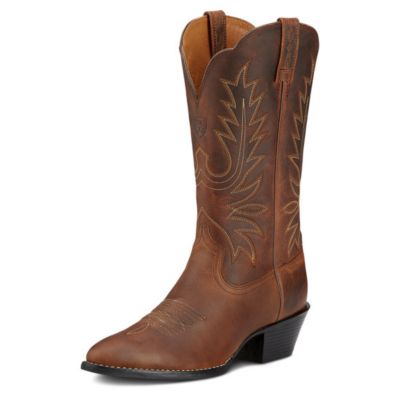
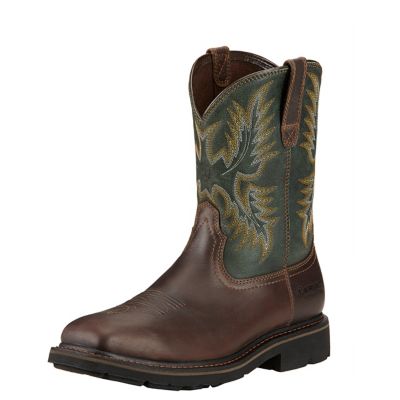
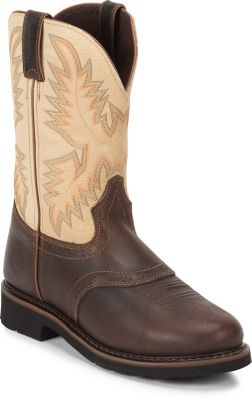
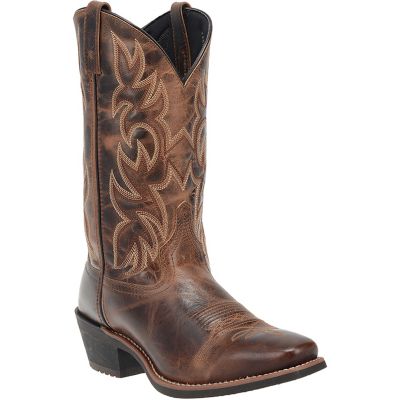
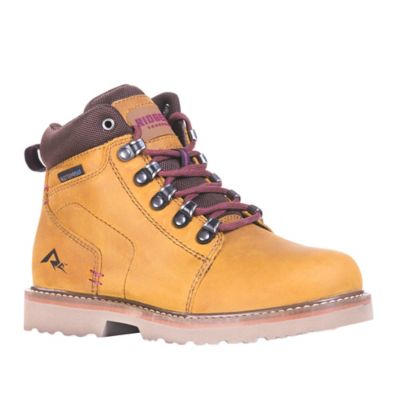
Men’s western boots in size 11 bring a familiar ranch silhouette to days spent tending livestock, checking fence lines, heading into town, or meeting friends at the dance hall. The right pair starts with the job at hand: riding calls for different features than standing on a concrete shop floor, and boots worn with dress jeans may put more emphasis on a clean leather finish. Traditional western details include pull-on shafts, stitched uppers, shaped heels, and toe profiles ranging from round to broad square. Round toes offer a classic outline, while square toes have a broader appearance; the actual room inside depends on the boot’s shape and construction, not the toe label alone. Narrower or pointed profiles make a sharper statement without necessarily shortening the space reserved for the foot. Roper-style boots generally have shorter shafts and lower heels, giving them a less pronounced profile for everyday wear. Materials make a difference in both feel and upkeep. Full-grain leather retains the hide’s natural surface and can develop creases and character with regular wear. Suede has a soft, textured finish that calls for different cleaning methods than smooth leather, while synthetic uppers vary in flexibility, finish, and care requirements. Leather outsoles have a traditional look and feel, though smooth leather can be slick on some surfaces. Rubber outsoles can provide grip and cushioning, with performance depending on the tread pattern and compound. For someone moving between a feed room, gravel driveway, and shop floor, outsole design deserves as much attention as shaft stitching. Deep tread can hold mud and manure, while flatter patterns may release debris more easily. A defined heel and an outsole suited to the stirrup matter for horseback riding, but not every western-looking boot is built for saddle use. Those distinctions help separate a good-looking town boot from footwear meant for a particular task. Brown, tan, and black finishes pair naturally with denim, and contrasting stitching adds western character without changing how the boot performs underfoot.
Size 11 is a starting point rather than a promise of the same fit across every pair of men’s cowboy boots. Width, instep height, toe shape, and the form around which a boot is built all influence how it sits on the foot. Men’s widths commonly include D for medium and EE for wide, although labels and measurements can differ by maker. A broad square toe does not automatically mean a wide fit through the ball of the foot or instep. A well-fitting pull-on western boot generally feels comfortably snug over the instep, leaves room for the toes to move, and holds the foot without pinching. Slight heel movement can be normal in a new pair as the sole begins to flex, but large amounts of slipping or a foot sliding forward suggest a fit problem. Leather may soften and give somewhat across pressure points, but boots should not need painful wear to become comfortable, and their usable length will not grow enough to solve cramped toes. Socks also affect the fit. The socks intended for daily wear belong in the fitting process, especially when switching between thinner boot socks and thicker cushioned pairs. For men who spend hours standing at a livestock sale or walking a property, a cushioned footbed, supportive midsole, and suitable arch shape can matter more than elaborate stitching. Removable footbeds may accommodate an insert, provided the boot still has enough interior space afterward. Shaft height and opening size deserve attention, too: the top should sit comfortably around the calf, and the shaft should work with the cut of the jeans. Jeans with enough room through the lower leg can fall over the shaft without bunching around it. Comparing both feet and walking on a clean indoor surface can reveal rubbing or pressure before a pair goes into everyday service. A size 11 in another type of footwear does not always translate directly to western boots, so the maker’s sizing information remains an important reference.
Construction and care help determine how men’s size 11 western boots hold up to repeated wear. Welted construction can make some boots candidates for resoling, though the repair options depend on the design and the condition of the upper. Cemented construction bonds the outsole to the upper and can support a flexible feel, but repair possibilities vary. Neither construction method alone tells the whole story; stitching, leather thickness, outsole material, and the demands of the day all play a part. Work around equipment or livestock may call for protective features beyond the western shape. A safety toe, electrical hazard rating, or slip-resistance claim should come from the boot’s stated specifications, not an assumption based on its appearance. A plain toe does not provide the same impact protection as footwear with a rated safety toe, and no outsole prevents slips on every surface. For everyday upkeep, brushing away grit keeps it from collecting along seams and scuffing the finish. Smooth leather usually benefits from an appropriate cleaner and occasional conditioner, following the maker’s directions; too much conditioner can alter the finish or leave the leather overly soft. Suede needs a suitable brush and products intended for its nap rather than ordinary leather cream. Damp boots should air-dry away from direct heat, which can harm leather and adhesives. Keeping them upright in a ventilated space helps preserve the shafts, and rotating pairs gives the interiors time to dry between wearings. A boot jack makes removal easier without forcing one heel against the other boot’s stitching. With that kind of attention, western boots can remain part of a working wardrobe long after the first creases appear. They can also make a thoughtful gift for a rancher, horse owner, country dancer, or anyone who favors boots with jeans, provided the recipient’s size, width, and preferred fit are known. For someone shopping for another wearer with larger feet,
Western Boots For Men Size 14 offers a separate size-focused page. The strongest match comes down to room where the foot needs it, support for the day’s work, and materials that suit the way the boots will be worn.