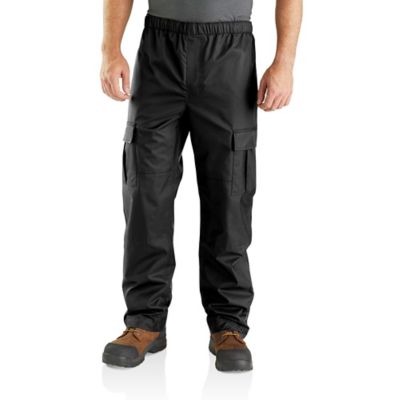
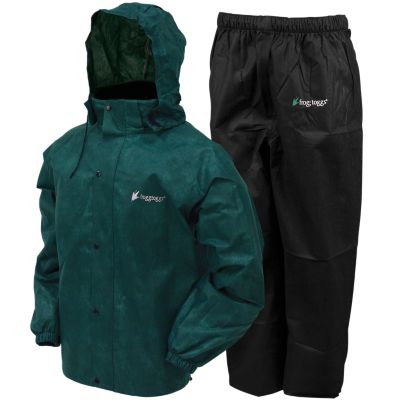
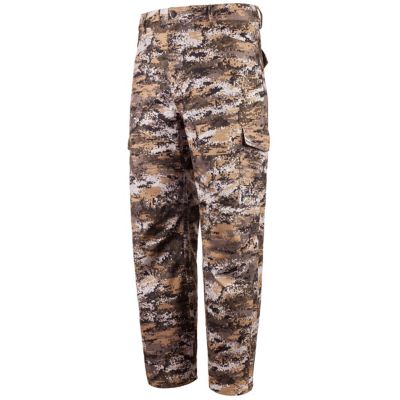
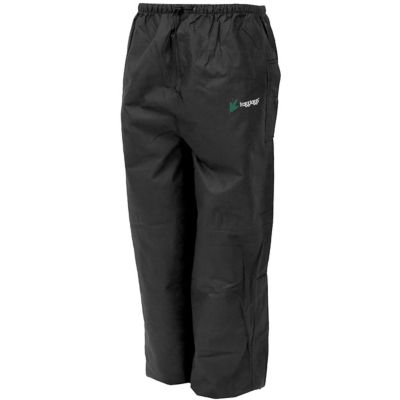
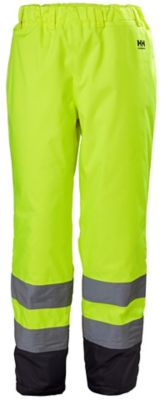
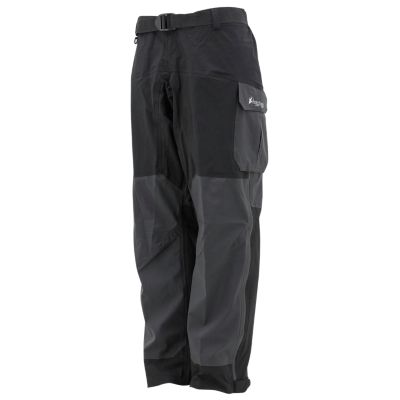
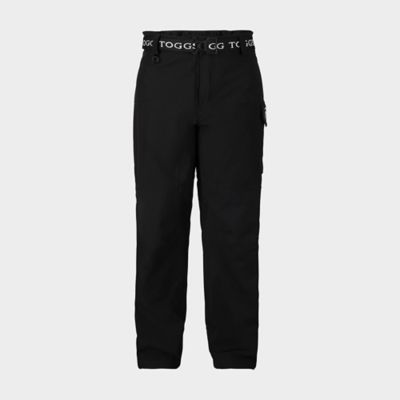
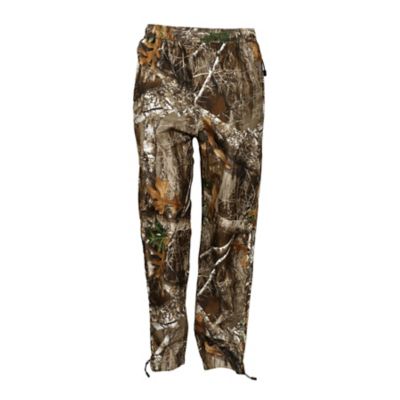
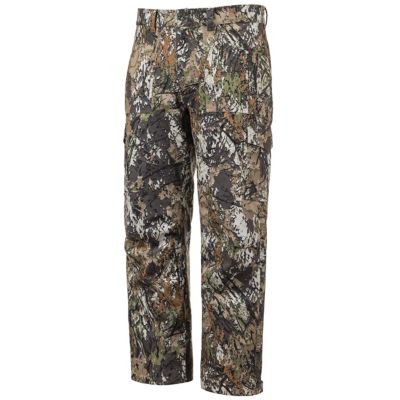
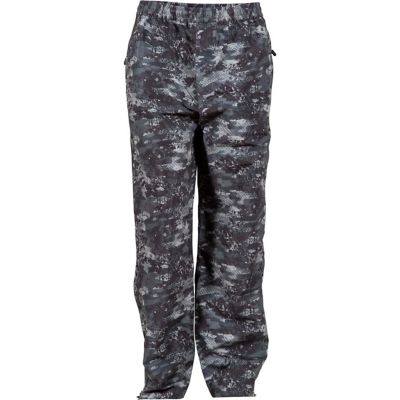
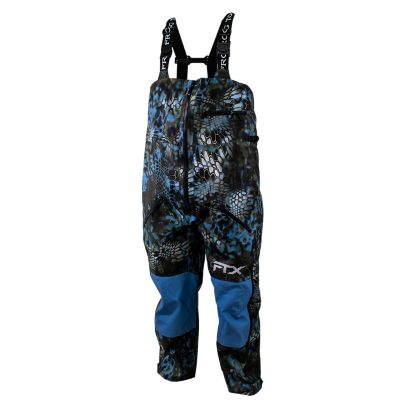
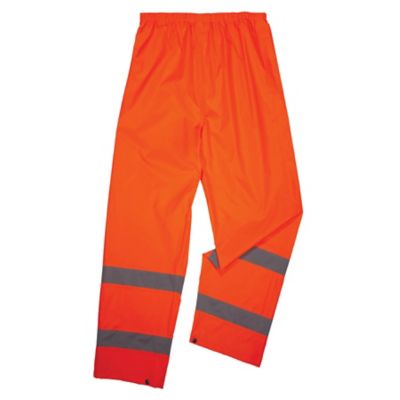
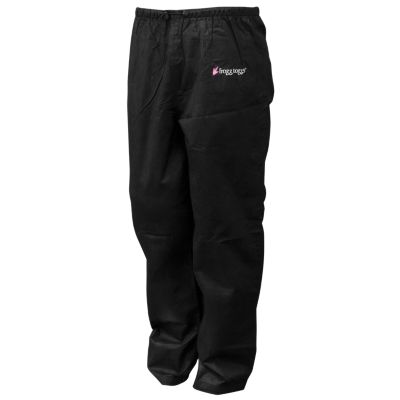
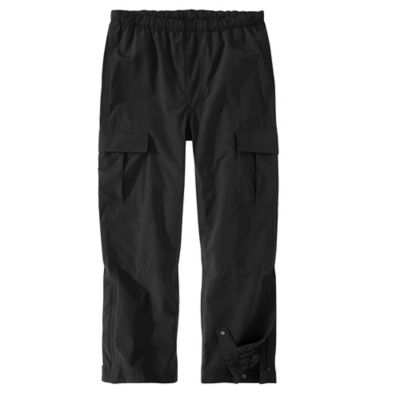
Men's waterproof pants help keep rain, wet grass, and splashing water from turning a day's work into a soggy chore. They make sense for feeding livestock in a downpour, walking fence lines through dripping brush, or hauling supplies across a muddy yard. Their job is different from that of ordinary work pants: the outer fabric and waterproof barrier work together to block water, while the garment's construction helps keep it from slipping through seams and openings. Nylon and polyester are common shell materials, often paired with a coating or membrane that provides the waterproof protection. Fabric weight and construction affect how a pair feels, from a light shell that packs into a small space to heavier rainwear suited to repeated contact with wet surfaces. Polyurethane-coated fabrics and PVC rainwear offer other approaches to shedding water, with differences in flexibility, weight, and airflow. Taped or sealed seams matter because stitching creates small holes that can let moisture through an otherwise waterproof fabric. Pocket openings, fly closures, and ankle construction also influence how well the finished pants hold out rain. A water-repellent surface treatment helps droplets bead up and roll away, but that treatment alone does not make pants waterproof. Breathable waterproof materials allow some moisture vapor to escape, which can make active chores more comfortable, though no shell eliminates sweat during hard work. Unlined rain pants provide a barrier over everyday clothing, while lined or insulated styles add warmth when the task calls for it. Waterproof protection and insulation are separate features, so one does not automatically mean the other. For brief showers or lighter contact with moisture,
Men's Water Resistant Pants offer a related category; water-resistant construction generally handles limited exposure rather than the sustained wet conditions waterproof rainwear is intended to address.
Fit makes a real difference when waterproof pants go from standing at the barn door to climbing steps, crouching beside a gate, or reaching down to fasten a boot. Pull-on rain pants often fit over jeans or work trousers, so the waist, seat, and thighs need enough room for both the clothing underneath and a full range of movement. A trim shell worn directly over a base layer has a different fit requirement than an overpant pulled over heavy workwear. Waist measurements alone do not tell the whole story; rise, inseam, and the cut through the knees all affect comfort once the work starts. Elastic waistbands, drawcords, and adjustable tabs can help hold pants in place without a tight belt pressing into the waist. Articulated knees or a gusseted crotch can make bending and stepping easier, particularly in fabrics that have little stretch. Full-length or partial side zippers can simplify pulling rain pants over boots, while storm flaps help shield those openings from rain. Adjustable ankle closures can reduce loose fabric around the lower leg and help keep cuffs from dragging through mud. Hem length deserves attention, too: pants that bunch beneath a heel wear differently from a pair that sits neatly over the boot shaft. For rain falling from above, an outer cuff that overlaps the boot top helps direct runoff away from the opening, although waterproof pants are not a substitute for waders in standing water. Pocket design affects everyday convenience as much as fit. Pass-through openings provide access to pockets in the pants underneath, while separate pockets keep small belongings within reach; either arrangement needs closures suited to wet conditions. Ranch hands, landscapers, grounds crews, and folks tending acreage may favor different combinations of coverage and mobility. Someone kneeling beside a stock tank faces different wear points than someone walking a long pasture, and a comfortable fit leaves room for those differences without excess fabric catching underfoot.
Long service life depends on more than a heavy fabric. Knees, the seat, inner legs, and cuffs take repeated rubbing, especially around gravel, rough lumber, and barn floors. Reinforced panels can help protect high-contact areas, while sound stitching and well-protected closures support the garment through repeated bending and pulling. Even substantial rainwear can snag on wire or sharp equipment, so resistance to everyday abrasion should not be mistaken for puncture protection. Ordinary waterproof pants also do not replace task-specific protective clothing for chemical handling, chainsaw work, or other hazards. For general chores and outdoor recreation, matching the construction to the job helps balance coverage with comfort: lighter shells are easier to carry along on a walk, while heavier coated pants may suit slower tasks with frequent splashes. Care has just as much bearing on continued performance. Mud left in folds can abrade fabric, and long stretches packed away damp can lead to odors and mildew. The care label determines whether a pair belongs in a washing machine or needs a gentler cleaning method, along with suitable water temperature and drying instructions. Fabric softeners, bleach, and strong cleaners may interfere with certain waterproof materials or surface treatments. Heat can damage some coatings, even though other garments allow controlled heat to renew water beading, making the stated care directions important. Dry storage, away from sharp tools and prolonged direct sunlight, helps protect the fabric between outings. Occasional checks around seams, zippers, and cuffs can reveal a small tear or lifting seam tape before the next wet day. These practical details also matter when waterproof pants are a gift for someone who spends plenty of time outside. The recipient's usual waist and inseam, preferred work layers, and boot size are more useful starting points than appearance alone. A pair that fits the person's chores and clothing can earn its place beside the mudroom door, ready for the next trip to the barn or walk across a rain-soaked field.