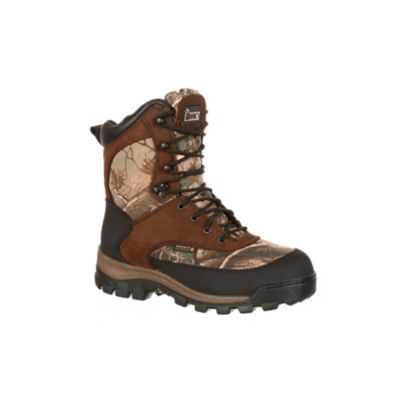
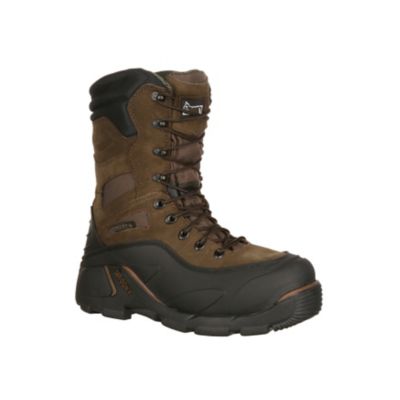
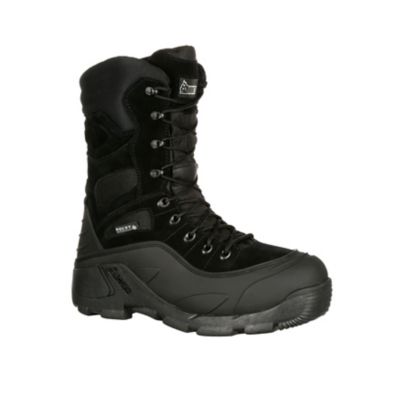
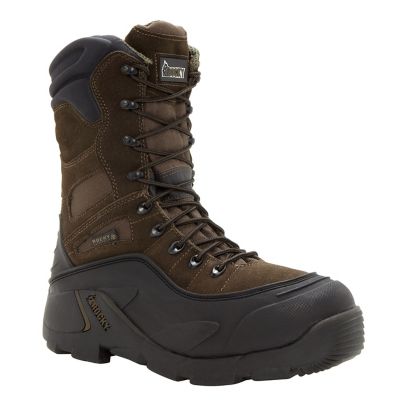
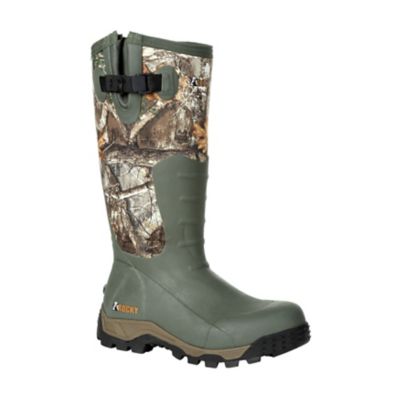
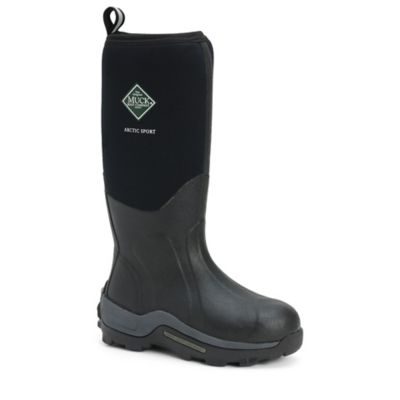
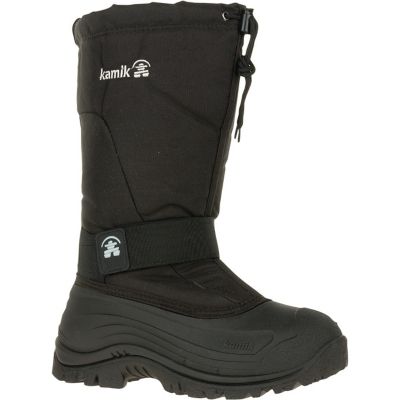
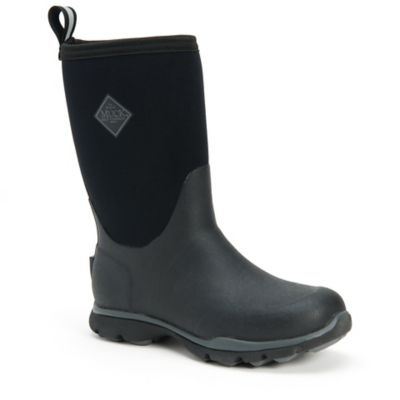
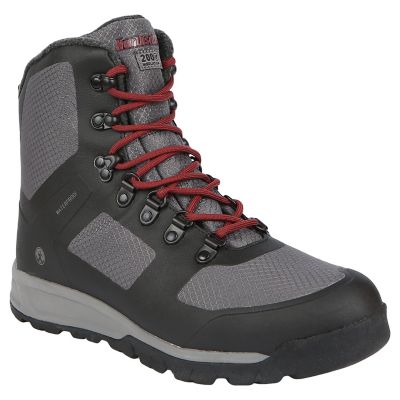
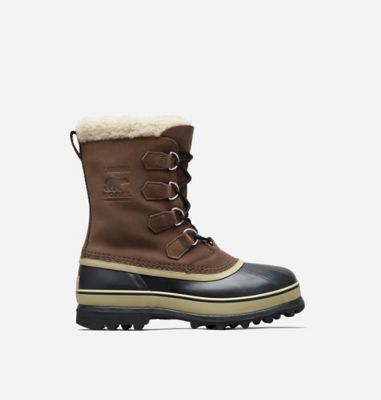
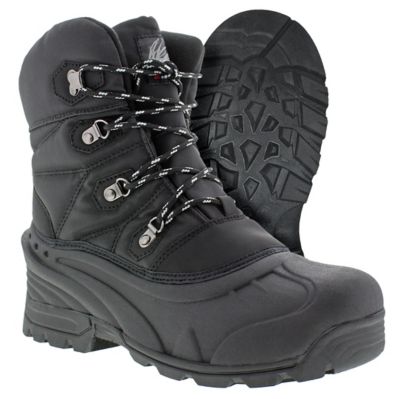
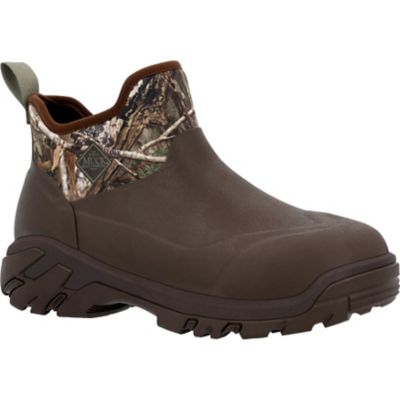
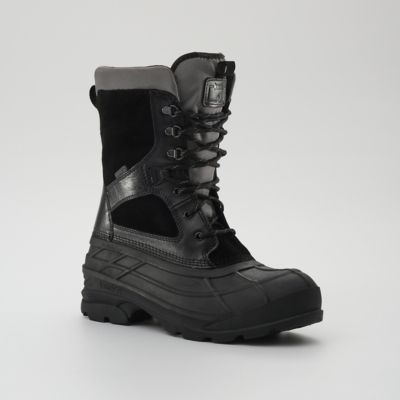
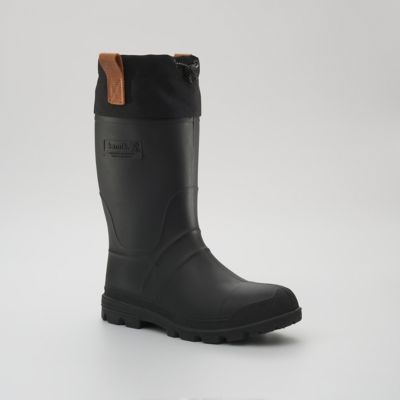
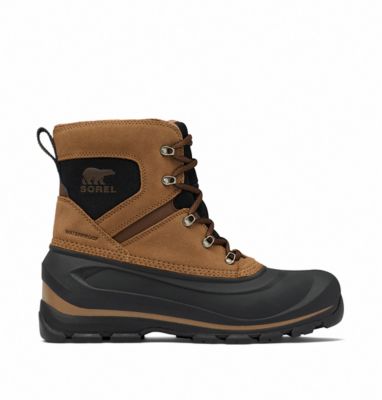
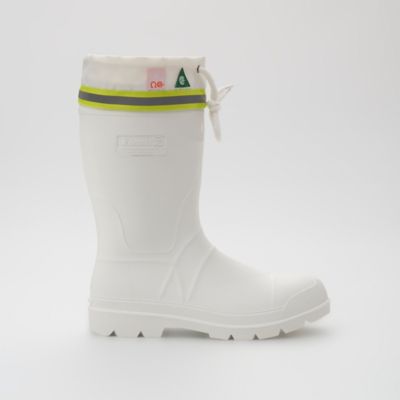
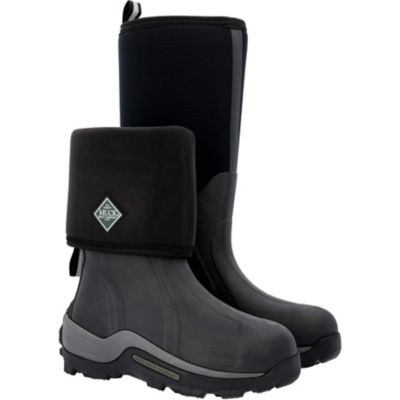
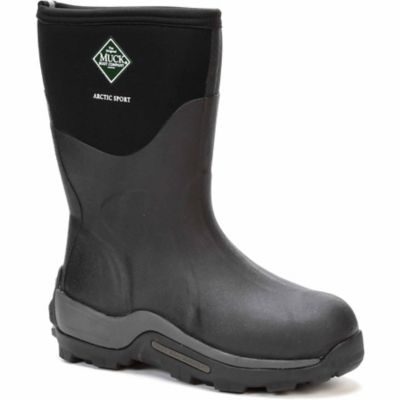
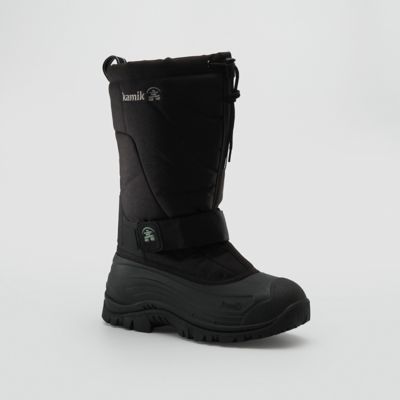
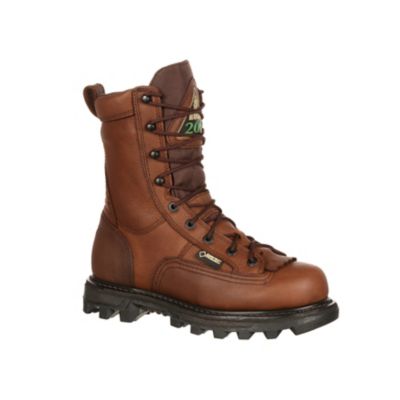
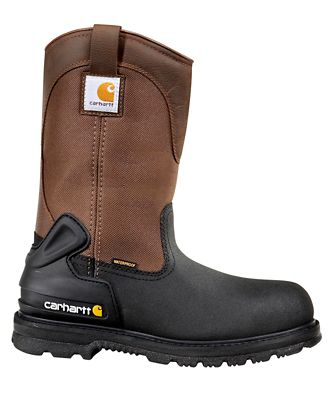
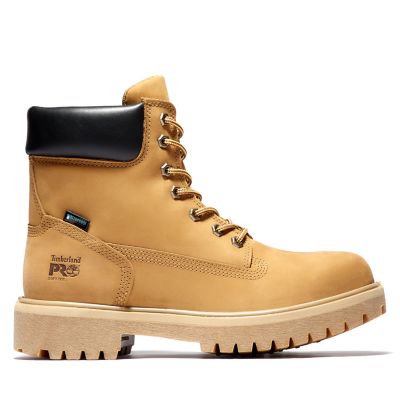
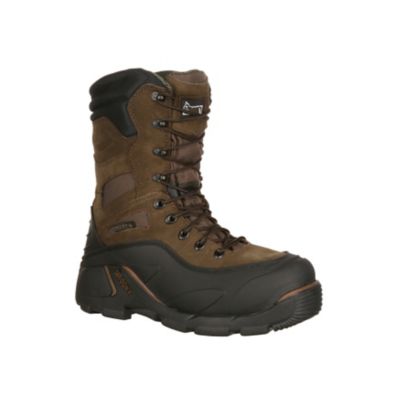
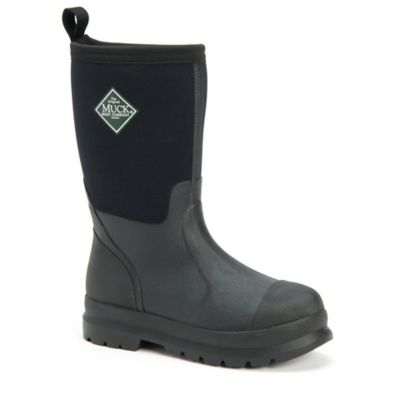
Men's snow boots are built for the cold, wet footing that comes with clearing a driveway, feeding livestock after a snowfall, or walking from the truck to the barn through churned-up slush. Their main job is to bring together insulation, protection from moisture, and traction, though the amount of each depends on the boot's construction. Waterproof snow boots may combine sealed seams, a waterproof membrane, or a molded rubber lower section to help keep melting snow from reaching socks. Water-resistant uppers offer more limited protection and aren't the same as a fully waterproof design, especially when wet snow sits against the boot for a long stretch. Leather uppers bring a substantial feel and can stand up well to everyday scuffs with proper care, while synthetic textiles can help keep weight down and allow easier movement. Rubber around the foot adds a barrier against puddles and slush, but water can still enter over the top or through openings that aren't sealed. Boot height matters out by the woodpile or along a snow-covered fence line: a taller shaft provides more coverage, while a shorter boot can feel less restrictive for driving and brief trips outside. A gusseted tongue, attached along its sides, helps limit the gaps where snow and grit can work their way in. Cuffs that fit comfortably around the lower leg also help keep loose snow out, particularly when pant legs overlap the boot opening. These details make men's winter snow boots a practical fit for homeowners, folks tending animals, and anyone whose day includes more than a quick walk across a cleared parking lot. The right balance comes down to the ground underfoot, the depth of the snow, and how long the boots will stay on. A pair for shoveling and hauling firewood has a different job from one worn mainly between the house, truck, and feed store, even when both need to keep feet comfortable in the cold.
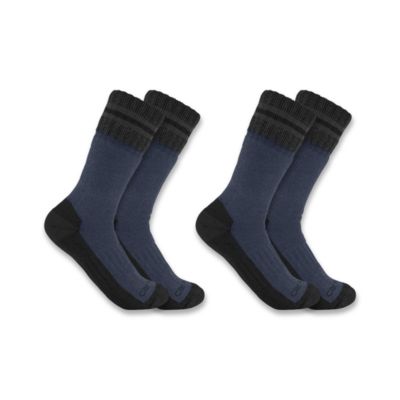
Warmth in insulated men's snow boots comes from the whole setup, not just a thick-looking lining. Synthetic insulation traps air around the foot, and some designs include removable liners that can be taken out to dry between outings. Insulation amounts, often listed in grams, help describe construction, but that number alone doesn't establish how warm a boot will feel. Time outside, wind, dampness, socks, and activity all play a part. Standing beside a gate while animals move through can leave feet feeling colder than steady walking or shoveling, so boots suited to active chores may feel different during long stretches of standing still. Manufacturer temperature ratings also depend on testing conditions and aren't a promise of comfort for every person. Fit is just as important as insulation. Toes need room to wiggle without the foot sliding forward, and the heel should feel secure without a hard pinch at the back. Automatically going up a full size can leave too much movement; the manufacturer's sizing information and the socks intended for wear are better starting points. Wool-blend or synthetic socks help manage moisture, while socks packed tightly inside a boot can compress insulation and make feet uncomfortable. Removable footbeds can make drying easier and may leave room for an appropriate replacement insole, provided it doesn't crowd the foot. Lace-up closures allow adjustments across the instep and ankle, which can help accommodate different foot shapes. Pull-on styles simplify trips in and out of the house, though their fit through the heel and shaft deserves attention. Zipper closures offer another way to get boots on and off, with moisture protection depending on the design around the zipper. Weight and flexibility matter over a full day, too. A substantial boot may feel reassuring in deep snow but tiring on repeated walks between outbuildings. For errands and lighter everyday wear,
men's casual winter boots offer a related category to consider, with each pair's insulation, water protection, and intended use still worth checking.
Underfoot construction deserves a close look when snow hides uneven gravel, packed tracks, and slick spots near a water trough. Deep outsole lugs can bite into loose snow, while space between those lugs helps shed material rather than letting it pack into a smooth layer. Rubber compounds and tread patterns vary, and no ordinary snow boot can guarantee grip on ice. A sole that handles fresh snow well may behave differently on a glazed porch step or frozen concrete. Traction aids designed to fit the boot can add grip in certain conditions, but they need to match the activity and may require removal before stepping onto indoor floors. Cushioning helps soften repeated steps on hard ground, while a stable base can feel steadier when carrying a feed bucket or an armload of split wood. Snow boots aren't automatically safety footwear, either; tasks involving impact, compression, or other workplace hazards call for the appropriate labeled protection. How well a pair holds up also depends on its stitching, sole attachment, reinforcement at wear points, and care after a long day outside. Salt and mud left on the surface can take a toll on leather and other materials, so a gentle cleanup according to the maker's directions helps protect the finish. Liners and footbeds that come out should dry separately when damp, and boots generally fare better with room-temperature airflow than against a stove, radiator, or other strong heat source. Leather may need a compatible conditioner or water-repellent treatment, while membranes and synthetic uppers require products approved for those materials. Dry storage helps prevent lingering dampness between snowfalls. For a gift, knowing the recipient's usual size, foot width, and everyday chores is more helpful than choosing by appearance alone. Whether they're headed to someone who keeps the driveway clear or handles morning barn rounds, men's snow boots earn their place by matching the work, fitting comfortably, and being ready for another trip through the snow.