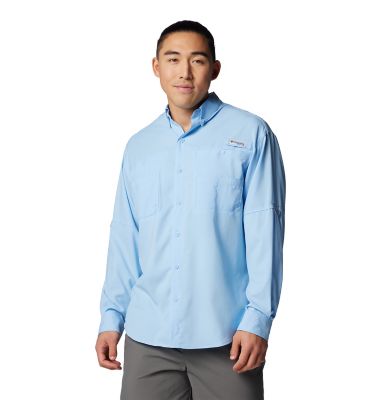
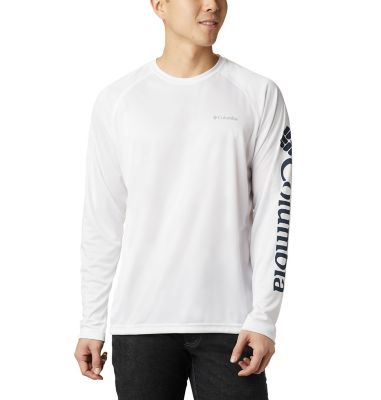
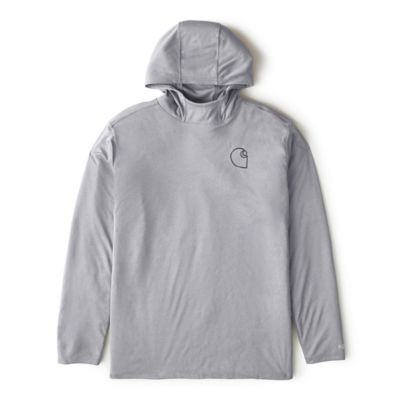
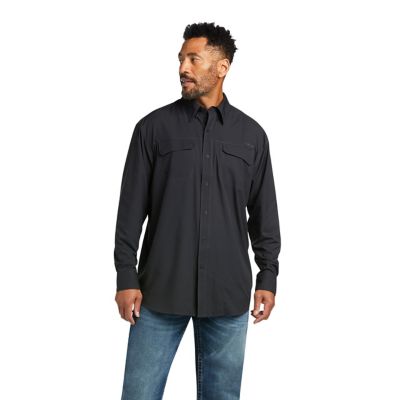
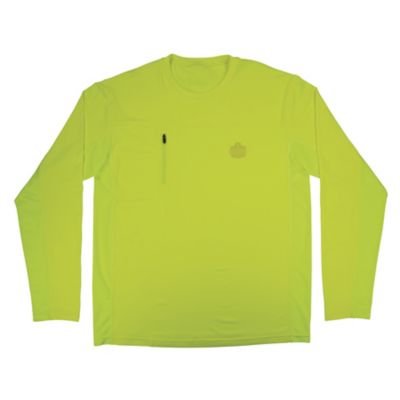
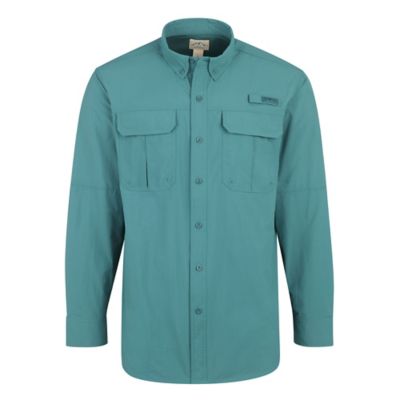
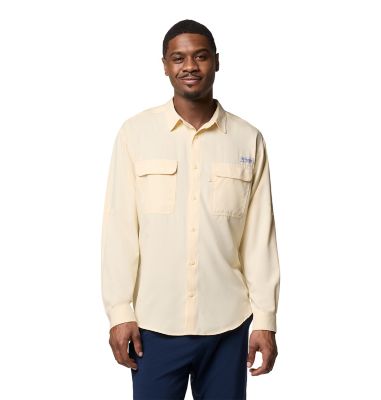
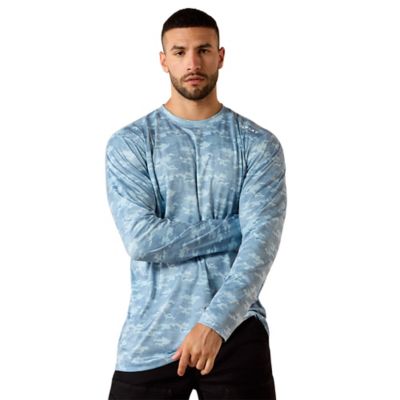
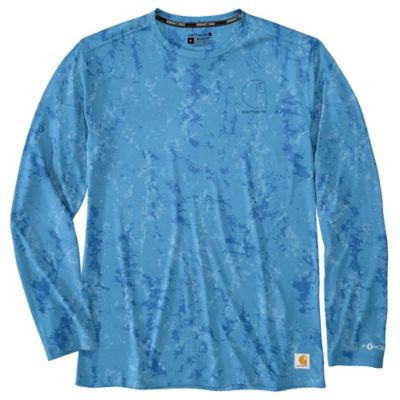
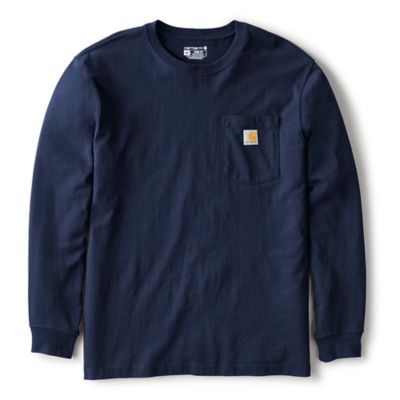
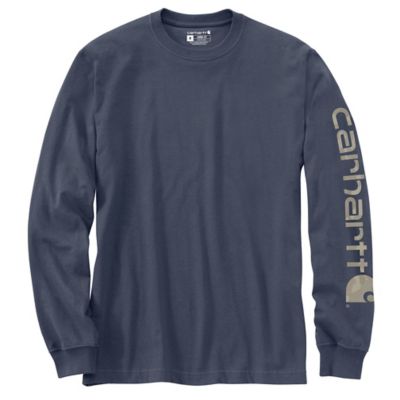
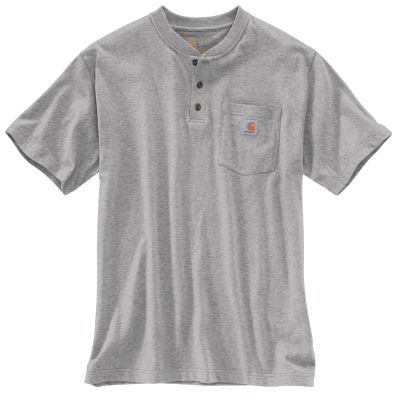
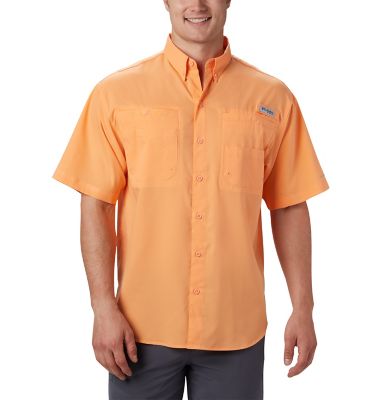
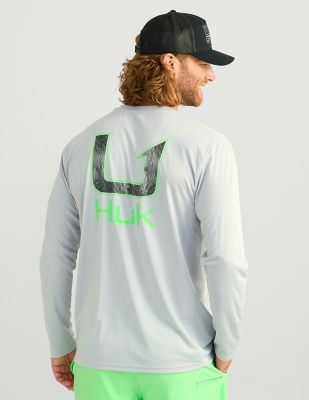
Men's long sleeve sun shirts offer arm and upper-body coverage in fabrics designed to help limit exposure to the sun's ultraviolet rays. They're a practical choice for checking fence lines, fishing from the bank, walking trails or spending an afternoon tending a garden. A labeled UPF 50 or 50+ fabric blocks at least 98% of UV radiation under test conditions, making that rating a useful detail when comparing shirts for extended time outside. UPF describes protection through the fabric; it does not account for uncovered skin at the face, neck, hands or an open collar. Long sleeves help cover more skin without requiring a heavy layer, while lightweight construction can make reaching, walking and casting feel less restrictive. Many sun shirts feature polyester, nylon or blends with a little stretch. Depending on their construction, these fabrics can move moisture away from the skin and dry faster than heavier cotton garments. Those benefits are separate from UV protection, though, so a moisture-wicking claim alone does not establish a shirt's UPF rating. Cotton blends may appeal to men who prefer a familiar, soft feel, while smooth synthetic knits can sit comfortably beneath a vest or work shirt. Fabric weight, weave and finishing all influence how a shirt feels and performs. An airy feel does not necessarily mean less protection, and a thick fabric does not automatically come with a tested rating. When comparing
Men's UV Shirts, the stated UPF rating and care label tell more than appearance alone. Coverage also depends on how the garment is worn and its condition, including whether the fabric is stretched, wet or worn thin. A sun shirt works best as one part of an outdoor routine that also includes shade breaks, a brimmed hat, sunglasses and broad-spectrum sunscreen on exposed skin, applied and reapplied according to its label.
Fit makes a real difference when a shirt needs to stay comfortable through chores and recreation. Men's long sleeve sun shirts should allow enough room across the shoulders and upper back to reach a gate latch, lift an arm or handle a fishing rod without pulling hard across the fabric. A close-fitting style can work well for active movement, but fabric stretched tightly over the body may not provide the same protection it delivers under its stated test conditions. A relaxed fit leaves more room for airflow and layering, provided the sleeves and hem stay clear of anything that could catch them. Sleeve length deserves attention, especially for taller men or anyone who spends much of the day with arms extended. Cuffs that sit at the wrist while standing may ride up when driving a utility vehicle or reaching across a workbench. Thumbholes can help hold some sleeves in place and extend coverage over part of the hand, though they do not replace gloves when a task calls for them. A longer hem helps keep the lower back covered while bending over a garden bed or kneeling beside a tackle box. Pullover styles keep the front simple, while button-front shirts offer a familiar look for moving from outdoor tasks to errands in town. Crew necks leave less room at the neckline than an open collar, and hooded styles can add coverage around the neck and head when worn as intended. Mesh panels and vents may improve airflow, but their UV protection should be checked rather than assumed. Flat or low-profile seams can reduce rubbing beneath backpack straps, and a smooth collar can feel better against the neck over a long stretch outside. Pockets are handy for small essentials, but placement matters when wearing a pack, harness or other gear. For work around moving equipment, follow workplace clothing requirements; sun protection is not a substitute for required protective workwear.
The right construction depends on where the shirt will spend its time. A man who fishes from a kayak may favor quick-drying fabric, easy shoulder movement and a neckline that stays comfortable beneath a personal flotation device. Someone walking property lines may put more weight on sleeve coverage, seams that lie comfortably beneath a pack and a hem that stays put when stepping over uneven ground. For garden work and everyday chores, a soft feel and straightforward care can matter as much as technical features. Reinforced stitching and neatly finished seams are worth a look at stress points, especially around cuffs, underarms and pocket edges. Thin, stretchy sun shirts are not a replacement for clothing intended to stand up to thorns, sharp fencing or heavy abrasion. Care helps preserve both the garment's shape and its intended performance. Follow the sewn-in instructions for washing temperature, detergent and drying method, since fabric blends and protective treatments can have different requirements. Avoid bleach or fabric softener when the label advises against them, and do not assume a hotter wash will improve the shirt's condition. After contact with salt water, chlorine, sweat or sunscreen, cleaning according to the label helps keep residue from building up. Let the shirt dry completely before putting it away, and check occasionally for holes, thinning areas, stretched cuffs or damaged stitching. Those signs can leave skin exposed or change how the fabric performs. Men's long sleeve sun shirts also make practical gifts for dads, husbands, brothers and friends who spend time around the farm, on the water or along a trail. A familiar shirt size is a starting point, but chest measurements, sleeve length and the recipient's preference for a relaxed or closer fit make the choice more personal. Simple colors and easy-care fabrics can fit into an everyday rotation, giving an outdoorsman coverage he can wear from the first gate check to the last walk back from the pond.