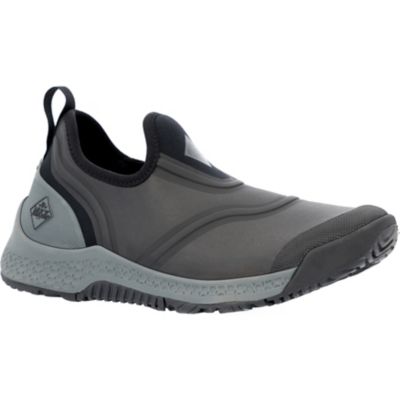
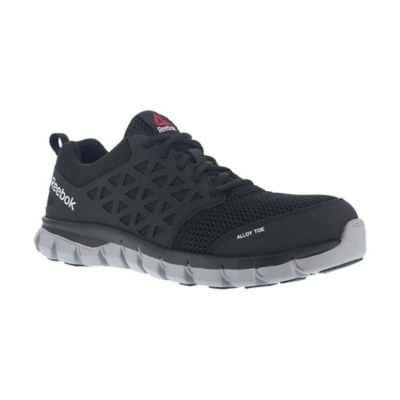
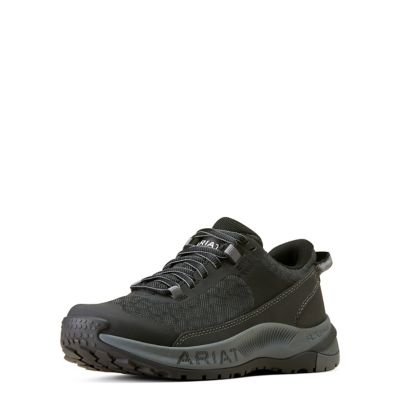
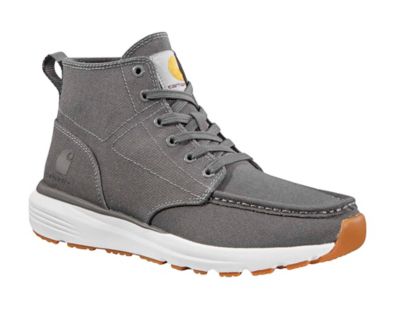
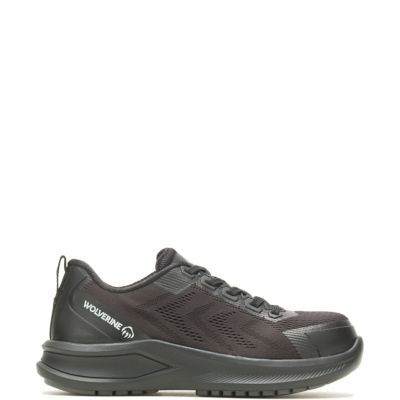
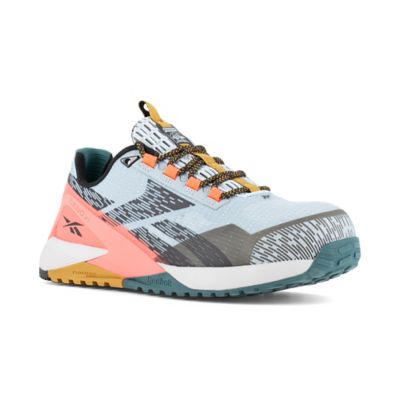
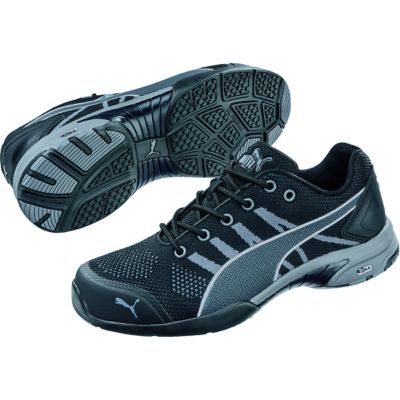
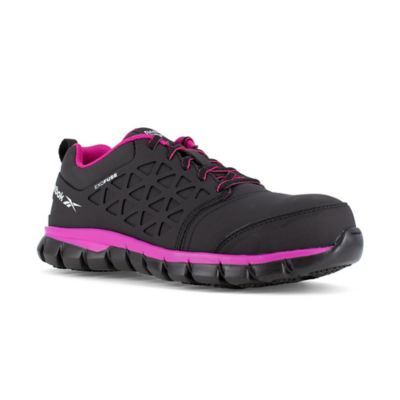
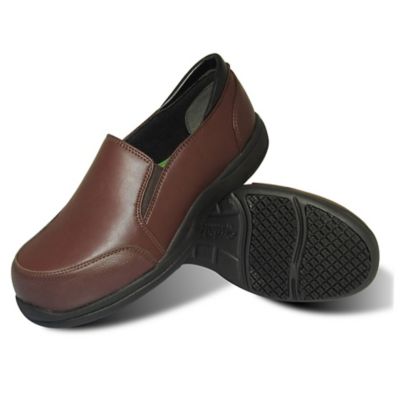
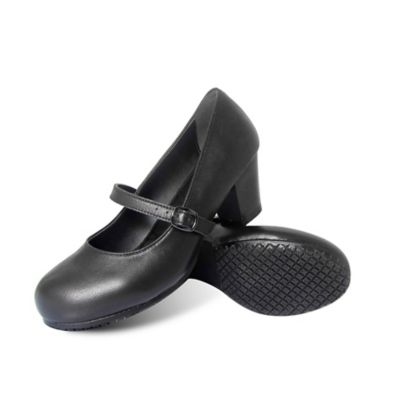
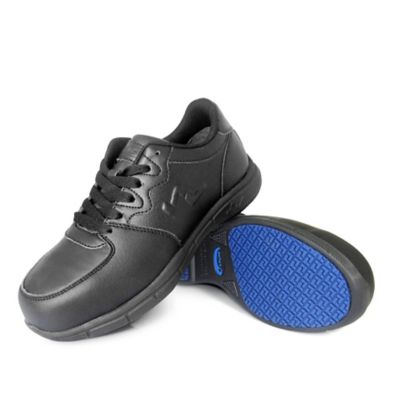
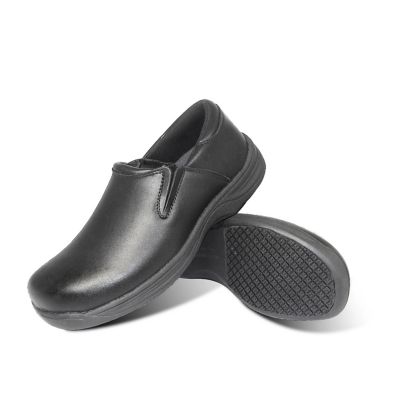
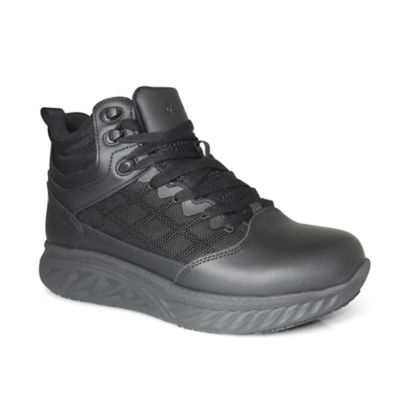
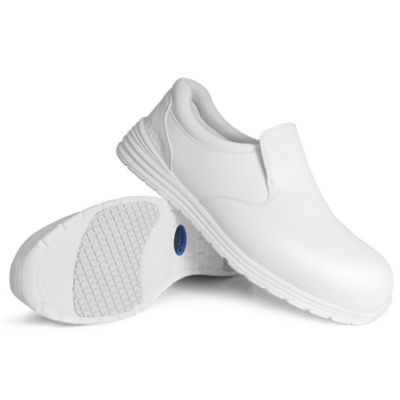
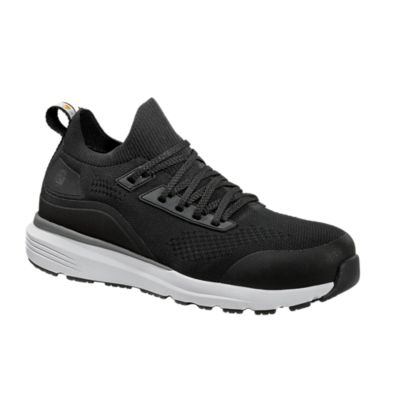
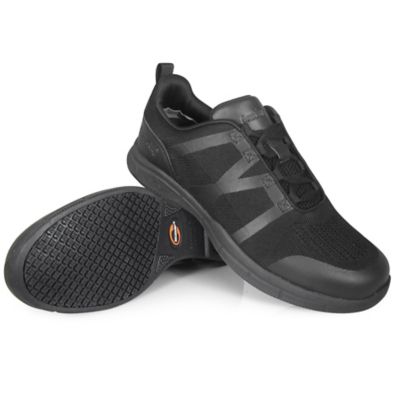
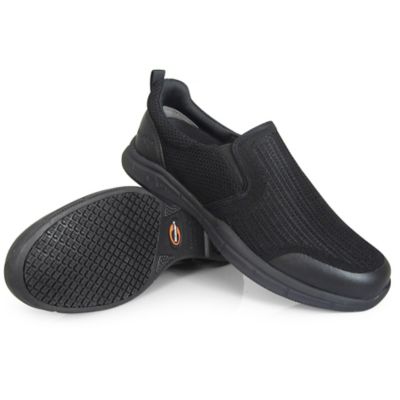
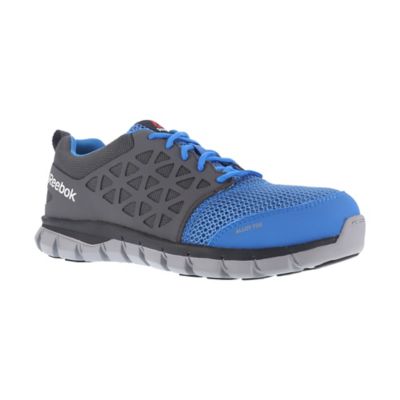
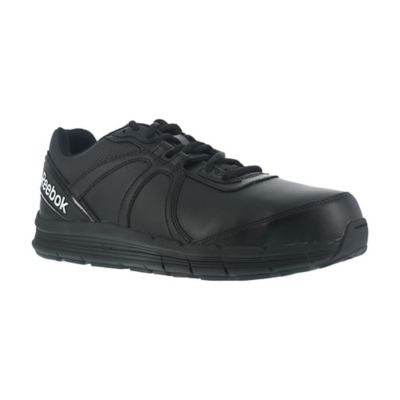
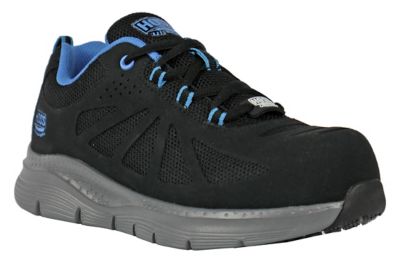
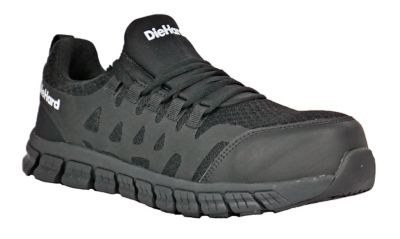
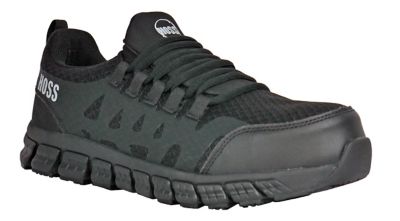
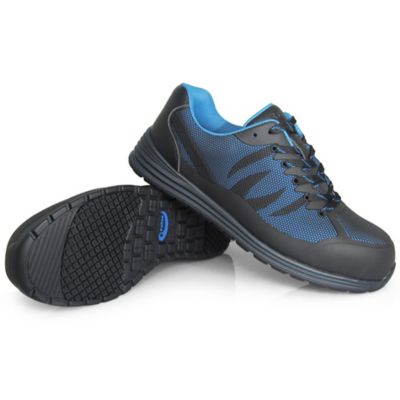
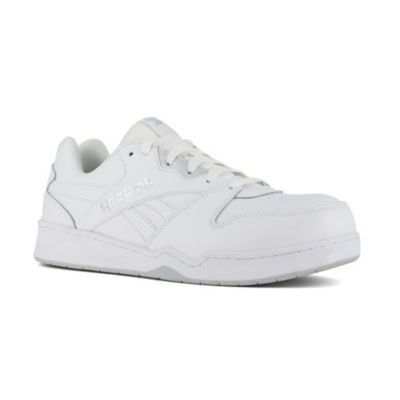
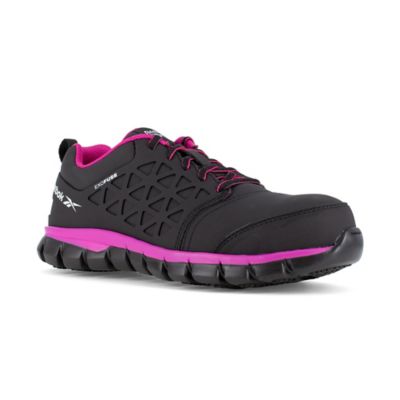
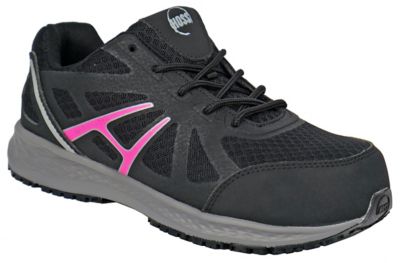
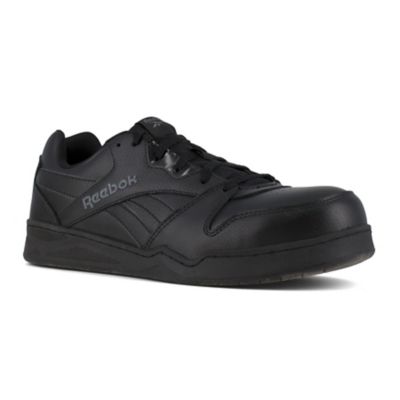
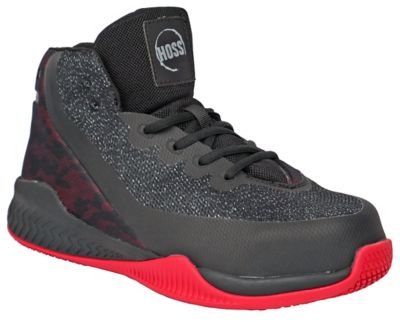
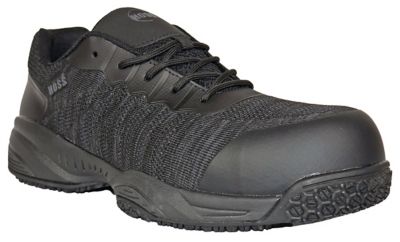
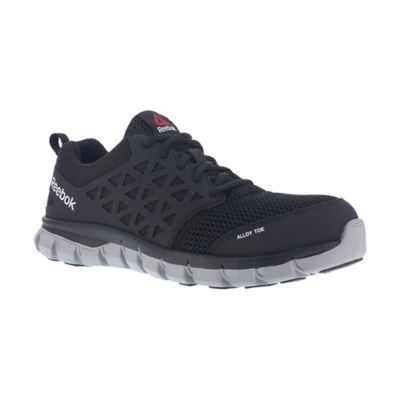
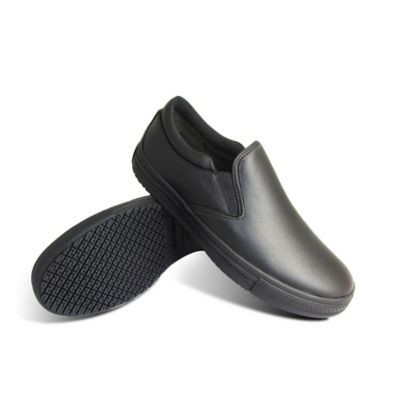
Women’s lightweight work shoes bring a lower-profile feel to jobs that keep feet moving, from walking warehouse aisles to working a service counter or crossing a concrete shop floor. The right pair balances manageable weight with the traction, cushioning and protection the work calls for. Less weight can make each step feel less cumbersome, but a light shoe still needs enough structure to hold the heel steady and support the foot through a long shift. Athletic-style construction often pairs flexible uppers with cushioned midsoles, while reinforced toes and heel panels help handle everyday scuffs. Mesh allows airflow, making it a practical material for indoor work where spills and debris are limited. Leather and synthetic uppers can provide more coverage and a smoother surface to wipe clean, though their flexibility and breathability vary. Combination uppers bring these materials together, placing reinforcement around higher-wear areas while keeping other sections lighter. Underfoot, EVA foam contributes cushioning without much added weight, and rubber outsole sections provide contact with the floor. Sole design matters as much as the material: tread pattern, contact area and the surface underfoot all affect traction. Slip-resistant work shoes are intended to improve grip under specified conditions, not prevent every slip on every surface. A busy kitchen with greasy tile presents different demands than a packing area with smooth concrete, so workplace requirements belong at the center of the decision. Deep, widely spaced tread may help release loose dirt, while other tread patterns are designed for flatter indoor surfaces. Cushioning also needs to suit the pace of the job. Standing at a workstation, walking between buildings and repeatedly stepping onto a loading platform place different demands on a shoe. A very soft footbed may feel inviting at first, but steady heel support, a well-shaped midsole and room for natural toe movement help round out the fit. Lightweight work footwear earns its place by matching the task, rather than simply weighing less.
Protection requirements separate soft-toe work shoes from safety-toe styles. Soft-toe construction can suit workplaces that do not require impact or compression protection, while safety-toe footwear is built to meet stated protective requirements. Steel and composite toe caps are both found in work footwear; the finished shoe’s weight depends on the entire construction, not just the toe material. Composite toes are not automatically the lightest choice, and a nonmetallic toe does not mean every part of the shoe is metal-free. Where protective footwear is required, the employer’s rules and the shoe’s marked ratings are more useful than appearance alone. ASTM F2413 identifies performance requirements for protective footwear, while ASTM F3445 addresses slip-resistance performance. Those markings describe particular features and should not be treated as interchangeable. Electrical hazard protection is another separate rating, providing secondary protection under specified conditions rather than replacing safe electrical work practices. The fit around a protective toe deserves attention because the cap itself will not stretch to make extra room. Toes need space to move without pressing against the front or sides, and the heel should stay seated without rubbing as the foot bends. Length is only part of that fit; forefoot width, instep height and heel shape all influence how a shoe feels. The socks worn on the job can change the fit, especially when they have extra cushioning. Trying shoes with those socks gives a better sense of the space available. Lace-up styles allow adjustment across the instep, while slip-on designs depend more heavily on a close match between the shoe’s shape and the foot. Removable footbeds can make room for compatible inserts, provided the change does not crowd the toes or interfere with required protective features. Feet may become fuller after hours of standing, so a fit that feels cramped at the start leaves little room for a full workday. Lightweight should describe the construction, not a compromise in fit or required protection.
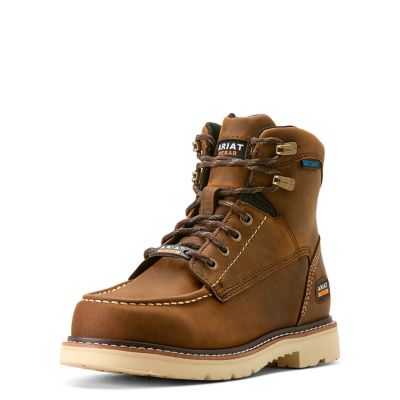
Everyday wear also comes down to how the shoes handle the work between the first clock-in and the walk back to the truck. Repeated kneeling can wear the toe area, catching a heel against equipment can scuff the back, and constant turns on concrete put stress on the outsole. Reinforced panels, secure stitching and protected seams can help in those contact areas, though no construction lasts the same amount of time in every workplace. Women’s lightweight work shoes are generally a better match for tasks suited to low-cut footwear than jobs requiring tall shafts, added ankle coverage or protection from deep debris. A feed-room cleanup, a day at the register and a maintenance shift may all involve plenty of steps, but they do not necessarily call for the same shoe. Cleaning requirements matter, too. Smooth uppers can be easier to wipe down after a spill, while mesh may hold fine dust and need gentler brushing. Care should follow the footwear maker’s directions, since leather, fabric and synthetic materials respond differently to cleaners and conditioners. Removing loose grit before wiping helps keep it from working into seams, and clearing packed tread helps preserve the outsole’s contact with the floor. Shoes should air-dry away from direct heat, which can affect adhesives and some upper materials. Removable insoles may be aired separately when care directions allow. Regular checks for worn tread, separating soles, damaged uppers or a footbed that no longer feels supportive can help spot when a pair needs attention or replacement. For households outfitting more than one worker,
men’s lightweight work shoes offer a related category to consider, with each person’s fit and job requirements kept separate. Work shoes can also make a practical gift when the recipient’s size, preferred fit and workplace rules are known. The most useful pair is one that feels right on the foot and belongs on the job.