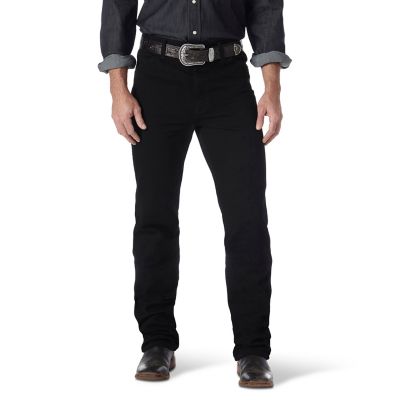
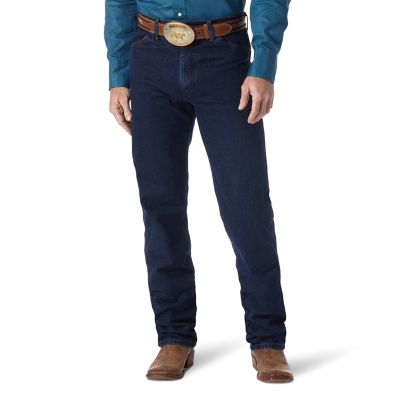
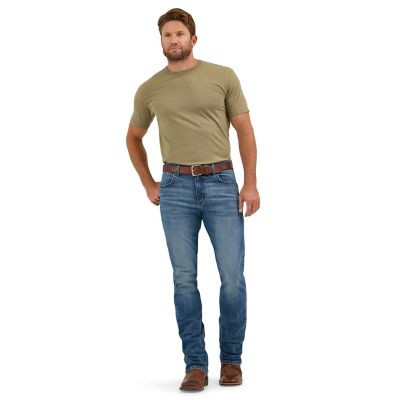
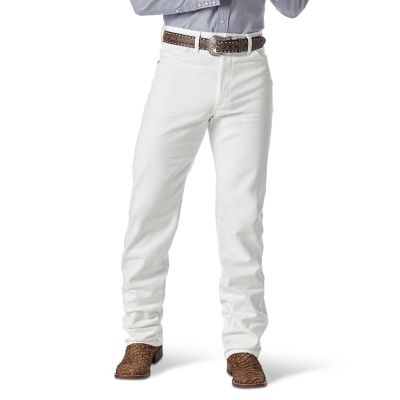
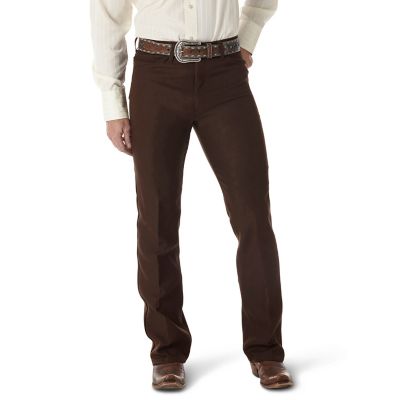
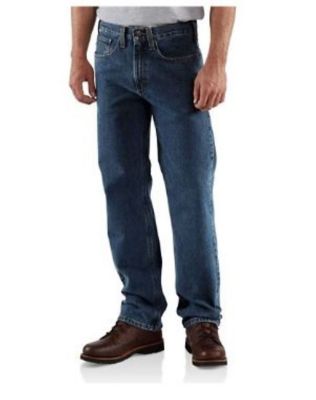
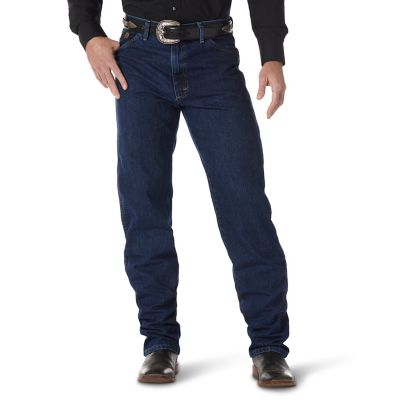
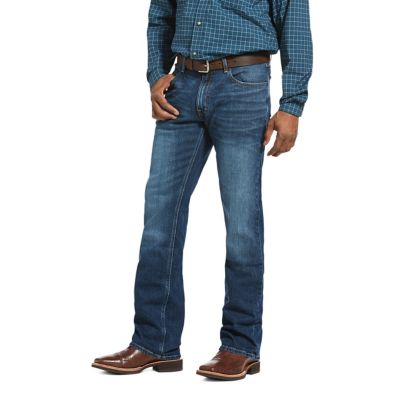
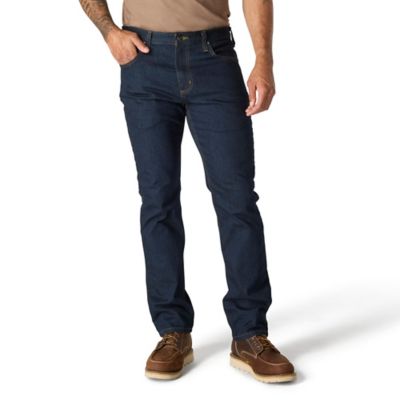
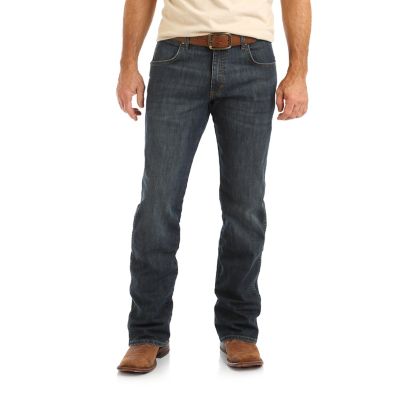
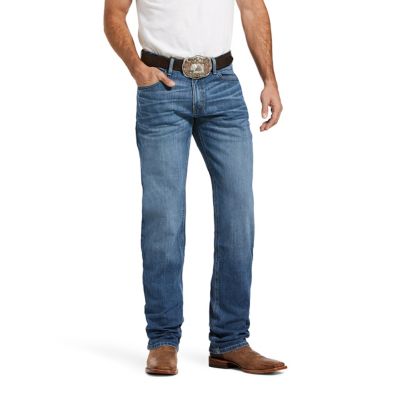
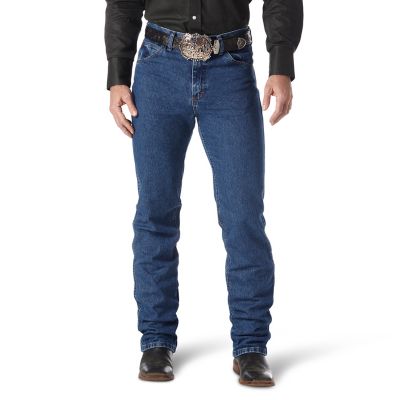
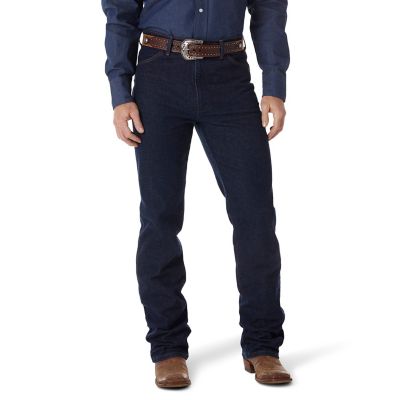
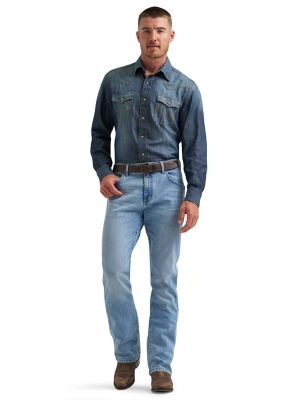
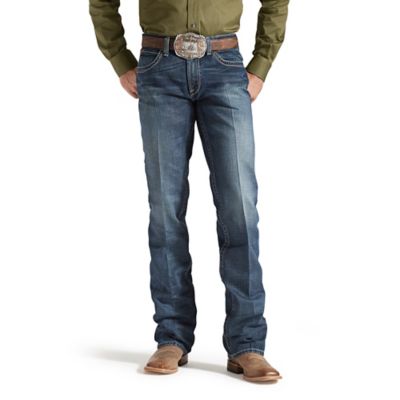
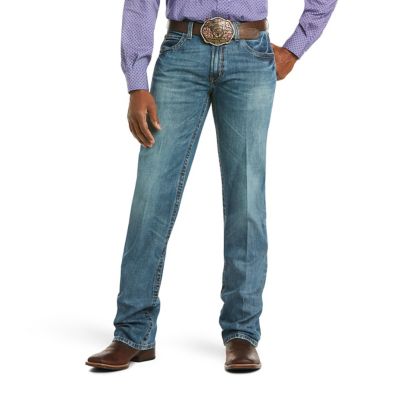
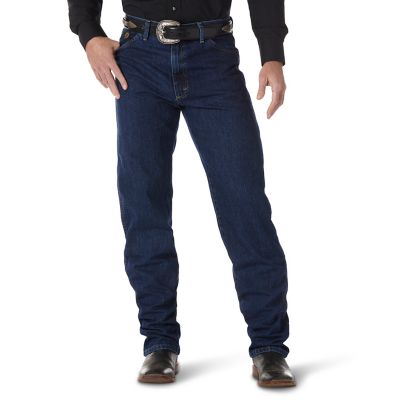
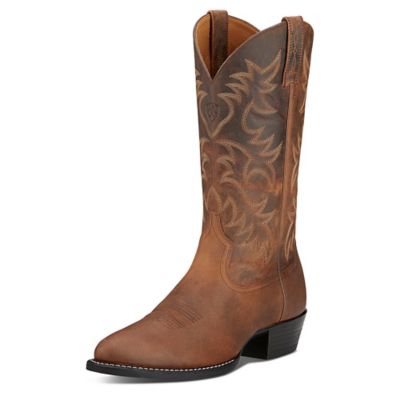
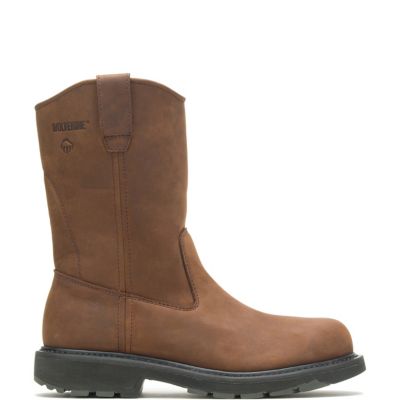
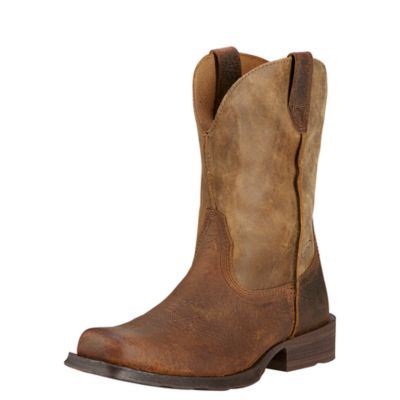
Men's jeans for boots generally work best with a leg opening that clears the boot shaft and an inseam that lets the hem rest near the top of the heel without dragging on the ground. Bootcut jeans have a slight flare below the knee, while straight-leg jeans can fit over boots when the opening provides enough room. The right choice depends on both the shape of the boot and how much room feels comfortable through the seat and thighs. Tall cowboy boots need space around the shaft, while lower-profile ankle boots often fit neatly beneath a slimmer straight leg. Work boots with broad uppers may call for a wider opening, even when their shafts are shorter. A smooth line from knee to hem keeps the denim from catching on the boot top or bunching tightly around the calf. Relaxed-fit jeans provide more room through the seat and thighs for bending, climbing into a pickup or spending time in the saddle. A regular fit offers a middle ground, and slim-straight jeans keep a closer shape without necessarily narrowing sharply at the ankle. Those fit names vary by maker, so the actual measurements matter more than the label alone. Inseam length also changes how jeans settle over footwear. A small amount of stacking means a few soft folds above the boot, not a heavy pile of fabric underfoot. Some men prefer an extra inch or two for that look, but adding length is not a rule for every pair. Boot height, heel shape and personal preference all play a part. Wearing the intended boots while checking the fit gives a better sense of where the hem will land. The waistband should stay comfortable while seated, and the rise should provide enough coverage when reaching across a tailgate or leaning over a fence. Jeans that fit well standing still should also leave room to move without pulling hard across the front pockets or behind the knees.
Denim construction makes a difference in how men's bootcut and straight-leg jeans feel throughout the day. All-cotton denim tends to have a firmer feel at first and gradually softens with wear. It suits men who like a more structured pair of jeans with a substantial feel through the legs. Denim blended with a small amount of stretch fiber can give a little during a deep bend, a long drive or a step onto a tractor platform. Stretch does not take the place of the right size, though; a waistband that digs in or thighs that feel tight usually need a different fit rather than more give in the fabric. Fabric weight is another consideration. Heavier denim generally feels more substantial, while lighter denim can feel less restrictive during frequent movement. Neither weight alone nor stretch content tells the whole story about how long jeans will last. Fabric construction, stitching, fit and the work they encounter all matter. Reinforced pocket corners, sturdy belt loops and well-finished seams are worth attention in jeans headed for regular chores. A little extra space across the thighs and seat can also keep the fabric from taking all the strain when kneeling beside a trailer hitch or lifting a feed sack. Pocket placement affects comfort, especially during hours behind the wheel or in a saddle. Deep front pockets can help keep small belongings settled, while back pockets should sit where their contents will not press awkwardly when seated. Wash and finish shape the look without changing the basic purpose of the jeans. Dark indigo and black denim pair easily with polished boots and a tucked-in shirt for supper in town. Medium and lighter blue washes have a more laid-back appearance alongside scuffed work boots and an everyday tee. Fading at seams and pockets adds variation, while a plain finish keeps the attention on the fit. Clean hems offer a straightforward look, and a modest stack gives more emphasis to the boot-and-denim combination without hiding the footwear beneath excess fabric.
A useful pair of jeans for boots should fit the day's plans, whether those plans involve checking fence, hauling supplies, driving between jobs or heading to a family get-together. Men who move between chores and town may prefer a straightforward wash and enough room to stay comfortable without an overly loose leg. For riding, room through the seat and thighs matters, along with a hem that still covers the boot shaft when the knee bends. For work around equipment, excess length and loose fabric can get in the way, so the fit needs to suit the task and any workplace clothing requirements. Jeans are also a practical gift for a husband, dad, brother or grown son when the waist, inseam and preferred cut are already known. Measurements from a pair that fits well can be more helpful than guessing from height, especially for someone who wears one length with everyday shoes and another with boots. A familiar rise and leg shape often matter just as much as the number on the waistband. For households with more than one boot wearer,
women's pants for boots offer another place to find clothing that works with favorite footwear. Routine care helps jeans keep their shape and stay ready for regular wear. Follow the care label, since cotton content, stretch fibers and finishes can call for different handling. Turning jeans inside out and washing with similar colors can help limit surface fading and color transfer. Dark denim may release dye during early washes, so it deserves extra care around lighter clothing and upholstery. High dryer heat can cause shrinkage or affect stretch fibers; the label's drying directions provide the best starting point. Mud and grit around the cuffs are worth removing before they settle into the fabric, and small seam problems are easier to address before they spread. With a comfortable waist, the right leg opening and a hem that clears the ground, men's jeans and boots make an easy everyday pairing.