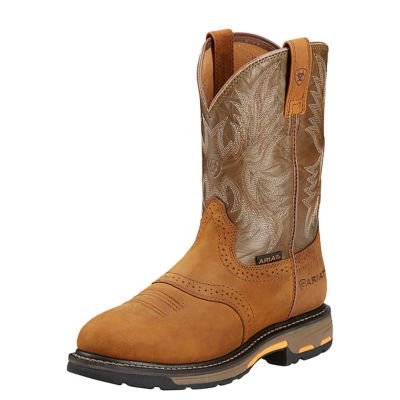
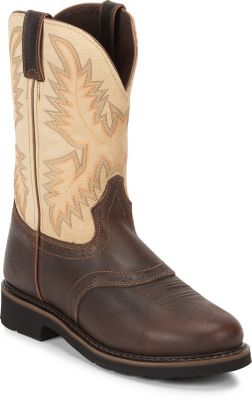
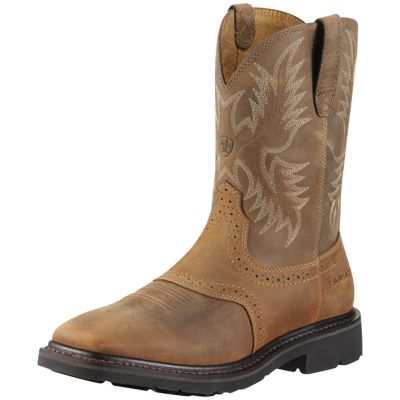
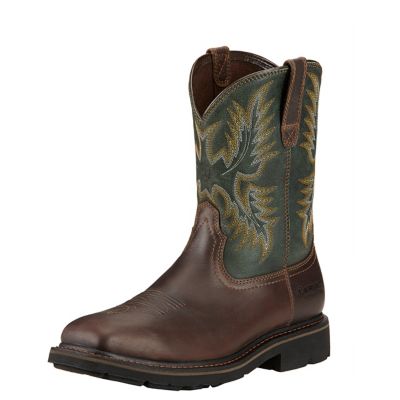
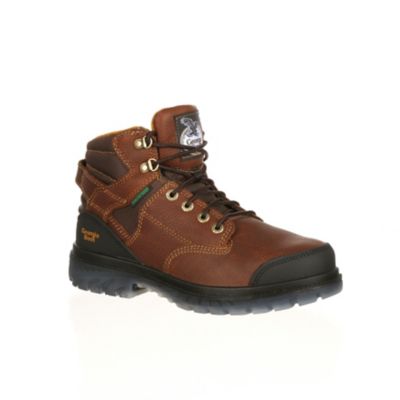
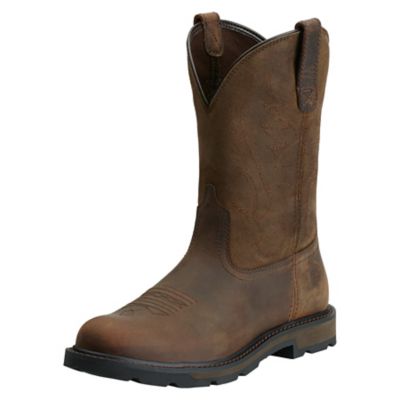
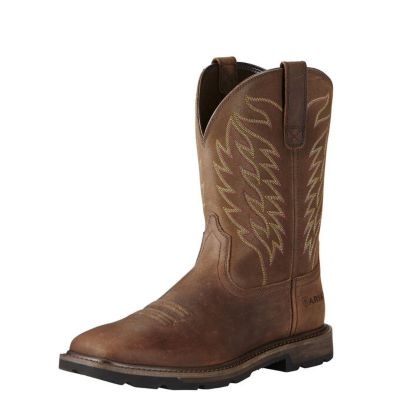
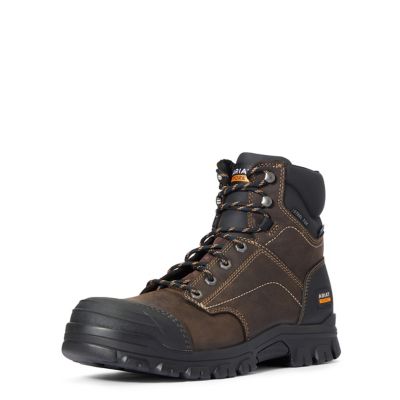
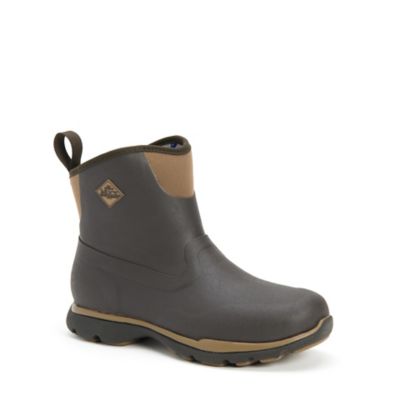
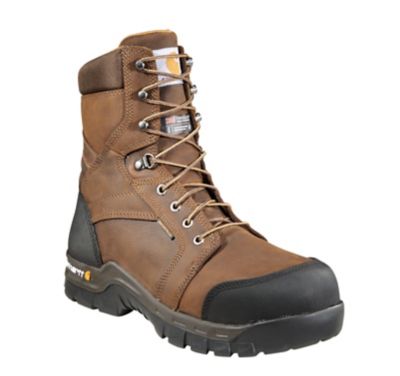
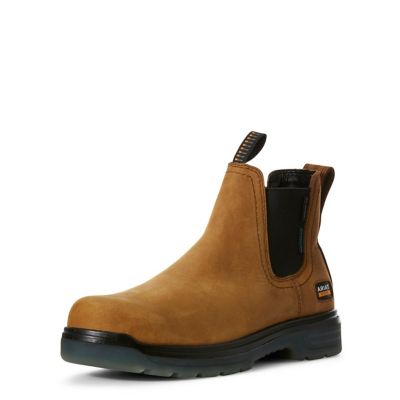
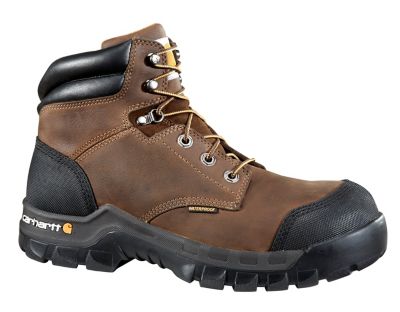
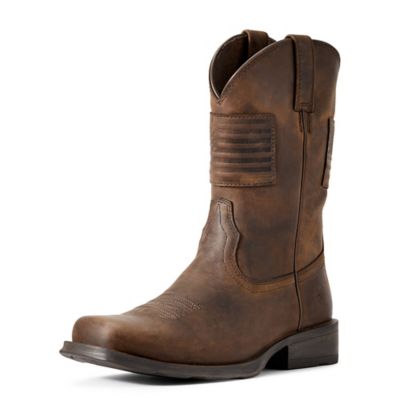
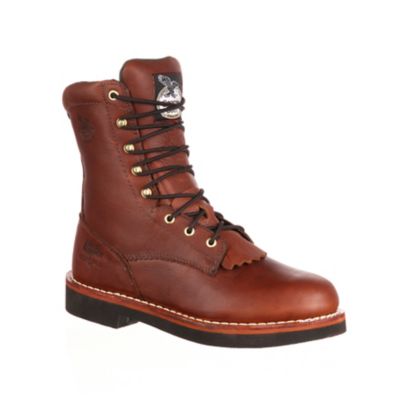
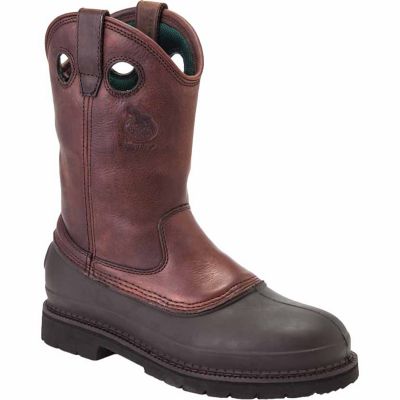
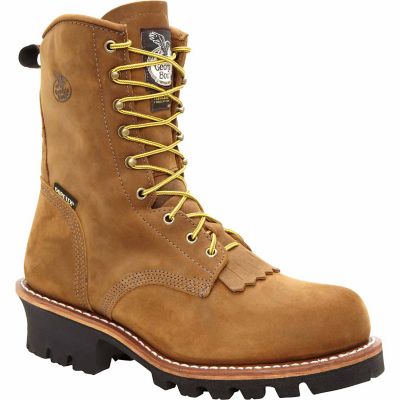
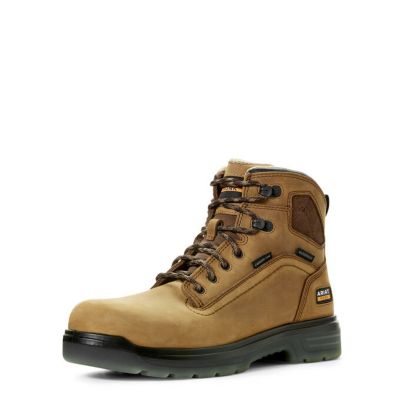
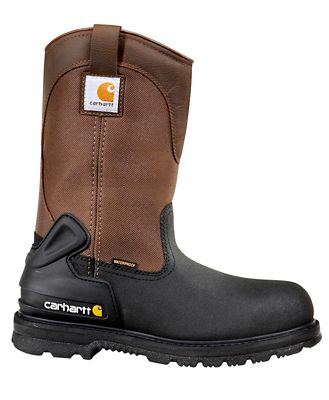
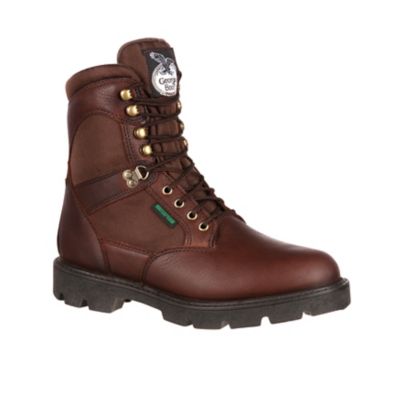
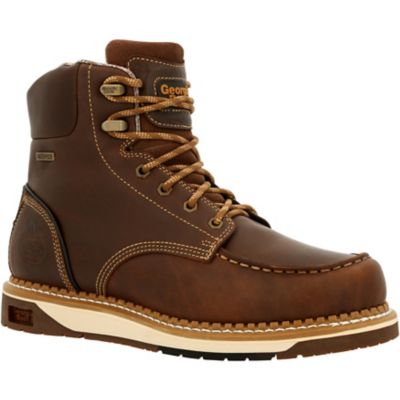
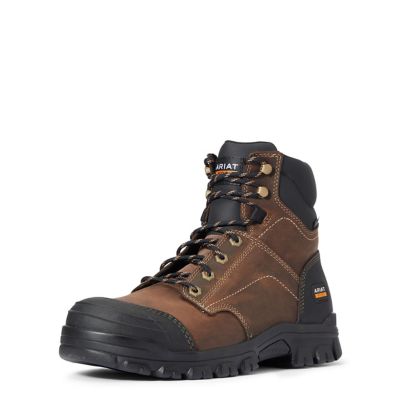
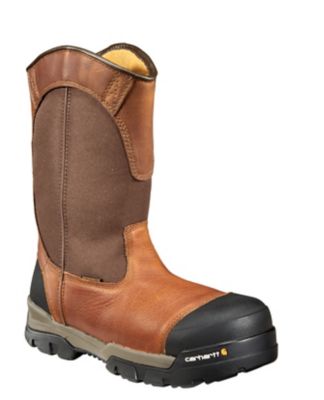
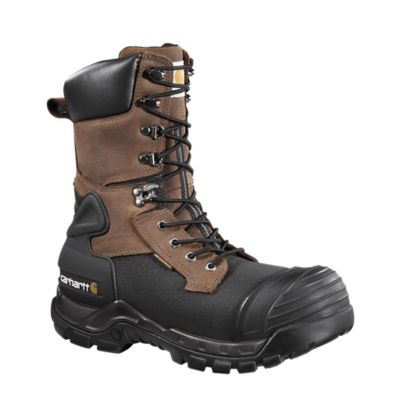
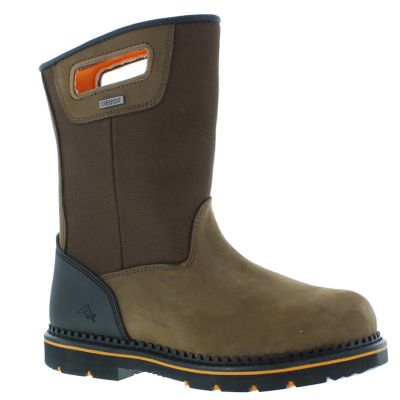
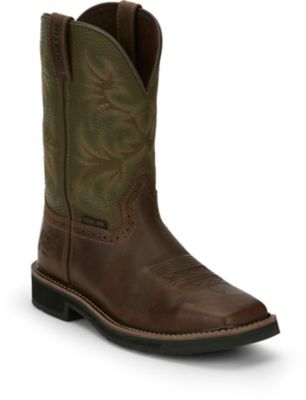
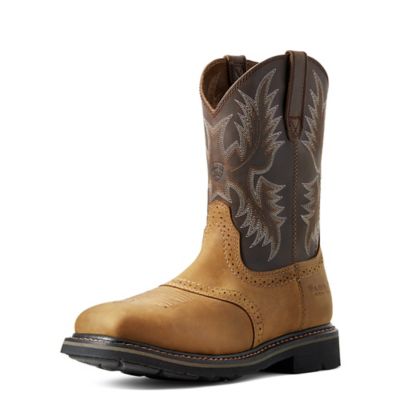
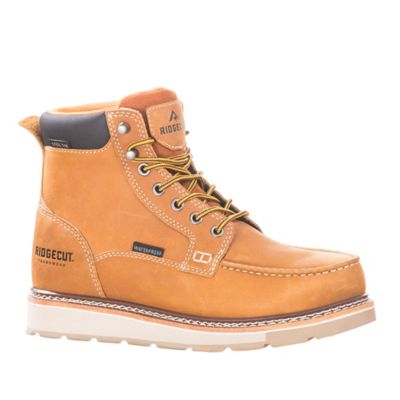
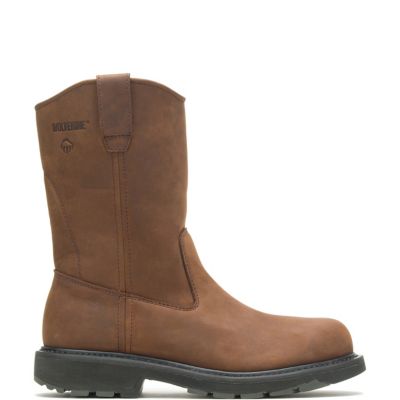
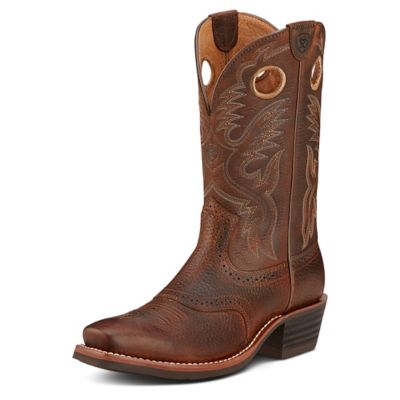
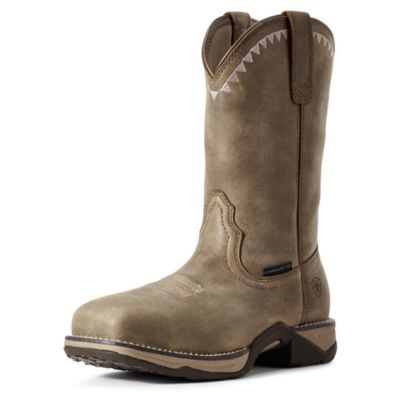
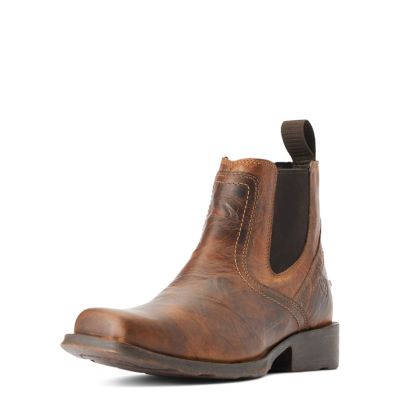
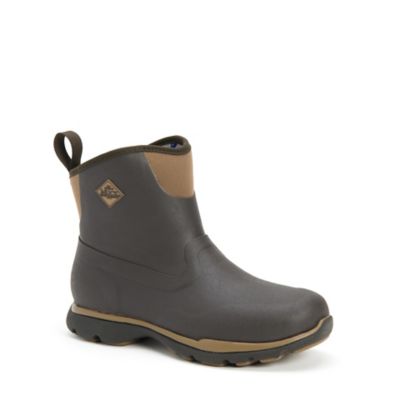
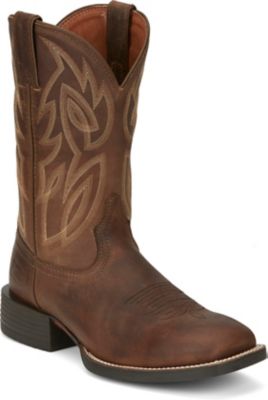
Men's brown work boots bring together support, foot protection and a straightforward look that fits life on the farm, in the shop and around the jobsite. Brown leather pairs naturally with work jeans and canvas pants, while shades from light tan to deep brown offer different looks without changing what matters underfoot. These boots can suit ranch hands moving between pens, tradesmen carrying tools and property owners tackling fence repairs or equipment maintenance. Construction matters more than color when matching a pair to the work ahead. Full-grain leather keeps the hide's outer surface intact and can develop creases and character with wear. Oiled leather has a rich finish and benefits from care products suited to that treatment, while nubuck has a brushed surface that needs a different cleaning approach. Leather uppers may include fabric panels for flexibility or reduced weight, and reinforced toe and heel areas can help limit abrasion where boots scrape against steps, gravel or machinery. Lace-up work boots allow adjustment across the instep and around the ankle; pull-on work boots offer a simpler on-and-off design without laces to tie. Shorter shafts allow more freedom around the lower leg, while taller shafts provide additional coverage and change how the boot sits beneath a pant leg. Soft-toe, steel-toe and composite-toe designs serve different needs. A soft toe does not provide the impact and compression protection of a safety toe. Steel and composite safety toes can meet workplace protection requirements when the footwear carries the appropriate rating, so the actual marking matters more than the toe material alone. Composite toes are nonmetallic, though that does not mean the entire boot is metal-free. Electrical hazard protection, puncture resistance and metatarsal protection are separate features, not automatic benefits of every safety-toe boot. Brown work boots belong on the job only when their stated protection matches the site's requirements and the tasks being done.
Comfort in men's brown work boots comes from the whole build, not just a thick footbed. There needs to be room for toes to spread without the forefoot sliding around, and the widest part of the foot should line up with the widest part of the boot. A safety-toe cap will not stretch to make extra room, so pressure across the toes is not something to count on breaking in. Work socks and any prescribed orthotics affect fit, making them worth wearing when trying on boots. Feet can expand over a day of standing and walking, and a fit that feels snug early on may become cramped after hours on a concrete shop floor. Width choices matter as much as length; sizing up to solve a width problem can leave excess space at the heel and put the boot's flex point in the wrong place. Lace-up styles offer more control over heel hold, while pull-on styles may have a little initial heel movement that should remain limited rather than letting the foot slide freely. For shoppers weighing cushioning and support,
men's comfortable work boots offer another way to focus on how footwear feels through a full workday. Cushioned midsoles can soften the feel of repeated steps, while a supportive shank helps control flex through the middle of the boot. Removable footbeds allow replacement when cushioning wears down, provided the replacement does not crowd the foot or conflict with the manufacturer's guidance. Outsole shape also changes the experience. Broad wedge soles can spread contact across flatter surfaces, while defined heels and deeper lugs serve different footing needs. Deep tread can grip loose ground but also carry packed dirt into a shop. Slip-resistant soles may help on designated surfaces, yet no sole prevents every slip. Oil resistance describes a different property and should not be treated as proof of slip resistance. Waterproof construction can be useful around wash areas and water troughs, but protection depends on the complete boot, including seams, closures and the height of any opening.
Long service from brown leather work boots depends on how they are built, what they encounter and how they are cared for between jobs. Welted construction joins the upper and sole through a stitched strip and may allow resoling when the rest of the boot remains sound. Cemented construction bonds the upper to the sole and often offers a flexible feel, though repair options differ by design. Neither construction method alone tells the whole story; stitching, leather thickness, outsole material and the demands of the work all affect wear. Kneeling to set posts puts repeated scuffing across the toe, climbing equipment steps works the heel and outsole edges, and walking concrete aisles wears tread differently than crossing gravel lots. A boot that feels right for long stretches at a workbench may not be the best match for a day of climbing and crouching. Routine care helps preserve both the leather and the fit. Loose grit is best brushed away before it works into seams, and packed dirt should be cleared from tread so the sole can make proper contact with the ground. Leather cleaners and conditioners need to match the finish; a treatment suited to smooth leather can darken it, and the same treatment may alter nubuck's brushed texture. Testing a care product on a small, less noticeable spot helps avoid an unwanted change in color. Boots should dry naturally with airflow, away from direct heaters that can stiffen leather or affect bonded parts. Removable insoles can be taken out for airing when the manufacturer's directions allow. Worn tread, separating soles, split uppers and damaged safety components are reasons to reassess whether a pair still belongs at work. Men's brown work boots can also make a practical gift for someone starting a trade, tending acreage or spending long hours in a workshop, especially when their size, preferred fit and workplace requirements are known. The right pair earns its place by matching the person's footing, movement and daily responsibilities, with brown leather that looks at home well beyond the barn door.