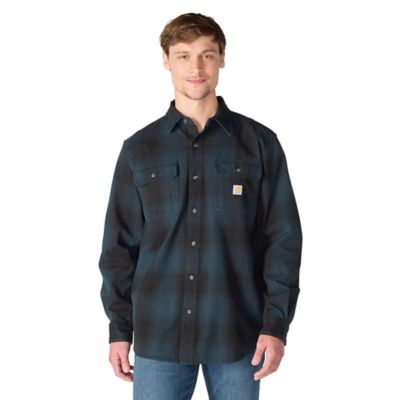
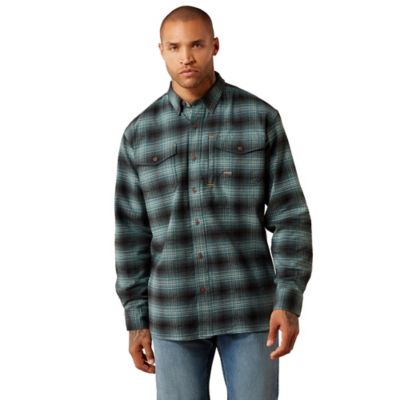
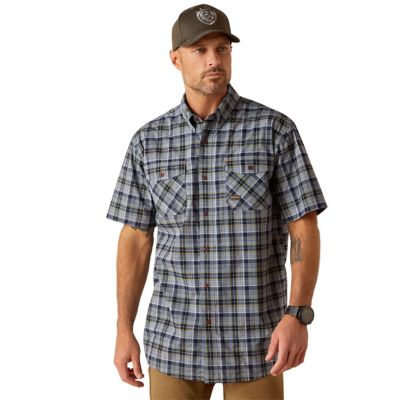
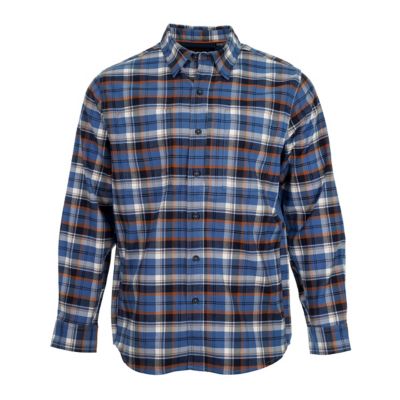
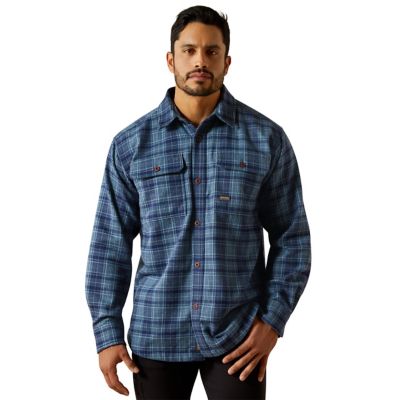
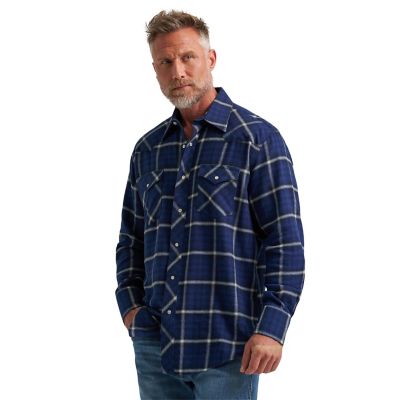
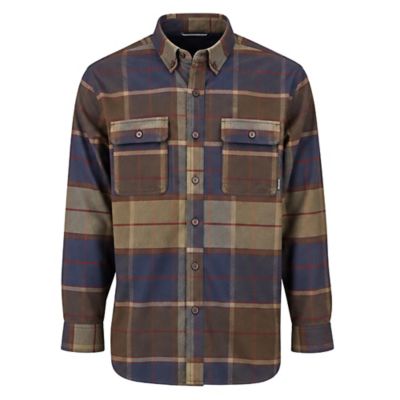
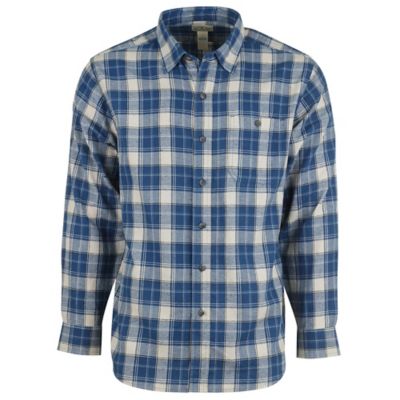
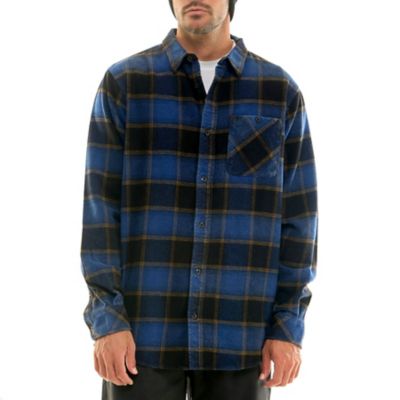
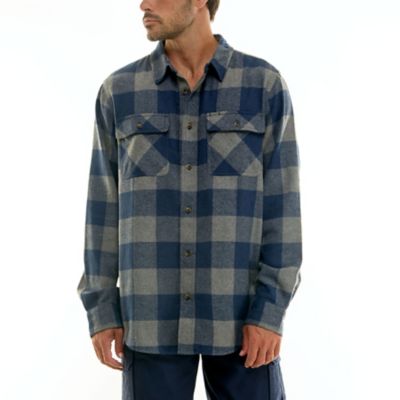
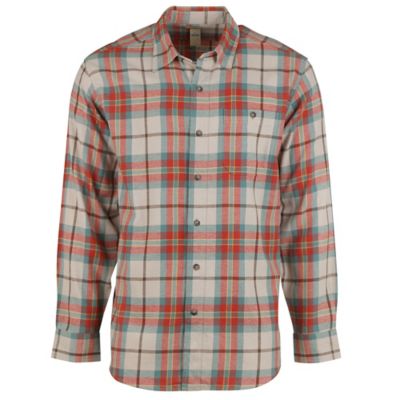
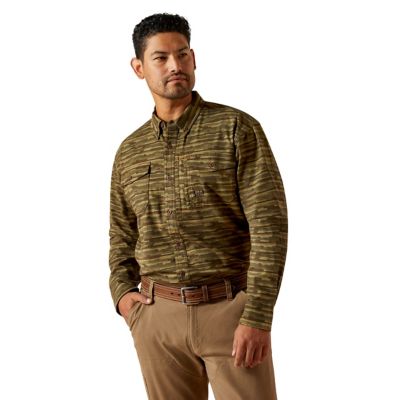
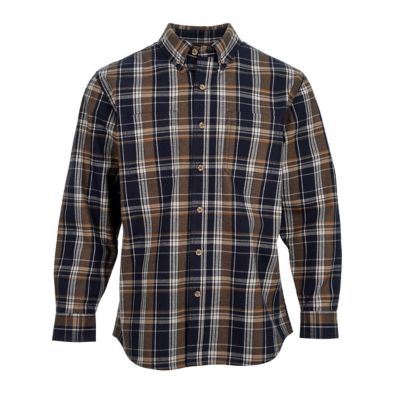
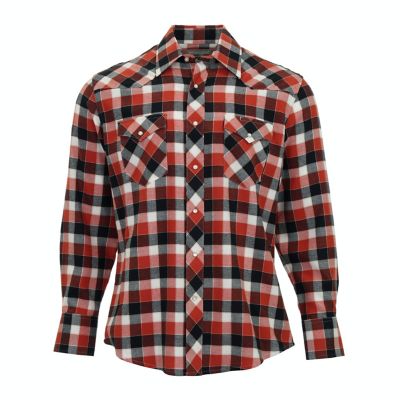
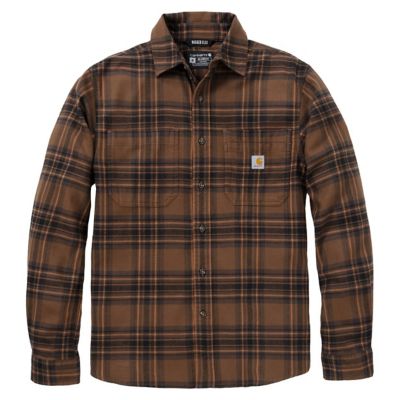
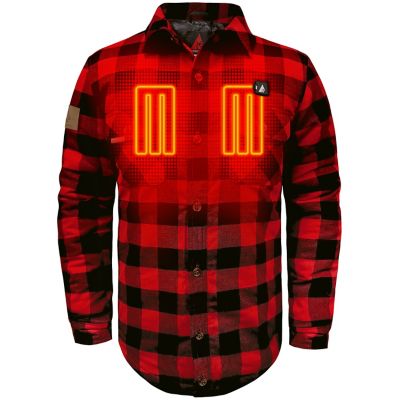
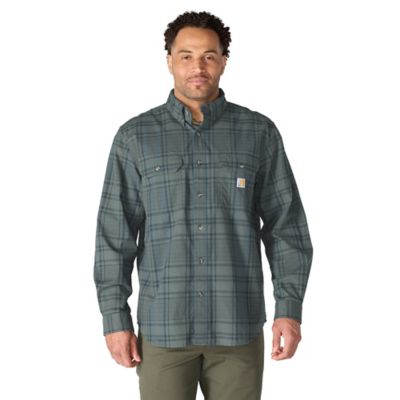
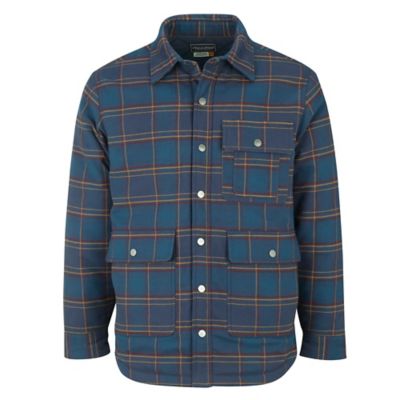
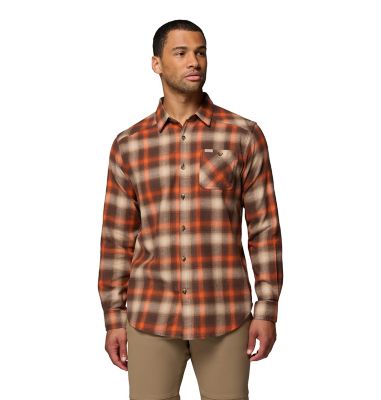
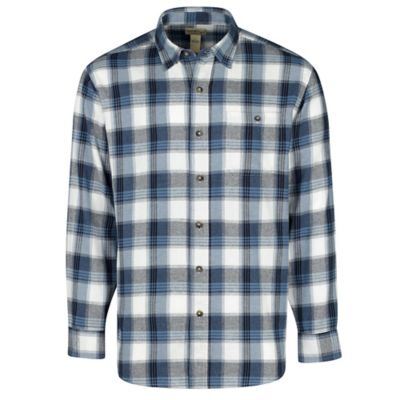
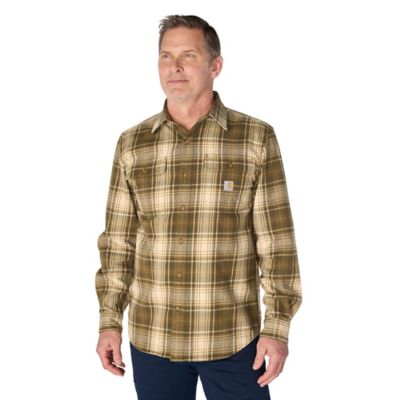
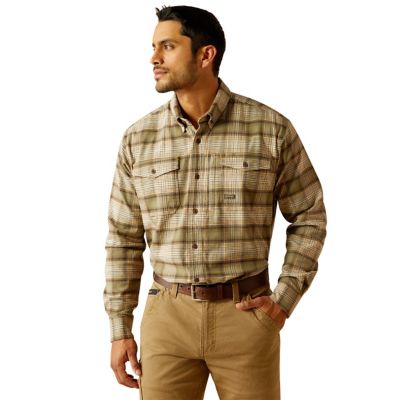
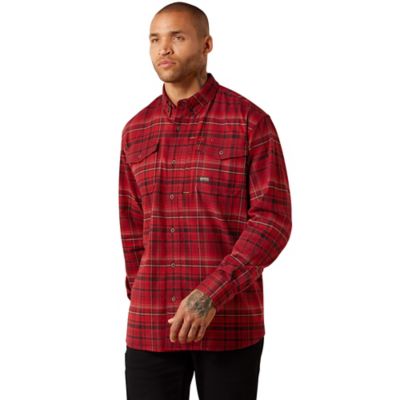
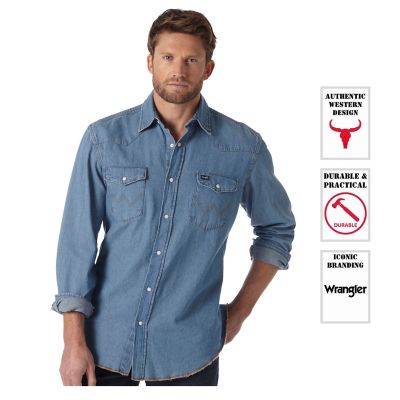
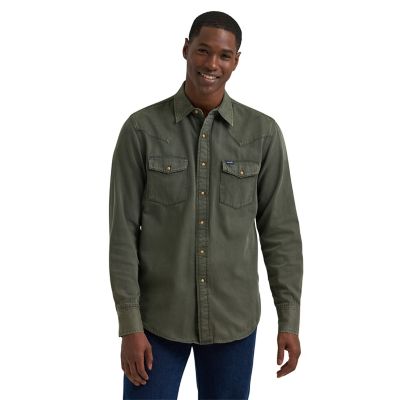
Men’s blue flannel shirts bring an easygoing look to daily chores, time in the shop, and trips into town, with a fabric feel that stands apart from a plain woven work shirt. Flannel describes the fabric rather than the pattern: it is typically woven and often brushed on one or both sides to raise a soft surface. That means plaid and flannel are not the same thing, even though checks are a familiar part of the look. A blue flannel can lean toward a deep navy check, a softer medium blue, or a bold combination of blue with white, gray, black, or brown. Larger checks make a stronger statement, while smaller patterns tend to blend easily with everyday work clothes. A mostly blue pattern also gives a shirt plenty of room to pair with denim without making the whole outfit feel matched from head to toe. Dark blue alongside tan canvas pants has a different feel from light blue over dark jeans, but both combinations fit naturally into a country wardrobe. Fabric composition and weight matter as much as color. Cotton flannel is familiar for its soft feel and absorbency, while cotton blends may offer different levels of shape retention, drying time, and wrinkle resistance depending on their fiber content. Brushing can vary, too, from a lightly softened finish to a more pronounced fuzzy surface. A lighter fabric generally tucks with less bunching and sits neatly under a jacket. A heavier fabric has more body and can work well worn open over a T-shirt. Neither weight tells the whole story about how a shirt will wear; the weave, yarn, seams, and care all play a part. For a shirt that moves between the feed room and the supper table, comfortable fabric, an easy fit, and a blue pattern that suits the rest of the closet go a long way.
Fit makes a noticeable difference in how a men’s blue flannel shirt feels through a full day. Slim cuts sit closer through the chest and waist, giving the shirt a neater outline with less extra fabric around the middle. Traditional fits generally leave a little more breathing room, while relaxed cuts allow additional space for movement and a layer underneath. Those labels can vary between shirts, so chest measurements, shoulder width, and sleeve length say more than the fit name alone. Shoulder seams should sit comfortably without pulling when reaching forward, and the button placket should lie flat rather than spread across the chest. Someone stacking feed bags or reaching across a workbench needs room through the upper back and arms, not just extra fabric at the waist. Sleeve length matters when bending an elbow, and adjustable cuffs can help keep the wrist opening from feeling too loose or too snug. Tall cuts add length through the body and sleeves, which can make a difference for men whose shirts tend to pull free when they bend. A longer hem generally stays tucked more easily, while a shorter hem can look less bulky worn untucked. Shirt construction deserves a close look as well. Even stitching, firmly attached buttons, and well-finished seams help a flannel stand up to repeated wear and washing. Reinforcement at stress points can be useful where movement puts extra strain on the fabric. Chest pockets bring a familiar work-shirt look and a handy place for a small notepad, though pocket size and closure style affect what stays put when bending over. A button-down collar keeps its points in place, while a plain point collar gives a more laid-back finish. These details shape whether a shirt feels right for chores, an afternoon at the fairgrounds, or a casual meal out, without requiring a whole change of clothes between stops.
Keeping blue flannel shirts looking good starts with the care label, since fiber content, fabric finishes, and construction can call for different washing and drying settings. Cotton-rich fabrics may shrink under high heat, and a shirt that fits well through the shoulders can feel quite different after an overly hot drying cycle. Washing with similar colors helps limit color transfer, particularly with deeper blues. Turning the shirt inside out can reduce rubbing against the brushed surface, and emptying the pockets keeps a forgotten receipt or bit of debris from going through the wash. A small stain from lunch or a day’s chores is easier to address before it has been through the dryer; the fabric’s care directions should guide the choice of stain treatment. Taking the shirt out promptly and smoothing the collar, cuffs, and placket can cut down on stubborn creases. If ironing is appropriate, the label’s setting matters, especially with blended fabrics. Some surface fuzz is part of flannel’s feel, but repeated abrasion can also lead to pilling, so gentle handling helps preserve that soft finish. Checking a loose button or an opening seam early gives a small repair a chance before it becomes a bigger problem. Beyond everyday wear, men’s blue flannel shirts make thoughtful birthday or Father’s Day gifts for dads, brothers, husbands, and friends who already reach for practical, casual clothes. Matching the recipient’s usual fit and preferred fabric weight matters more than guessing from appearance alone. A familiar blue shade is easy to work into a closet full of jeans, work pants, and plain tees. For family pictures or a get-together, coordinating with
Boys' Button Down Shirts lets younger family members share a similar look without everyone wearing the same pattern. Whether buttoned up and tucked in or worn open over a tee, blue flannel has a straightforward place in a man’s everyday rotation.