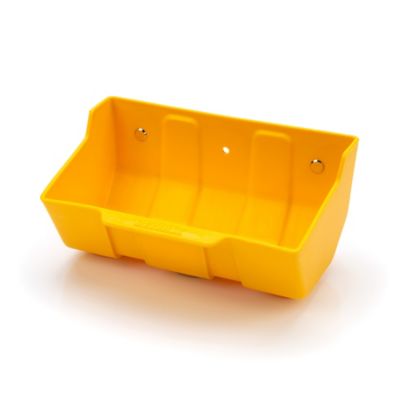
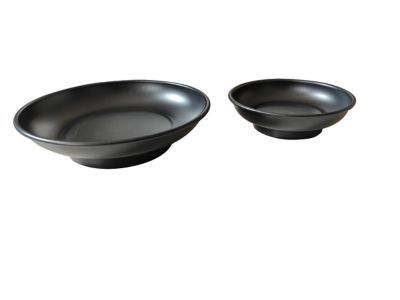
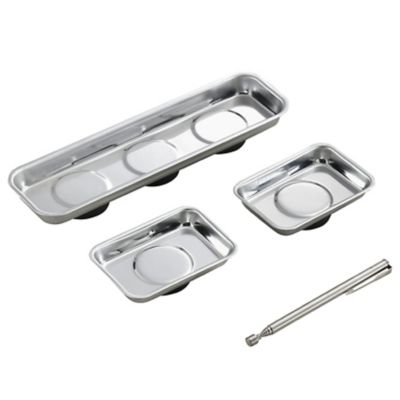
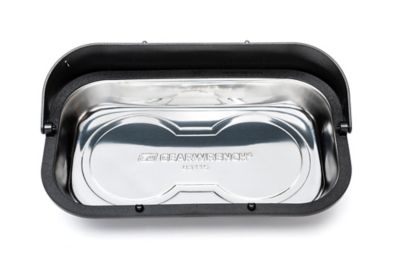
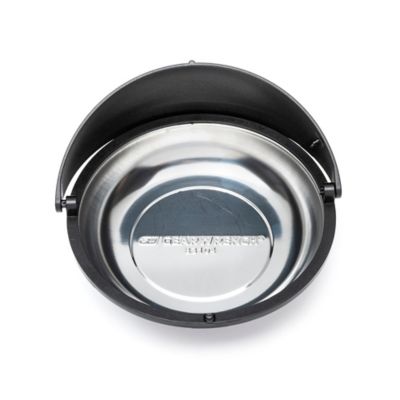
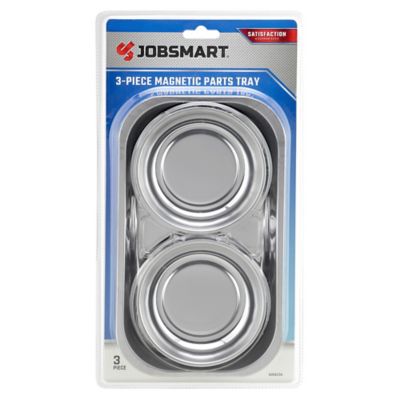
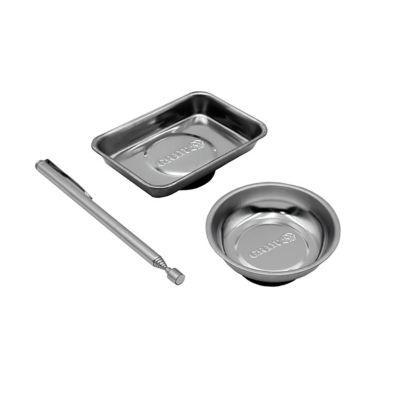
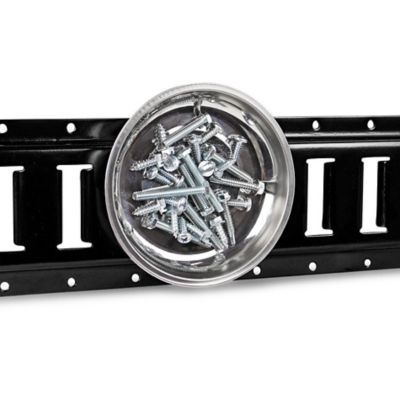
Magnetic parts trays are shallow containers with built-in magnets that help keep steel screws, nuts, bolts, washers and other small ferrous parts together during maintenance and repairs. Many designs also attach to a suitable steel surface, putting loose hardware within reach instead of scattered across a workbench or rolling underneath a truck. That simple setup comes in handy when a mower cover comes off, a tractor panel needs attention or a piece of shop equipment has several fasteners standing between the job and the finish line. The magnet attracts iron and many common steels, but it will not hold aluminum, brass, copper or every type of stainless steel. A tray can still contain those nonmagnetic pieces when it sits level, though they will not stay put through magnetic pull alone. Shape and capacity make a difference in how a tray fits the work. A small round bowl takes little bench space and keeps a handful of fasteners close together, while a wider rectangular tray gives longer bolts, sockets and brackets more room. Divided layouts help separate hardware from different sections of an assembly, making it easier to tell which screws belong with which cover. Deeper sides offer more containment for mixed pieces, while a shallow profile makes small washers easier to see and pick up. The best fit depends less on filling the biggest tray and more on keeping the contents visible and manageable. A crowded pile of similar-looking bolts can slow reassembly, especially when their lengths differ by only a little. For a repair involving several assemblies, separate trays can keep each group together without taking over the whole bench. Opening size matters, too: a tray should leave enough room to lift out a fastener with work gloves on rather than pinching around a tight rim. Whether the work happens beside a utility trailer, at a garage bench or near a piece of farm machinery, these trays give small parts a designated landing spot.
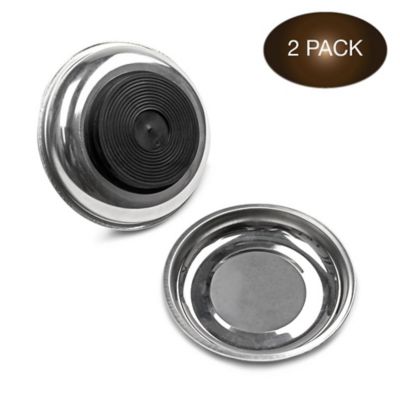
Materials and construction affect how magnetic parts trays handle everyday shop work. Stainless steel bowls are common because their smooth surfaces wipe down readily and resist corrosion, though the grade, finish and care still matter. A stainless steel bowl does not need to be magnetic itself for a magnet beneath it to attract suitable hardware. Plastic and silicone designs bring different shapes and handling characteristics, including flexible walls or collapsible sections on some styles. Those features can make storage easier, but the tray still needs a stable base and enough room for the parts involved. Exposure to oil, grease, fuel or cleaning chemicals calls for checking the material’s care directions rather than assuming every tray tolerates the same treatment. Around the base, a rubber or similar protective covering can cushion contact with a painted steel surface. It is not a guarantee against scratches, especially if metal filings or grit collect underneath. A clean mounting surface and a clean base help protect the finish of a tool cabinet, service cart or machine panel. Magnetic holding strength also depends on the surface beneath the tray. Thin sheet metal, curves, coatings and uneven contact can reduce the grip compared with a broad, flat steel surface. A tray that holds firmly on a level bench may behave differently on the side of a cabinet, particularly after several sockets or heavy bolts go into it. Designs intended for vertical mounting should match that use, and neither the tray’s grip nor the retention of its contents should be taken for granted overhead. Rounded edges, a secure magnet housing and an easy-to-grasp rim are worth considering for repeated handling. After a greasy repair, wiping the bowl and removing fine metal debris from around the base keeps the tray ready for the next task. Drying it after cleaning helps limit moisture buildup, and following the care directions helps protect coatings, flexible sections and the magnet assembly.
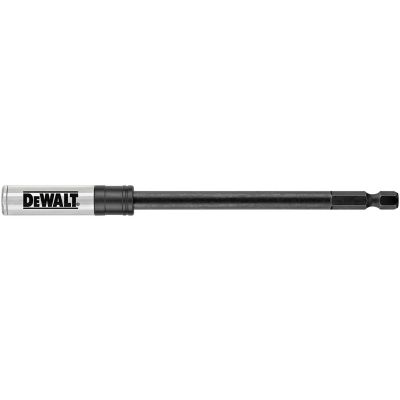
Magnetic parts trays fit naturally into a shop setup where hand tools, driver bits and loose fasteners each have their own place. A tray gathers hardware between steps, while
Magnetic Bit Holders help keep compatible driver bits in place at the tool. That distinction matters when a job calls for switching between removing screws and sorting them for reassembly: holding the bit and containing the hardware are two separate jobs. During a bench repair, a tray beside the assembly can keep mounting bolts apart from the smaller screws that secure an outer cover. Near a trailer, it can hold the nuts and washers removed from a bracket while the replacement hardware stays separate. For equipment with several similar panels, keeping each panel’s fasteners together cuts down on guesswork later. A tray is a temporary work area, not a substitute for labeled storage when a repair will remain apart for a while. Small containers or bags with clear labels are better suited to preserving the connection between parts and their location over a longer stretch. Mechanics, farm equipment owners, maintenance crews and folks who handle repairs around the property can all find a place for a magnetic tray among their everyday tools. It can also make a practical gift for someone setting up a garage workspace or spending more time maintaining their own equipment, particularly when its size suits the space they have. Safe placement remains part of the setup. Strong magnets belong away from magnet-sensitive equipment and magnetic-stripe cards, and anyone with a pacemaker or another implanted medical device should follow the device manufacturer’s separation guidance. Loose fasteners also need to stay out of reach of children and animals. Before moving a tray, checking its contents and securing anything that could spill is worth the moment it takes. With the right shape, suitable materials and a sensible spot beside the work, a magnetic parts tray helps keep the little pieces from becoming the biggest interruption.