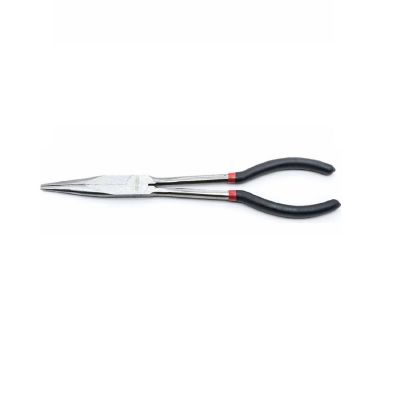
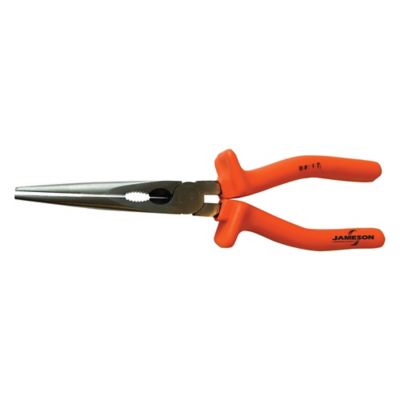
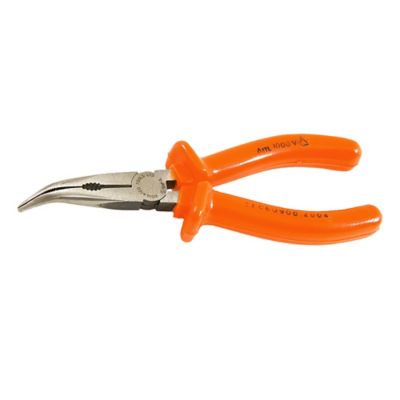
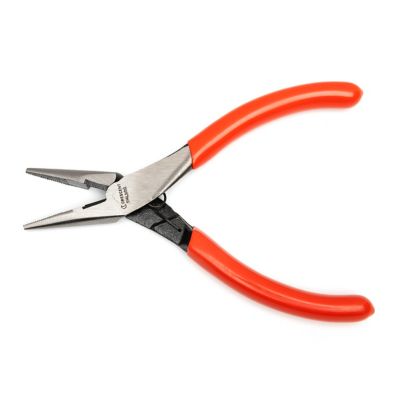
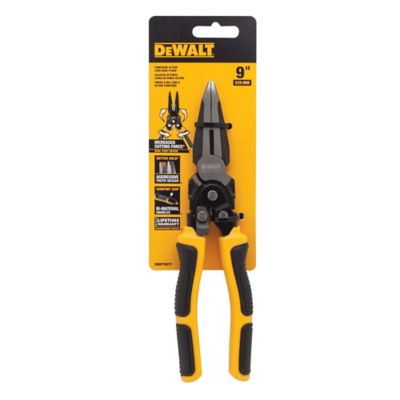
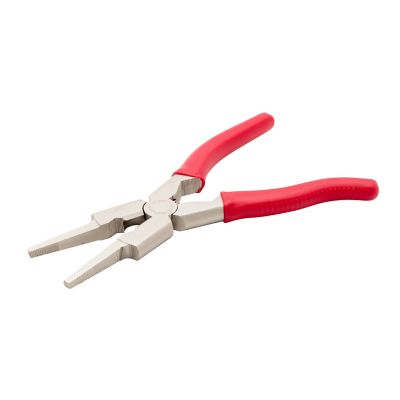
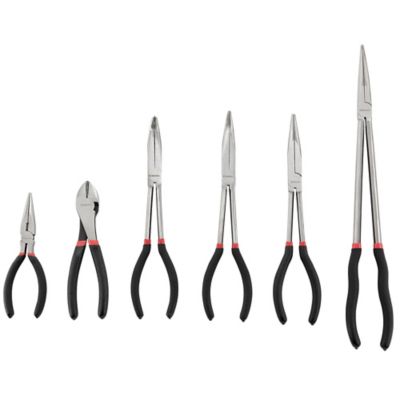
Long nose pliers are hand tools with narrow, tapered jaws that reach into confined spaces to grip small parts, bend wire, and hold pieces steady. Often called needle-nose pliers, they handle the fiddly work that wider jaws can crowd out, whether that means guiding a cotter pin through a small hole, forming a loop in wire, or retrieving a dropped washer from behind a bracket. Their shape makes them a practical addition to a farm shop, garage, household toolbox, or equipment maintenance kit. Straight jaws offer a direct approach to a part, while bent-nose jaws can reach around an obstruction and help keep your hand out of your line of sight. Extra-long designs extend farther into recessed areas, though a longer tool also needs enough room for its handles to open. Overall length and jaw length are different measurements, so both matter when matching pliers to the work. A compact pair can feel easier to control for small wire loops and close bench work, while a longer pair can help with a clip tucked behind a panel. Serrations inside the jaws give small objects more bite, but those teeth can leave marks on soft metal or finished surfaces. Smooth-jaw styles are worth considering when protecting the surface matters more than getting a firm bite. Some long nose pliers also include cutting edges near the pivot for wire, making it possible to grip, shape, and trim with one tool. Cutting capacity depends on the design and the wire material, not simply how large the pliers look. A cutter meant for soft copper wire should not be treated as a cutter for hardened steel wire. For everyday repairs, the best match comes down to the part being handled, the space around it, and how much gripping or cutting force the task calls for.
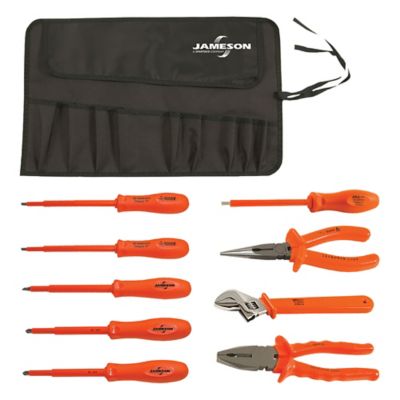
Steel construction gives long nose pliers the strength needed for repeated gripping and bending, but the steel type, heat treatment, and jaw shape all affect how the tool performs. Forged steel and alloy steel are common materials, with hardened gripping surfaces or cutting edges on some designs to help resist wear. Finishes such as plating or black oxide can help protect the metal, though no finish replaces sensible care. Jaw alignment deserves a close look: tips that meet evenly make it easier to catch a fine wire end or hold a tiny fastener without having it slip sideways. The pivot should move smoothly without excessive side-to-side play, and the jaws should open far enough for the intended work without forcing your hand into an awkward stretch. Handle fit matters just as much as reach, especially during repeated tasks such as bending several wire ends or positioning clips along an assembly. Slim dipped handles take up less room in a crowded pouch, while thicker molded grips may feel more comfortable when a job involves repeated squeezing. A grip that fits a bare hand well may feel different with work gloves, so consider both handle spacing and the room available around the repair. Spring-loaded handles reopen after each squeeze and can ease repetitive handling, although they may not suit every storage setup or personal preference. Cushion grips are not proof of electrical protection. Electrical insulation requires a specific rating and markings, and ordinary long nose pliers belong on de-energized equipment when electrical work is involved. Power should be disconnected and the circuit verified de-energized before handling conductors. When trimming wire, eye protection helps guard against flying ends, and the cut piece should be controlled when practical. Good hand clearance, a steady grip, and the right cutting capacity matter more than squeezing harder when a wire resists the cutters.
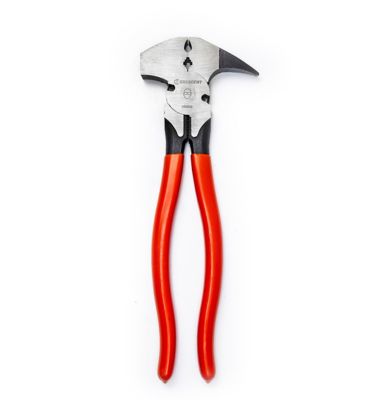
Around a working property, long nose pliers earn their place through small jobs that can otherwise stop a repair in its tracks. A narrow tip can guide a small spring onto its anchor, hold a nut where fingers cannot reach, or position a retaining clip while the other hand steadies the assembly. Mechanics may value access around brackets and linkages, while people doing household repairs may reach for them to shape wire or retrieve hardware from a narrow opening. Hobby work, model building, and small-part assembly also benefit from the control of tapered jaws. For someone setting up a first toolbox or adding to a well-stocked workbench, they make a practical gift when the jaw style and handle size suit the work that person enjoys. They are not a replacement for every gripping tool, though. Slender tips are built for access and control rather than heavy twisting, prying, or breaking loose stubborn fasteners. For jobs that call for broader jaws or greater gripping force,
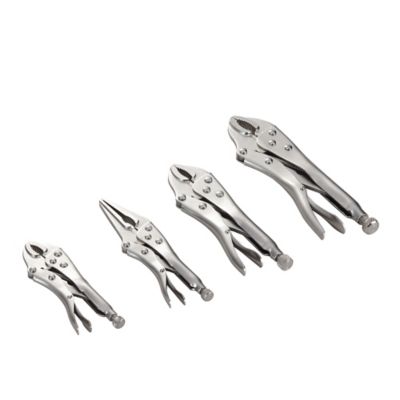
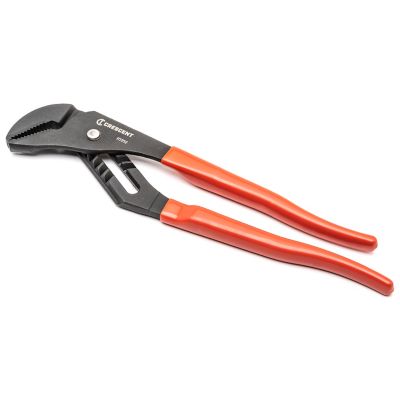
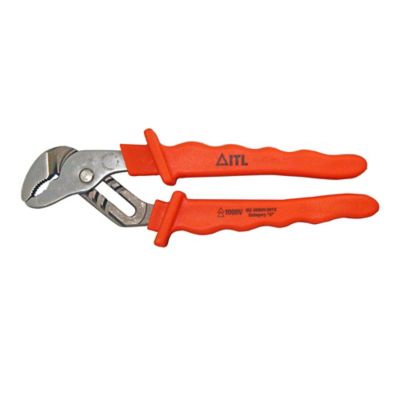
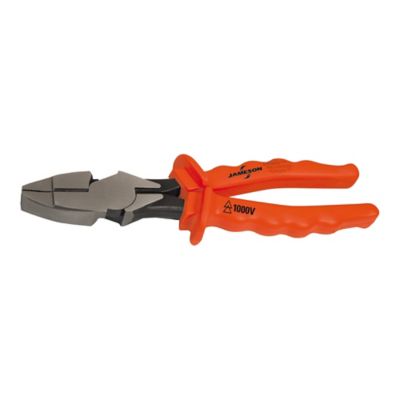
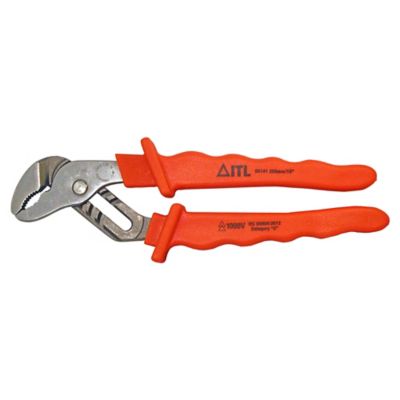
Heavy Duty Pliers are another category to consider alongside a long nose pair. Keeping the tool matched to the task helps protect the tips from bending and the pivot from strain. After a repair, wipe away grit, grease, and moisture, paying attention to the jaw teeth and the area around the joint. A small amount of suitable lubricant at the pivot, applied according to the maker’s directions, helps keep movement smooth; wipe away excess so it does not collect dirt or make the handles slippery. Store pliers in a dry drawer, pouch, or rack where the tips will not get battered by heavier tools. Check occasionally for chipped cutting edges, bent jaws, loose joints, or damaged grips, and take a compromised tool out of service. With the right reach, a comfortable handle fit, and care between jobs, long nose pliers can stay ready for the little pieces and tight corners that turn up in everyday repair work.