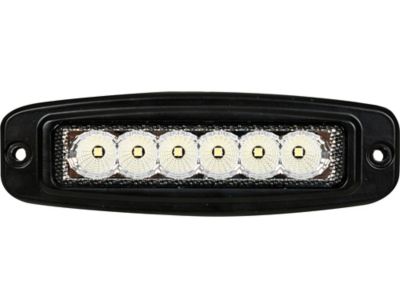
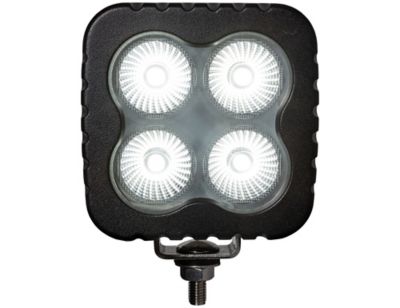
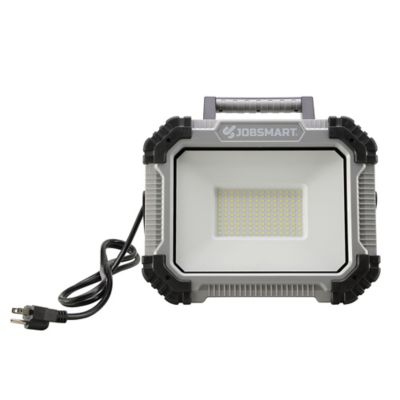
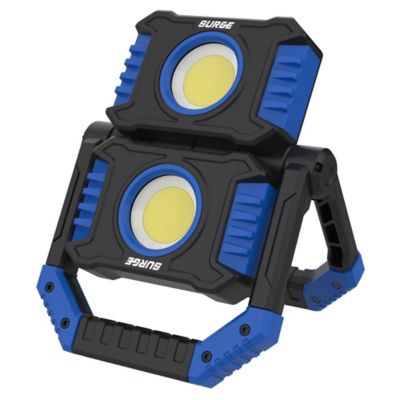
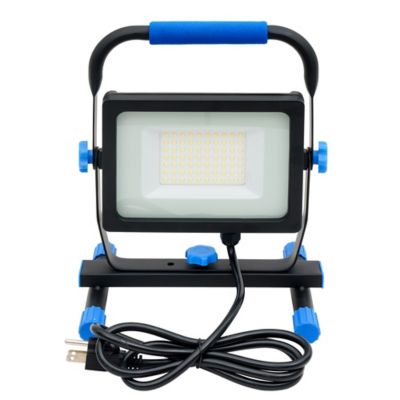
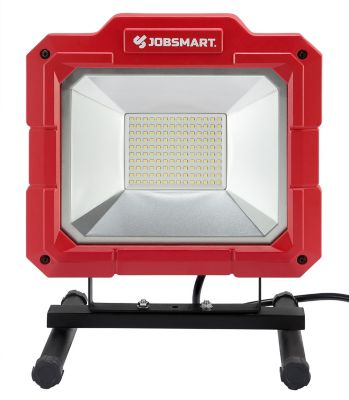
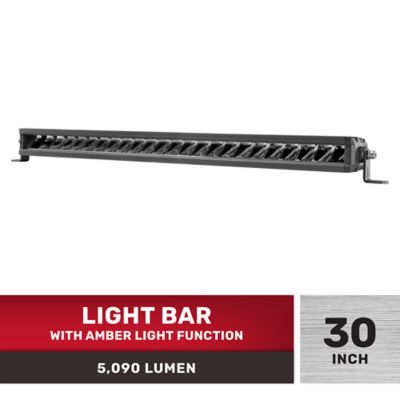
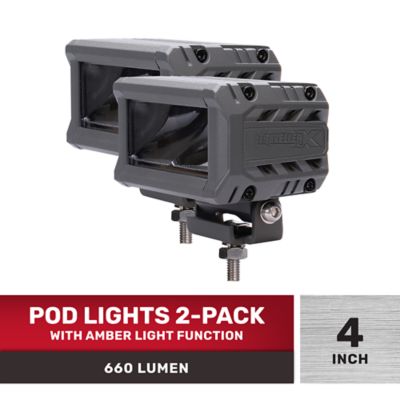
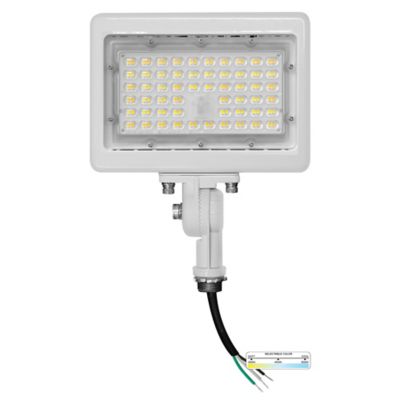
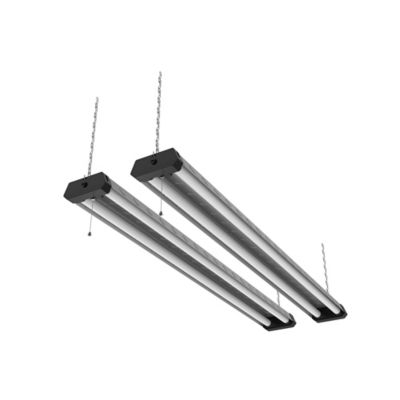
Lighting for contractors covers the working light that helps crews move through a jobsite, see their tools, and handle detailed work without fighting deep shadows. That can mean broad illumination across an unfinished building, a focused beam inside a cabinet, or overhead light above a shop floor. General contractors, electricians, plumbers, painters, and maintenance crews all need good visibility, but their setups can look quite different. A framing crew needs light across open bays and walkways, while someone connecting wires or checking a finished surface needs light close to the task. Portable LED work lights, temporary string lighting, suspended fixtures, and permanent overhead lighting serve different parts of that workload. Lumens describe total light output, while watts describe electrical power consumption; a higher wattage alone does not mean more useful light reaches the work. Beam spread, mounting height, fixture spacing, and the surfaces around the job all affect what a crew can actually see. A narrow beam puts light into a smaller area, while a wide beam spreads it across more floor or wall space. Broad, all-around illumination can help fill an open work area, but a directional light is often a better fit behind equipment or beneath a sink. More output is not always the answer when glare bounces off sheet metal or a bright fixture sits directly in someone’s line of sight. Adjustable heads, diffusing lenses, and thoughtful placement help put the light where it belongs. Color temperature also changes the appearance of a workspace, with neutral-to-cool white light commonly selected for construction and maintenance tasks. Color rendering matters when separating wire colors, matching paint, or checking wood finishes. The color rendering index, or CRI, describes how faithfully a light source shows colors compared with a reference source. Higher CRI ratings can be helpful for color-sensitive work, though brightness, coverage, and glare control still matter just as much to the overall setup.
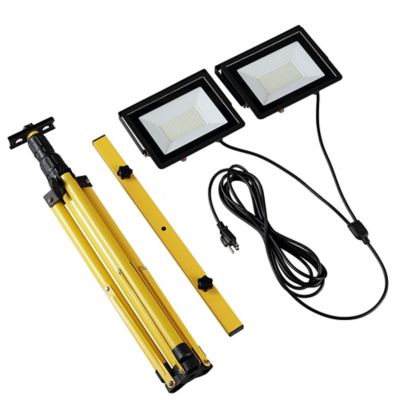
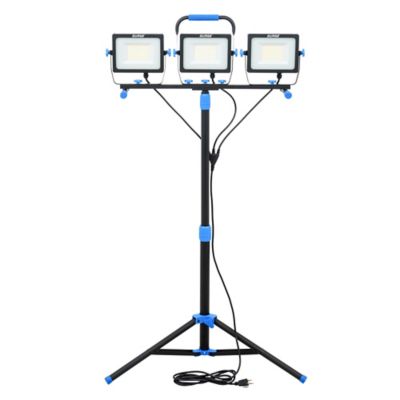
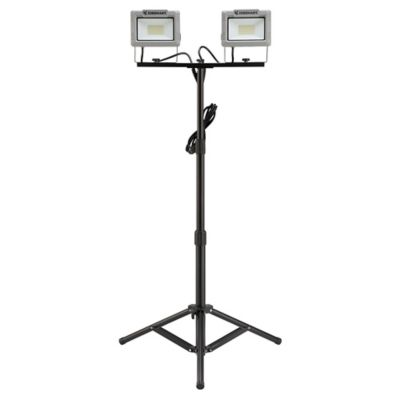
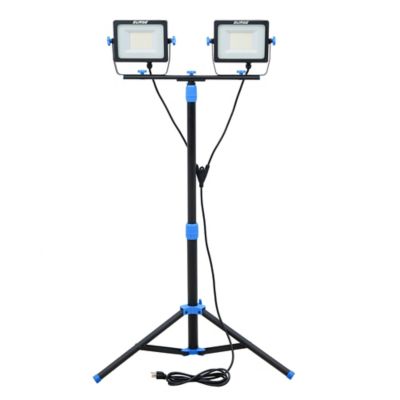
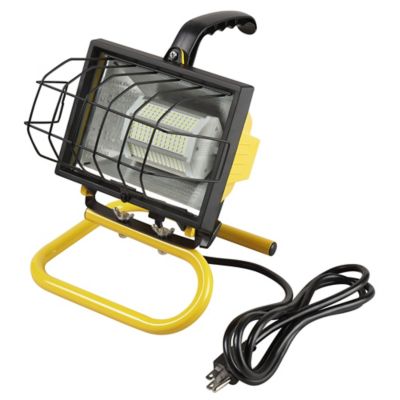
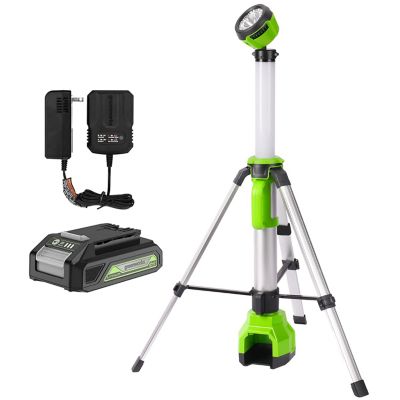
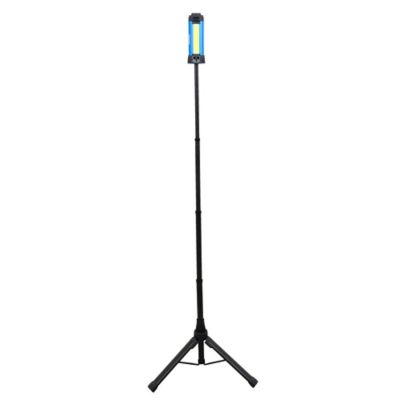
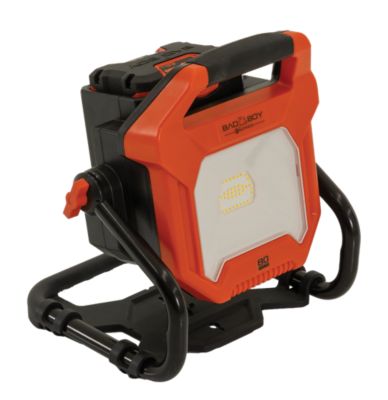
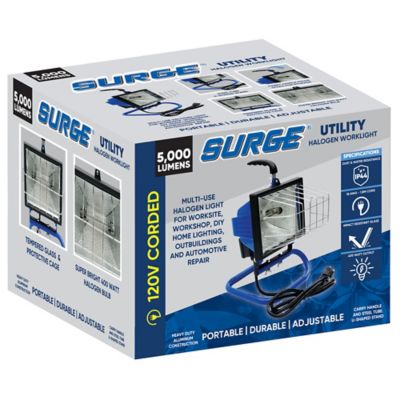
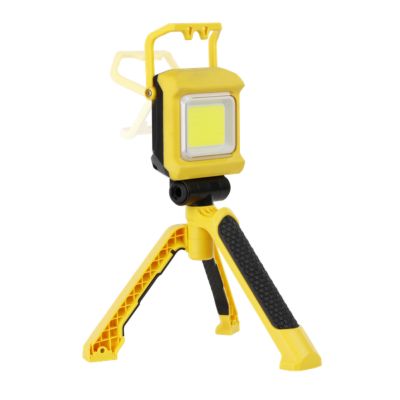
Portable jobsite lighting has to fit the way a crew actually works: carrying equipment from the truck, setting up around other trades, and moving again when the job shifts to the next room. Cast-aluminum housings, impact-resistant lenses, protective guards, and reinforced frames are construction features worth comparing for those everyday knocks. Housing material is only part of the picture, though. Hinges, adjustment knobs, handles, cord connections, and mounting hardware take plenty of handling, and their design affects how easily a light travels and stays positioned. A wide tripod stance helps support elevated lights, while a compact base can fit into tighter work areas. Either setup needs a firm, level surface and enough clearance that passing workers will not catch a boot or tool bag on it. Hook-mounted and hanging lights keep floor space open when the structure and mounting hardware can support them as directed. Cordless lighting makes sense where outlets are out of reach or cords would cross a busy path. Battery platform compatibility, charging arrangements, brightness settings, and runtime all affect how well that setup fits the workday. Runtime figures also depend on the battery and operating mode, so full-output operation may be shorter than operation at a lower setting. Plug-in lighting supports longer sessions where suitable power is present, but cord length, circuit capacity, and permitted fixture connections need attention. LED lighting generally draws less power than halogen lighting with comparable light output, which can ease electrical demand on temporary power systems. Electrical ratings still govern the complete setup, including cords and connected fixtures. Dust and moisture protection deserve a close look around masonry work, wash areas, and other demanding spaces. An ingress protection rating describes resistance to solids and water under defined test conditions; it does not replace the electrical listing or location rating required for the installation. Handles and guards also do not make a fixture suitable for every environment. Matching the equipment’s stated ratings to the work area is more useful than judging it by a heavy-looking housing alone.
Permanent contractor lighting serves a different purpose from a lamp that follows a toolbox from room to room. Shop bays, equipment sheds, storage buildings, and commercial workspaces need a layout that supports routine movement as well as close work. High-bay lighting suits taller mounting locations when its output and light distribution match the space, while lower ceilings call for fixtures designed to spread light at shorter distances. Ceiling height, shelving, partitions, and parked equipment can all change the result. A bright overhead fixture may light the center aisle well and still leave the underside of a workbench in shadow. Combining general lighting with task lighting gives mechanics, fabricators, and maintenance crews more control over those hard-to-see spots. For bench work and ongoing equipment maintenance,
lighting for workshops covers closely related needs, including visibility around tools, parts, and repair surfaces. Lighting plans often consider illuminance, measured in foot-candles or lux, rather than total fixture lumens alone. That measurement describes light reaching a surface, making it useful when comparing coverage at a bench, walkway, or inspection area. Fixture placement also needs to account for shadows cast by the person doing the work; light directly behind someone can leave their hands working in the dark. Controls can help divide larger spaces into practical work zones, provided switches, dimmers, sensors, and fixtures are compatible. Care is straightforward but important for both portable and installed lighting. Dust buildup on lenses reduces the light reaching the job, and damaged cords, loose mounts, or cracked housings call for attention before further operation. Cleaning should follow the manufacturer’s directions, with power disconnected and the fixture allowed to cool. Keeping lenses protected during transport and securing loose cords helps equipment arrive ready for the next job. The right contractor lighting fits the space, the power supply, and the work itself, whether that means checking a pipe connection in a tight crawl space or keeping a whole crew moving through an open building.