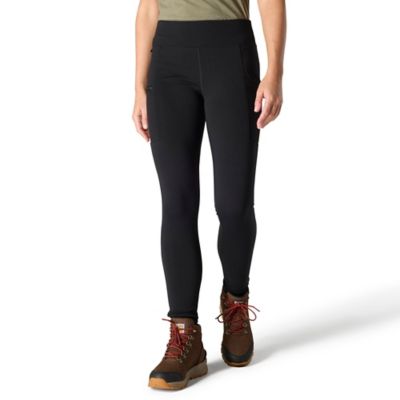
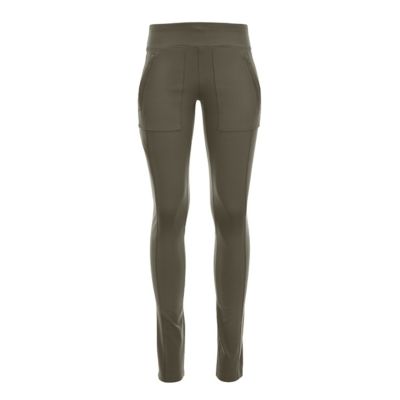
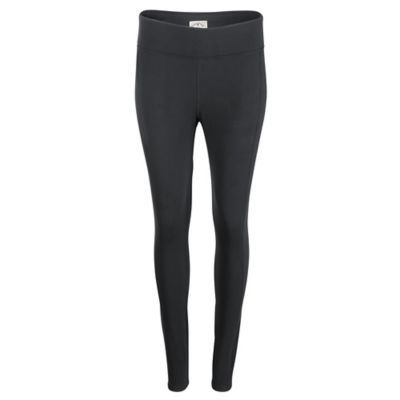
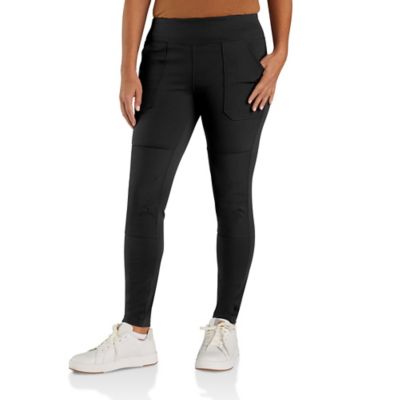
Women's leggings bring a close, flexible fit to everyday dressing, whether the day calls for a walk down the lane, a trip into town, time on the exercise mat, or a quiet evening at home. The best match depends on the activity, the feel of the fabric, and how the waistband sits through bending, reaching, and sitting. Cotton-rich leggings tend to have a soft, familiar feel that suits casual wear and lounging, while polyester or nylon blends often work well for exercise, especially when the fabric is designed to move moisture away from the skin. Spandex, also called elastane, adds stretch; the way it works with the other fibers and the knit construction affects how readily the fabric moves and returns to shape. A higher spandex percentage alone does not guarantee a better fit or more coverage. Four-way stretch allows movement both across and along the fabric, a helpful feature for squatting to fill a pet bowl or stretching after a long drive. For yoga and lounging, a smooth feel, an easy waistband, and seams that do not press into the skin often matter more than a firm hold. For running and other vigorous exercise, moisture management, a secure waist, and a closer, more supportive feel may take priority. Cotton can absorb and retain perspiration, so it may feel damp longer than a fabric designed to dry quickly. Fabric weight matters, too: a lightweight knit can feel barely there, while a more substantial knit may offer more coverage and structure. Neither thickness nor dark color alone guarantees that leggings stay opaque when stretched. For shoppers drawn to cotton's familiar feel but interested in other silhouettes,
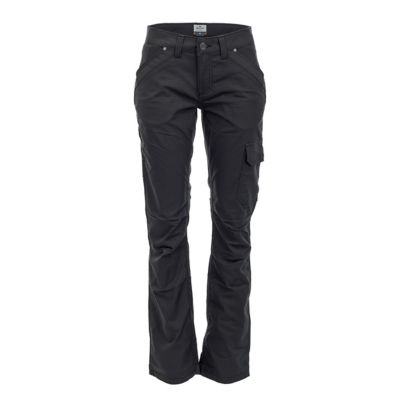
women's cotton spandex pants offer another direction for everyday dressing. Across these choices, comfort comes from the whole garment, not just one fiber or a soft first touch.
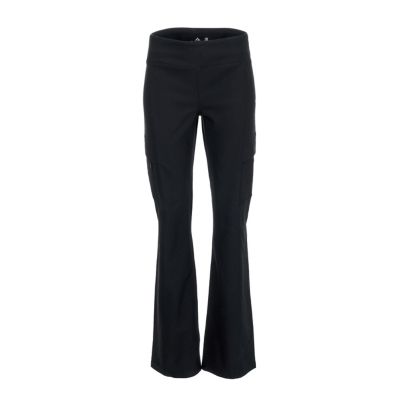
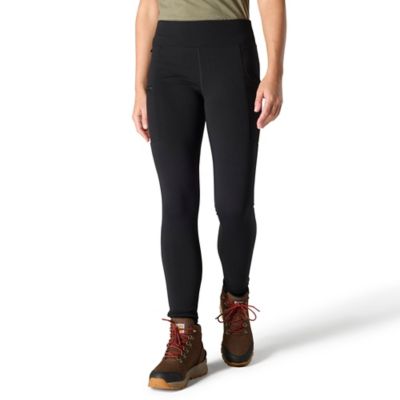
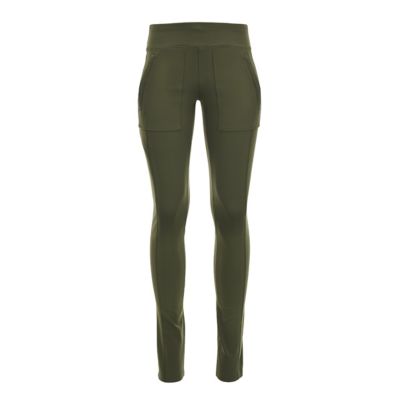
Fit gives women's leggings much of their everyday appeal, but snug should not mean pinching, pulling, or constantly tugging the waist back into place. High-rise leggings sit farther up the torso and can provide more coverage when bending, while mid-rise styles sit lower and may feel less restrictive to someone who prefers less fabric around the middle. The exact placement depends on torso length as well as the garment's measurements. A broad waistband can spread pressure over a larger area, and an internal drawcord can help adjust the hold during movement. Crossover waistbands have a different shape across the front, though their comfort still depends on sizing and construction. A waistband that rolls may be too tight, too loose, or simply a poor match for the wearer's proportions. Hip, waist, and inseam measurements give a better starting point than assuming every pair fits the same way. Petite and tall proportions can affect more than hem length, including where the rise and knee area sit. Full-length leggings generally reach toward the ankle, while seven-eighths styles stop a little higher and cropped cuts end farther up the leg. Those labels are relative to height, so the stated inseam helps clarify where a hem will land. Ankle-length cuts can tuck neatly into everyday boots without excess fabric bunching around the shaft, and shorter lengths pair easily with walking shoes. Flared silhouettes offer more room below the knee for shoppers who prefer a less fitted lower leg. Coverage deserves attention in a seated position and a deep bend, not just while standing straight. Fabric that becomes noticeably sheer or pulls hard across the hips may point to a sizing or construction mismatch. Practical details round out the fit: flat seams can reduce rubbing, a gusset adds room through the crotch, and side pockets keep small essentials close. A phone pocket should hold its contents without dragging the waistband down, while a small waistband pocket may be enough for a key. Pocket depth, placement, and closure matter as much as the number of pockets.
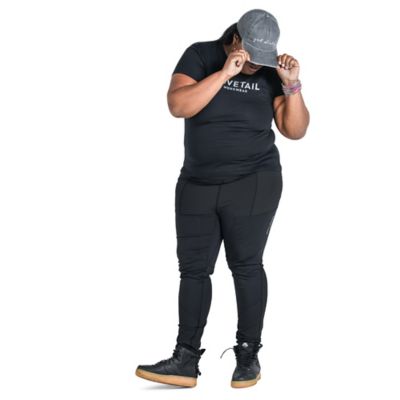
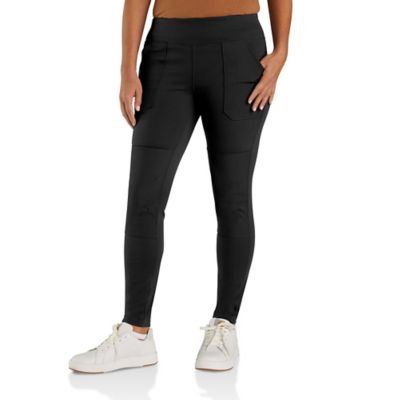
Everyday leggings earn their place by fitting into real routines without much fuss. A smooth, matte pair can work with a long T-shirt for errands, a relaxed button-front shirt for a casual visit, or a sweatshirt for walking the dog. Black women's leggings are easy to pair with different tops, while other solid colors and patterns let the outfit lean quieter or more playful. Smooth finishes may shed loose hair more readily than heavily brushed surfaces, although fabric performance varies. Around animals, rough lumber, or wire, a close fit does not make leggings protective workwear; tasks with snagging, abrasion, or machinery hazards call for clothing suited to those conditions. Even for light chores, repeated contact with rough surfaces can wear down a knit. Seams that lie flat, even stitching, and fabric that springs back after gentle stretching are useful construction details to consider. Pilling may develop where the thighs rub or where a bag rests against the hip, and a brushed, extra-soft finish can be more prone to catching lint or showing friction. Care helps preserve both the feel and the fit. The garment's care label takes priority, since fiber blends and finishes have different requirements. Turning leggings inside out and washing them with similar fabrics can limit surface rubbing; keeping them away from exposed zippers, hook-and-loop fasteners, and coarse towels can also help prevent snags. When the label permits, a gentle wash and air drying can reduce stress on stretch fibers, while excessive dryer heat can shorten their useful life. Fabric softener may interfere with some moisture-managing finishes, so it is worth checking the care directions before adding it. For gifting, leggings make the most sense when the recipient's size, preferred rise, and usual activities are familiar. Someone who enjoys long walks may appreciate secure pockets, while someone who spends evenings reading on the couch may favor a softer, less compressive feel. The right pair leaves room to move through the day without making the clothes another thing to fuss with.