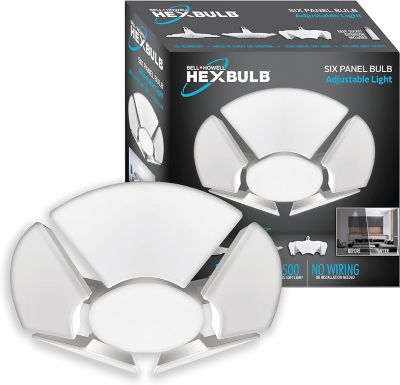
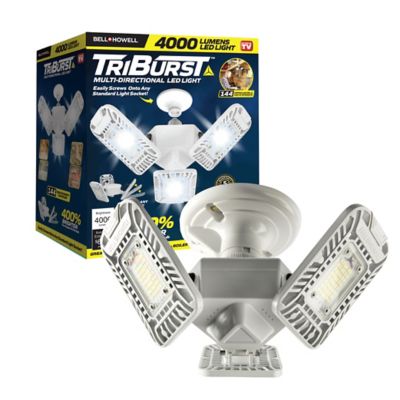
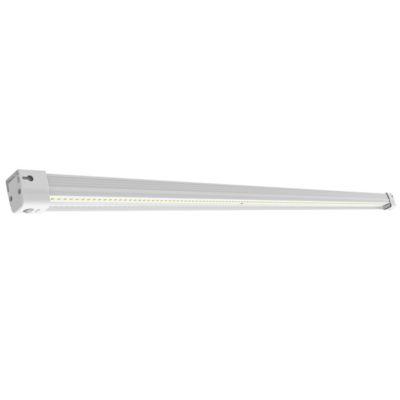
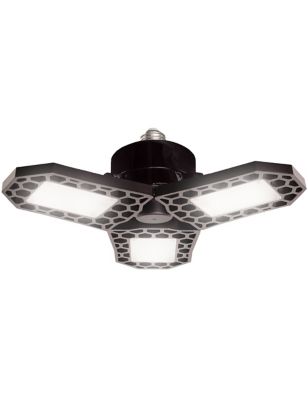
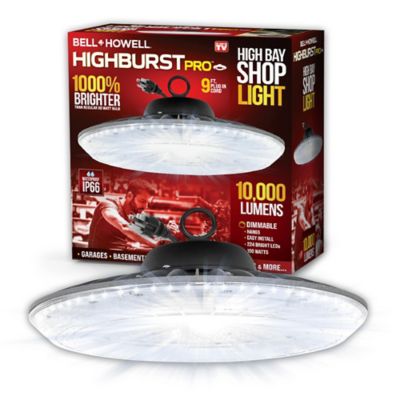
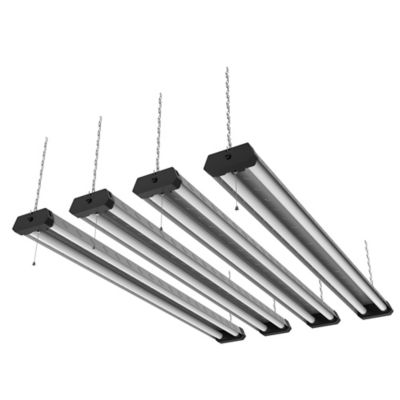
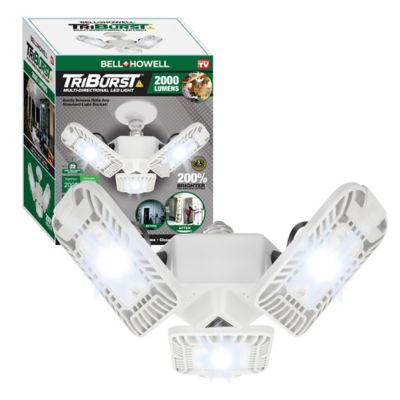
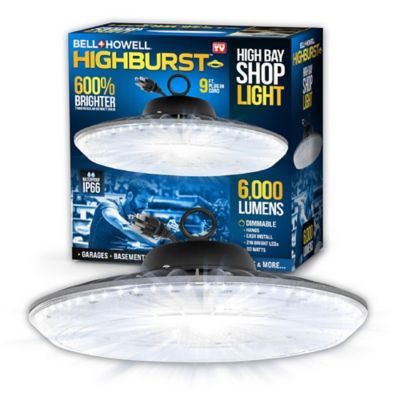
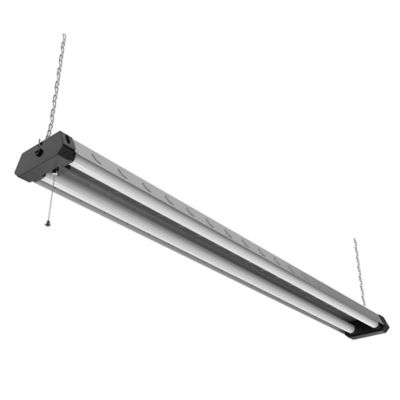
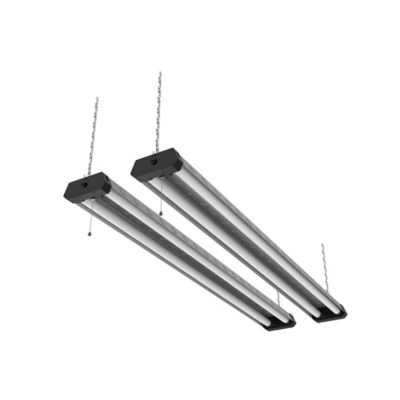
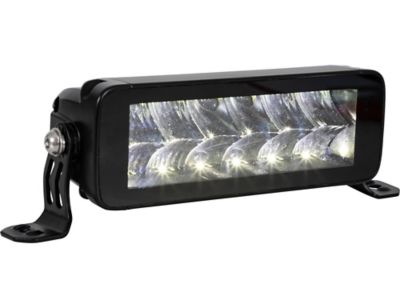
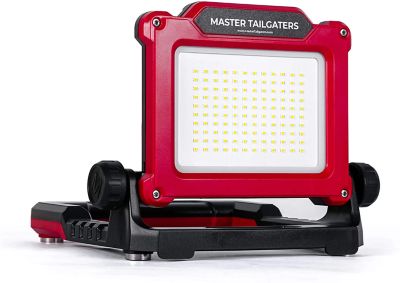
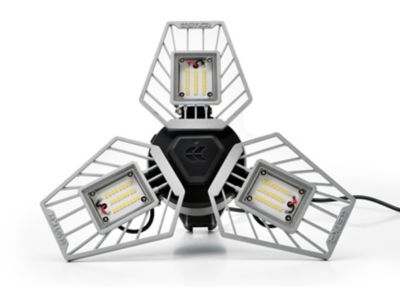
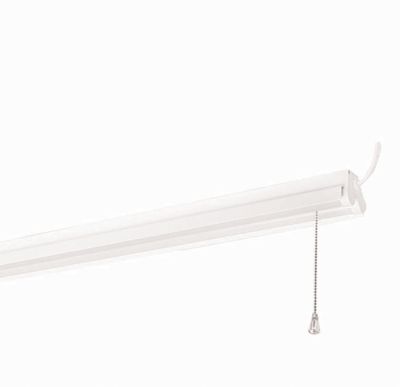
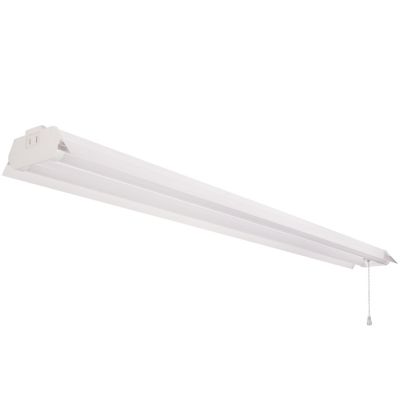
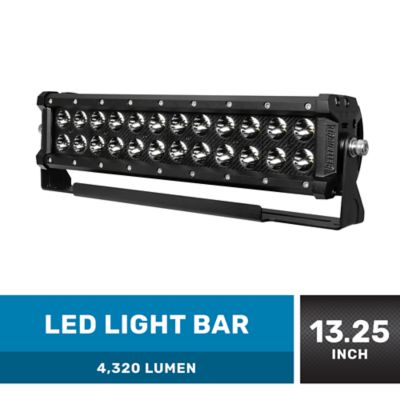
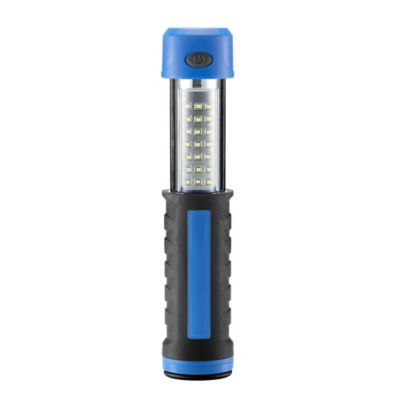
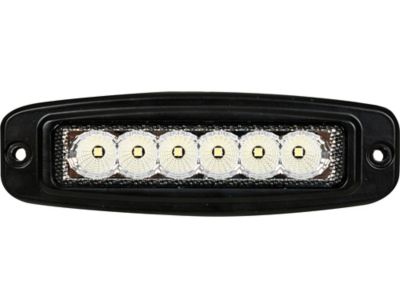
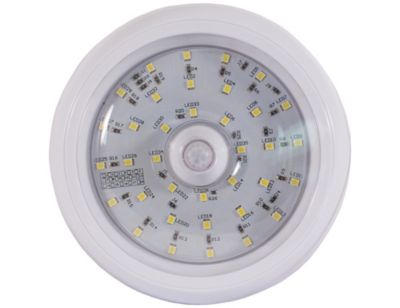
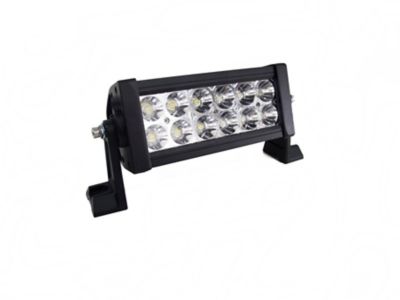
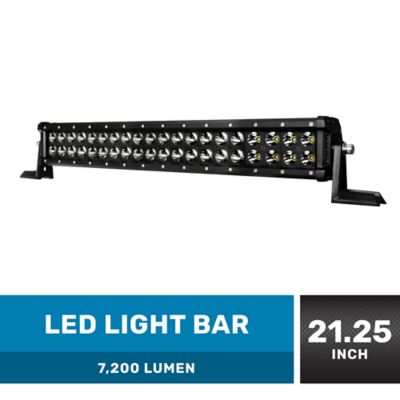
LED garage lights bring bright, energy-efficient light to parking bays, workbenches, tool storage areas, and the corners where chores tend to pile up. They make sense for more than a place to park the truck. A garage might also be where mower blades get sharpened, fishing tackle gets sorted, or a loose hinge gets fixed before supper. Good lighting helps those spaces serve their purpose without leaving the bench in shadow or making a small part hard to spot on the floor. Common styles include screw-in lights with adjustable panels, hanging or surface-mounted shop lights, linkable fixtures, and integrated LED strips or ceiling grids. Each shape suits a different space. Adjustable panels can spread light outward from a compatible ceiling socket, while long shop lights provide coverage along a bench or through a narrow bay. Linkable fixtures allow compatible lights to connect in a run, subject to the manufacturer’s connection limits. Low-profile strips sit closer to the ceiling, leaving more room around storage racks and overhead equipment. Grid layouts distribute light across a broader ceiling area, though their suitability still depends on output, spacing, and mounting requirements. For a garage that handles both parking and hands-on work, general overhead lighting and a separate task light often complement each other better than one bright fixture in the middle. The overhead light helps with walking around equipment and finding supplies; the task light puts illumination where hands and tools meet. Home mechanics, woodworkers, gardeners, and folks maintaining acreage all have different lighting needs, but the same practical aim: enough light in the right places. During the cooler months, when daylight fades before the work is done, that coverage helps keep an enclosed workspace useful. LED fixtures generally reach full brightness quickly and deliver more light per watt than incandescent lighting, though starting performance in a cold garage depends on the fixture’s operating temperature range.
Brightness, light color, and placement all affect how LED garage lighting feels once the door comes down and the work begins. Lumens measure light output, while watts measure electricity consumption; comparing lumens alongside watts gives a clearer picture than wattage alone. A large garage with high ceilings and dark walls generally needs more total light than a smaller space with a low, light-colored ceiling. Detailed bench work also calls for more concentrated illumination than parking or everyday storage. There is no single lumen total that fits every garage, because fixture height, beam spread, surface colors, and obstacles change how much light reaches the work area. A truck hood, an open cabinet door, or a deep shelf can cast a shadow even beneath a bright ceiling fixture. Lights positioned beside those obstructions, rather than directly behind the person working, can help put light back on the task. Adjustable panels offer some control over direction, while diffusers soften the appearance of individual LEDs and can make glare less bothersome. Color temperature, measured in kelvins, describes whether the light appears warmer or cooler. Around 4000K gives a neutral white appearance, while 5000K often looks crisper and more like daylight. Neither number indicates brightness. Color rendering is another separate consideration, especially for sorting wire colors, checking a paint finish, or comparing stains on wood. A higher color rendering index, or CRI, generally makes color differences easier to distinguish. For garages that double as workspaces, these details matter as much as the overall output. A bright fixture aimed into eye level can be tiring, while balanced overhead and task lighting makes the space easier to work in. Motion sensors can be handy when carrying feed pails or unloading tools, but a short shutoff timer may interrupt work at a bench. Dimming can add flexibility when supported by both the light and its controls. Garage lights are not automatically compatible with existing dimmer switches, so matching the fixture and control specifications matters.
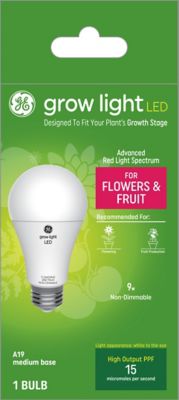
Construction and fit deserve the same attention as brightness, especially in a garage that sees dust, damp air, and temperature swings. LED garage light housings may combine metal components with plastic lenses or diffusers. Aluminum housings can help move heat away from the LEDs, while a lens shields internal components and shapes the light coming through it. Those materials alone do not establish whether a fixture belongs in a damp or dusty location; the listed environmental rating and installation instructions determine the intended setting. An enclosed, dry garage has different requirements from an open-sided equipment shed or an area exposed to splashing water. Cold-weather operation also varies, making the minimum operating temperature important in an unheated building. Physical clearance is just as practical a concern. Ceiling fixtures need room away from the garage door’s travel, tracks, opener, and overhead storage, with mounting hardware suited to the surface and the fixture’s weight. Screw-in panel lights require a matching socket and enough clearance for their panels, while plug-in shop lights need a properly located outlet and a cord route that stays clear of moving equipment. Hardwired lighting belongs on an appropriate circuit, with installation handled according to local electrical requirements and by a qualified electrician where needed. Some LEDs can interfere with a garage door opener’s radio signal, so opener compatibility is worth checking for lights near that equipment. Routine care is usually straightforward: disconnect power, let the fixture cool, and remove dust according to the manufacturer’s directions. Keeping vents and light-transmitting surfaces clear helps preserve light output and heat management. Many LED fixtures carry rated service lives of tens of thousands of hours, but heat, operating conditions, and electronics affect actual performance. Integrated fixtures and designs with replaceable lamps also differ in how they are serviced when a component fails. For a garage corner devoted to seedlings or indoor plants,
LED Grow Lights serve a different purpose, supplying plant-focused illumination rather than general workspace lighting. Matching each light to its job helps the garage function as a parking area, a working shop, and a place to keep everyday chores moving.