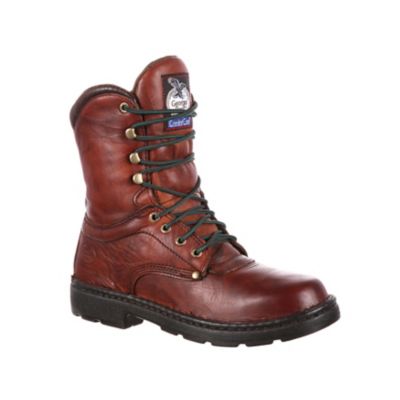
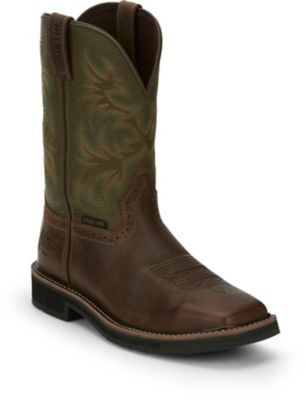
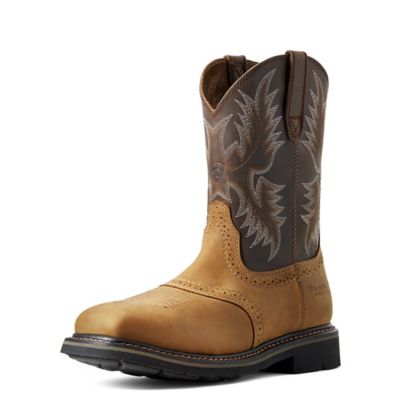
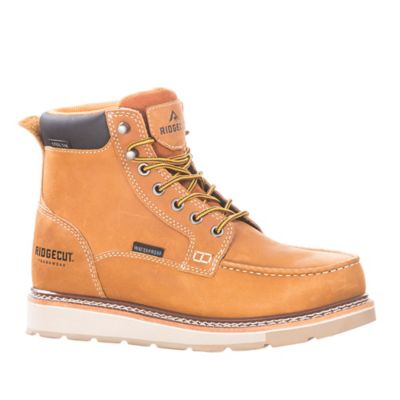
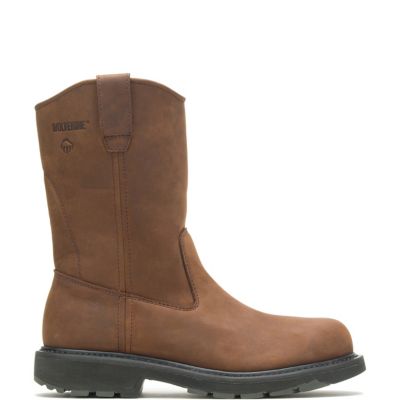
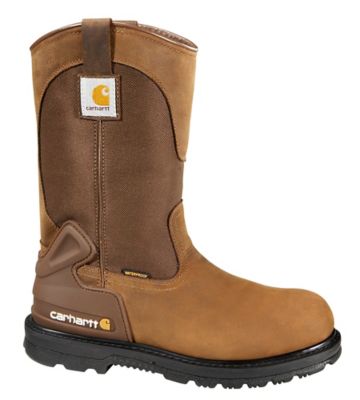
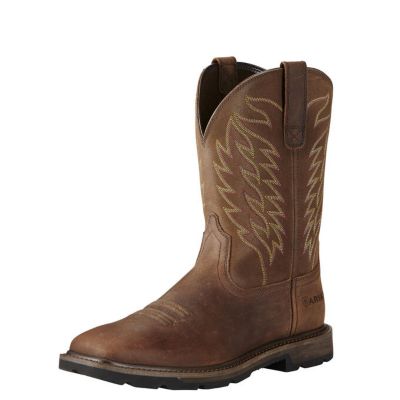
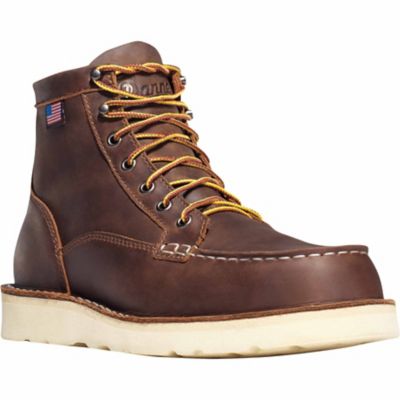
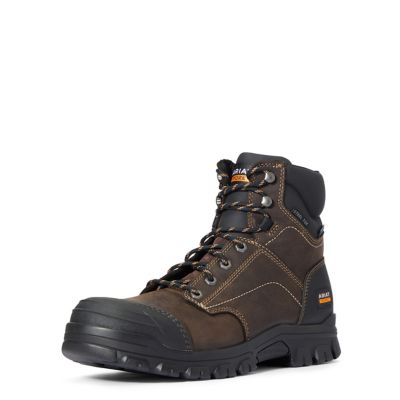
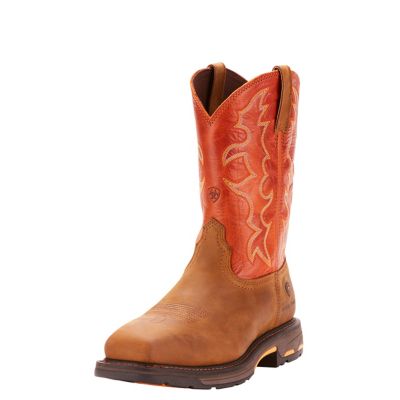
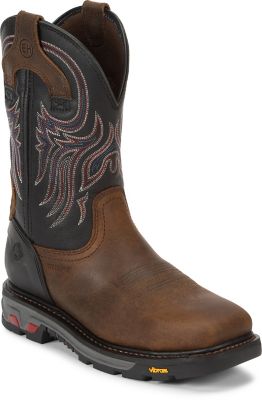
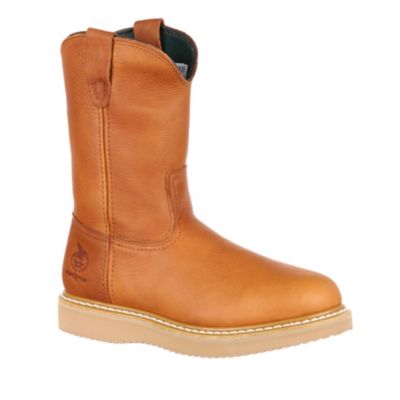
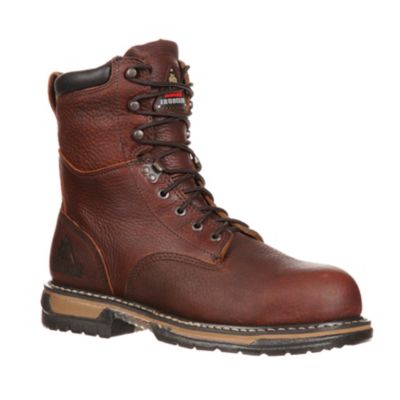
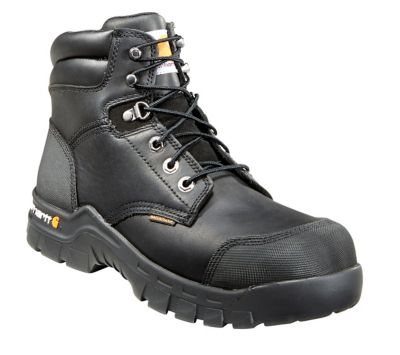
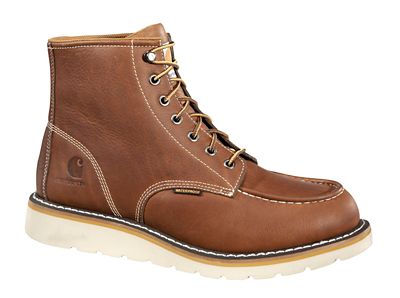
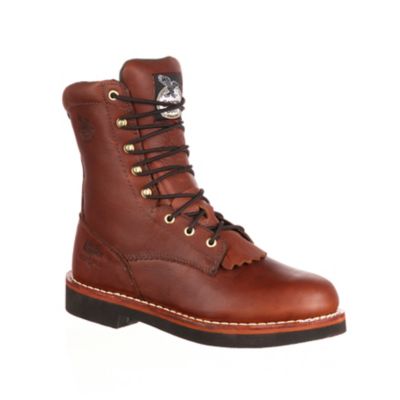
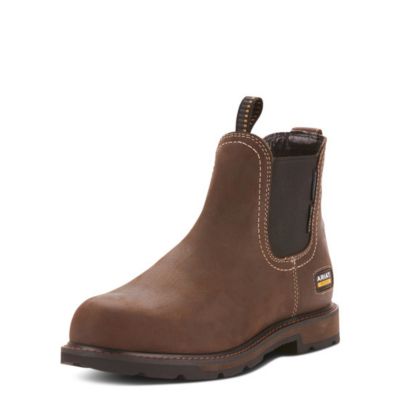
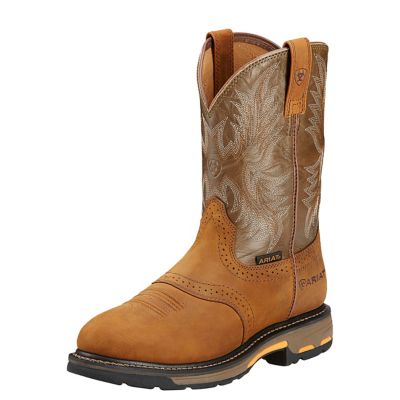
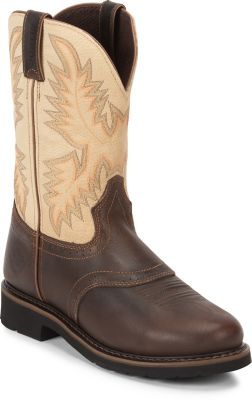
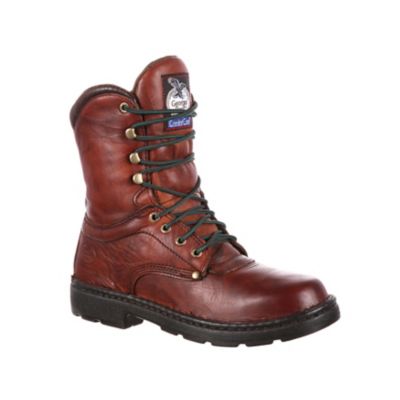
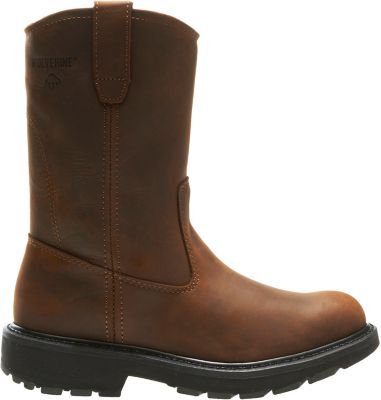
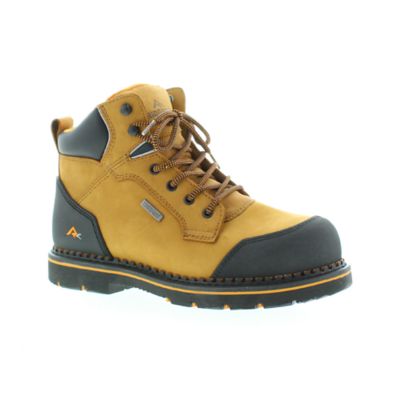
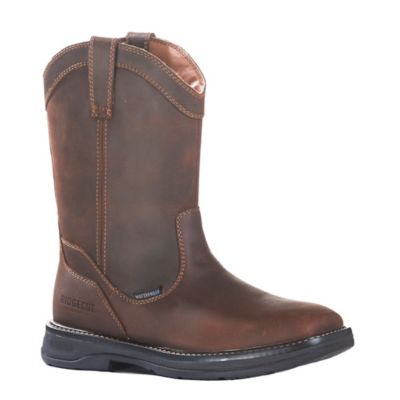
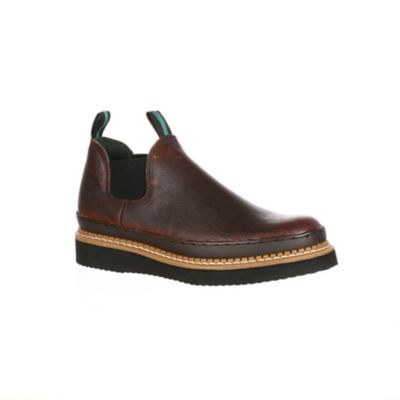
Leather work boots for men pair leather uppers with the support, traction and protection needed for long hours on the job. The right pair depends on the work: carrying feed across a barn floor puts different demands on footwear than climbing ladders, running equipment or standing at a shop bench. Full-grain leather keeps the hide’s outer surface and offers strong resistance to everyday abrasion, while its appearance develops with wear. Leather thickness, tanning and finish also affect how a boot feels, flexes and responds to care. Smooth leather generally wipes clean more easily, while roughout and nubuck have textured surfaces that call for different cleaning methods. Leather alone does not make a boot waterproof; that protection depends on construction features such as a waterproof membrane and sealed seams. For work around wash areas or frequent splashes, those details deserve a closer look. Toe protection is another important distinction. Soft-toe boots suit tasks without a protective-toe requirement, while steel, composite and alloy safety toes provide protection when the footwear meets the applicable standards for the job. Composite toes are nonmetallic, but the entire boot is not necessarily metal-free. Electrical-hazard protection, puncture resistance and metatarsal protection are separate features, not benefits that come with every safety-toe boot. Workplace requirements and footwear markings matter more than a rugged appearance. Beyond protective features, lace-up and pull-on designs offer different everyday conveniences. Laces allow adjustment across the instep and around the ankle; pull-on styles keep the upper free of laces and make getting dressed for chores straightforward. Shaft height affects lower-leg coverage and how the boot fits beneath work pants. Color is mostly a matter of preference, though scuffs and leather treatments can change its appearance over time. For a familiar look that fits easily with denim and canvas workwear,
men’s brown leather work boots offer plenty of character without taking attention away from the job.
Fit makes a difference well before the first full shift is over. Men's leather work boots should hold the heel and midfoot comfortably while leaving enough room for toes to move without pressing against the front or a safety-toe cap. Length alone does not tell the whole story: width, instep height, toe-box shape and the boot’s overall shape all influence comfort. A broad, square-looking toe is not automatically wider inside, and a thick sock cannot correct a boot that is too large. Trying boots with the same type of socks worn for work gives a more useful sense of fit. Feet can swell during a long day, so a snug fit should never mean pinching, tingling or cramped toes. Some pull-on boots allow a small amount of heel movement at first, but repeated rubbing or a heel that slides excessively points to a fit problem. Leather may soften and flex with wear, yet break-in will not create missing toe room or make a safety cap expand. Underfoot construction matters just as much. Cushioning helps soften repeated steps, while a supportive footbed and shank can help a boot feel steadier through the arch. Removable footbeds leave room for replacement insoles when the boot has enough interior space, though thicker inserts can change the fit. Outsole choice should match the surfaces underfoot. Deeper lugs can bite into loose ground, but they also carry more dirt into the truck or shop. Shallower tread is often easier to clean. Broad wedge soles spread contact across more of the ground, while defined heels may suit certain ladder or riding tasks when the footwear matches the equipment and its safety requirements. Slip-resistant soles can help with grip, but no tread prevents every slip. Oil resistance describes resistance to damage from oil exposure; it does not automatically mean the sole grips an oily floor. For someone moving between a concrete shop floor, gravel drive and feed room, those distinctions matter more than looks alone.
Construction and regular care help determine how leather work boots hold up through repeated wear. The upper, sole attachment, stitching and lining all contribute to service life, and each can wear at a different rate. Reinforced toe areas can help limit abrasion from kneeling, while heel counters help maintain shape around the back of the foot. Welted construction may allow resoling when the boot’s design and condition permit; not every welted boot is a practical candidate for repair. Cemented and direct-attach construction can offer a different balance of weight and flexibility, so the whole boot deserves consideration rather than judging by a single construction term. Care starts with getting grit out of seams, folds and the space where the upper meets the sole. A soft brush or damp cloth handles many routine cleanups, followed by a leather cleaner suited to the finish when more attention is needed. Mud and manure should not sit on the leather longer than necessary. Boots that get damp need time to dry away from direct heat, which can stiffen leather and damage other components. Removing removable footbeds and opening the boots helps air reach the interior. Conditioner can keep compatible leather from becoming overly dry, but too much can soften it excessively or darken the finish. Suede, nubuck and waterproof constructions may need different treatments, making the manufacturer’s care directions worth following. Rotating between pairs, when practical, gives each pair more time to dry between wearings. Worn tread, separating soles, damaged stitching or an exposed safety toe are reasons to reassess whether boots still belong on the job. For a gift marking a new apprenticeship, a job change or another milestone, leather work boots are most useful when the wearer’s size, width and workplace requirements are already known. A pair that fits the person and the work earns its place by the door, ready for the next trip to the barn, the shop or the jobsite.