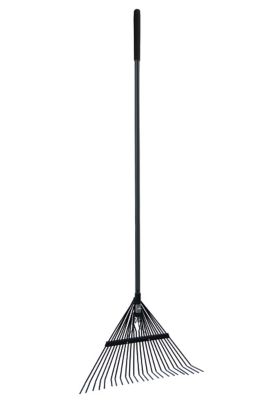
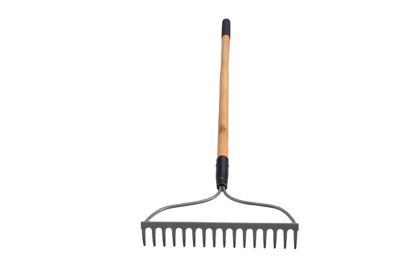
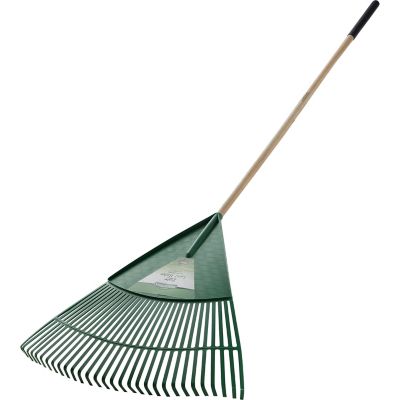
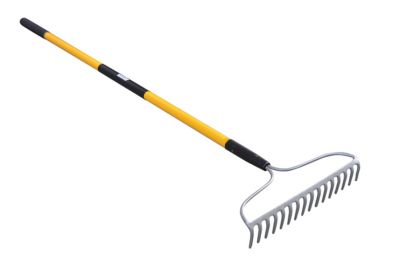
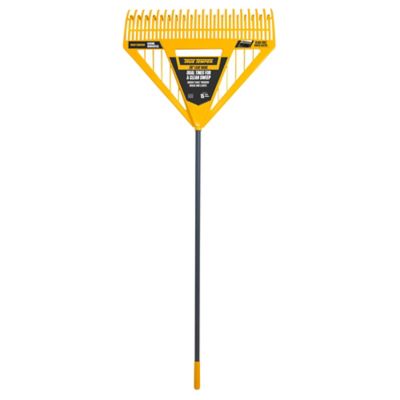
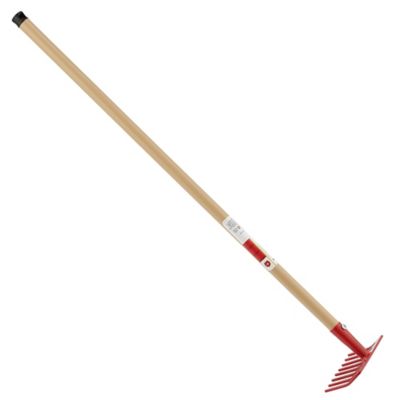
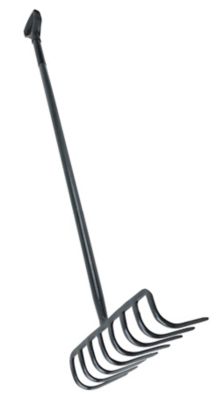
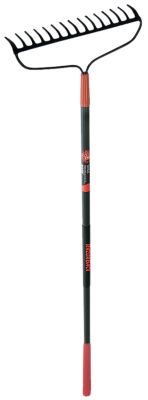
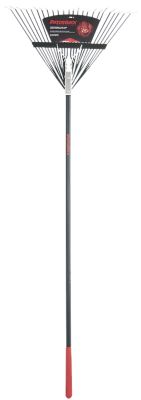
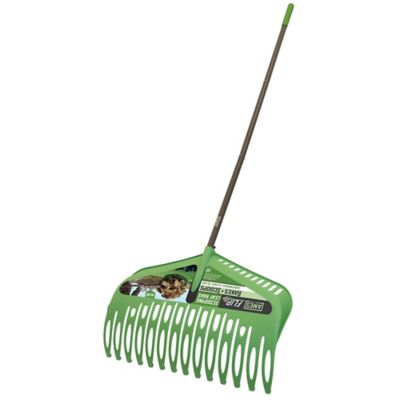
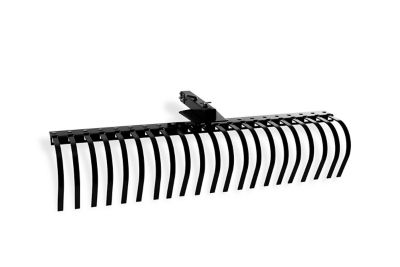
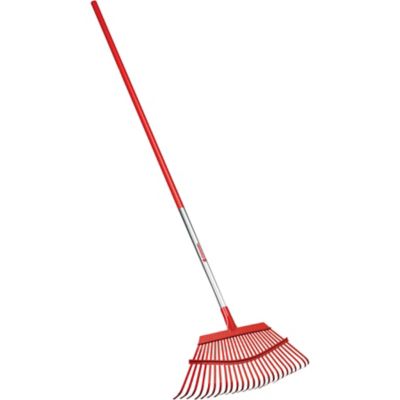
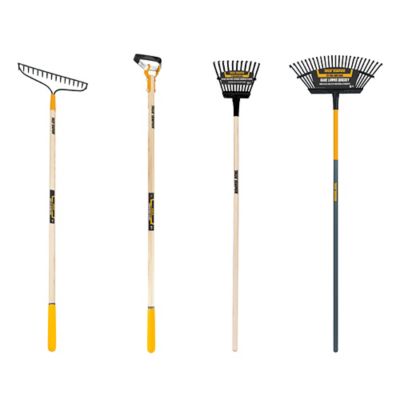
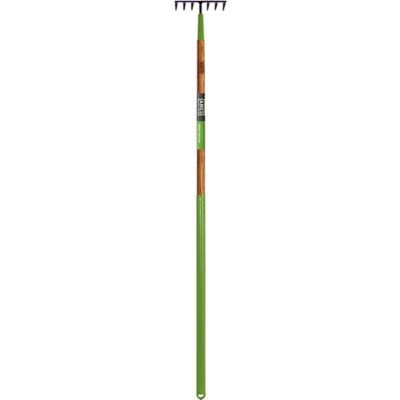
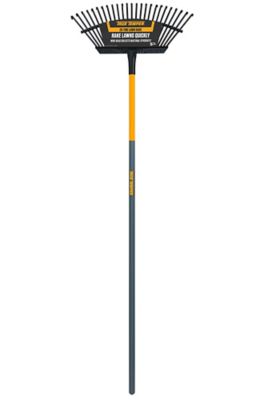
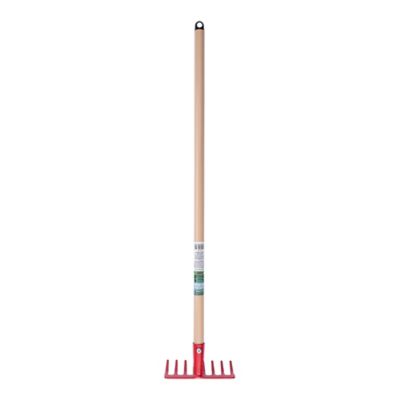
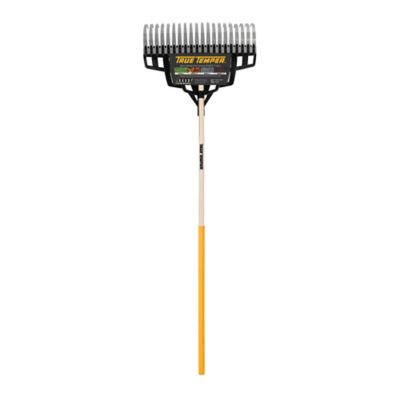
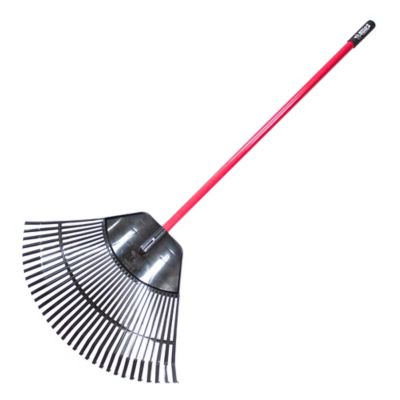
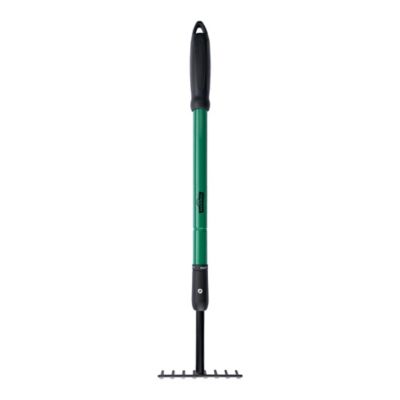
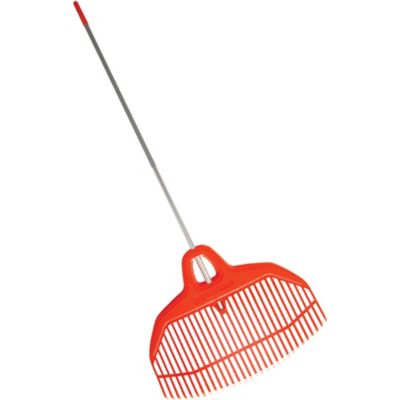
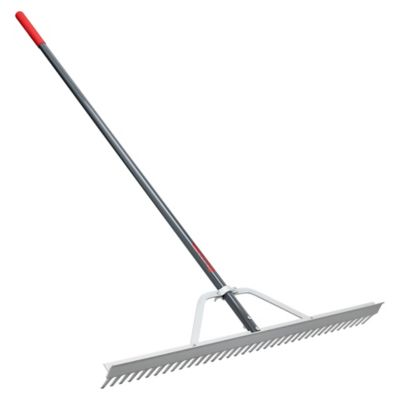
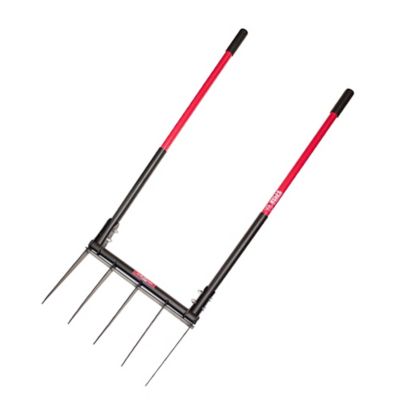
Lawn rakes for grass maintenance tasks help gather leaves and clippings, lift loose dead grass, and tidy turf around the yard. The right rake depends on the material being moved, the condition of the grass, and how much ground needs attention. A broad fan-shaped head with flexible tines works well for gathering light debris across an open lawn, while a narrower head reaches between shrubs, along fence lines, and around trees. Flexible tines can skim through grass without digging deeply into the soil, which makes them a practical choice for routine cleanup around established turf. Spring-steel tines offer some give while helping pull together tangled clippings and scattered leaves. Plastic tines are often lightweight and can suit loose, dry debris, though their performance depends on their shape, thickness, and spacing. Closely spaced tines help catch smaller material; wider spacing lets more fine debris pass through and may make the head easier to clear. A lawn rake is not the same tool as a dethatching rake. Loose dead grass may come away with ordinary raking, but a dense thatch layer calls for equipment designed to work through that buildup. Dethatching rakes have rigid blades or teeth that reach into the layer of stems and roots near the soil surface, and they require more care around living grass. For spreading and leveling loose soil before seeding, a rigid garden or bow rake generally fits the job better than a flexible lawn rake. Keeping those differences in mind helps match the tool to the work without expecting one head design to do everything. On a country property, that might mean a wide lawn rake for the grass beside the house and a smaller head for the strip along a garden fence. Around a compact yard, reach and control may matter more than covering a wide path with every pull. Head width is useful only when the rake can move comfortably through the space.
A lawn rake should fit the person holding it as well as the job ahead. Handle length affects posture, reach, and how much bending the work requires. A handle that is too short can leave a taller person stooping, while an overly long handle may feel awkward around beds, gates, or closely planted areas. A comfortable working position allows the head to meet the grass without forcing the shoulders upward or the back into a deep bend. A
lawn rake for easy use should also have a manageable weight and a grip that feels secure through repeated pulling motions. That matters when gathering clippings from a broad stretch of turf or working around the bases of several trees. A wide head can cover more ground, but it also collects a larger load and needs room to swing and turn. A narrower head trades some coverage for control, making it handy beside edging, around posts, and in corners where debris tends to collect. Handle materials bring their own considerations. Wood offers a familiar feel and can provide a little natural flex, though smoothness and protection from moisture matter for long service. Fiberglass handles resist rot, but their weight and balance vary with construction. Metal handles can offer strength in a slim profile, with grips or sleeves helping keep the shaft comfortable to hold. Beyond the handle itself, the connection between the handle and rake head deserves attention. A firm connection helps the head track steadily rather than wobble during a pull. Braces, fasteners, and the shape of the socket all contribute to how the tool feels under load. For someone maintaining grass around a farmhouse, rental property, or shared family yard, balance can matter as much as reach. A rake that feels comfortable for a few strokes may feel quite different after working along a long fence, so overall weight, head resistance, and hand position belong in the same buying decision.
Care and intended use play a big part in how long a lawn rake stays ready for work. Flexible lawn-rake tines are meant to gather material, not pry out buried stones, break hard ground, or drag heavy branches. Pulling a large, packed pile puts more strain on the head and handle than gathering smaller amounts, especially when clippings have tangled together. Around thin grass, new seedlings, and exposed roots, a light touch helps limit disturbance. Established turf can tolerate ordinary cleanup, but repeated hard scraping may pull living grass along with the debris. That distinction matters for anyone trying to tidy a lawn without turning a simple cleanup into a repair job. The material being gathered also affects the tool: fine grass can lodge between closely spaced tines, while stringy stems may wrap around the head. Clearing that buildup keeps the rake moving through the lawn instead of pushing a clogged mass ahead of it. After the work, removing soil and plant residue helps protect both metal and plastic parts. A rinse may loosen stubborn dirt, followed by drying before storage. Wooden handles benefit from checks for rough spots, cracks, or splinters, and metal heads deserve attention if rust begins to form. Loose fasteners and shifting head connections are worth addressing before another round of yard work. Hanging a rake or securing it in a tool rack keeps tines away from foot traffic and reduces the chance of a handle being knocked over or stepped on. Storage space matters at purchase time, too: a broad fixed head needs more wall space than a narrow one, while an adjustable head adds moving parts that need to stay clear of debris. For homeowners, gardeners, grounds crews, and anyone tending grass around outbuildings, the most useful rake is one matched to the regular work. The right combination of tine flexibility, head width, handle fit, and straightforward care makes everyday grass cleanup easier to manage.