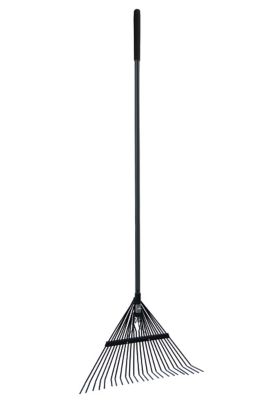
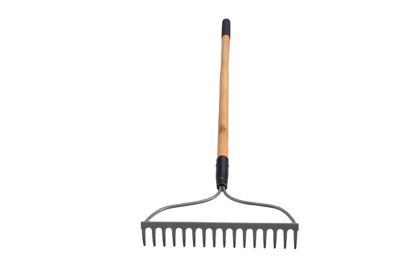
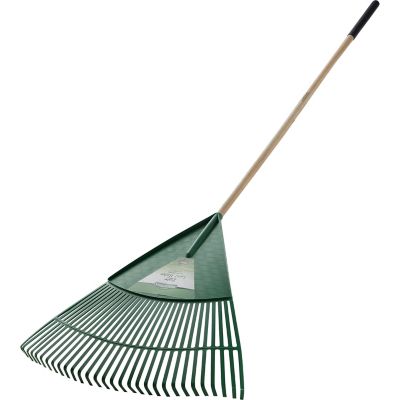
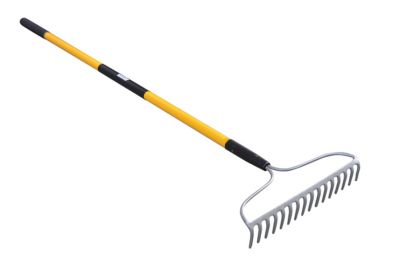
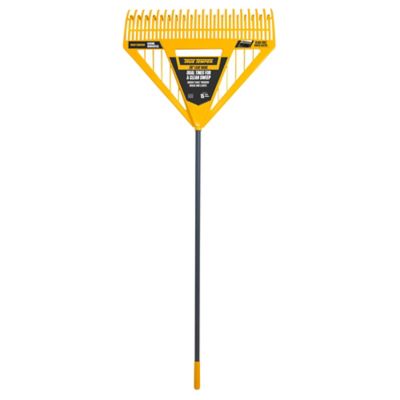
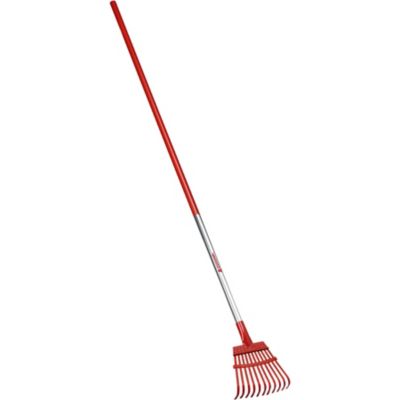
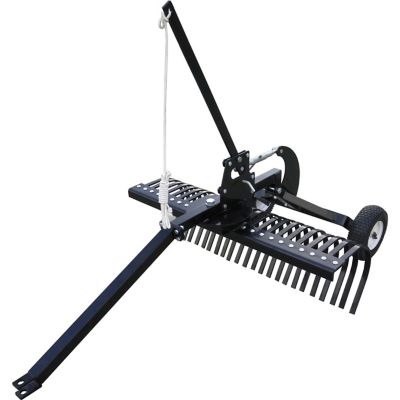
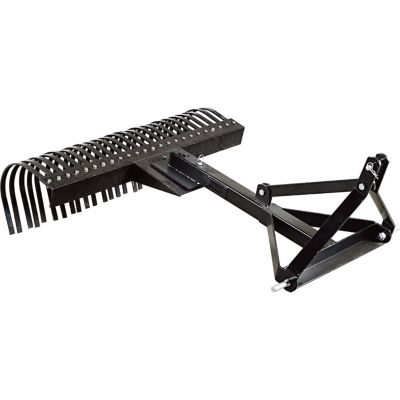
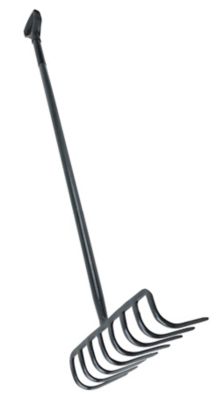
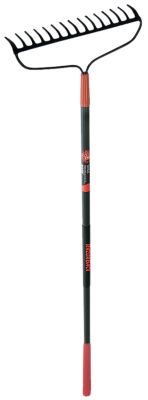
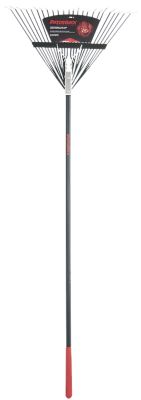
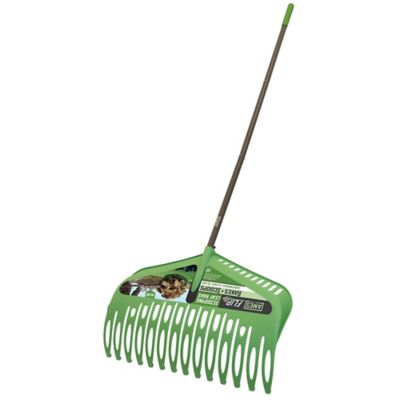
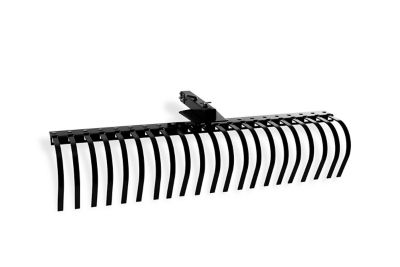
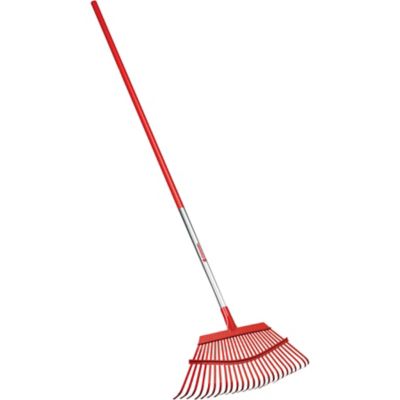
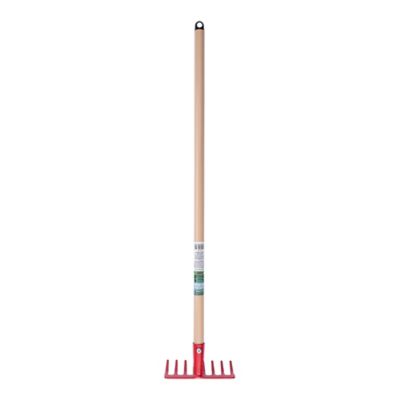
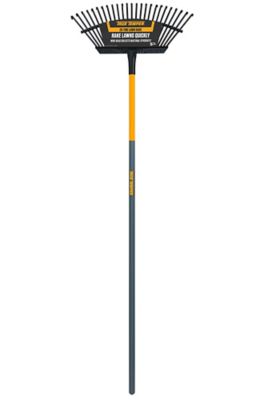
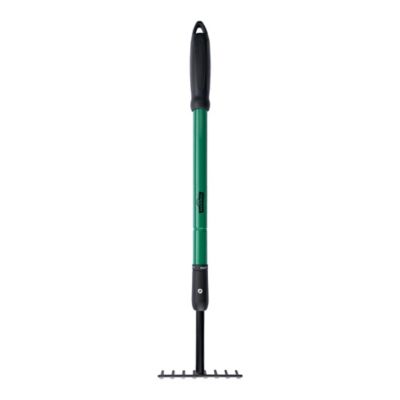
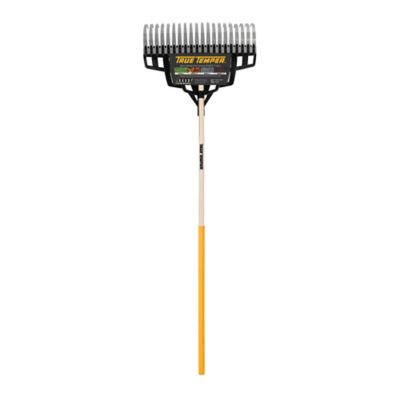
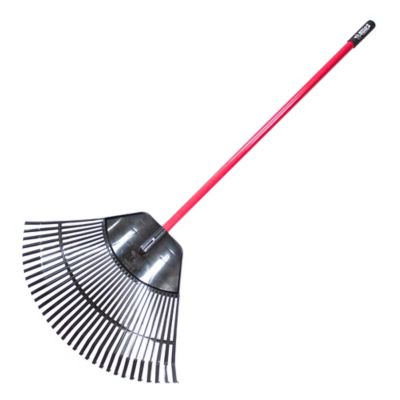
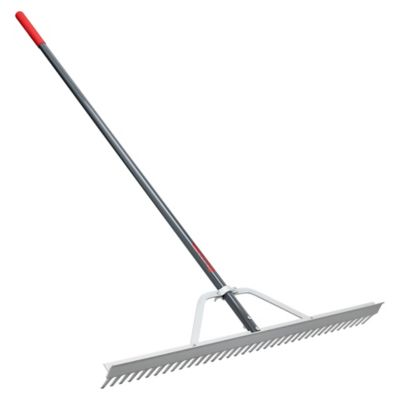
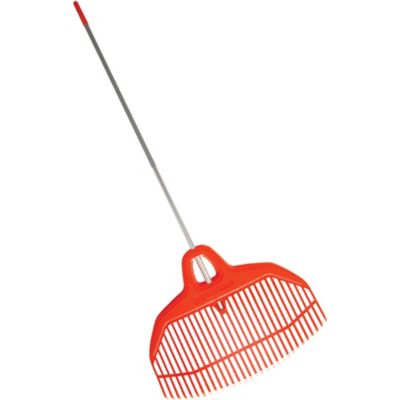
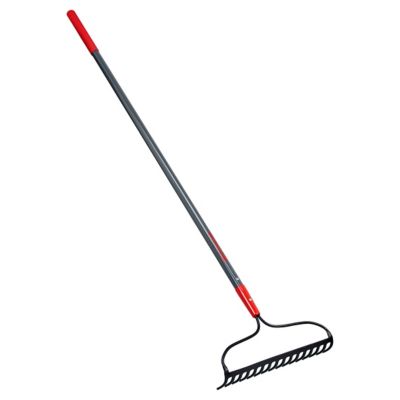
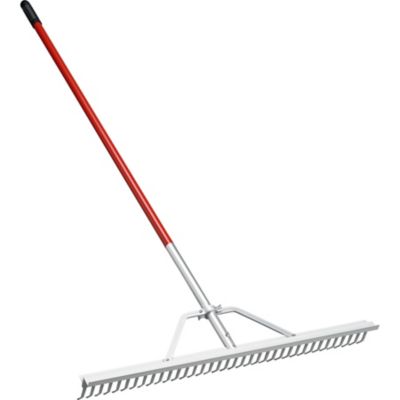
Lawn rakes for fast yard cleanup work best when the head shape, tine spacing, and flexibility match what needs gathering. A wide, fan-shaped leaf rake covers open grass efficiently, bringing scattered leaves and light clippings into a manageable pile with fewer passes. Flexible tines skim through the grass rather than digging into the ground, making them a good fit for routine cleanup around the house, beside a garden, or along a stretch of fence. For dry leaves spread across a large lawn, a broad, lightweight head helps keep the job moving without adding much weight to each pull. Damp, matted leaves put more resistance on the rake, so a secure head connection and tines with enough backbone matter more than width alone. Narrower heads reach between shrubs, around tree trunks, and beside porch steps where a wide fan can get hung up. They also make it easier to work around flowers without catching nearby stems. Head width affects more than coverage: a larger head gathers more material at once, but a full load takes more effort to move. A smaller rake can feel more manageable on tight paths, uneven ground, or a yard broken up by planting beds. Tine spacing matters, too. Closely spaced tines help collect small leaves and fine clippings, while a more open pattern can let loose soil fall through. Adjustable fan heads offer another approach, with a narrower setting for close quarters and a wider setting for open stretches; the locking mechanism needs to hold the chosen position firmly. A lawn rake is different from a rigid bow rake built for spreading soil or gravel, and ordinary leaf raking is not the same job as removing a thick layer of thatch. Matching the rake to the task helps protect the grass while keeping unnecessary effort out of the work. For a small yard, a comfortable all-around size may handle most cleanup, while a larger property may call for both a broad lawn rake and a compact rake for the spots it cannot reach.
Materials make a noticeable difference in how a lawn rake feels across a patch of grass and after a full round of cleanup. Molded plastic or poly heads are often light in the hand, with broad tines suited to moving leaves and loose grass clippings. Their performance depends on the shape and thickness of the head, so flexibility should come with enough support to keep the fan from folding under an ordinary load. Spring-steel tines flex individually and can work through tangled grass and small bits of yard debris, though they can also catch roots or dig into soft ground when pulled too hard. A lawn rake is not meant to pry up stones or drag heavy branches, regardless of the head material. The handle deserves just as much attention as the working end. Wood handles offer a familiar feel and can stay comfortable with regular care, but rough grain, cracks, or splinters need attention before the next job. Fiberglass handles avoid wood grain and may have a protective grip, while metal handles can offer a slim profile; weight, finish, and construction vary with each design. Handle length should suit the person doing the work. Enough reach allows a comfortable stance without repeated bending, but an extra-long handle can be awkward in a crowded bed or beside a building. A shorter handle may suit a smaller adult or a helper working in a confined space. Grip shape matters when hands are gloved, especially if the rake has to be repositioned often. A padded section can soften contact, while a textured grip can help limit slipping. Balance counts as much as total weight: a head-heavy rake may feel tiring even if the tool seems light when lifted from its storage hook. Connections at the head and handle should feel snug, with no distracting wobble during a pull. For homeowners, gardeners, and folks keeping grass tidy around a barn or outbuilding, that combination of fit, balance, and sound construction makes a practical difference over repeated passes.
Fast cleanup is not simply a matter of choosing the widest rake or pulling harder. The right lawn rake gathers debris with a comfortable stroke and releases it without constant stopping to clear the tines. Rounded or smoothly finished tine ends can move through turf with less snagging, while a fan that keeps even contact with the ground helps collect leaves across its working width. On lumpy ground, some flexibility helps the head follow the surface instead of riding over low spots. Along a gravel drive, lighter contact gives more control over loose leaves without dragging as much stone onto the grass. Under trees, a smaller head can gather leaves around exposed roots without forcing a broad fan through every gap. Heavy sticks and fallen limbs are better handled separately rather than tangled into a rake load. Smaller piles are often easier to move onto a tarp or into a collection container than one large heap, particularly when leaves hold moisture. A rake that fits comfortably beside the other cleanup tools also earns its place in the shed: a hanging hole, a secure handle, and a head that stores without crowding a walkway all help with everyday convenience. The broader category of
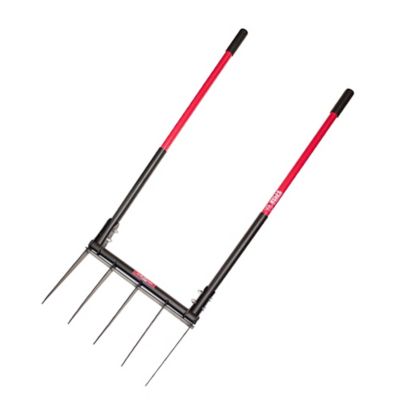
Yard Rakes For Outdoor Maintenance includes rake styles intended for different outdoor tasks, making the distinction between leaf gathering, soil work, and other ground maintenance worth keeping in mind. Care is straightforward but important. Clearing trapped grass and leaves, brushing away soil, and letting the tool dry before storage help keep the head and handle in working shape. Metal parts benefit from attention to rust and their finish, and wood handles should stay smooth and protected from prolonged moisture. Checking fasteners and head connections helps catch looseness before it interrupts a job. With the right reach, manageable weight, and tines suited to the debris, a lawn rake can make everything from a quick pass around the porch to a full-yard cleanup feel a lot less like a wrestling match.