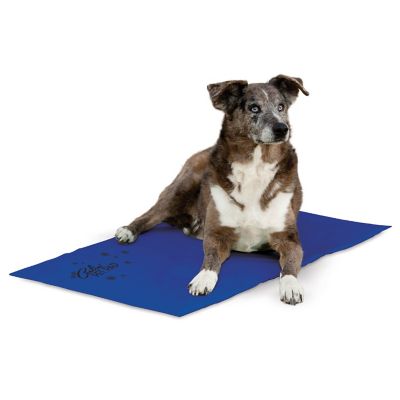
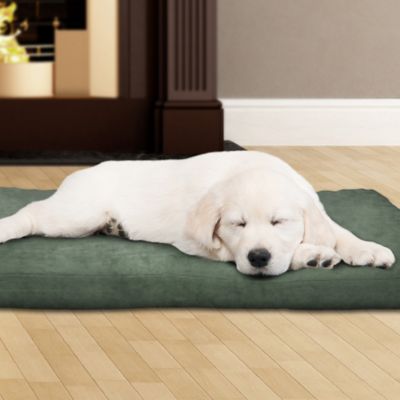
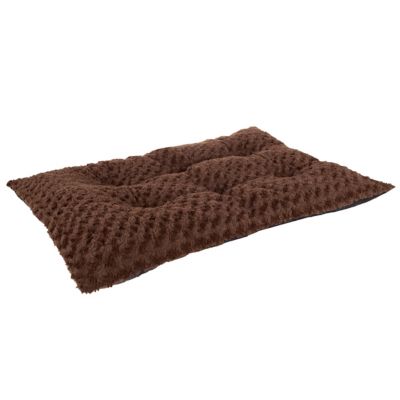
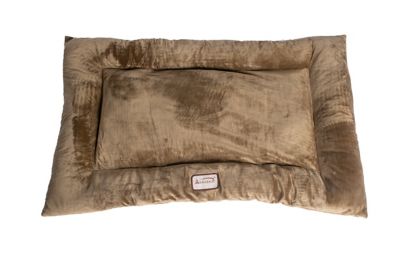
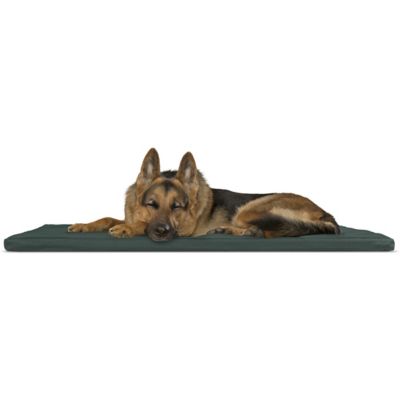
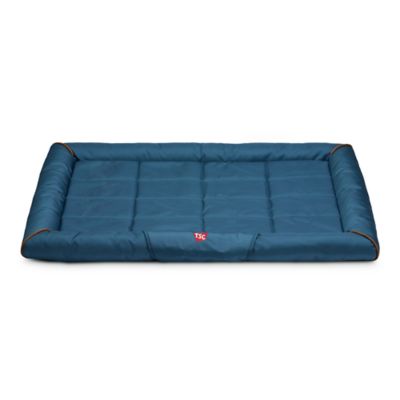
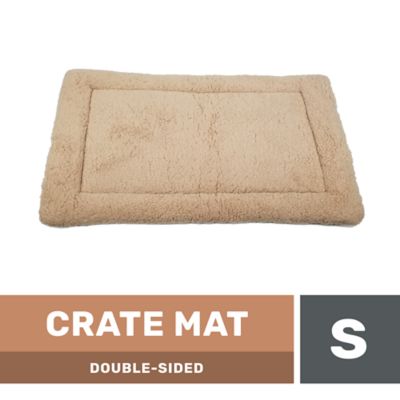
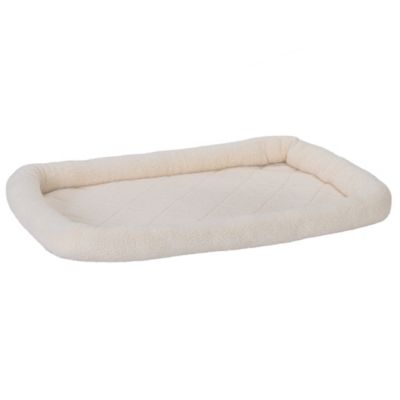
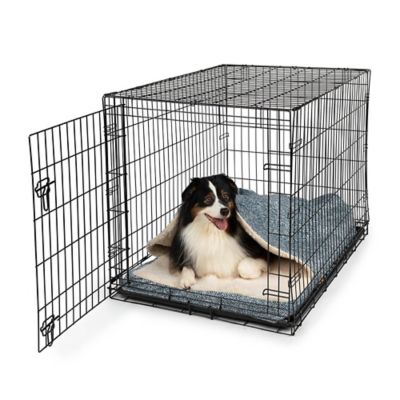
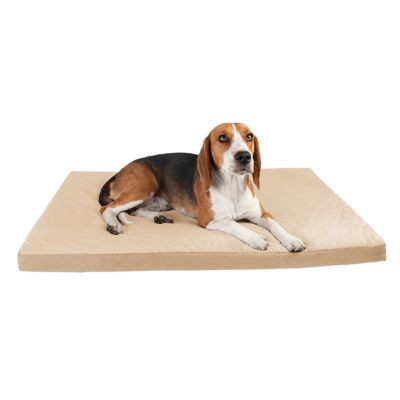
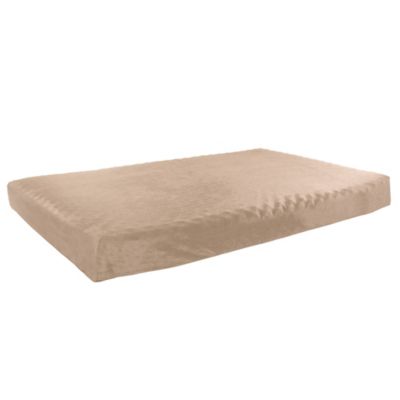
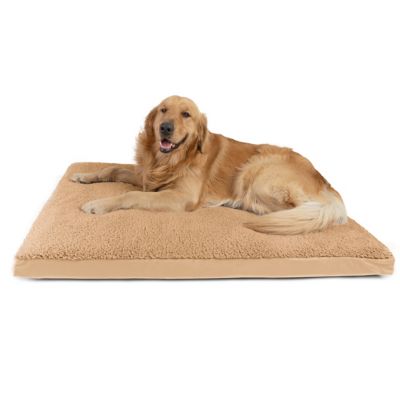
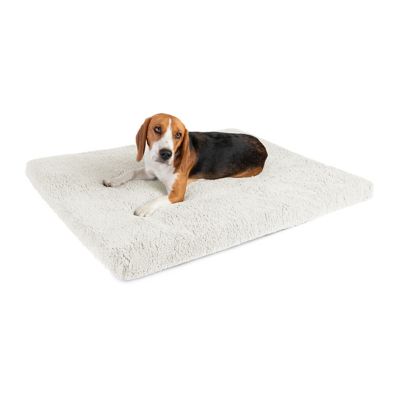
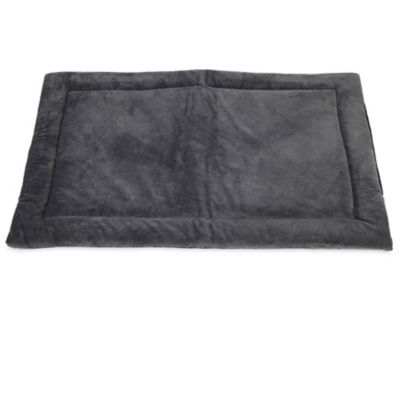
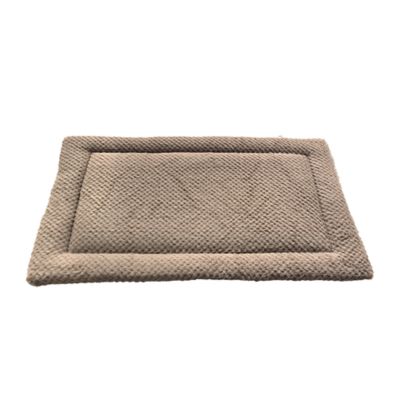
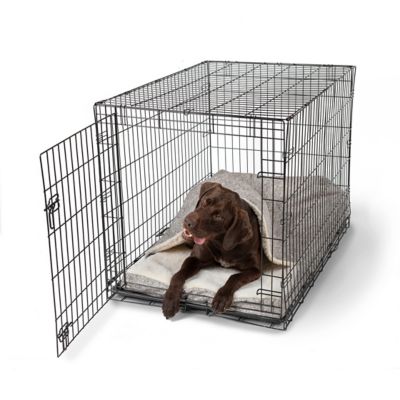
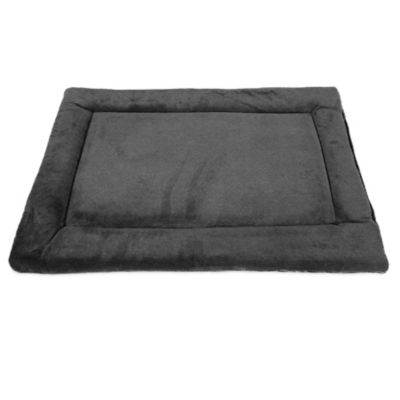
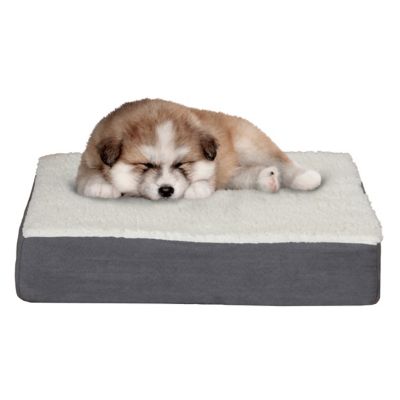
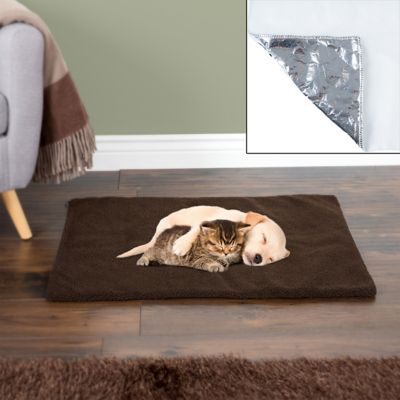
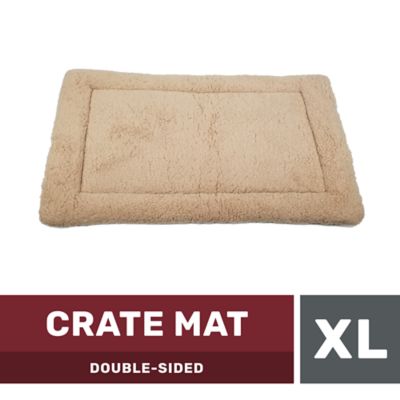
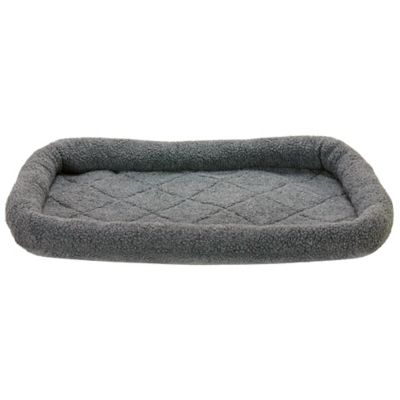
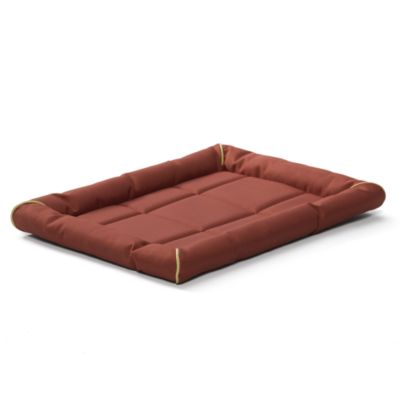
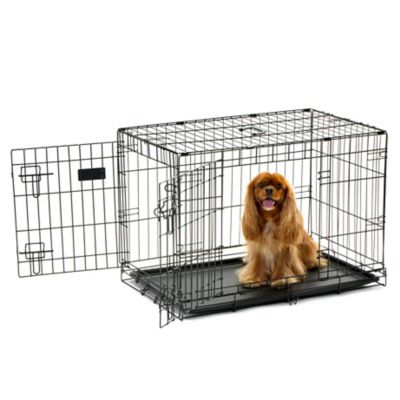
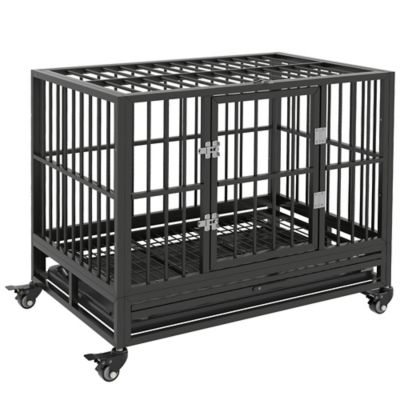
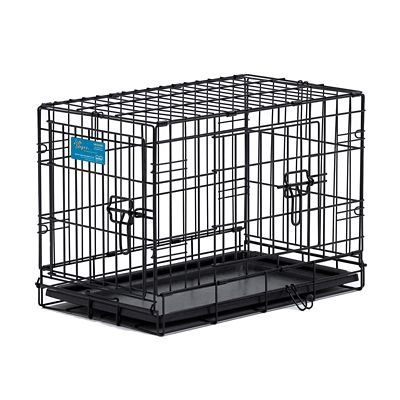
A large dog crate pad adds cushioning between a dog and the crate floor, giving a big companion a more comfortable spot to stretch out, curl up, or settle down after chores. A common large dog crate pad measures about 42 by 28 inches, but sizing varies by manufacturer and crate design. The best fit comes from matching the pad’s listed dimensions to the crate’s usable interior floor space, not just the measurement on the crate’s packaging. A crate labeled 42 inches may have a slightly smaller sleeping area once the frame, tray edges, and door opening are taken into account. Pads that lie flat from corner to corner leave fewer loose edges to bunch beneath paws, while an oversized pad can fold against the sides and take away resting space. A pad that falls short leaves sections of the hard tray exposed, especially for dogs that sleep with their legs stretched out. Breed labels alone do not tell the whole story, either: two dogs of similar weight can have very different body lengths and sleeping habits. A long-legged dog may need more room to sprawl, while a broad-chested dog may do better with a wider resting surface. The crate itself still needs enough room for the dog to stand naturally, turn around, and lie comfortably; extra cushioning cannot make up for cramped quarters. Thickness matters alongside length and width. A slim mat leaves more headroom and usually passes through the crate door easily, while a thicker foam pad adds cushioning but raises the sleeping surface. Low-profile edges can also make stepping in and out simpler for dogs that hesitate at a raised threshold. For households that move a crate between a bedroom and the main living area, a pad that stays flat and lifts out without a struggle makes that routine less of a chore. The same practical fit matters whether the crate is a quiet nap spot for a grown dog or part of a younger dog’s daily routine.
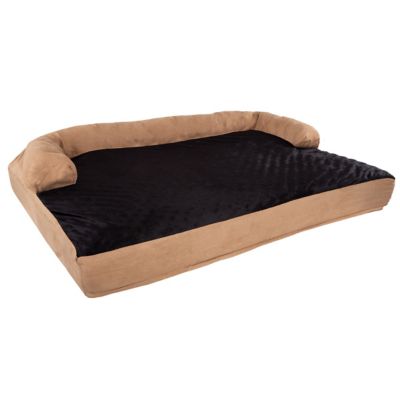
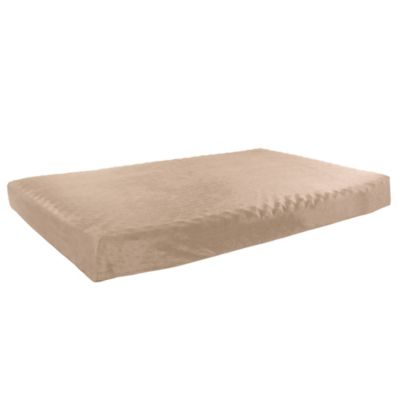
Materials and construction shape how a large dog crate mat feels beneath a heavier dog. Foam provides a more even resting surface than loose fill, although its firmness and thickness can vary considerably. Denser foam can help keep elbows and hips from sinking straight through to the tray, while softer fiber-filled pads offer a cushioned feel that some dogs enjoy for curling up. Quilted stitching helps hold filling in place, limiting the shifting that can leave one end plump and the other nearly flat. For an older dog or a dog that gets up slowly, the balance between cushioning and steady footing deserves attention; a deep, squishy surface is not always the easiest place to stand. Bedding described as orthopedic may offer supportive foam construction, but the label does not replace checking the actual materials or getting veterinary advice about ongoing stiffness or discomfort. The cover matters just as much in everyday use. Fleece and plush fabrics have a soft feel for dogs that like to nest, while smoother woven covers can make loose hair and bits of dirt easier to brush away. Tightly woven fabric, reinforced seams, and securely finished corners are worth a closer look when a dog paws at bedding before lying down. A nonslip underside may help limit sliding on a smooth crate tray, though the pad should still fit properly rather than depending on grip alone. Removable covers make it easier to separate the sleeping surface from the inner cushion for cleaning, and a covered zipper can keep the closure from sitting directly beneath the dog. Water-resistant layers can help protect the filling from small spills, but moisture may still reach the inside through seams or openings. No fabric or construction should be treated as chew-proof. A dog that tears at bedding, pulls out filling, or swallows loose pieces needs closer supervision and a bedding choice discussed with a veterinarian when that behavior persists.
Daily care plays a big part in keeping crate bedding pleasant for both the dog and the people sharing the house. A pad near the back door may collect grit from paws, while one beside the couch may gather more shed hair and the occasional crumb from a training treat. A cover that comes off easily makes those ordinary messes simpler to handle, especially when the inner cushion takes longer to dry than the fabric shell. Care labels matter because a washable cover does not necessarily mean the foam or filling can go into the washing machine. Some inserts call for spot cleaning only, and forcing a thick pad into a small washer can strain seams or leave soap trapped inside. Thorough drying is just as important as washing; a cover that feels dry on top can still hold moisture around its seams, and a damp insert can develop lingering odors. Having a second compatible cover can keep the regular resting spot ready while another cover is in the wash. Loose threads, exposed foam, split seams, and worn corners also deserve attention during cleanup, since a small opening can become a tempting place for a dog to tug. For a dog that enjoys gathering soft bedding beneath its chin, a
Large Dog Blanket can add a familiar layer, provided there is still room to move comfortably and the dog does not chew or swallow fabric. A low-profile pad can also serve as a familiar resting surface during visits away from home when its care instructions and intended use allow, though bedding never takes the place of proper vehicle restraint. As a gift for someone welcoming a large dog, crate bedding is most useful when the recipient’s crate measurements, the dog’s habits, and the household’s cleaning routine are known ahead of time. A good match is less about the biggest or thickest cushion and more about a flat fit, suitable support, secure construction, and care that fits everyday life.