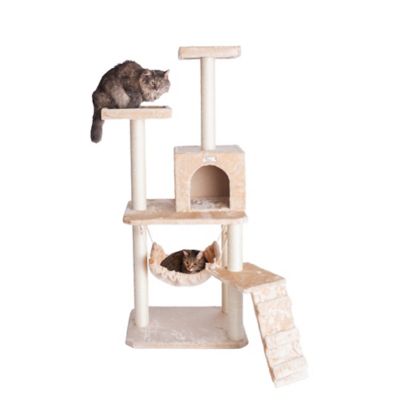
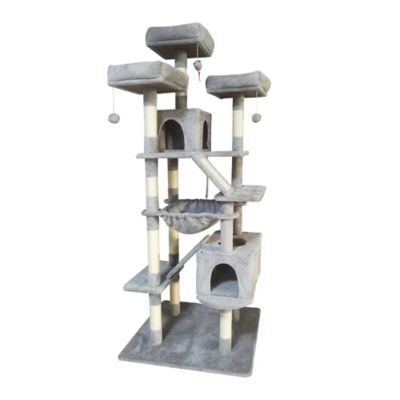
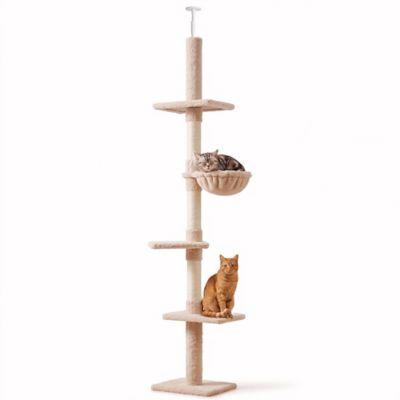
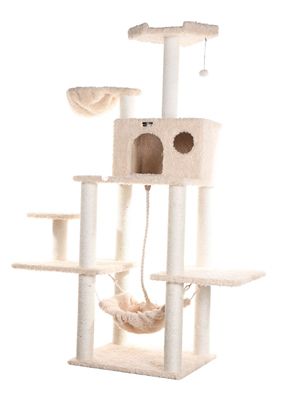
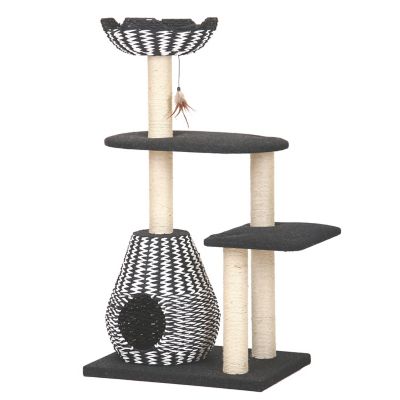
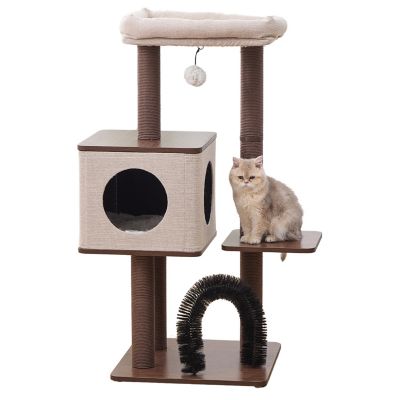
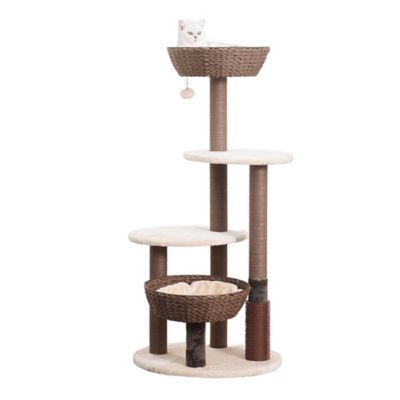
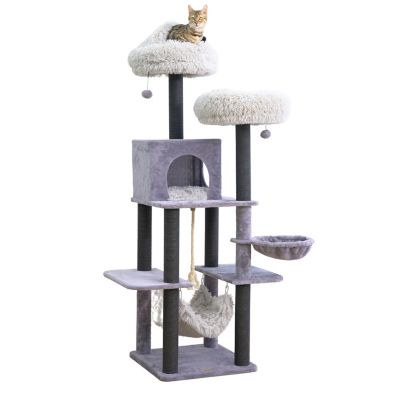
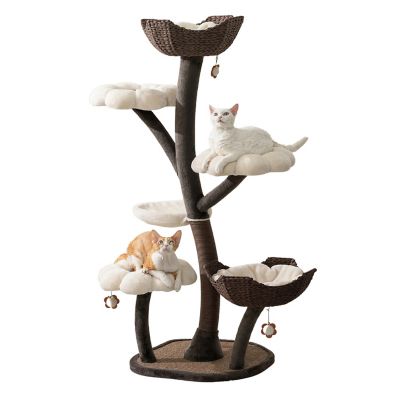
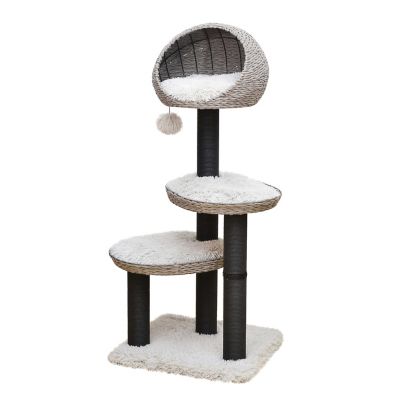
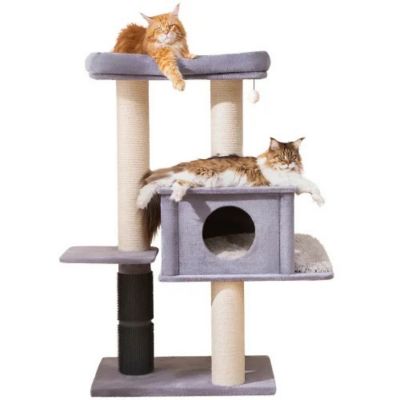
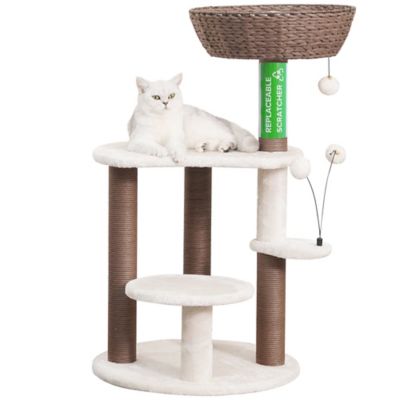
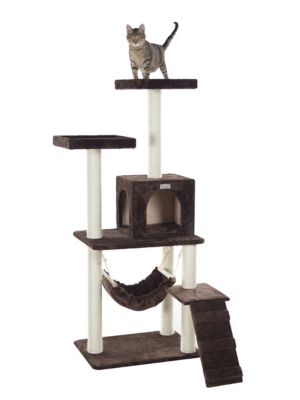
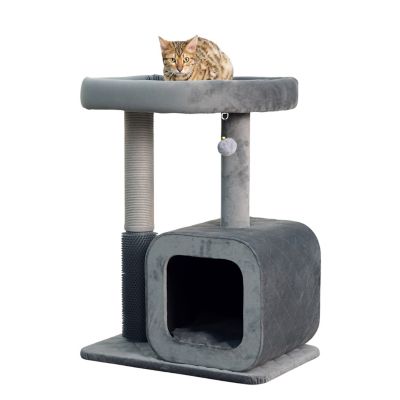
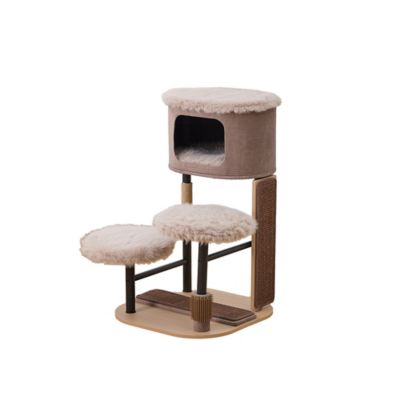
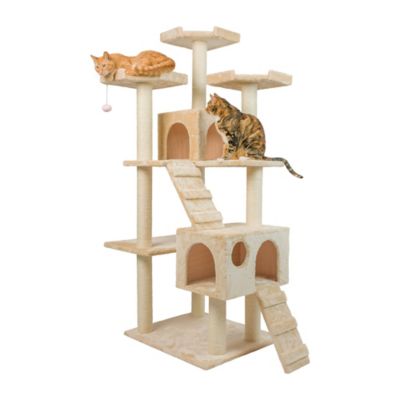
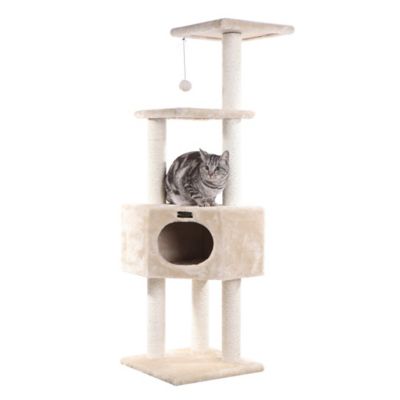
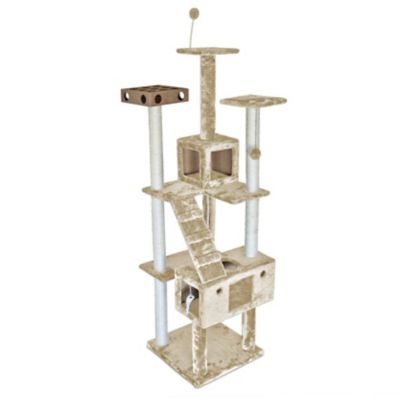
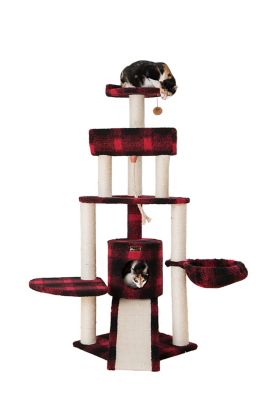
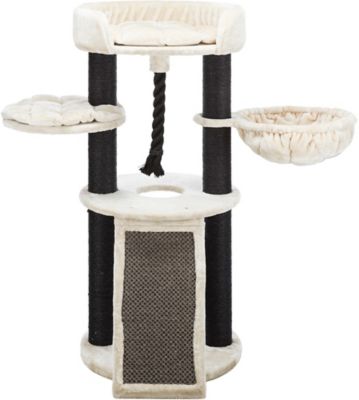
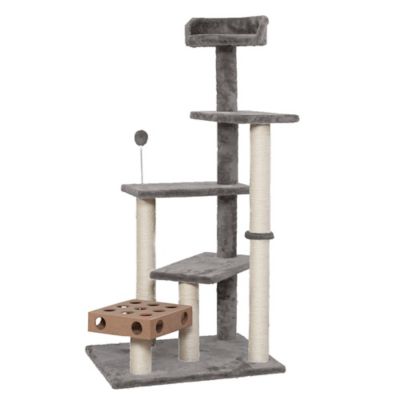
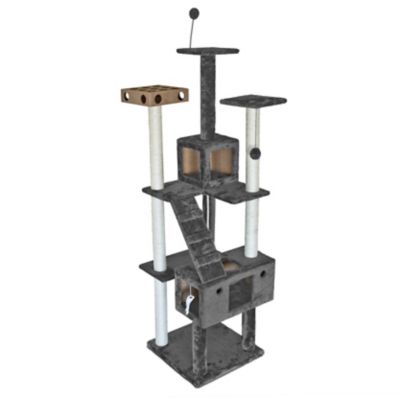
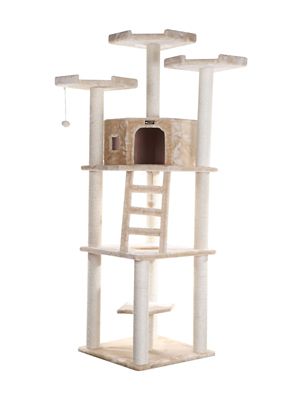
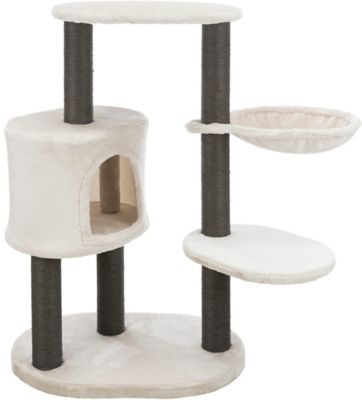
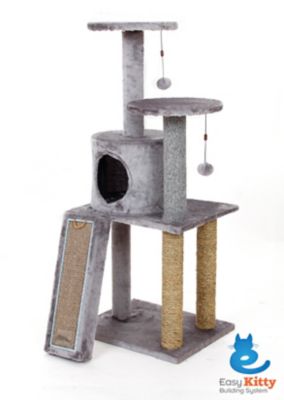
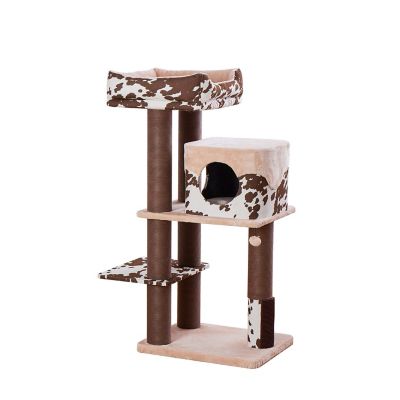
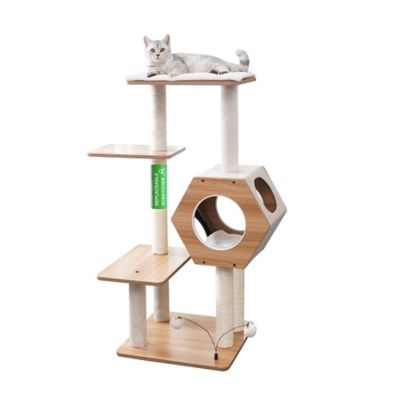
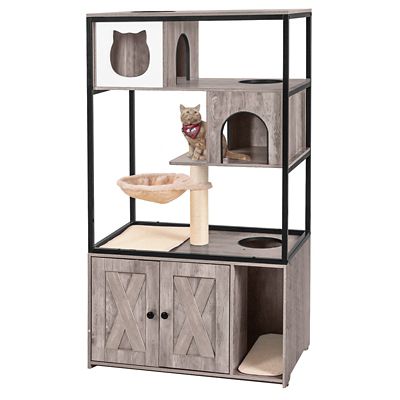
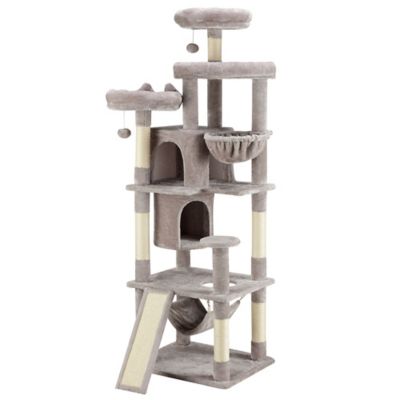
Large cat trees give cats room to climb, stretch, scratch, and settle into a spot of their own without taking over every chair in the house. A tall perch lets a cat keep an eye on the room, while an enclosed cubby offers a quieter place to curl up away from household traffic. Many tall cat trees stand roughly 60 to 80 inches high, though height alone does not make a tree a good fit for a bigger cat. The size of the resting platforms, the strength of the supports, and the footprint of the base matter just as much. Maine Coons, Ragdolls, and other large cats need enough space to turn around and lie comfortably without hanging most of their body over an edge. Even an average-size cat may appreciate an extra-wide platform for a full-length stretch. Perch measurements help show how much resting space a tree provides, while condo opening dimensions help determine whether a cat can get inside without squeezing through a narrow doorway. Raised edges can give a lounging cat something to lean against, and a deep bed may suit a cat that likes to tuck into a snug spot. Open platforms work well for cats that prefer to sprawl. Scratching posts add another important function: they give cats a surface for working their claws and stretching their shoulders and backs. A longer scratching section can be especially helpful for a tall cat that reaches up on its hind legs. In a home with several cats, separate resting areas let each one pick a favorite place instead of competing for the same top perch. Multiple routes between levels can also make it easier for cats to pass one another. A large cat tree earns its floor space when its layout matches the way the cats in that household actually move, rest, and play.
Materials and construction make a difference in how a large cat tree feels under a climbing cat. Solid wood, plywood, and other engineered wood panels appear in different designs, with carpet, plush fabric, or removable cushions covering resting surfaces. The material name tells only part of the story; panel thickness, connection points, post construction, and base dimensions all contribute to support. A broad, substantial base helps resist tipping, especially when a cat springs onto an upper level from the floor. Weight limits deserve a close look, including whether the stated limit applies to one perch or the whole structure. For a two-cat household, the combined weight matters wherever both cats might settle together. Sisal rope and sisal fabric provide textured scratching surfaces, while carpet-covered areas offer a different feel under paws. Some cats favor one texture over another, so their existing scratching habits can be a useful clue. Platform spacing matters, too. An athletic adult may enjoy a series of higher jumps, while an older cat or one with limited mobility may do better with closely spaced steps, broad lower shelves, or a gentle ramp. A hammock or basket should have enough room and a suitable weight rating for the cat that will climb into it. The climbing layouts in
Cat Towers for Large Cats are worth comparing by resting space, entry size, and support, not just overall height. Around the house, the tree’s full footprint includes any platforms that extend beyond its base. That extra width matters beside a sofa, in a bedroom corner, or near a busy hallway. Enough open space around the lower levels gives a cat room to approach and land without bumping into furniture. Placement near a window can offer an interesting lookout, provided the tree stays clear of blind cords and does not interfere with safe window operation. For tall designs that include an anchoring system, following the manufacturer’s attachment instructions adds an important safeguard.
Everyday care helps keep large cat trees comfortable and ready for the next climb. Upholstered platforms collect hair, tracked litter, and the occasional crumb from a treat, so surfaces that are easy to reach make routine cleanup simpler. A vacuum attachment or lint brush can lift loose hair from carpet and plush fabric, while removable cushions may make deeper cleaning easier when their care instructions allow washing. Wood and other exposed panels should be cleaned according to the manufacturer’s directions, without soaking joints or leaving surfaces damp. Cats often return to familiar-smelling places, so regular light cleaning can be less disruptive than letting mess build up until the entire tree needs attention. Scratching surfaces naturally show wear over time. Loose rope, exposed fasteners, torn fabric, and weakened connections call for attention before they become a snag or a hazard. Replaceable posts, pads, or cushions can make upkeep more practical when the design supports those parts. Connections may also need checking after assembly and as climbing and jumping put the frame through its paces. A tree that rocks, shifts, or develops a leaning platform needs inspection rather than another round of play. Good fit goes beyond measurements: a shy cat may want a sheltered lower condo, while a confident climber may head straight for an open lookout. A little space away from a dog’s resting area can give a cat somewhere to relax without being crowded. For kittens, accessible lower levels offer a gentler introduction than a layout that depends on long jumps. Toys attached to the tree need regular inspection as well, particularly strings and small parts that can loosen during play. A large cat tree can make a thoughtful gift for someone welcoming a cat or setting up a multi-cat home, as long as the recipient’s floor space and the cats’ needs are part of the choice. The best match is a tree with room to settle in, a layout the cats can navigate, and surfaces that fit into the household’s cleaning routine.