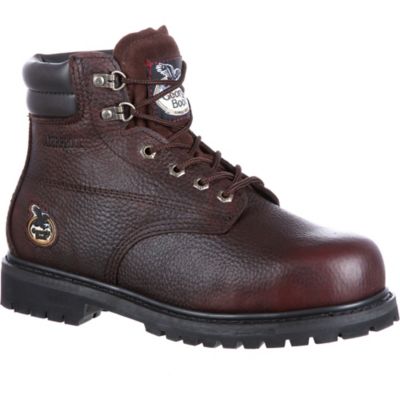
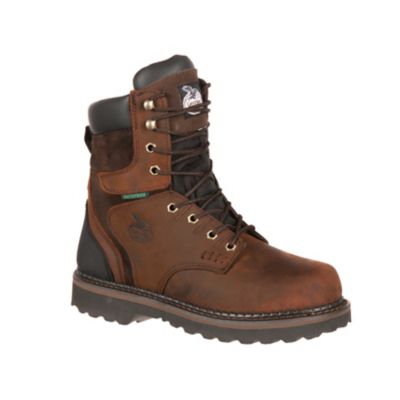
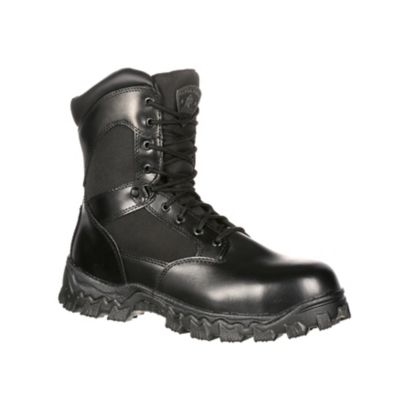
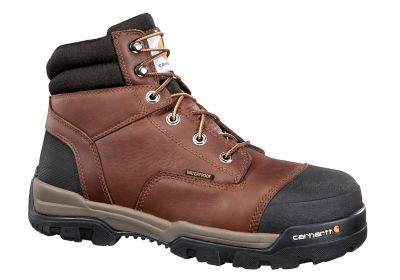
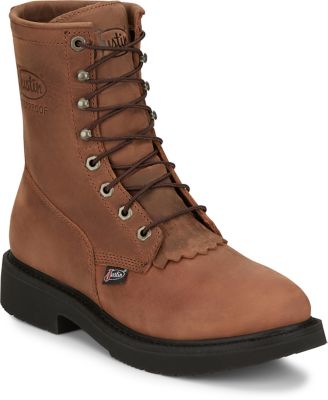
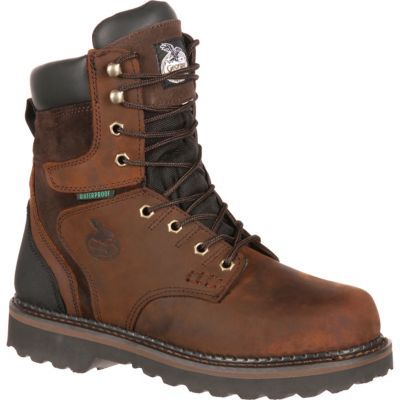
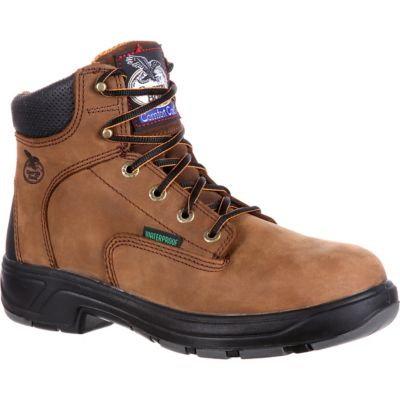
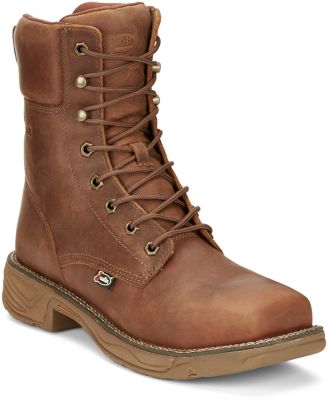
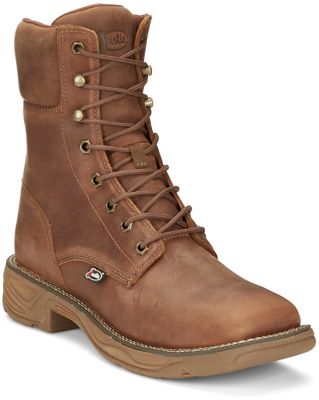
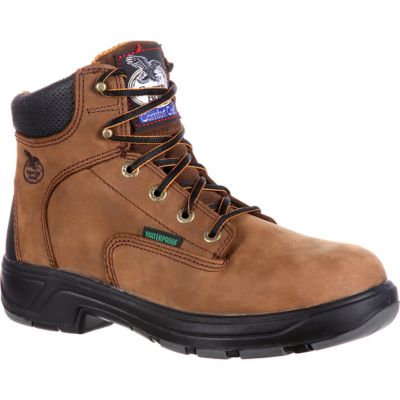
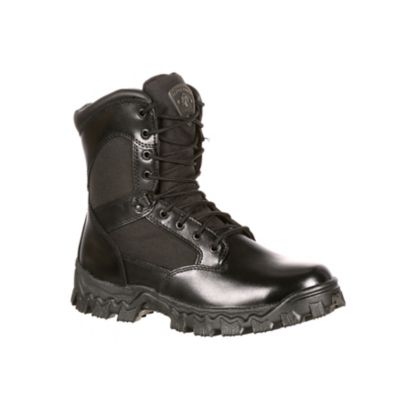
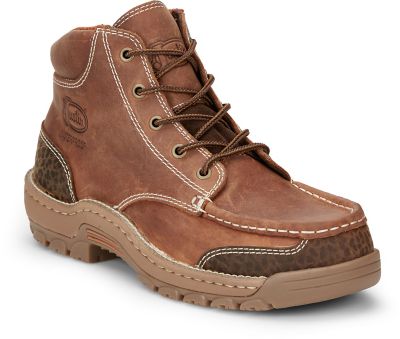
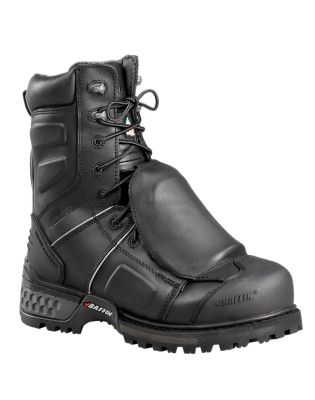
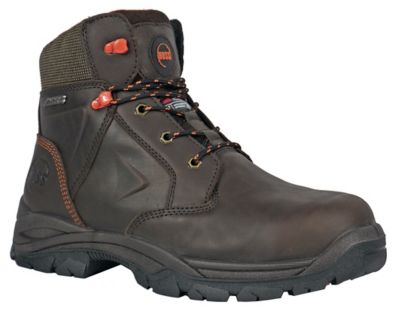
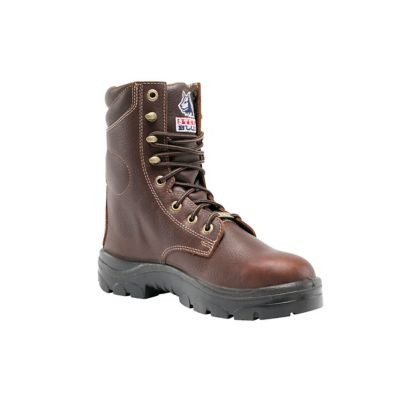
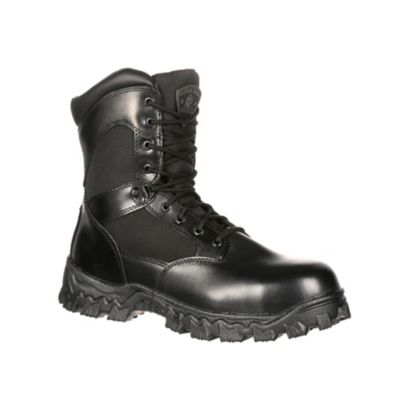
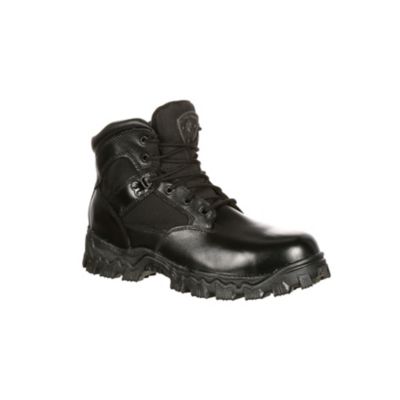
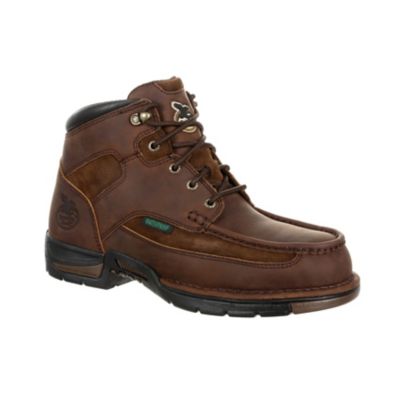
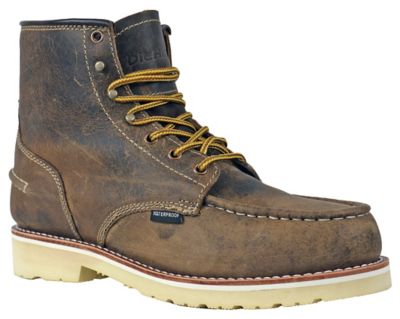
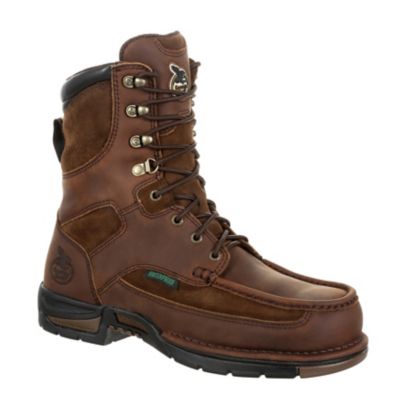
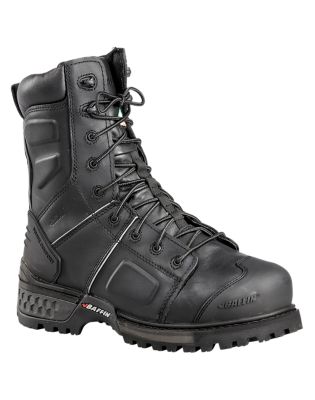
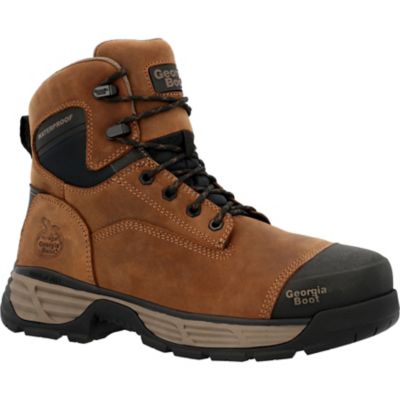
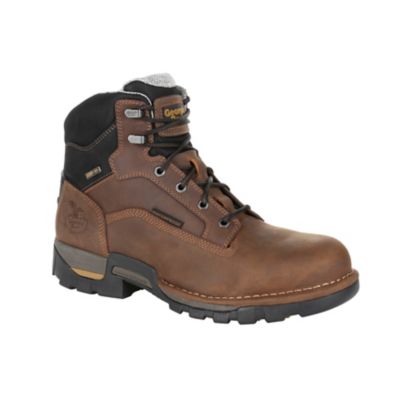
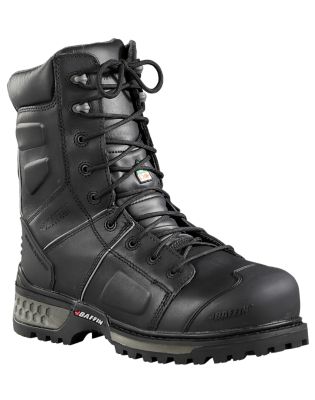
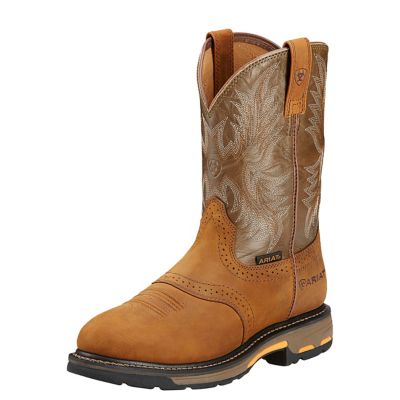
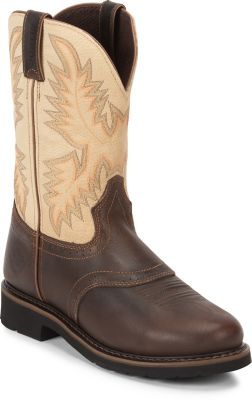
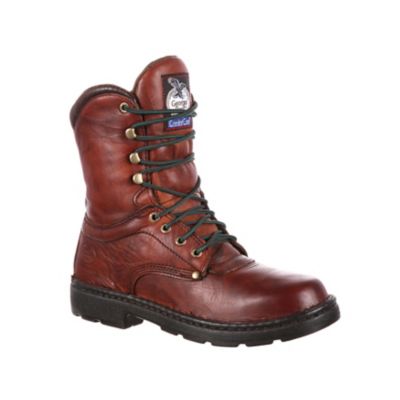
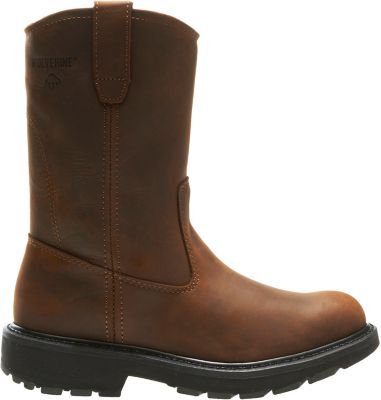
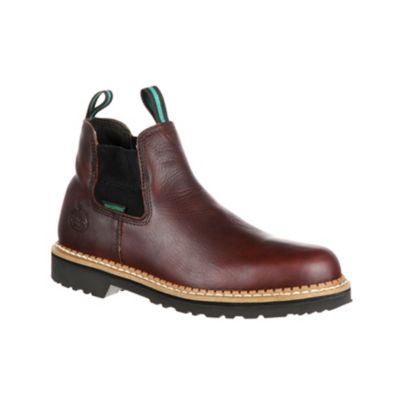
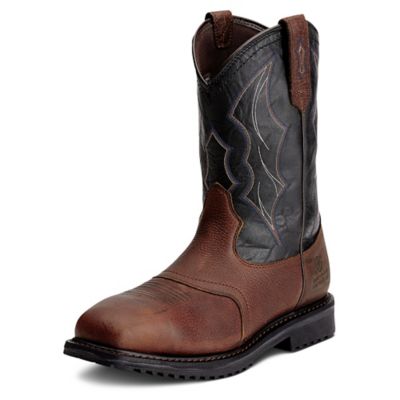
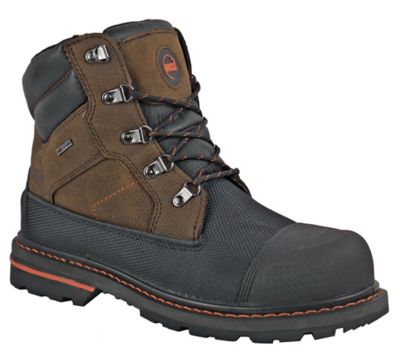
Lace-up waterproof work boots belong wherever a day’s work includes wet grass, muddy gates, wash bays or puddles between the truck and the barn. They pair coverage against outside moisture with a laced fit that can be adjusted across the foot and around the ankle. That combination makes sense for livestock owners, landscapers, construction crews and anyone whose chores keep going when the ground gets soggy. Waterproof construction varies, with some boots relying on an internal membrane or bootie, sealed seams and treated uppers to help keep water out. Water-resistant leather alone is not the same thing as a waterproof build, especially when exposure lasts longer than a quick walk across the yard. Full-grain leather brings a substantial feel and can develop a broken-in flex with wear, while leather-and-textile combinations may offer a lighter feel and easier movement. Reinforced toe and heel areas can help handle scraping against stall boards, equipment steps and rough ground, though no material is immune to wear. Shaft height matters, too: a taller upper adds coverage above the ankle, but water can still enter over the opening. A gusseted tongue helps close the gaps alongside the laces, where splashes and loose grit might otherwise find a way inside. Waterproof boots are not a substitute for tall rubber chore boots when standing in deep water is part of the job. For work that moves between damp ground, a gravel drive and a concrete shop floor, though, a lace-up design offers a practical balance of coverage, flexibility and a close fit. Breathable linings can help move moisture vapor, but waterproofing does not prevent perspiration. Socks, workload and time on the feet all affect how the inside feels by quitting time. The best match comes down to the work itself: repeated kneeling beside equipment, climbing into a cab and walking pasture fences each place different demands on the upper, sole and way the boot bends.
Fit makes a big difference when the morning starts with feeding and the afternoon ends with another trip across the property. A work boot should hold the heel securely without pinching the toes or pressing hard across the top of the foot. Enough room for toes to move helps on long walks and downhill stretches, while too much room can allow sliding and rubbing. The socks worn for work belong in that fit equation, along with any orthotic or replacement footbed that changes the space inside. Laces allow some adjustment as feet swell through the day, but they cannot fix a boot that is the wrong length, width or shape. Speed hooks can make taller boots easier to get on and off, and eyelets and hooks should hold the laces evenly without creating pressure points. Cushioning softens the feel underfoot, while a supportive platform can make a difference when carrying feed bags or spending hours on hard floors. A substantial boot may feel steady on rough ground, but extra weight can become noticeable after miles of walking. Outsole design deserves just as much attention as the upper. Deeper lugs can bite into loose soil, while shallower tread patterns may be easier to clear of packed mud. Slip-resistant soles can help on certain surfaces, but traction still depends on the ground, contaminants and tread condition; no outsole makes wet concrete or a slick equipment step risk-free. Soft-toe styles suit many chores, while safety-toe styles are built for work where impact or compression hazards call for added protection. Steel, alloy and composite toe caps differ in weight and feel, and the documented safety rating matters more than assumptions about the material. Workplace requirements should determine which protection is appropriate. The same fit considerations apply to
women's waterproof lace-up boots, whether the day involves tending livestock, hauling supplies or moving between a workshop and an outdoor yard.
Long wear depends on both construction and what happens after the boots come off. Stitching, outsole attachment, lace hardware and abrasion-prone areas all deserve a close look, particularly for work that involves crouching, climbing or brushing against rough lumber. Some welted constructions allow resoling, depending on the design and the condition of the upper, while many cemented constructions favor flexibility and lower weight. Neither approach tells the whole story on its own; the work environment and upkeep matter, too. Mud left packed around seams and sole edges can hide damage, and dried grit can work against leather as the boot flexes. Cleaning methods need to suit the upper material, with loose dirt brushed away and heavier soil removed according to the maker’s care directions. Leather conditioner and waterproofing treatments serve different purposes, and not every spray, oil or wax belongs on every boot. An unsuitable treatment can change the finish or interfere with how the materials perform. Gentle air-drying away from direct heat helps protect leather, adhesives and waterproof components; setting wet boots beside a stove or blasting them with hot air can do more harm than good. Removing removable footbeds opens up the interior for drying, and giving boots time to dry between wearings helps manage lingering moisture. Fresh laces, sound eyelets and intact tread are small details that matter when the workday involves ladders, uneven lanes or repeated trips over a wet threshold. Worn-smooth soles, separated seams and persistent leaks are signs that protection or footing may be compromised. For someone who spends long days on their feet, waterproof lace-up work boots can also make a practical gift when the correct size, preferred fit and job requirements are known. Whether they head for the barn aisle, the shop or a muddy jobsite, the right pair should match the ground underfoot and leave enough comfort for the last chore of the day.