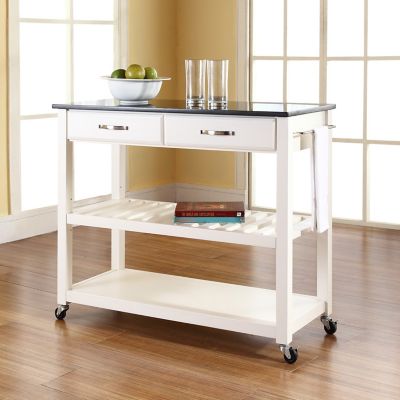
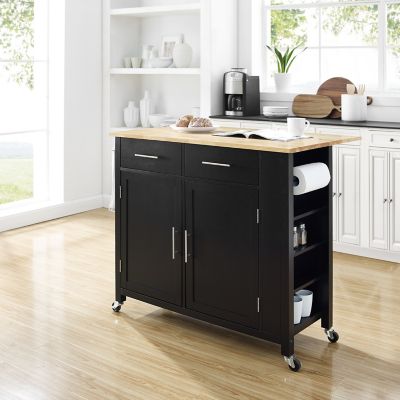
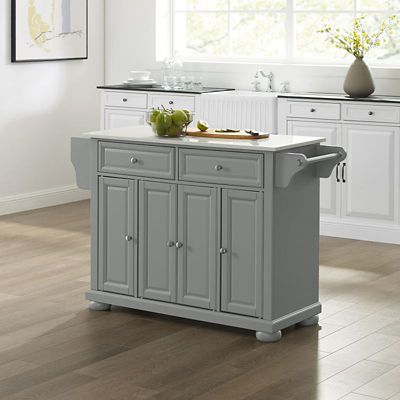
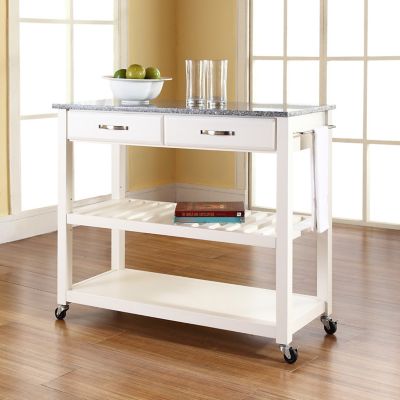
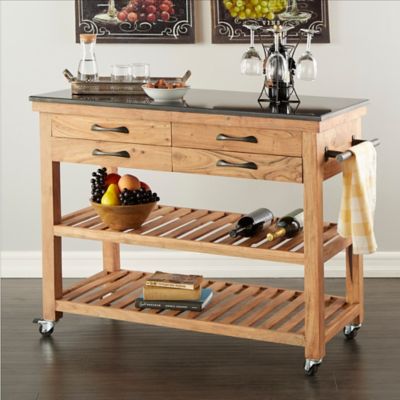
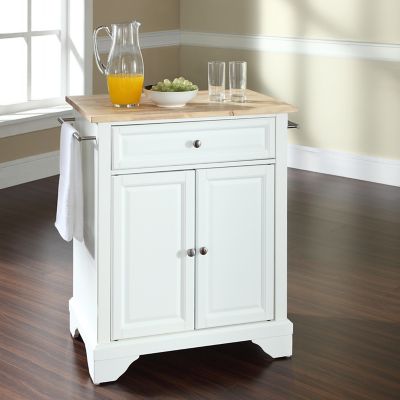
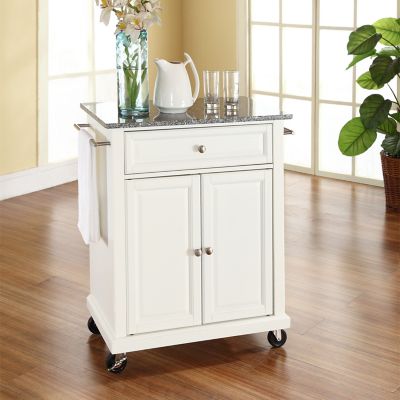
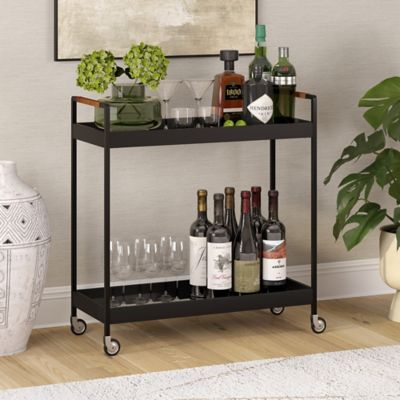
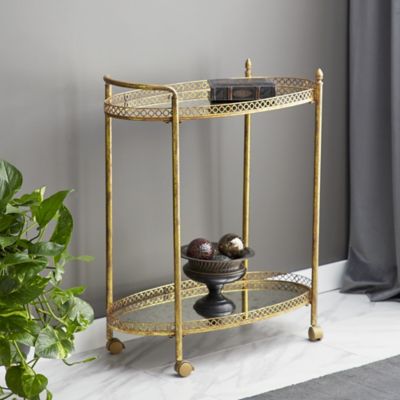
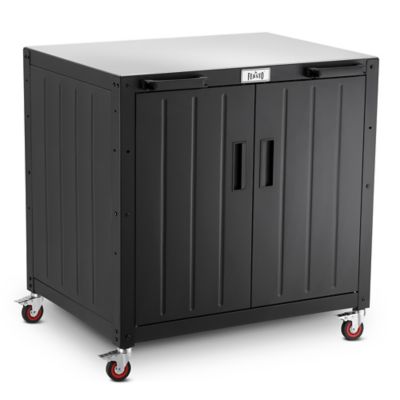
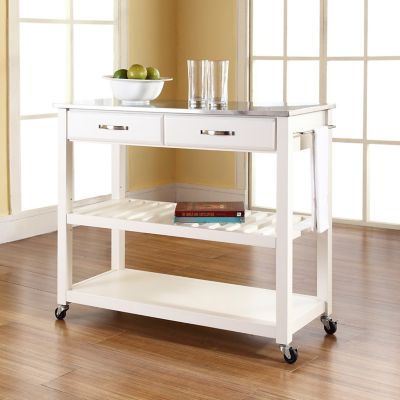
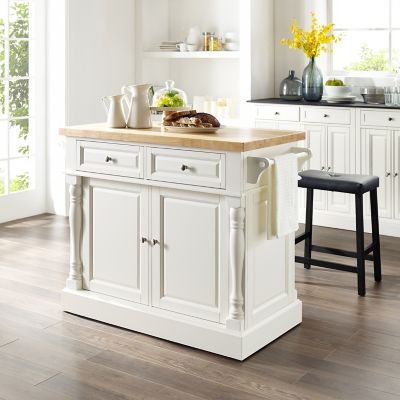
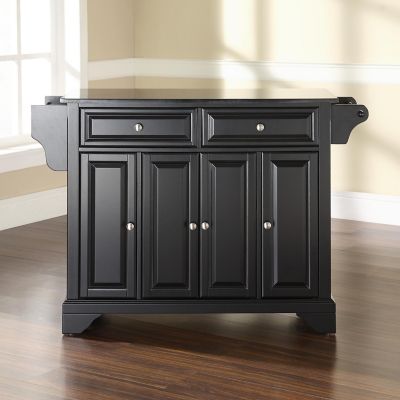
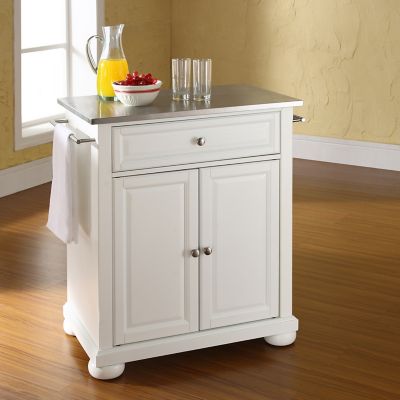
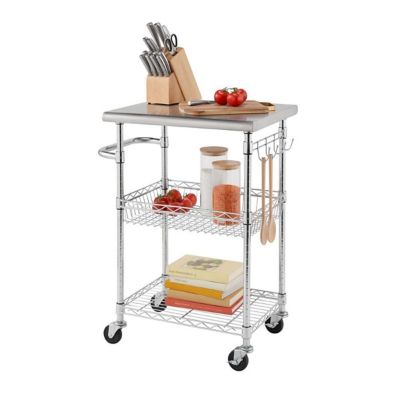
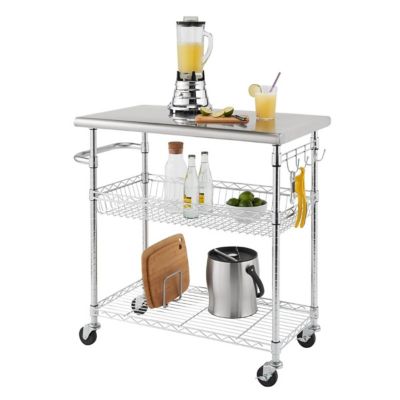
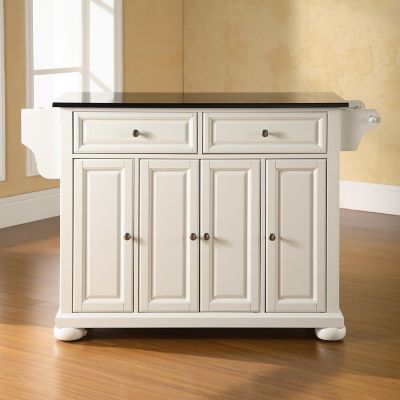
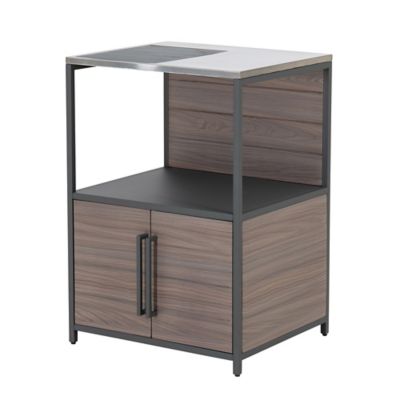
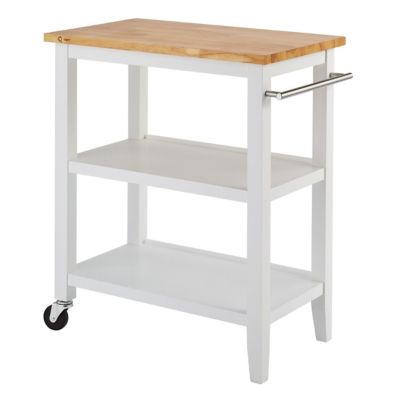
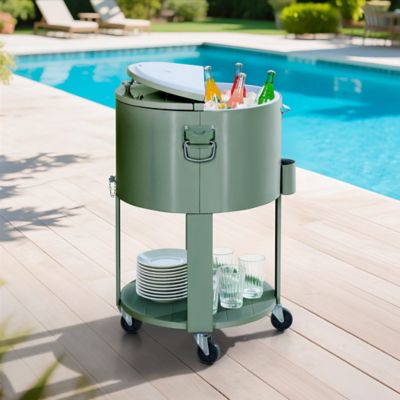
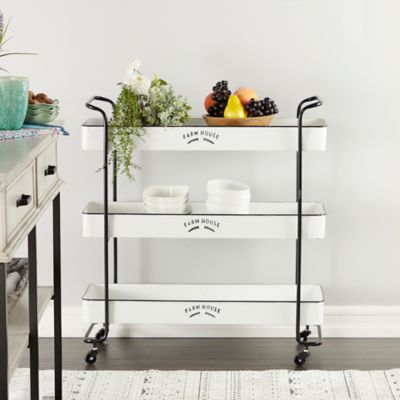
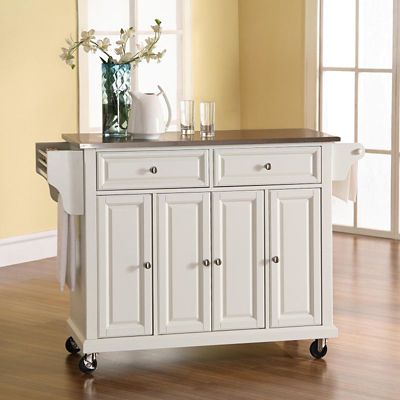
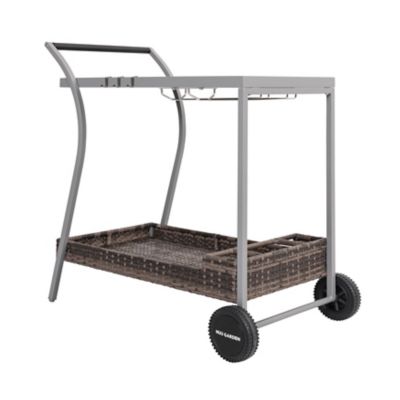
Kitchen bar carts are wheeled storage and serving units that keep drinks, glassware, and kitchen essentials together while adding a movable surface for serving. Most have a top and one or more lower shelves, with layouts ranging from open shelving to enclosed cabinets and drawers. They can fill the gap between a crowded countertop and a full-size kitchen island, especially in a home where the kitchen also serves as the gathering place. A cart parked beside the dining table can hold a pitcher of tea, drinking glasses, and napkins so nobody has to squeeze past the cook for a refill. Near a breakfast nook, it can become a coffee station with mugs, stirring spoons, and a tray for the little things that otherwise spread across the counter. For entertaining, a kitchen beverage cart gives bottles, mixers, an ice bucket, and serving tools a spot of their own. Wine racks and hanging stemware holders separate those supplies from general storage, though their dimensions need to suit the bottles and glasses they hold. Drawers make sense for corkscrews, bottle openers, coasters, and napkins, while cabinets can keep serving pieces out of sight between gatherings. Open shelves make it easier to spot a stack of plates or reach a basket of towels without opening a door. The best arrangement depends on the job: a drinks station benefits from bottle storage and a clear serving surface, while a kitchen storage cart may need more room for bowls, pantry containers, or serving platters. A flat top does not automatically make a cart suitable for chopping or supporting a countertop appliance; food-contact suitability, weight limits, and the maker’s intended use still matter. With the right layout, a cart can handle the serving side of supper without taking over the room, leaving the main counter clear for the person getting the meal on the table. That separation is especially handy when several people are helping in a kitchen with limited counter space.
Materials affect a kitchen bar cart’s appearance, weight, upkeep, and how well it stands up to everyday knocks and spills. Wood brings a warmer look alongside painted cabinets, plank tables, and other familiar kitchen furnishings. Solid wood, wood veneer, and manufactured wood are different constructions, so care directions and moisture tolerance can vary even when their finishes look similar. A sealed wood serving surface generally needs prompt spill cleanup, and a butcher-block top may call for periodic oiling with a treatment approved by its maker. Cutting directly on a surface is appropriate only when that surface is intended for food preparation; a separate cutting board helps protect other tops. For a straightforward look alongside wood cabinets or stainless steel appliances,
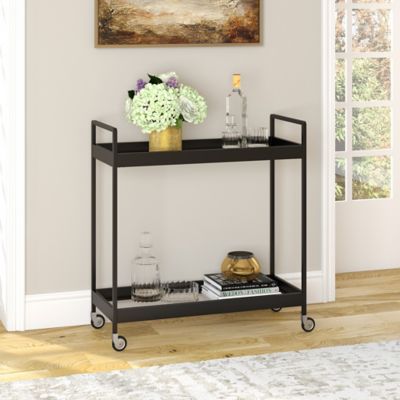
Metal Bar Carts fit into a range of kitchen settings. Metal frames can support open shelving without the visual weight of a cabinet, though their load capacity depends on the construction rather than appearance alone. Painted and powder-coated finishes need gentle cleaning to avoid scratches, and chipped areas may need attention according to the care instructions. Glass shelves give a room a lighter look and make lower storage easy to see, but fingerprints and water spots tend to show. Shelf weight ratings are particularly important when glass supports bottles or stacks of dishes. Stone tops add weight and a substantial feel; certain stones also need sealing or protection from acidic spills. Across materials, coasters, trays, and trivets help keep bottle rings, drips, and heat away from the surface. A removable tray can carry several glasses to the table and catch the small splash that comes with pouring a full pitcher. Smooth, accessible shelves are simpler to wipe down than tight corners crowded with racks. For daily upkeep, a soft cloth and the recommended cleaner are a better match than abrasive pads or a soaking-wet rag. Hardware and caster attachments also deserve an occasional check, since loose connections can affect how steadily a loaded cart rolls.
Fit matters just as much as storage space, particularly in a kitchen where cabinet doors, chairs, and people all need room to move. A cart’s overall width and depth should include handles, towel bars, and any shelves or leaves that extend beyond its frame. Its parked footprint is only part of the picture: there also needs to be clearance for drawers to open, cabinet doors to swing, and someone to stand comfortably beside it. A narrow cart may tuck neatly against a wall but have limited space for larger platters, while a deeper design can offer more shelf room and take more effort to turn through a doorway. Top height affects comfort when pouring drinks or arranging plates, and a cart meant to sit beside a counter will not necessarily line up with that counter. Swivel casters help with turns around a table or kitchen island, while locking casters help hold the cart in place during serving. Wheel size and material influence how smoothly it crosses flooring seams, rugs, and thresholds. Even with wheel locks engaged, a cart is not a step stool or a support for someone leaning their full weight against it. Heavier supplies belong low and centered, within both the individual shelf ratings and the total load limit. Bottles and glasses need a settled spot away from shelf edges, and hot liquids call for extra care before anything moves. A handle offers a practical place to steer without tugging on a towel rail or shelf. For homes with children or curious pets, alcohol, sharp tools, and breakable glassware need storage that suits the household rather than simply staying within easy reach. A kitchen bar cart can also make a thoughtful housewarming or wedding gift when its size, care needs, and storage match the recipient’s home. Whether it holds coffee fixings for two or serving pieces for a table full of family, its value comes from giving everyday essentials a sensible place to land.