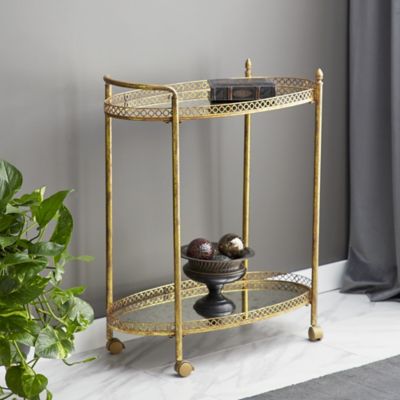
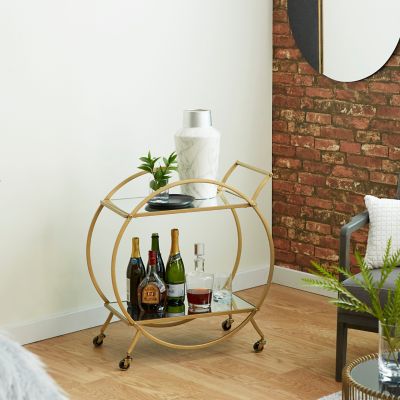
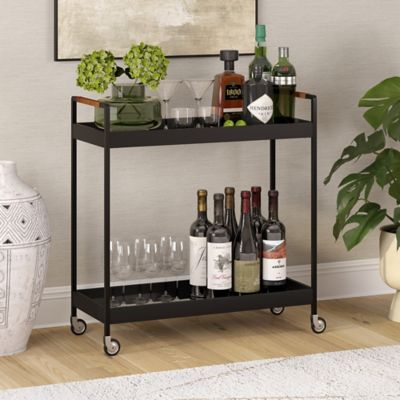
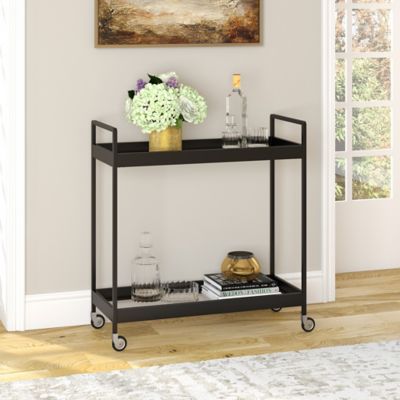
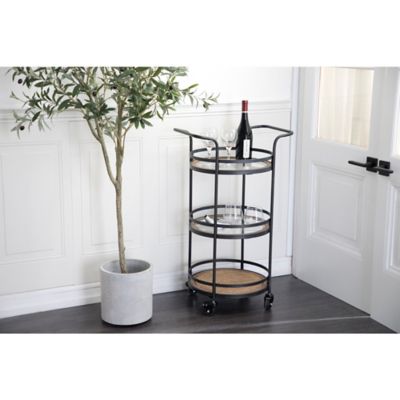
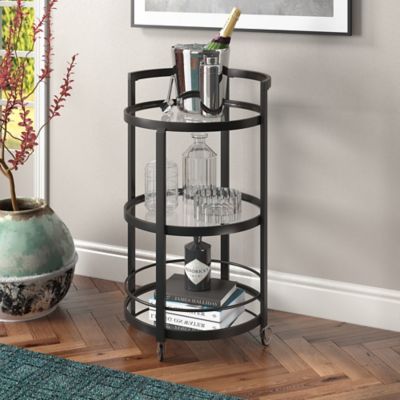
Glass bar carts pair glass shelves with a supporting frame to create a movable station for drinks, glassware, and serving supplies. The clear shelving keeps the look open, making these carts a good fit for a dining room, living room, or farmhouse kitchen where a solid cabinet might feel too heavy. Frames may feature steel, aluminum, brass, or wood, with each material bringing a different feel to the room. Dark metal offers a crisp outline beside pale walls, brass tones add warmth near wood furniture, and wood accents can tie a cart into an existing table or hutch. Clear glass lets the frame and its contents stand out, while tinted or textured glass changes how much of the shelving shows through. Tempered glass offers greater resistance to impact than ordinary glass, though it can still break and needs careful handling. Shelf thickness, frame construction, and the way the glass rests on its supports all deserve attention alongside appearance. An open design may look light without being light to lift, especially once bottles and serving pieces are in place. Size matters just as much as finish: a cart needs enough room to park neatly without blocking a doorway, crowding a dining chair, or narrowing the path between the kitchen and table. Overall height affects how comfortably someone can pour a drink or reach the top shelf, while shelf spacing determines whether taller bottles, pitchers, and stemware will fit. A compact rectangular cart can settle against a wall, while a round shape may work well beside a chair or in a breakfast nook. Handles and wheels can extend beyond the shelf edges, so the full outside measurements matter more than shelf dimensions alone. The best fit leaves breathing room around nearby furniture and keeps frequently reached supplies within an easy reach.
A glass bar cart earns its place by keeping the makings of a gathering together without taking over the room. The top shelf can hold a serving tray, a pitcher, or a few glasses, while lower shelves give bottles and extra supplies a home. Some designs include stemware racks, bottle holders, or raised shelf edges; these features affect both storage capacity and how freely the cart can be arranged. A hanging glass rack needs clearance beneath it, and bottle compartments should suit the bottle shapes intended for them. Raised edges can help contain small shifts, but they do not replace careful placement when the cart is moving. For homes where refreshments travel from kitchen to dining room,
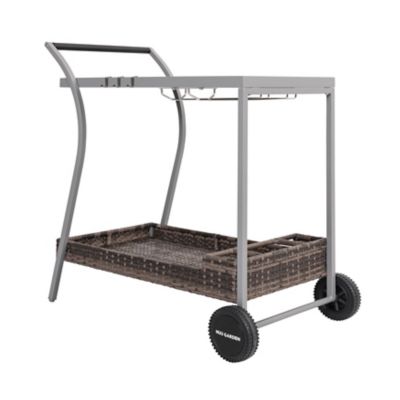
Rolling Bar Carts offer the convenience of bringing the serving station closer to the gathering. Wheel size, wheel material, and the floor surface all influence how smoothly that trip goes. A cart that rolls easily across a hard floor may need more effort over a rug edge or doorway threshold. Locking casters, when included, help hold the cart in place during serving, while a comfortable handle gives a clear place to push without grabbing the glass or pulling on a shelf. Bottle weight adds up quickly, so the stated load limit for each shelf matters more than how much open space remains. Heavier contents generally belong lower down, with weight spread evenly rather than concentrated at one corner. A clear route and an uncrowded top make moving the cart less awkward. Once parked, the same setup can serve lemonade at a family supper, sparkling water during a card game, or coffee after dinner. For smaller homes, that flexibility can be especially handy: one piece of furniture can support everyday routines and company without requiring a separate drinks cabinet. It can also keep serving supplies close to the table, cutting down on trips back to the kitchen while everyone settles in.
Glass shelves bring a bright, open look, but fingerprints, water rings, and spills tend to show, so everyday care is part of the fit. A soft cloth and a cleaner approved for the glass and surrounding frame help keep the surfaces clear without putting the finish at risk. Applying cleaner to the cloth rather than spraying across the whole cart gives better control around shelf supports, wood accents, and metal joints. Spills are easier to manage before they dry, especially sticky mixers or coffee drips near shelf corners. Coasters and trays can catch moisture and keep small serving pieces together, provided their bottoms are smooth and clean. Glass should not serve as a cutting surface, and hot kettles, pans, or serving dishes need a suitable protective barrier unless the manufacturer says otherwise. The shelf edges deserve attention during cleaning because chips or cracks can make continued use unsafe; damaged glass should be addressed according to the manufacturer's directions. Hardware, shelf supports, and casters also benefit from occasional checks, particularly when a cart moves often. Assembly should follow the supplied directions, with every shelf seated properly and fasteners secured as specified. Around children and pets, sensible placement matters: bottles, breakable glasses, and loose accessories should stay out of easy reach, and a cart should never invite climbing or riding. These practical details help determine whether a glass bar cart suits a busy household, a quiet dining corner, or a room mainly set aside for guests. It can also make a thoughtful housewarming or wedding gift for someone who enjoys hosting, as long as the size, finish, and storage arrangement suit their space. Whether it holds cocktail supplies or a pitcher of sweet tea, its appeal comes from combining accessible storage, a convenient serving surface, and an open look that lets the surrounding room remain part of the picture.