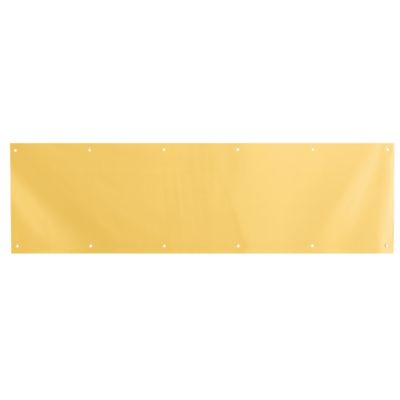
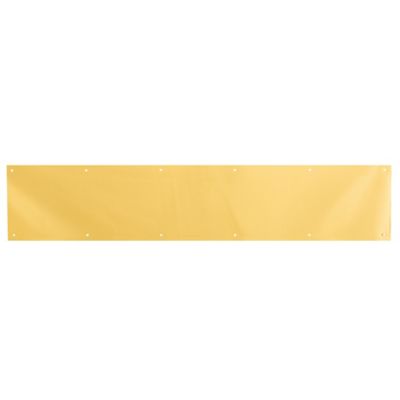
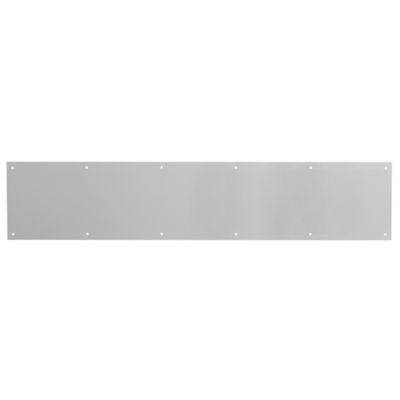
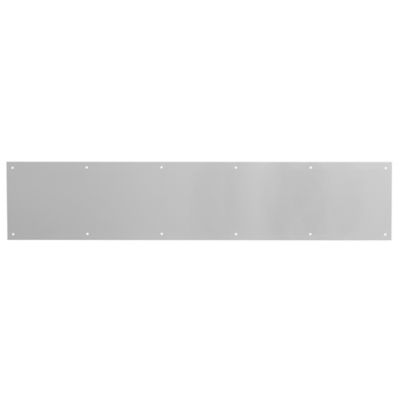
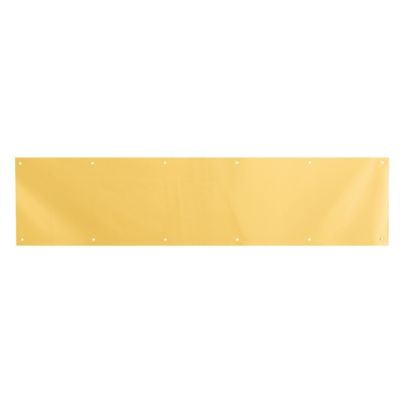
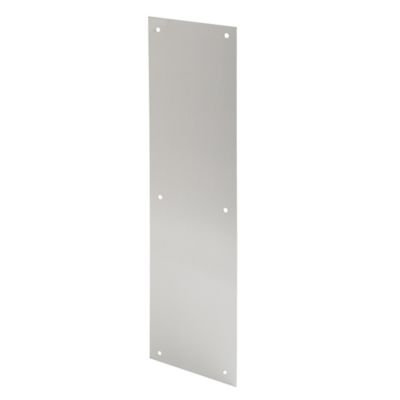
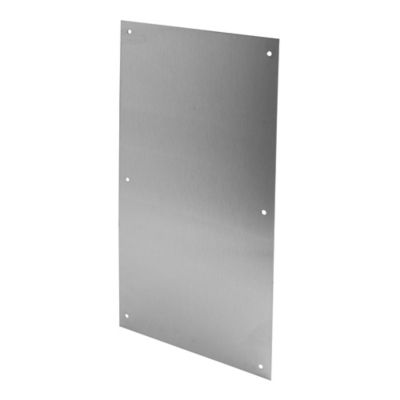
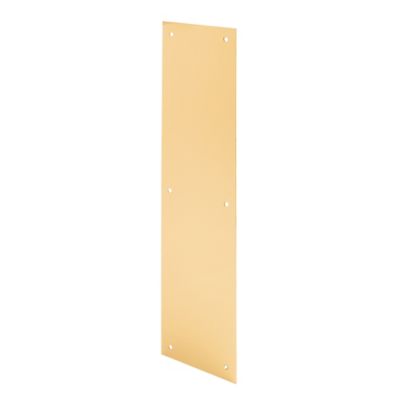
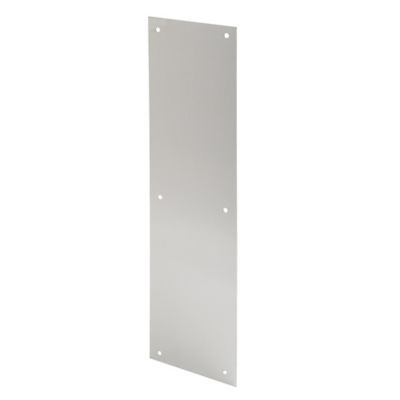
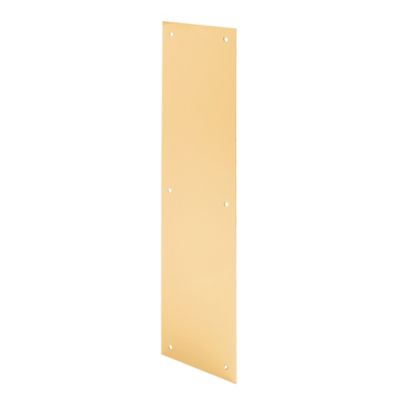
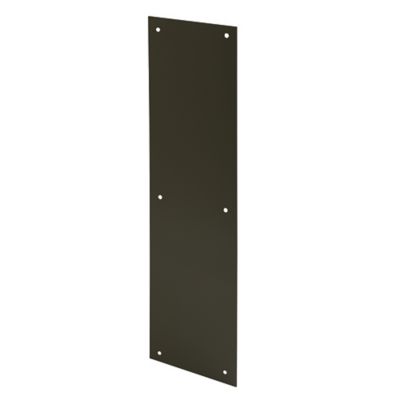
Kick plates for commercial doors help protect the lower part of a door from the everyday knocks that come with a busy building. Shoes, boots, hand trucks, carts, buckets, animal carriers and equipment can all leave behind scuffs, dents and scratches, especially around entrances that see steady traffic. A sturdy plate creates a washable barrier over that high-impact area, helping doors stay cleaner and look presentable through the cooler months and the wet, muddy days that come with changing weather. They are a practical fit for farm and ranch stores, feed rooms, barns, offices, warehouses, workshops, schools, restaurants, clinics, apartment buildings and other places where people move in and out all day. They can also be useful anywhere employees regularly carry supplies with both hands and push a door open with a boot or knee. When choosing a kick plate, start by checking the door’s overall width, construction and traffic level. Many standard plates are sized about 2 inches narrower than the door, leaving roughly a 1-inch inset on each side so the plate clears the door stop and trim. Measure the actual door rather than relying only on a nominal size, and account for any existing hardware, weatherstripping or unusual edge profile. Common heights include 6, 8 and 10 inches for ordinary foot traffic, while taller armor plates may be preferred where carts, gurneys, pallet jacks or other rolling equipment regularly contact the door. A busy back entrance at a hardware counter may need a different level of protection than a quiet office door, just as a service door near a wash bay may need more durable coverage than an interior hallway door. Taking a close look at how the door is used can help prevent buying a plate that is too short for the job or so large that it interferes with the door’s operation.
Material and finish matter when a commercial door has to stand up to hard use while still fitting the space. Stainless steel is a popular choice for its strength, clean appearance and resistance to moisture, cleaning chemicals and general wear. Type 304 stainless steel works well for many indoor and everyday commercial settings, while Type 316 may be considered in locations exposed to harsher chemicals, salt air or more demanding conditions. Satin finishes are often easier to live with than highly polished surfaces because they tend to hide fingerprints, light scratches and dust from boots or work gloves. Aluminum offers a lighter-weight option and may suit projects where easy handling and a lower cost are priorities. Brass and bronze finishes can bring a warmer, more traditional look to a storefront, lodge, office or older building, while black and other coated finishes may blend neatly with modern doors and dark hardware. The finish should be selected with the surrounding hardware in mind, including hinges, push plates, door pulls and thresholds. Installation style is another important consideration. Screw-mounted kick plates are a dependable choice for a permanent installation on compatible wood or metal doors. Countersunk holes keep the fastener heads seated neatly, and the right screw type depends on the door material and the level of security needed. Adhesive or tape-mounted plates provide a clean appearance without exposed screw heads and can be helpful when drilling is not desirable, though the door surface must be smooth, clean, dry and suitable for a high-bond adhesive. Magnetic mounting is generally limited to hollow steel doors and should not be treated as a universal option. Before installation, clean the door, confirm the plate is centered, check that it will not block a sweep or other hardware, and follow the mounting instructions closely. If the door is fire-rated, pay special attention to the requirements that apply to protective plates. Under NFPA 80 guidance, a field-installed plate on a fire-rated door generally cannot extend more than 16 inches up from the bottom unless the plate and installation are specifically labeled or approved for that use. Building codes, door labels and local authority requirements can vary, so a qualified door professional or the local authority having jurisdiction should verify the plan before work begins.
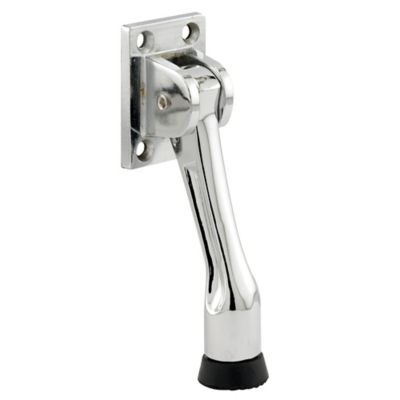
For facilities that see a lot of outdoor traffic, a kick plate can be one small improvement that makes daily cleanup and maintenance easier. A feed store entrance may take a steady beating from muddy work boots, while a clinic or care facility may need protection from wheelchairs, carts and rolling equipment. In a warehouse or workshop, a plate can help keep the door from picking up fresh scratches every time a load is moved through. In a rural office, shop or barn, it also offers a simple way to add durability without replacing the entire door. Look for a plate that matches the door’s width, leaves room for the frame and hardware, and has a height suited to the equipment and traffic moving through that opening. Heavier-gauge construction is often worthwhile in demanding areas, while a lighter option may be perfectly adequate for a staff-only room. Keep in mind that a kick plate protects the bottom section of a door; it does not replace a door sweep, threshold, closer or other hardware that controls drafts, pests, water and movement. For related ways to help a commercial door open, close and stay in place, explore
Commercial Door Stops. During wet and windy seasons, inspect the fasteners, adhesive bond and door edges from time to time, especially at entrances exposed to grit, standing water or frequent washing. Tighten loose screws when appropriate, remove buildup before it works under the plate, and replace damaged hardware before a small problem turns into a door that drags or fails to close. With the right size, material, mounting method and code considerations, commercial door kick plates provide straightforward protection for the high-use doors that keep a business, farm, facility or workshop moving.