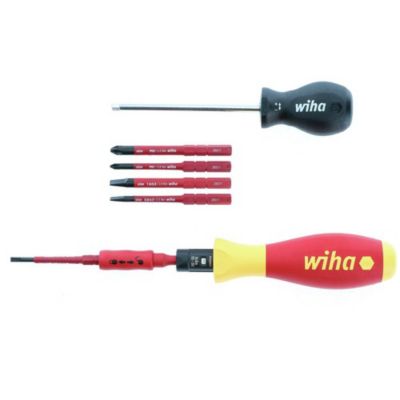
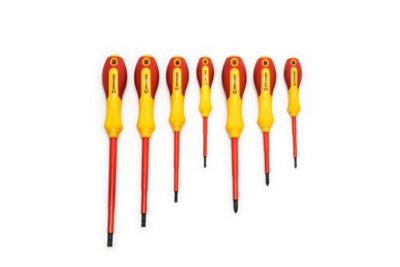
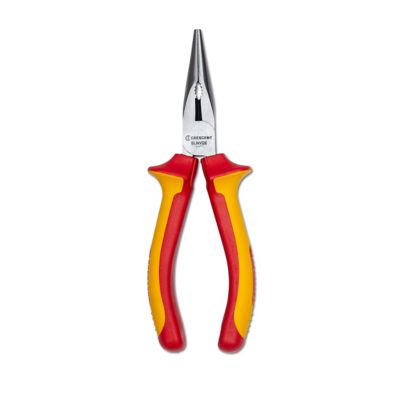
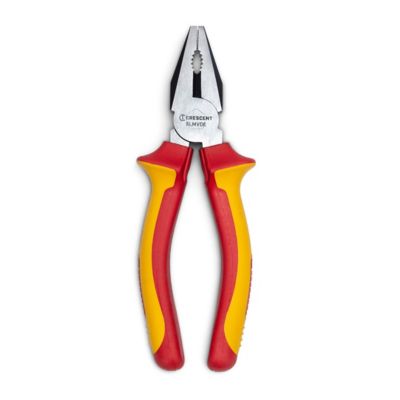
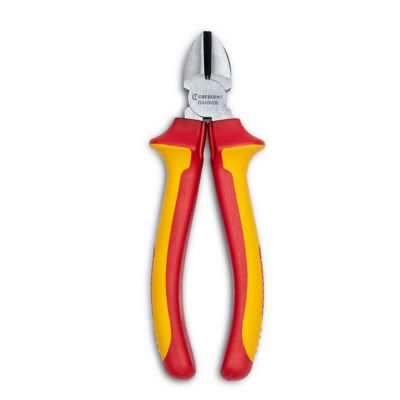
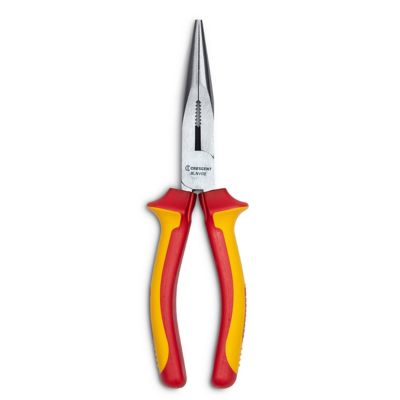
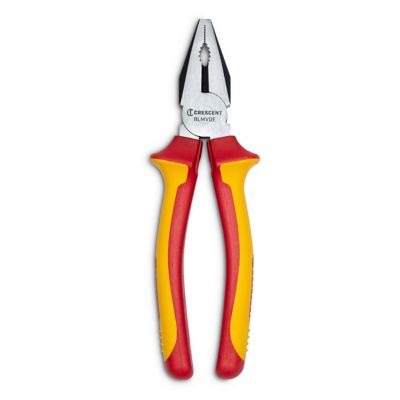
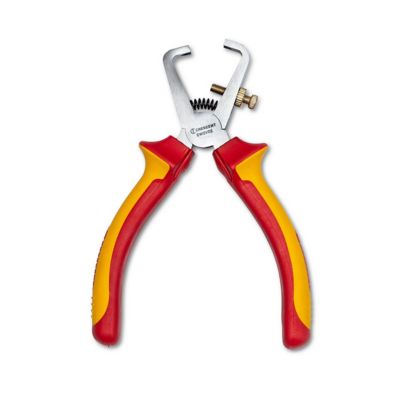
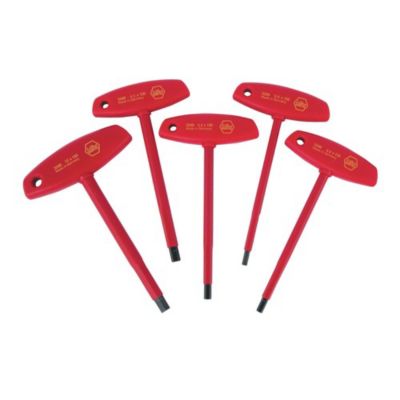
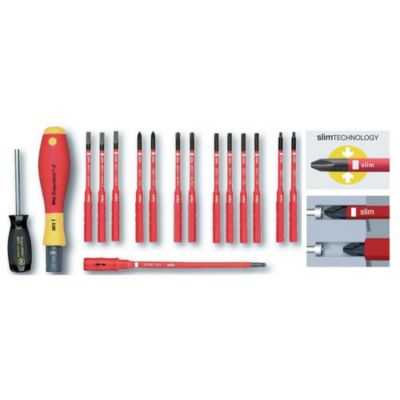
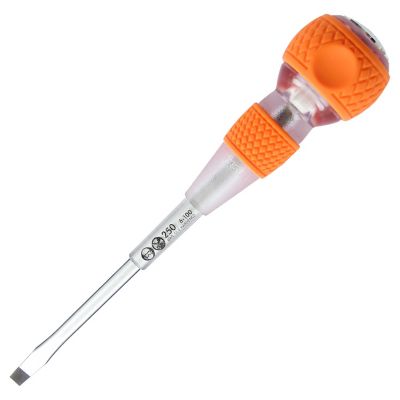
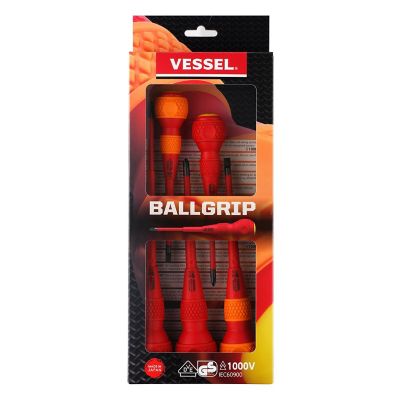
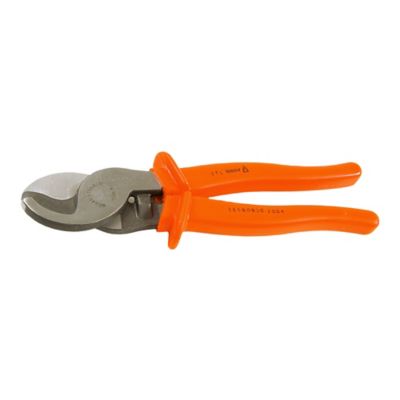
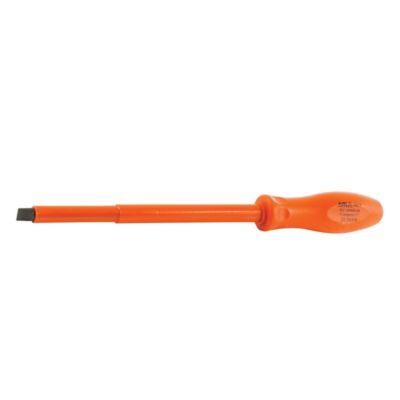
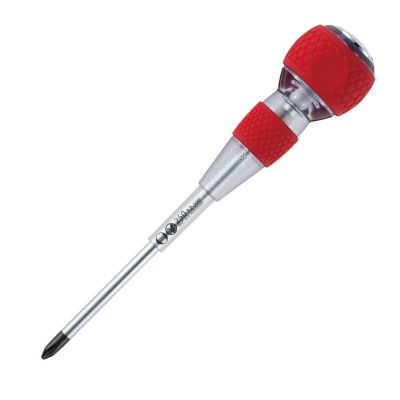
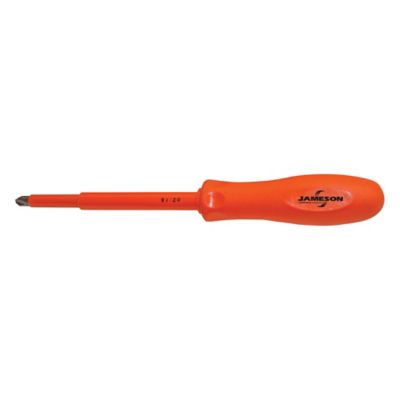
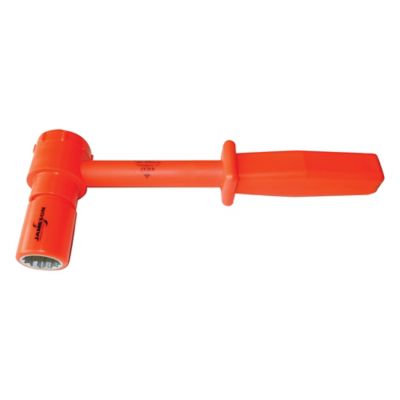
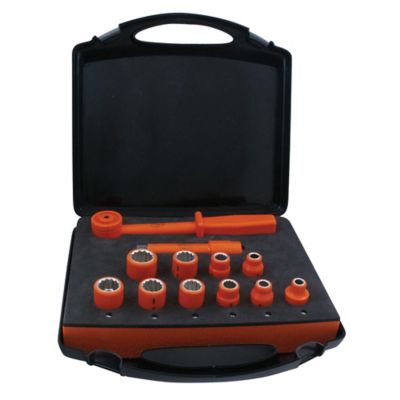
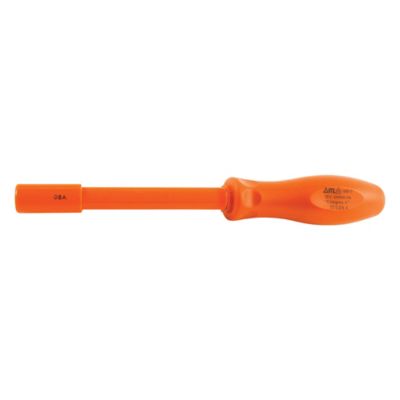
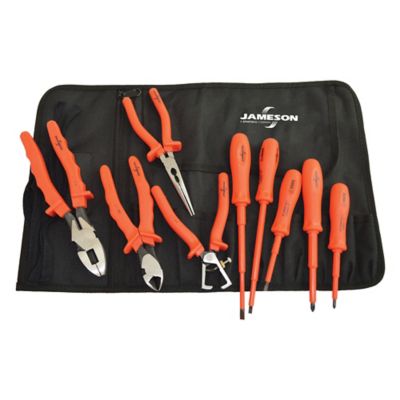
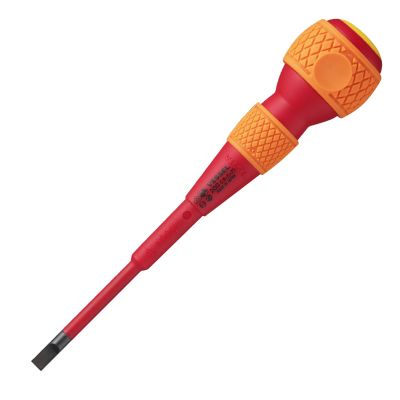
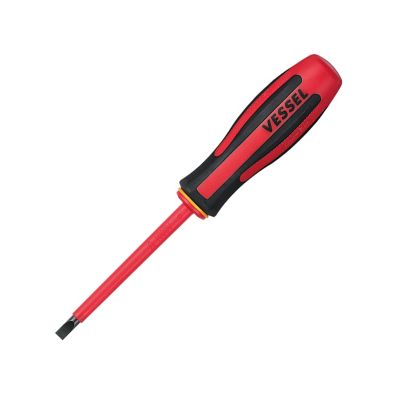
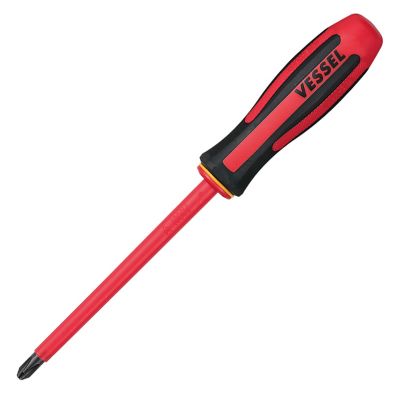
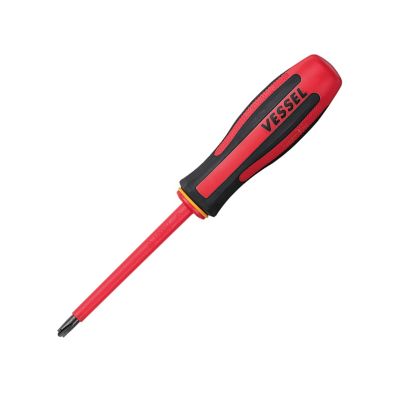
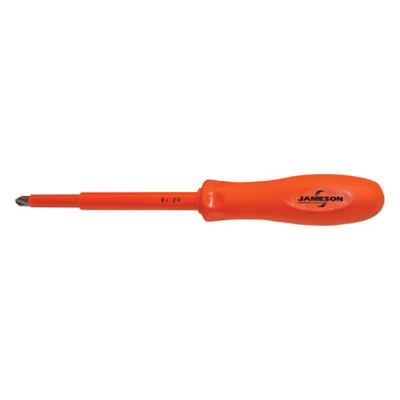
Insulated tools are made for electricians, maintenance crews, utility workers, farmers, facility teams, and handy folks who work around electrical equipment where an extra layer of protection matters. The insulated covering is designed to help reduce the chance of shock and protect against accidental contact with energized parts, but it does not make electrical work risk-free. Always shut off power whenever possible, verify that circuits are de-energized with the proper testing equipment, follow local codes and workplace procedures, and use the required personal protective equipment. A tool with a soft rubber or plastic grip is not automatically an electrically insulated tool. For recognized electrical protection, look for tools clearly marked with a 1,000-volt AC rating, a 1,500-volt DC rating where applicable, and the official double-triangle symbol. Certifications and markings tied to standards such as IEC 60900 and ASTM F1505 help show that the tool was made and tested for this kind of work. Tools meeting these standards are individually tested at much higher voltages, commonly 10,000 volts AC, before they reach the jobsite. That extra testing is one reason certified insulated tools belong in an electrician’s everyday kit, whether the work takes place in a new home, an older barn, a commercial building, a service truck, or a chilly workshop during the cooler months. Browse the selection of
Insulated Tools to find hand tools suited to electrical service, installation, repair, and maintenance tasks.
When choosing insulated tools, start with the kind of work you do most often and the size of the tool kit you need to carry. A general-purpose kit may call for several driver styles and sizes, along with gripping, cutting, and turning tools for common electrical jobs. Someone working on control panels or delicate wiring may value a comfortable, precise handle and a slimmer working end, while a person handling heavier cable or outdoor equipment may place more importance on jaw strength, cutting ability, and a solid grip. Look for clean, complete insulation that runs from the handle toward the working end without gaps, loose sections, or rough edges. Many certified tools use contrasting insulation colors, so damage is easier to spot when an outside layer is nicked or worn through. The handle should feel steady in your hand, even when you are wearing work gloves, and controls should move smoothly without excessive play. Balanced tools can make a long day of tightening terminals or servicing equipment easier on your wrist and forearm. A well-chosen set also saves time in the field; reaching into a pouch and finding the right insulated tool is better than making do with an ordinary hand tool because the proper one was left in the shop. These tools can make a practical gift for an apprentice, trade-school student, new maintenance worker, or experienced electrician building a backup kit. They are also useful for a farm owner or rural property manager who handles routine equipment upkeep, provided electrical work is left to a qualified person when the job calls for licensed expertise or specialized training.
Inspect every insulated tool before use, especially after it has spent a day rolling around in a service truck, toolbox, or crowded work pouch. Look closely at the entire outer surface for cuts, cracks, punctures, burns, flattened spots, or areas rubbed smooth by contact with metal. If a scratch or gouge reveals a contrasting inner layer, treat the insulation as compromised and remove the tool from service right away. Do not try to patch, tape, sand, or coat damaged insulation and put the tool back to work. Replace it with a properly rated tool instead. Keep the insulation clean and dry by wiping away oil, grease, dirt, and moisture after the job. Contamination can make a handle harder to hold and may hide damage that would otherwise be easy to see. Store insulated tools in a dedicated pouch, drawer, or case where they will not rub against sharp blades, loose fasteners, welding equipment, or other objects that can cut the protective coating. Avoid using them for jobs they were not designed to handle, such as prying, striking, or forcing a fastener with an ill-fitting tip. Even certified insulation can be damaged by heat, chemicals, sunlight, and rough treatment, so a little care goes a long way. Before starting work around electrical circuits, make sure the tool’s markings remain readable, the working end is in good condition, and the tool is appropriate for the voltage and task. Insulated tools are one part of a careful electrical safety routine—not a substitute for de-energizing equipment, testing for the absence of voltage, maintaining safe clearances, and following qualified work practices.