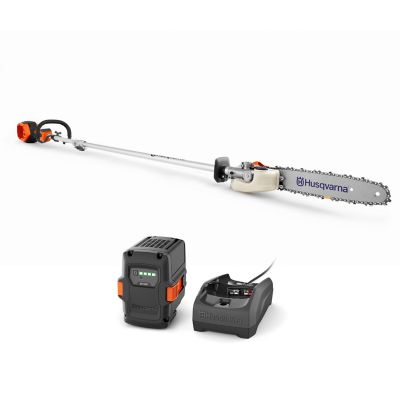
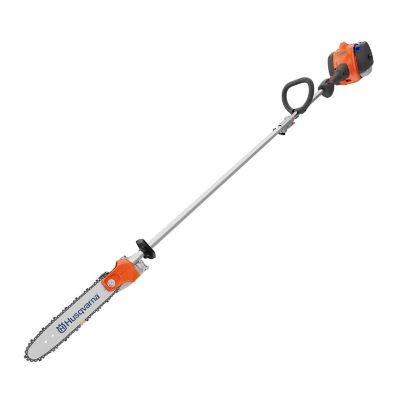
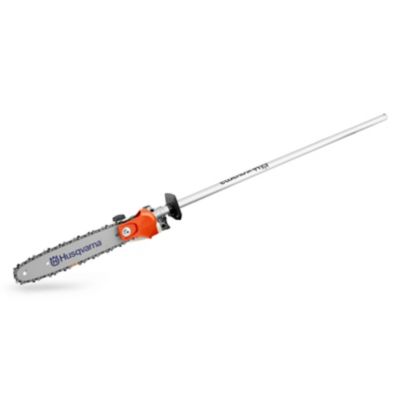
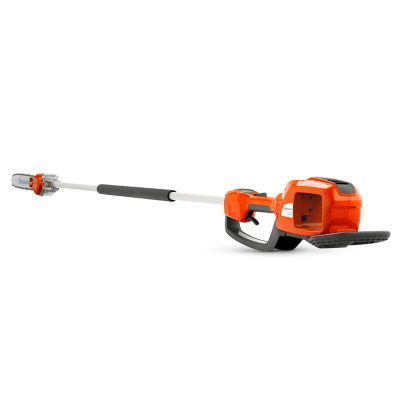
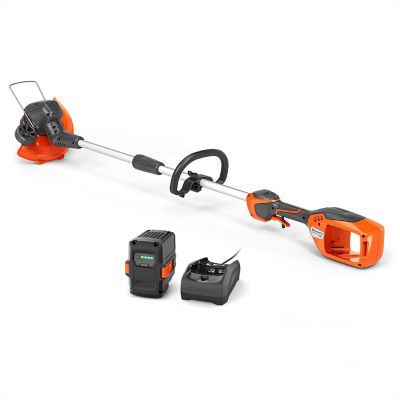
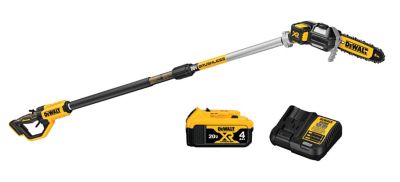
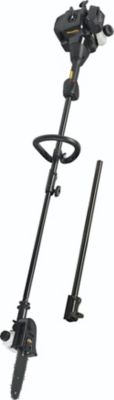
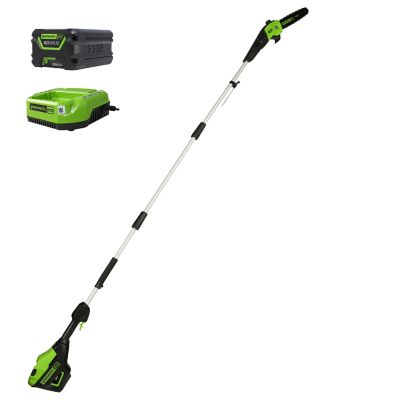
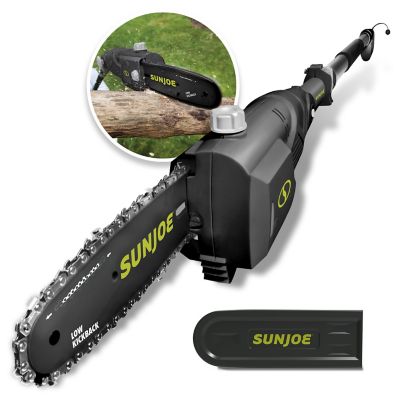
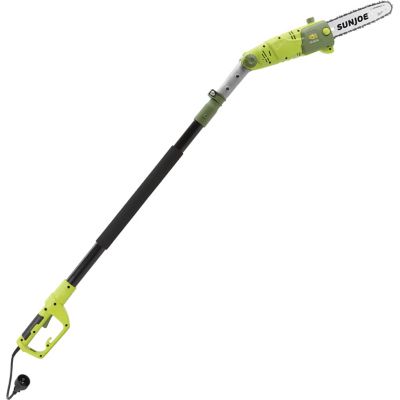
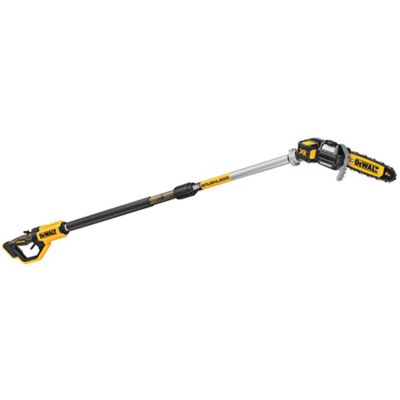
A pole saw puts a small chainsaw cutting head on a long shaft, making it possible to trim certain elevated branches while keeping both feet on the ground. It fits the kind of upkeep that comes with tree-lined driveways, pasture edges and yards where low limbs crowd a walking path or hang into an access lane. For homeowners, acreage owners and landscape crews, the main shopping considerations are power source, shaft design, cutting capacity and how the tool feels at its working length. Gas pole saws suit jobs where refueling is more practical than stopping to recharge, especially across a spread-out property with no convenient electrical outlet. They also bring engine noise, exhaust and regular fuel-system care. Battery pole saws run without engine exhaust and take fuel mixing out of the picture, though their working time depends on battery capacity, branch size, wood hardness and cutting load. Battery weight matters, too: a larger battery can extend working time while changing the tool’s balance. Neither power source takes away the need for chain lubrication, a sharp chain or proper protective equipment. The better fit depends less on the size of the property alone than on how much actual cutting happens between moves. A few limbs beside a gate present a different workload from repeated pruning along a long lane. Shaft materials also play a part in handling. Aluminum and composite components can help manage weight, but the full tool’s balance matters more than any single material description. A cutting head that feels manageable close to the body may feel considerably heavier at full extension. Comfortable grips, accessible controls and a harness attachment, where provided, are worth considering for jobs that involve carrying the saw between trees. These tools belong in the pruning category, not as a substitute for tree-removal equipment or professional climbing work. Large limbs, damaged trees and branches suspended over buildings call for a qualified tree-care professional rather than simply a longer pole.
Reach deserves a close look because shaft length and advertised working height are not always the same measurement. A working-height figure may include the operator’s height and arm position, so it does not necessarily describe the physical length of the tool. Fixed-shaft designs keep the setup straightforward, while telescoping designs allow length adjustments within the manufacturer’s stated range. Some designs separate into sections for transport or accept attachments, but those features depend on the tool and its approved connections. Extra length can help with access, yet it also increases leverage against the operator and makes the cutting head harder to control. A shorter, well-balanced setup may be a better match for routine low-limb work than a longer one that encourages overreaching. Guide-bar length is another useful comparison point, but it is not permission to cut every branch that appears to fit against the bar. The manufacturer’s cutting limits, the branch’s position and the surrounding space all matter. Dense wood and thick limbs place more demand on the chain and powerhead than small, sound branches. A clear landing area is just as important as access to the cut. A limb over a fence can damage wire or posts when it drops, and one above a parked trailer can cause trouble even when it looks small from the ground. People, livestock and pets need to stay outside the work area according to the operator’s manual. Pole saw work calls for firm footing, both hands on the tool and a position away from directly beneath the branch. Ladders and improvised platforms add hazards rather than useful reach. Eye, hearing and head protection, gloves and suitable footwear belong with the equipment. Electrical lines require particular caution: an ordinary pole saw is not protection against electrical contact, regardless of shaft material. Branches touching or close to utility lines belong with the utility provider or properly qualified professionals, not routine property maintenance.
Long-term ownership comes down to keeping the cutting system in shape and matching replacement parts correctly. A chain that is sharp and tensioned to the manufacturer’s specification cuts with less forcing than a dull or improperly adjusted chain. Sawdust, fine chips and oily residue collect around the cutting head, so accessible covers and clear maintenance information can make routine care less of a chore. An automatic chain-oiling system supplies lubricant during operation, but its reservoir still needs attention, and bar-and-chain oil is separate from engine lubrication. Replacement chain selection involves more than bar length: chain pitch, gauge and drive-link count must match the approved setup. Guide bars, sprockets and other cutting components also need compatible specifications. Before cleaning, adjustments or parts changes, the tool needs to be shut down and isolated from its power source as directed in the manual. Gas models with two-cycle engines require the specified fuel-and-oil mixture, along with attention to filters, spark plugs and fuel storage instructions. Battery equipment needs the correct charger and an approved battery, with charging and storage handled according to the manufacturer’s directions. Shared battery platforms can simplify property-tool ownership, but batteries and attachments are not interchangeable just because their connections look similar. Package contents are another practical detail: the tool, battery, charger, harness and cutting-head components may be arranged differently, so the listed contents matter when comparing setups. A bar cover helps protect the cutting attachment during transport and storage, while a suitable storage spot keeps the shaft from becoming a trip hazard in the shed. For a broader look at equipment for property chores, explore
Husqvarna Outdoor Products. The most useful pole saw setup is one that matches the work, fits the operator and leaves room for sensible limits. For a person maintaining an acreage or keeping access lanes clear, manageable handling and straightforward care can matter as much as maximum reach.