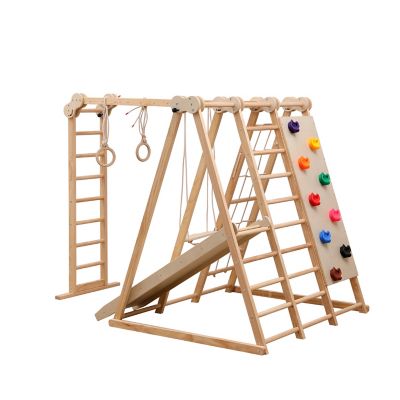
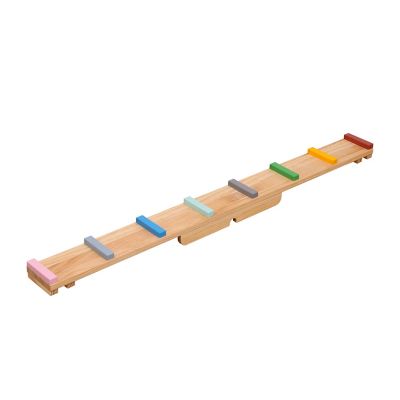
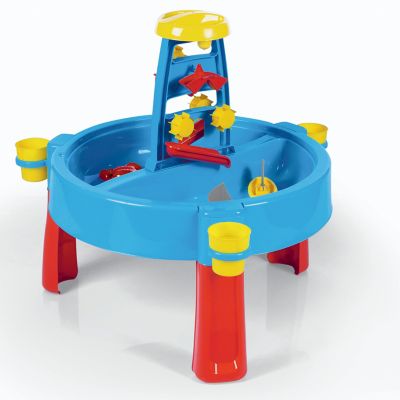
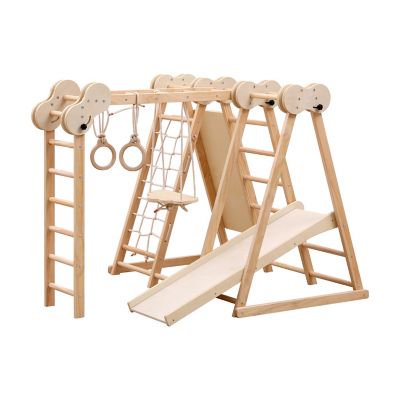
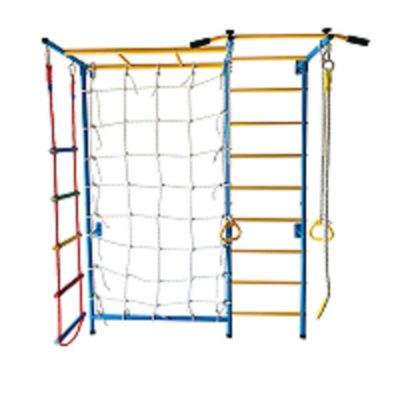
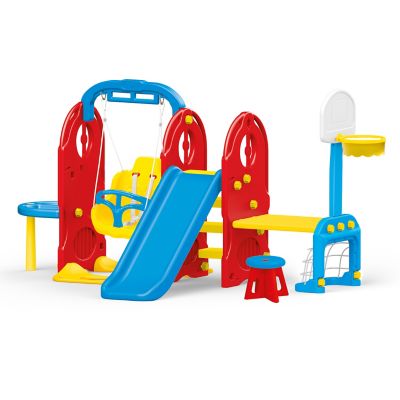
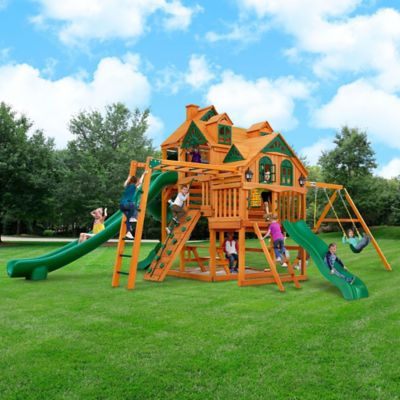
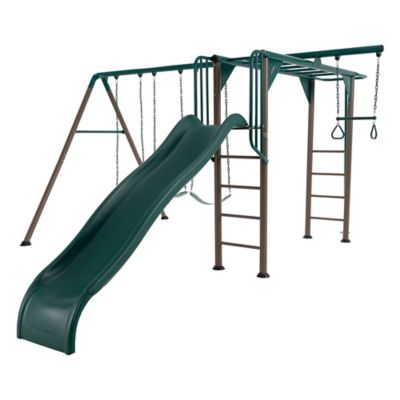
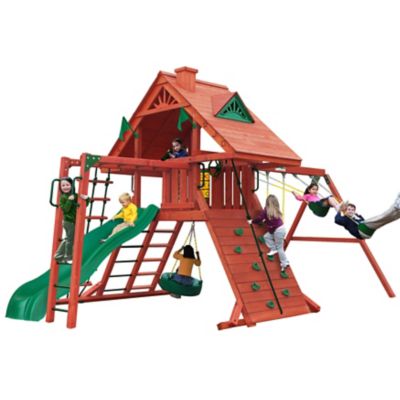
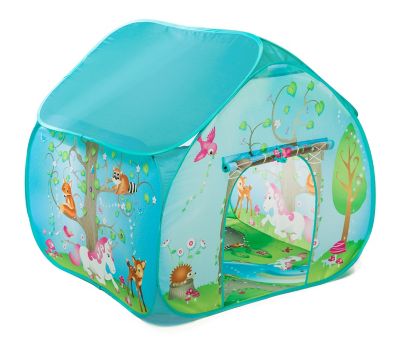
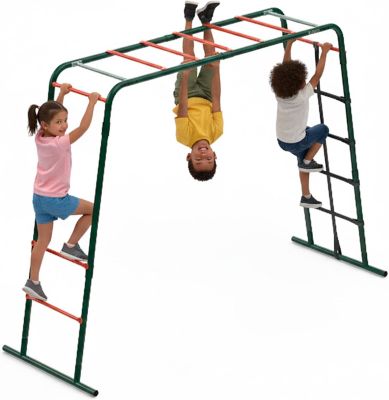
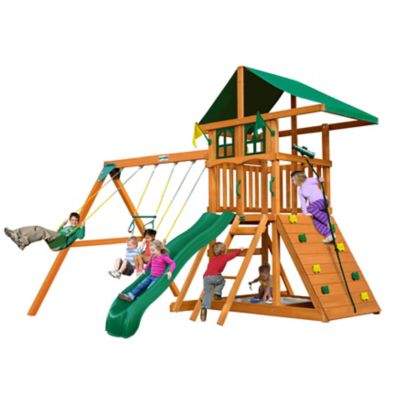
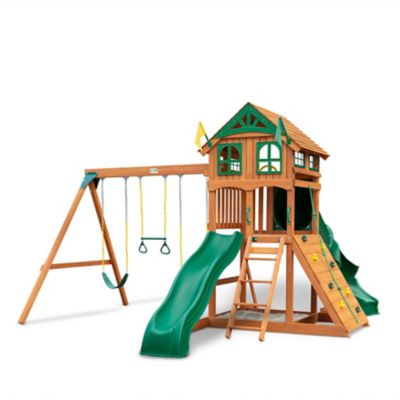
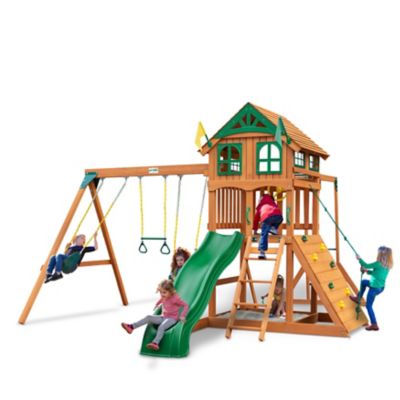
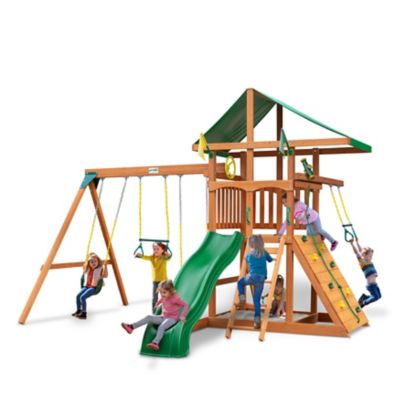
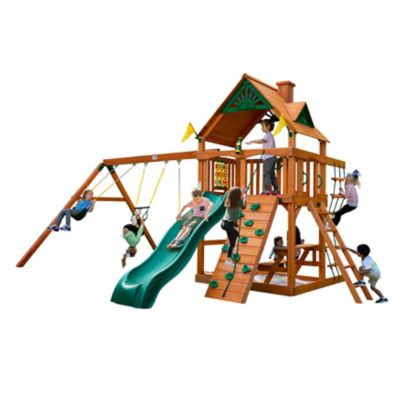
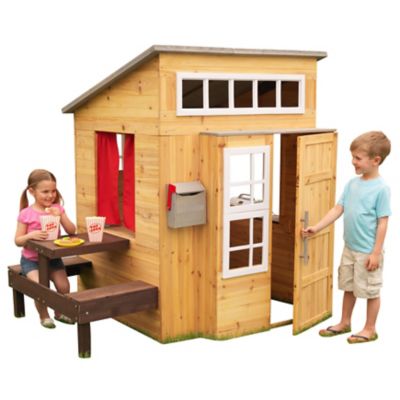
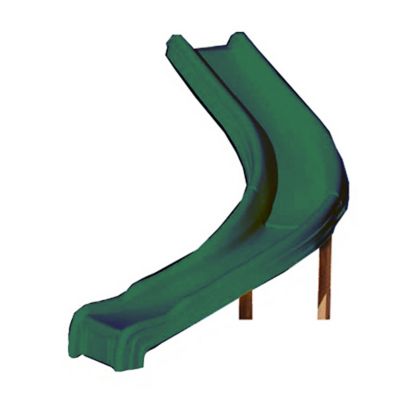
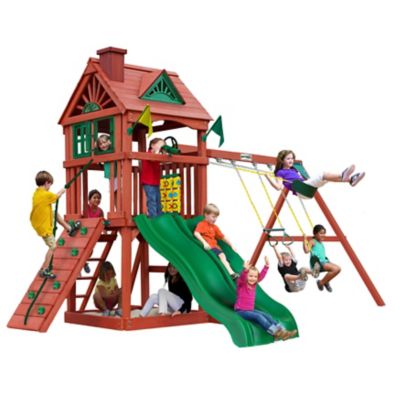
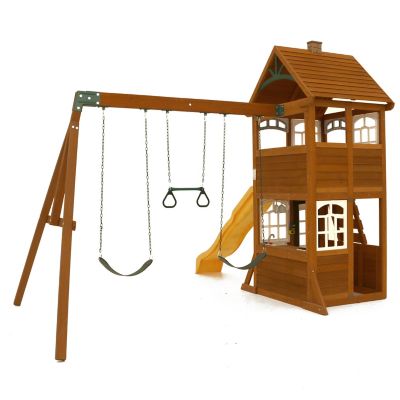
Home play equipment brings climbing, sliding, swinging, and make-believe play into spaces where children can stay close to home. The category ranges from compact indoor climbers and low toddler slides to backyard swing sets and larger playsets with raised platforms, ladders, and clubhouse-style spaces. Each type supports a different kind of activity: a swing offers a repeating rhythm, a climbing wall calls for careful hand and foot placement, and a small playhouse gives pretend chores and backyard adventures a place to begin. For a little one still getting steady on their feet, low platforms, easy-to-grip handholds, and steps sized for short legs matter more than an elaborate layout. Older children may prefer more challenging climbing routes, longer slides, and room to play alongside siblings or friends. Manufacturer age recommendations, individual weight limits, and total occupancy limits help define who a structure is meant for; a larger frame does not automatically make equipment suitable for every age. Seat shape, step spacing, platform height, and the distance between handholds all affect fit, too. Children should be able to reach the parts intended for their age group without stretching beyond their ability or needing a makeshift boost. Indoor play equipment generally suits a dedicated playroom or another open area with enough room for movement and adult supervision. Outdoor play equipment needs a level section of the yard where its full operating space can stay clear of fences, sheds, driveways, and other obstacles. A backyard with plenty of acreage can still have a tricky slope or a narrow usable strip, while a smaller space may suit a simpler setup with fewer moving parts. The best match is not necessarily the biggest structure. It is equipment that fits the children, fits the space, and offers activities worth coming back to, whether that means a few turns on a slide before supper or an afternoon of pretend farm chores.
Materials influence the feel, care needs, and long-term upkeep of home play equipment. Wooden frames bring a familiar backyard look and can support substantial play structures, but their surfaces need regular checks for splinters, cracks, and any finish maintenance specified by the manufacturer. Metal frames often feature coated surfaces that help resist corrosion; scratches, exposed metal, and connections still deserve attention. Molded plastic provides smooth shapes and wipe-clean surfaces, particularly on smaller equipment, though cracks, distortion, or loose connections can take a piece out of service. No material eliminates the need for inspections. Fasteners can loosen, swing hangers can wear, and climbing grips can shift with repeated activity. Accessible hardware, clear assembly directions, and manufacturer-supported replacement parts make ongoing care more manageable. Setup requirements matter just as much as the frame itself. The dimensions listed for a playset usually describe the structure, not its entire safe play area. Swings need extra clearance through their full forward-and-back travel, and slides need an unobstructed exit area. Overhead space should stay clear of branches, utility lines, and other hazards. Outdoor climbing and swinging equipment also needs protective surfacing appropriate to its fall height, installed and maintained according to the equipment and surfacing instructions. Grass and packed dirt are not substitutes for impact-absorbing playground surfacing, and hard surfaces such as concrete are not appropriate underneath this equipment. A level installation, the specified anchors, and correctly tightened connections help the structure perform as intended; extra weight alone does not take the place of anchoring. Indoors, clearance from walls, windows, furniture edges, ceiling fans, and window-covering cords deserves the same attention as floor space. Any required mats, wall attachments, or floor protection should match the manufacturer's directions. Equipment labeled for home use is intended for that setting, rather than the heavier traffic of a school or public playground. Those details help distinguish a good-looking setup from one that actually belongs in the space and suits its intended use.
Day-to-day play also depends on how an equipment layout works when more than one child joins in. Separate climbing, swinging, and pretend-play areas can give siblings different things to do without crowding the same ladder or landing spot. A clear path between activities helps keep a child leaving the slide out of another child's swing path. For families with a wide age range, an age-appropriate toddler area apart from taller equipment can make supervision more manageable, though an adult still needs to stay attentive. Sightlines matter: a raised clubhouse or broad climbing panel can block the view from a nearby seat, even when the whole structure seems close. Simpler layouts often make it easier to see hands, feet, and busy play spaces at a glance. Space for a supervising adult to approach also matters, especially around equipment for younger children. For a broader backyard setup,
Outdoor Play Toys can complement fixed equipment with other ways to move, imagine, and play together, provided loose toys stay outside swing paths and landing areas. Portable equipment brings its own practical considerations, including whether it must be secured during play, how it folds or comes apart, and where it can be stored afterward. Folding joints and removable sections need their locks or fasteners fully engaged before children climb aboard. Cleaning methods vary by material, so manufacturer-approved care is a better match than harsh cleaners or abrasive scrubbing. A quick check before play can catch a loose connection, damaged surface, or obstacle that was not there the last time. As a birthday gift or a shared present for grandchildren, home play equipment calls for a conversation with the adults responsible for the space. Footprint, age range, assembly, surfacing, and supervision all belong in that conversation. A setup that matches those everyday realities can become a familiar gathering spot for climbing practice, taking turns, and the kind of make-believe that turns a backyard platform into a farmhouse porch.