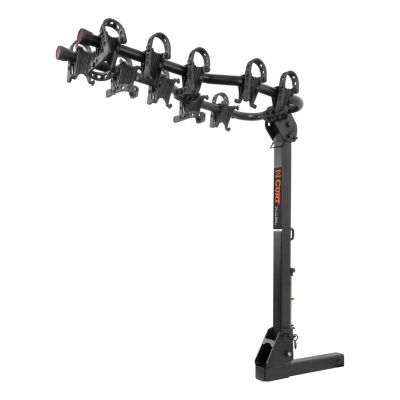
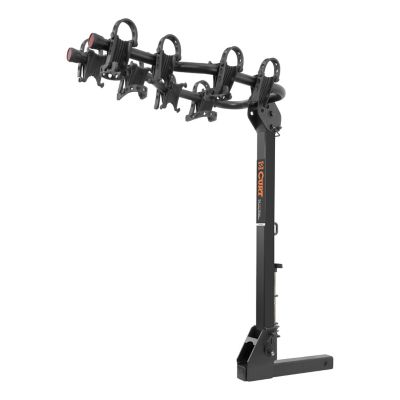
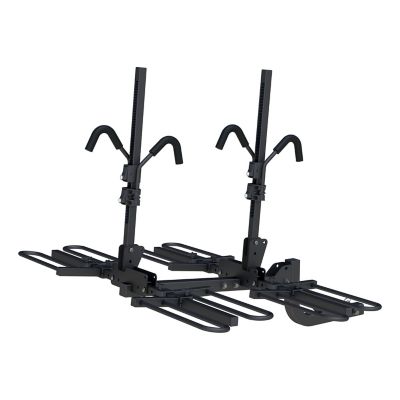
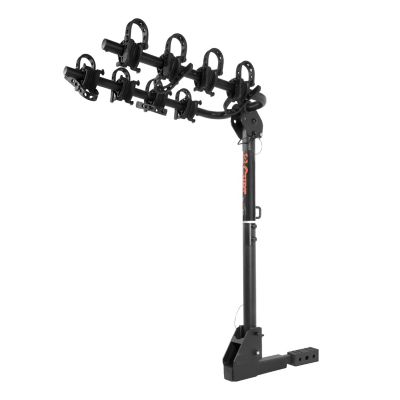
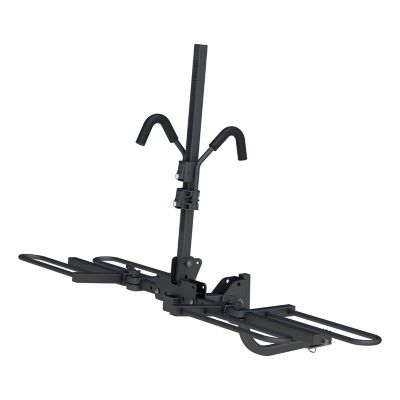
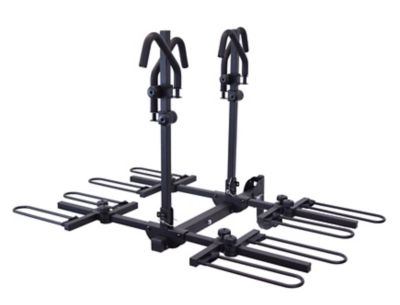
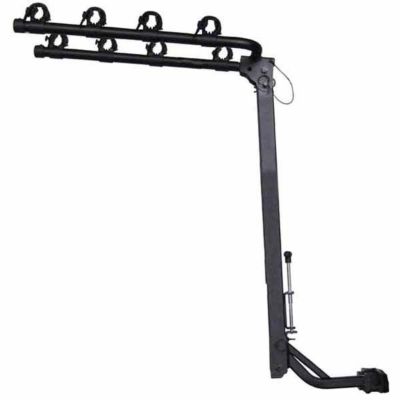
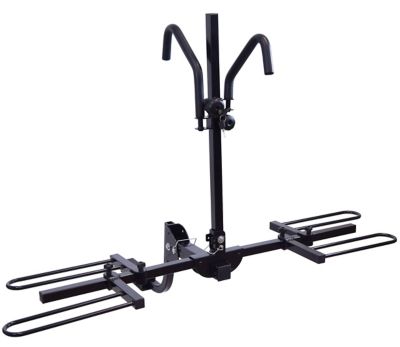
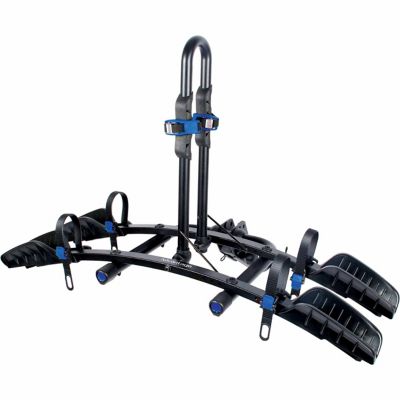
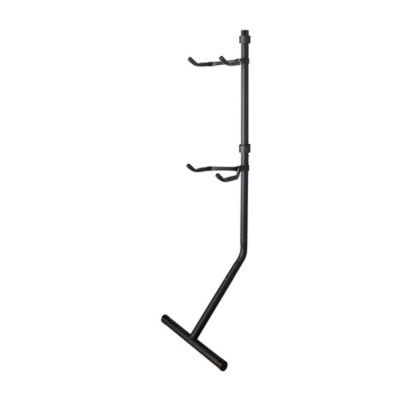
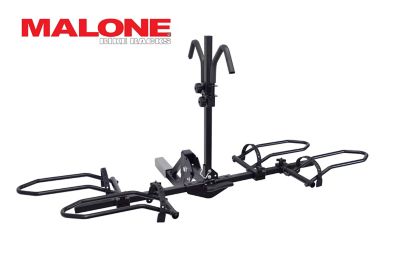
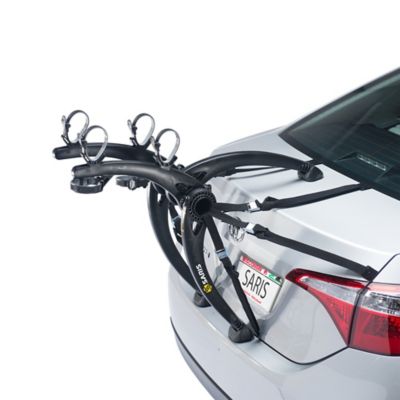
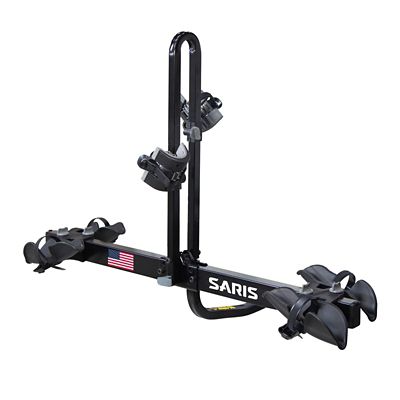
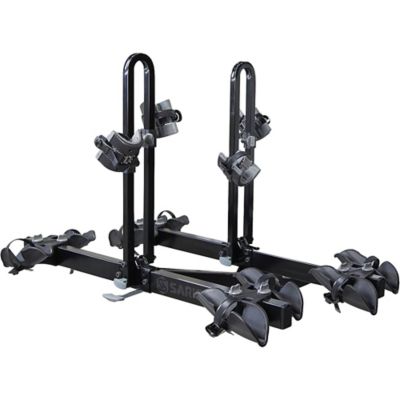
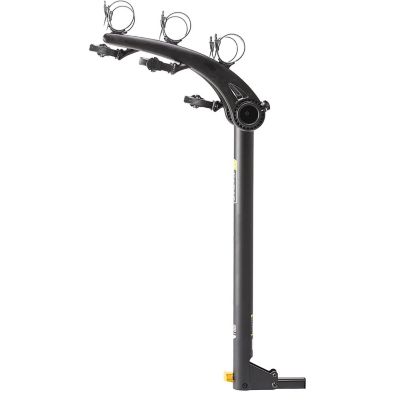
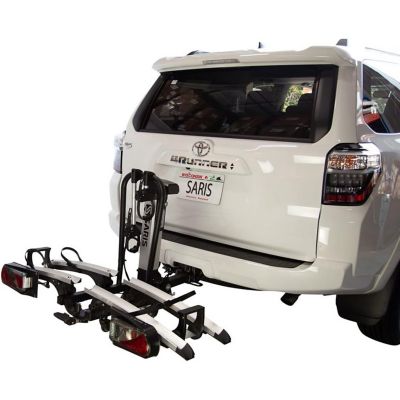
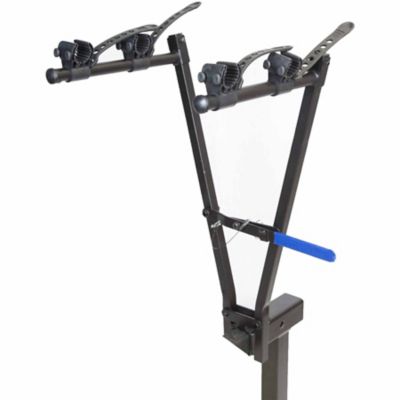
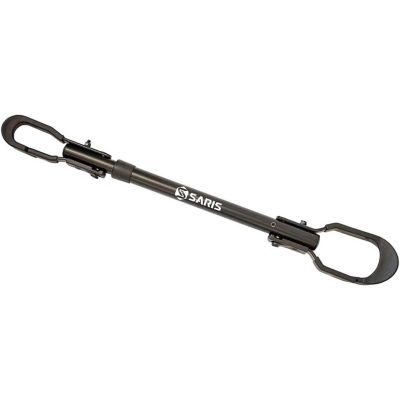
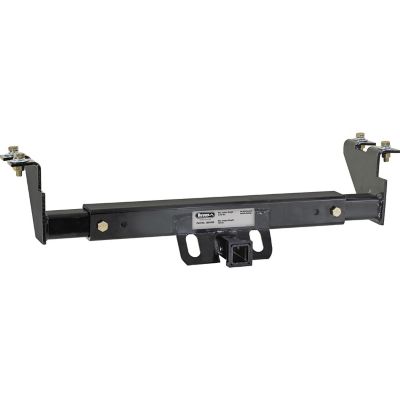
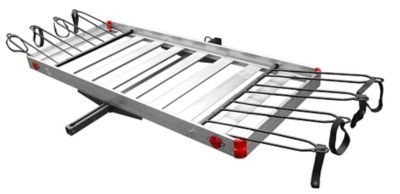
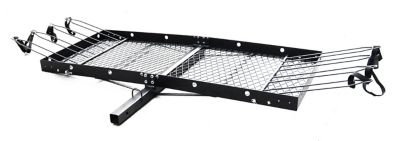
Hitch mount bike racks carry bicycles behind a vehicle on a carrier that fits into its trailer hitch receiver. That setup keeps bikes out of the truck bed and off the roof, leaving room for camping gear, feed bags, or whatever else needs to come along. For a family heading to a paved rail trail or a rider driving out to a stretch of singletrack, a hitch-mounted carrier makes the trip between home and the trailhead easier to manage. The two main styles are platform racks and hanging racks, and the difference comes down to how they support the bicycles. Platform, or tray-style, racks hold bikes upright with their wheels resting in trays. Depending on the design, arms or clamps secure the wheels or the frame; not every platform rack avoids frame contact. Wheel-holding designs can be a good match for bicycles with unusual frame shapes or frames that require special handling, provided the bicycle manufacturer permits that attachment method. Hanging racks suspend bicycles from support arms, generally beneath the top tube, with cradles and straps helping hold each bike in place. These designs often weigh less than platform carriers and can suit households hauling several conventional-frame bicycles. Step-through frames and some smaller bikes may need an approved adapter bar, while closely spaced bikes need enough separation to keep pedals, handlebars, and frames from rubbing together. Capacity matters just as much as rack style. A solo rider may need space for one bicycle, while a couple bringing a child’s bike needs a different arrangement. A
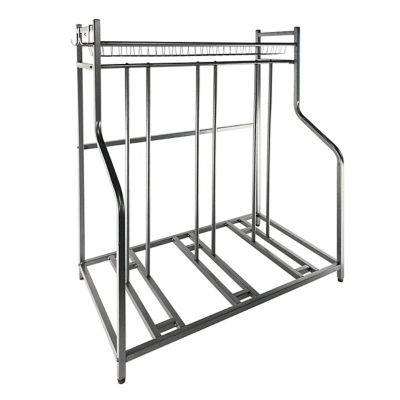
3 Bike Hitch Rack offers a useful category to consider for a three-bicycle trip, though each bike still has to meet the carrier’s individual limits. The best match is a rack that holds the actual bicycles making the trip, rather than simply offering enough spaces on paper.
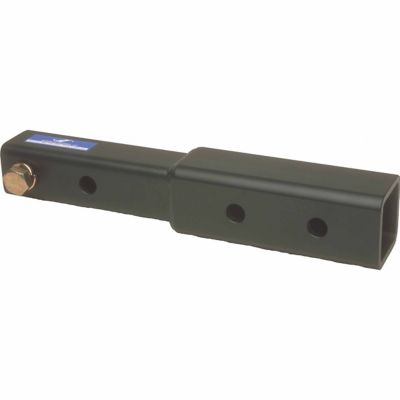
Vehicle fit starts with the hitch receiver, commonly a 1-1/4-inch or 2-inch opening, and the rack must match the receiver size and hitch class specified by its manufacturer. A receiver opening alone does not establish how much weight the vehicle can carry. The rack’s weight plus all loaded bicycles must stay within the applicable vehicle, hitch, and carrier limits, with the lowest rating controlling the setup. Adapters and extensions can change the permitted load and clearance, so they belong only in combinations approved by the relevant manufacturers. Per-bike ratings are especially important with electric bicycles: a carrier’s total capacity does not mean one tray can hold that entire amount. A rack intended for heavier bikes needs an appropriate individual weight rating, along with trays and restraints that fit those bikes. Removable batteries may travel separately when the bicycle manufacturer recommends it, but the remaining bicycle weight still needs to fall within the rack’s limit. Wheel diameter, tire width, and wheelbase also affect fit. A fat-tire bicycle, a long mountain bike, and a child’s sidewalk bike can place very different demands on the same carrier. Fenders may interfere with wheel clamps, and carbon frames need attachment methods approved for that frame. Around the vehicle, clearance determines how convenient the rack feels on an ordinary day. Rear-mounted spare tires, tailgates, hatch doors, and exhaust outlets can all affect placement. Tilting designs move away from the rear of the vehicle, while swing-away designs pivot to the side for a wider opening; the instructions determine whether either movement is permitted with bikes loaded. Folding arms or trays reduce the rack’s footprint when empty. That can help in a garage or parking area, although the carrier still adds length behind the bumper. On a steep gravel driveway, ground clearance deserves attention too, especially with a low receiver or a long loaded carrier extending beyond the rear wheels.
Materials and moving parts play a big role in how a hitch bike rack handles regular trips down back roads and repeated loading at the trailhead. Steel construction provides strength but can make a carrier heavier to lift into place, while aluminum components can reduce handling weight. Powder-coated finishes and corrosion-resistant hardware help protect exposed surfaces, though scratched coatings and trapped moisture still need attention. Plastic or rubber-lined cradles, padded contact points, wheel straps, and adjustment knobs should hold firmly without pressing against brake hoses, cables, or other vulnerable bicycle parts. An anti-rattle mechanism helps limit movement at the receiver connection, but it does not replace the required hitch pin, locking hardware, or bicycle restraints. Locks can help discourage theft during a stop for lunch or groceries, whether they secure the rack to the vehicle, the bicycles to the rack, or both; they are not a substitute for keeping an eye on the load. For regular riding outings, easy-to-reach releases and clearly engaging latches can matter as much as carrying capacity. A loading ramp, when designed for the carrier, can also make lifting a heavy bicycle less of a chore. Once the ride is over, knocking off loose grit and cleaning away road salt according to the manufacturer’s directions helps protect finishes and keeps joints from collecting abrasive debris. Straps, cradles, bolts, pins, and hinges need periodic inspection, with worn parts replaced before another trip. Lubrication belongs only where the rack instructions call for it, and storage in a sheltered spot helps limit weather exposure through the cooler months. Before pulling out, each bicycle should be secured at every required contact point, with loose accessories removed and lights and the license plate unobstructed as required by law. Carriers also need explicit approval for RV, trailer, or off-pavement applications, where movement and loading forces can differ. For someone giving a rack to a trail rider or cycling family, knowing the vehicle’s hitch specifications and the bicycles’ dimensions and weights turns a thoughtful gift into equipment that fits their weekends.