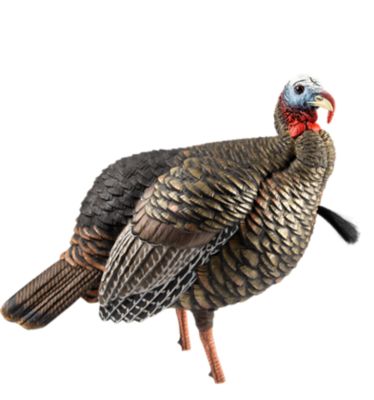
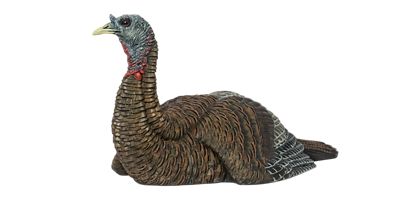
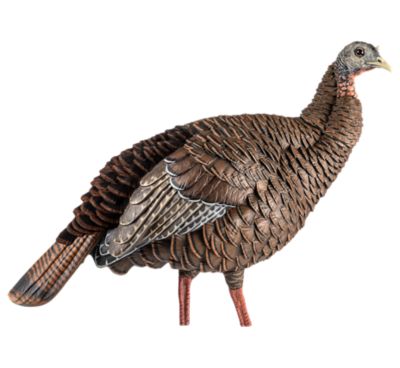
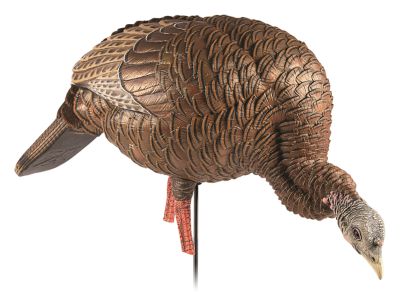
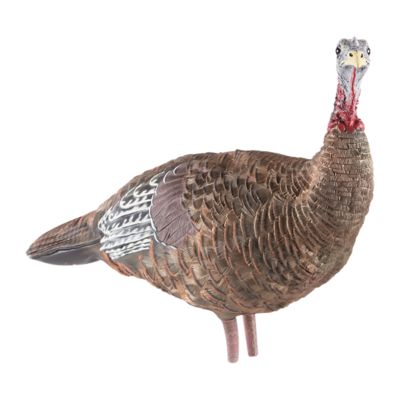
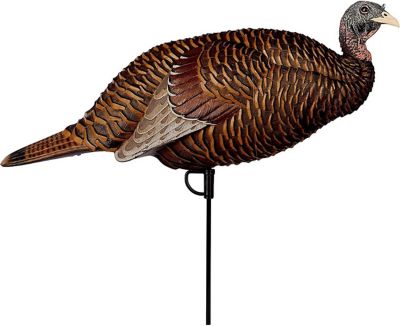
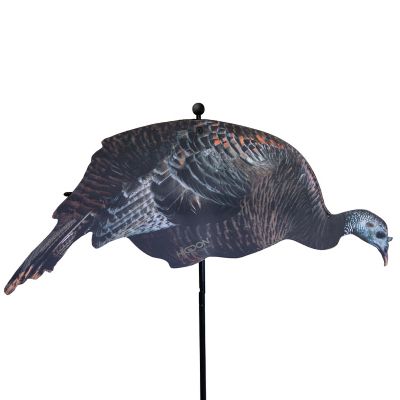
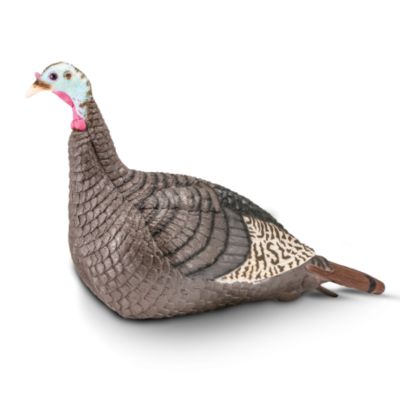
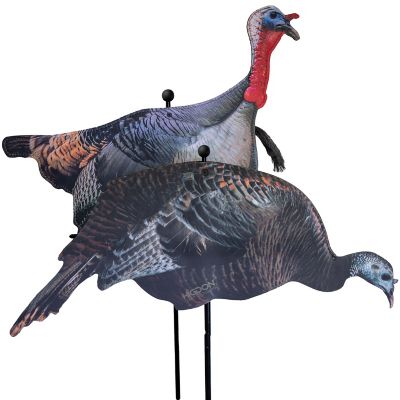
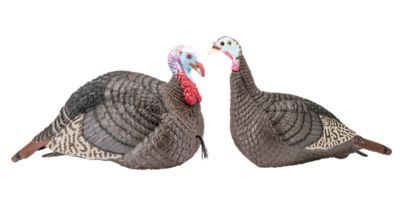
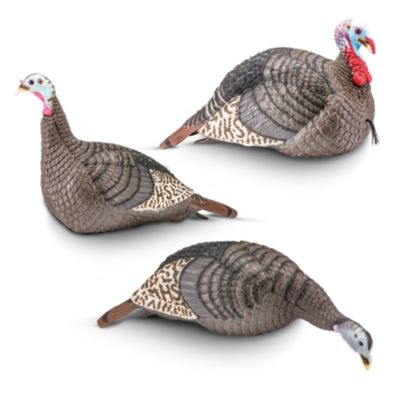
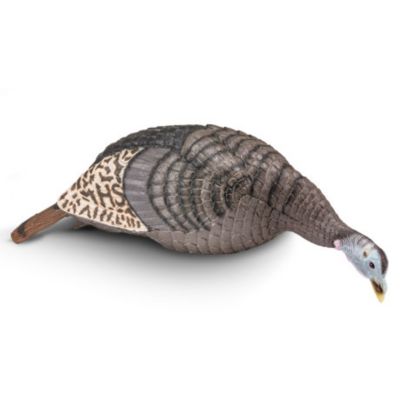
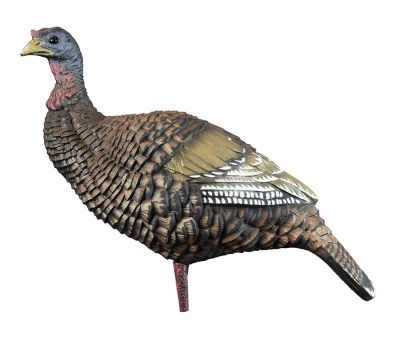
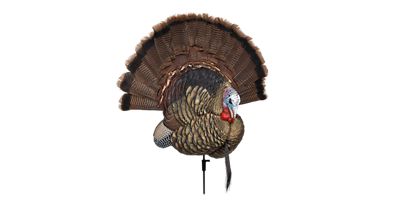
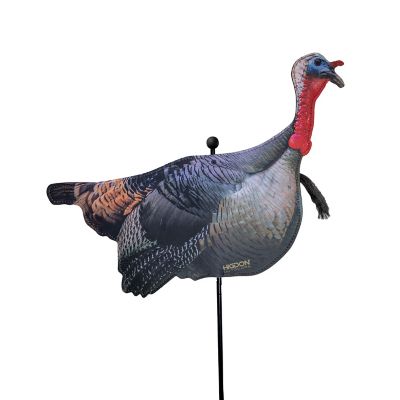
Hen turkey decoys bring the shape, posture, and feather pattern of a hen into a turkey hunting setup, giving approaching birds something to see as well as hear. Often paired with turkey calls, they can help hold a gobbler’s attention on a visible bird rather than the hunter’s hiding spot. Their appeal comes from familiar flock behavior, especially during spring breeding activity, though a decoy never guarantees that a tom will come closer. Posture makes a difference in how a setup looks. An upright hen presents a taller outline that can stand out along a field edge or in shorter cover. A feeding hen, with her head down, suggests a relaxed bird going about her business. Breeding-position hens sit lower to the ground and represent a different social signal. Each style has a place, and the right choice depends on the terrain, the birds’ behavior, and the rest of the setup. A hen standing in open pasture tells a different story than one tucked beside a brushy fence line. Body size matters, too: a life-size profile can look convincing at a distance, while a smaller, packable body may better suit a hunter walking deep into the woods. Natural-looking head color, a believable tail shape, and feather markings that carry across the back and sides all contribute to the overall appearance. A hen’s coloring is generally more muted than a gobbler’s, so subtle detail can matter more than a bright finish. A convincing outline and sensible placement often do more for a setup than extra parts or exaggerated movement. For hunters watching a hayfield opening, a logging lane, or a small clearing, hen turkey decoys offer a way to add a visual focal point without building an elaborate spread. Some setups center on a single hen; others combine hen poses or include a separate turkey decoy to suggest flock activity. The goal is a scene that fits the ground and gives an approaching bird room to see it.
Construction affects how hen turkey decoys travel, stand, and handle repeated trips through brush and farm country. Flexible rubber and similar pliable materials can compress for transport, although the amount of folding a body can tolerate depends on its construction. Foam designs often keep carrying weight down, while hollow molded plastic bodies generally maintain a fixed shape and need more room in a vest or gear bag. A full-size rigid body may be easy to set out near a blind reached by a short walk, while a collapsible hen can make more sense for hunters crossing several ridges before settling in. Surface finish is another consideration. Painted bodies can show feather shading and head detail, while flocked surfaces add short fibers that soften the appearance and help reduce glare. Hunters comparing those finishes can also explore
Flocked Decoys for more context on that style of surface. Flocking can collect dirt and needs gentle handling, so its appearance comes with a different care routine than a smooth shell. The stake and mounting connection deserve as much attention as the body. A stake needs to fit its socket correctly and support the decoy at the intended height without leaving it leaning sideways. Soft ground, stony soil, and thick roots can each affect how easily a stake goes in and how firmly it holds. Some mounting systems allow the body to turn with a breeze; others limit rotation to keep movement more controlled. A little motion may add life, but excessive spinning can make the scene look unnatural. Clear attachment points, manageable assembly, and parts that stay together in a carrying bag all matter when setting up before daylight. For anyone adding a hen to existing hunting gear, packed dimensions, total carrying weight, and compatibility with replacement stakes are practical details worth weighing alongside the bird’s appearance.
Care between hunts helps preserve both the finish and the shape of a hen turkey decoy. Mud around the mounting socket, grit on a painted breast, and moisture trapped inside a hollow body can all create problems if the decoy goes straight into storage. A soft cloth and water are often enough for routine cleaning, with the maker’s care directions taking priority for flocked finishes, painted details, and flexible materials. Harsh cleaners and stiff brushes can damage surface treatments. Letting the body and stake dry before packing helps keep a carrying bag cleaner, too. Flexible bodies generally benefit from storage that avoids prolonged pressure or sharp folds unless the design specifically allows them, while rigid shells need protection from crushing under other gear. Keeping stakes and attachment pieces together saves a hunt from starting with a missing part at the truck. These practical touches also make hen turkey decoys a thoughtful gift for an adult turkey hunter, a hunting partner, or someone putting together a first turkey setup. A gift that matches the recipient’s carrying space and hunting style will usually serve them better than one chosen on appearance alone. Someone who hunts from a fixed blind may value a full-body shape, while a hunter covering ground on foot may put more weight on easy packing and quiet handling. Safe transport and placement remain part of owning any realistic turkey decoy. A covered decoy is less likely to be mistaken for a live bird while being carried, and it should never sit where another hunter could aim toward the person behind it. Clear identification of the target and what lies beyond it is essential. State and local rules may also limit decoy types or motion systems. With suitable construction, sensible care, and attention to hunting conditions, hen turkey decoys can earn a place alongside calls, camouflage, and the rest of a well-planned turkey hunting kit.