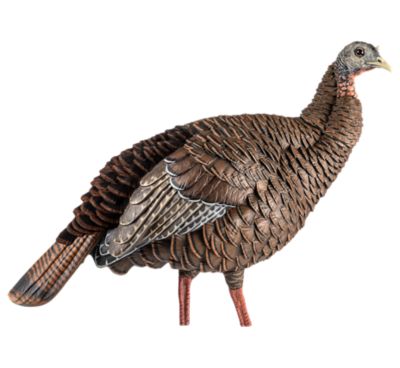
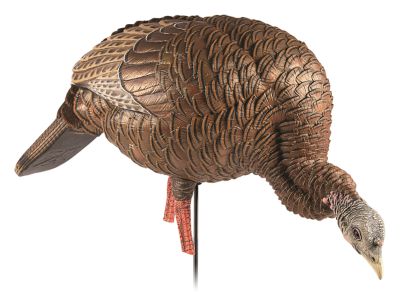
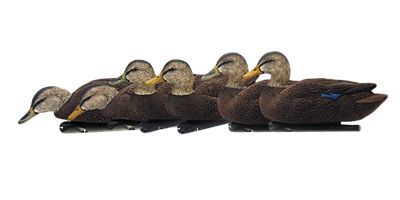
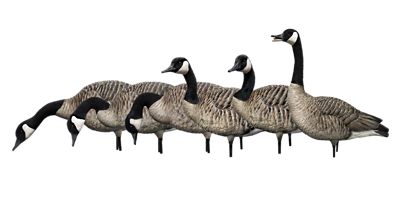
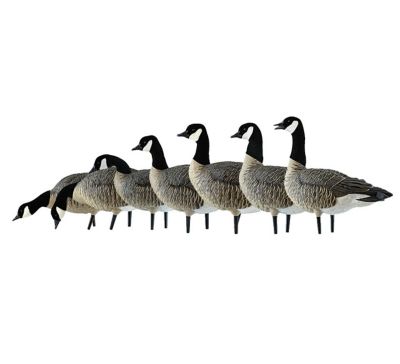
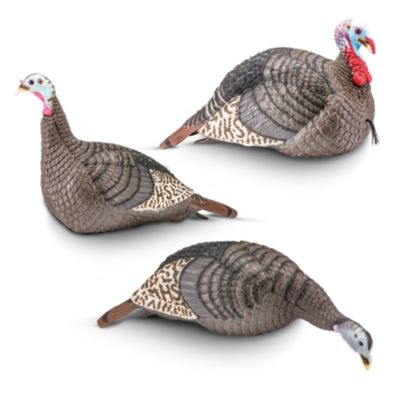
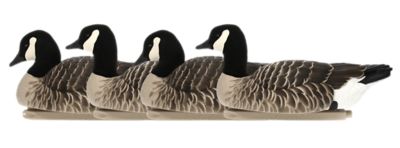
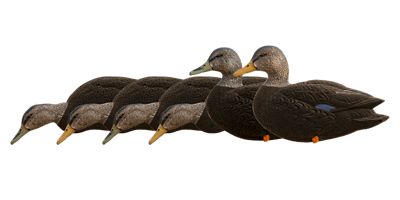
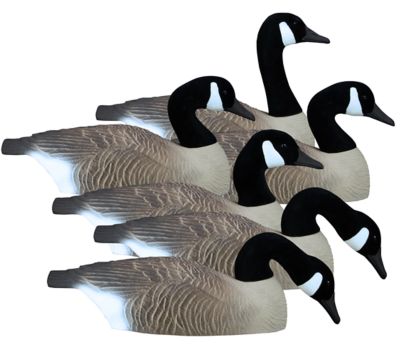
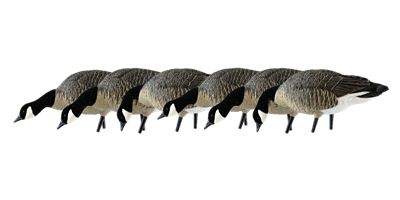
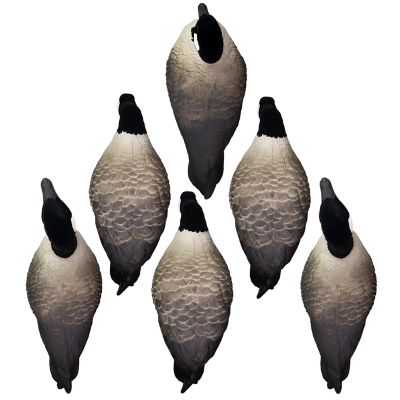
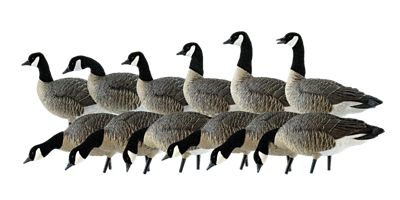
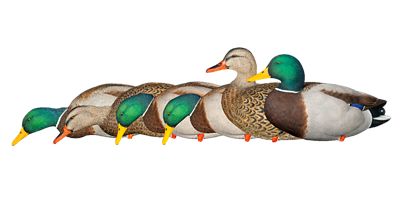
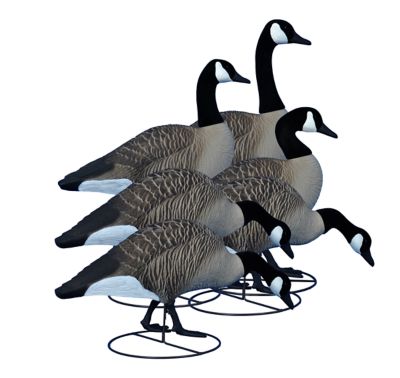
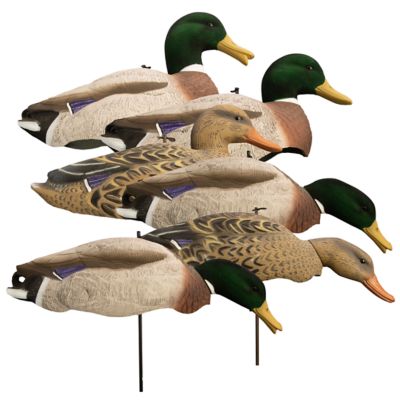
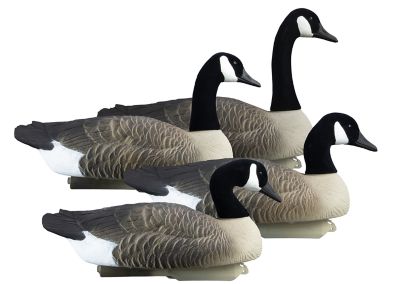
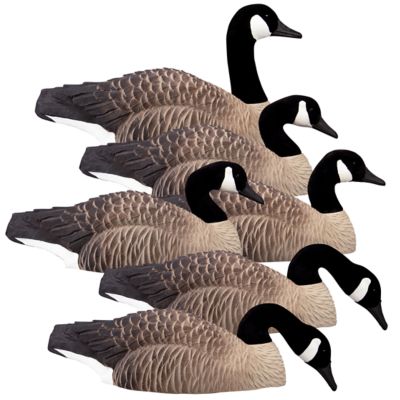
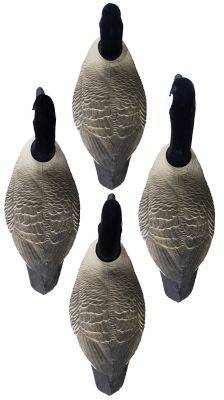
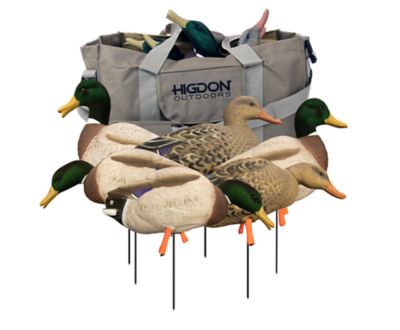
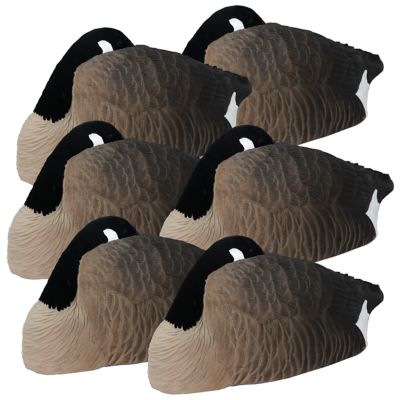
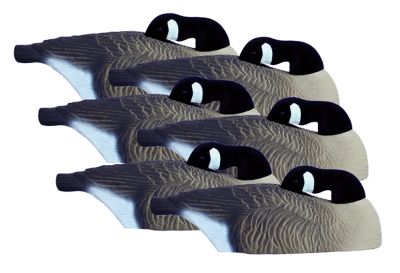
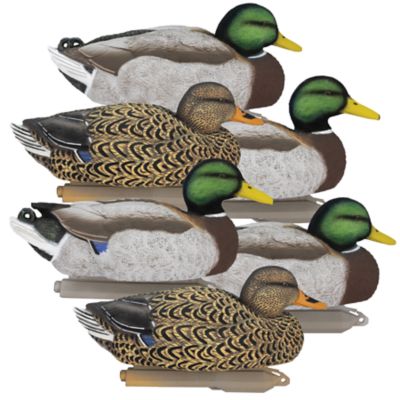
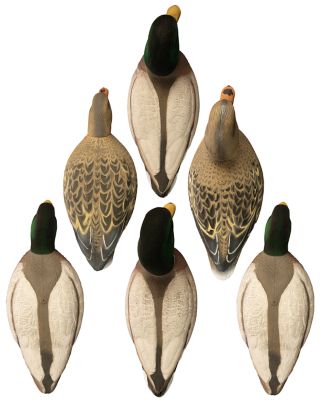
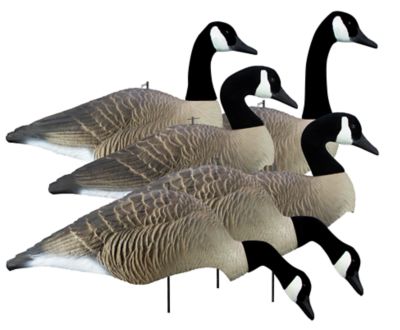
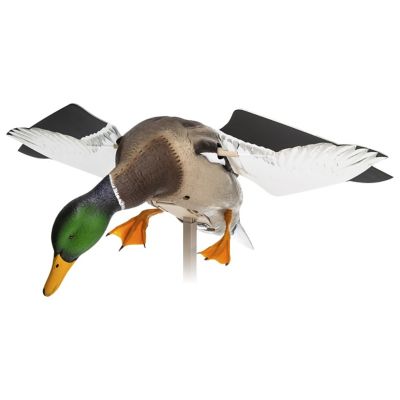
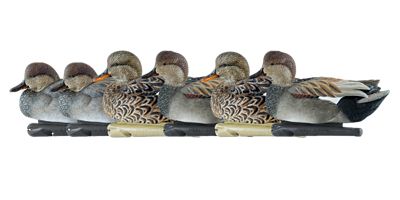
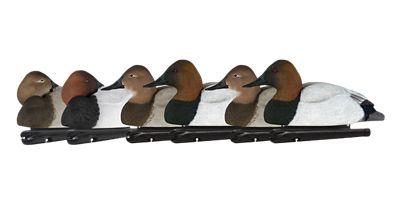
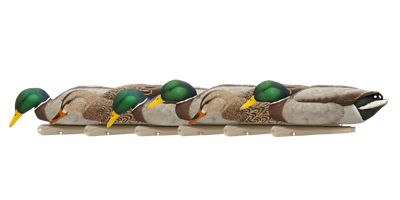
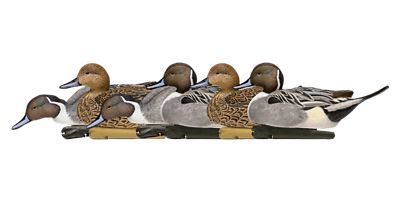
Flocked decoys are hunting decoys with a coating of short, fine fibers on the head, body, or another part of the surface. That soft, velvet-like finish helps reduce unnatural plastic glare and gives the covered areas a feather-like texture. For waterfowl hunters, the goal is a spread that looks more like resting or feeding birds when ducks and geese swing past for a closer look. Flocking is a surface treatment, not a separate type of decoy body, so it can appear on different shapes and constructions. Some decoys have flocked heads paired with painted bodies, while others have more extensive fiber coverage. Head-only flocking can soften reflections on prominent areas such as a goose’s head and neck; broader coverage brings that low-glare finish across more of the bird. Neither approach replaces believable body shapes, suitable colors, or a well-arranged spread. Instead, flocking adds another layer of realism, especially where sunlight might otherwise catch a smooth surface. Molded plastic bodies provide the underlying shape on many decoys, while paint, flocking, attachment points, and moving parts each serve a different job. A floating duck decoy needs a body designed for buoyancy and balance, while a full-body field decoy needs a practical way to stand upright above the ground. Body posture matters, too. Feeding shapes suggest birds settled into a food source, and upright shapes add the watchful look common in a living flock. A mix of postures can make a spread feel less repetitive without requiring every decoy to have the same finish. For someone building a first waterfowl setup or adding to a seasoned hunting partner’s gear, flocked decoys offer a way to bring more surface detail into the picture. Their value comes from how that finish works with the whole setup, rather than from texture alone.
The right fit starts with the birds being hunted and the places where the spread will spend its time. Duck and goose decoys differ in size, markings, posture, and handling needs, and a field setup asks different things of its equipment than a pond or marsh setup. In cut crop fields, full-body decoys may sit on stakes or bases that hold them above stalks and uneven ground. Compatibility between the body and its support matters, along with the clearance needed for any intended movement. A connection that fits loosely can leave a bird leaning at an odd angle, while an incompatible stake may not seat properly at all. On the water, keel design, anchor attachment points, and balance affect how a floating decoy rides and stays positioned. Those features deserve as much attention as the flocking, particularly where a breeze or current can turn a carefully placed spread into a tangled bunch. Motion can help suggest live birds, but the amount and type depend on the decoy’s design; a flocked finish does not mean a decoy includes moving parts. Size also affects more than appearance. Larger bodies take up more room in a trailer, boat, or bag, while smaller setups may be easier to carry along a muddy bank or across a field. Hunters who walk a good distance from the truck often weigh carrying space and total load against the number of birds they want in the spread. Those hunting from a boat may give more thought to stacking, line management, and keeping flocked surfaces away from anchors. A sheltered farm pond, a broad feeding field, and an exposed shoreline all call for different combinations of body style and rigging. Local hunting rules, land access, and any restrictions on motion equipment remain part of that choice. Flocked decoys can also make a thoughtful gift for a waterfowl hunter when the species, hunting location, and existing support or rigging system are known.
Care is where flocked decoys differ most noticeably from smooth painted bodies. The fibers can flatten, collect dirt, or wear away when they rub against rough surfaces, so transport and storage play a big part in keeping the finish looking right. A decoy bouncing against loose hardware in a truck bed faces a different kind of wear than one riding in a divided bag with its head protected. Individual compartments, head covers, or other protective storage can limit rubbing, provided they fit without crushing the flocked areas. After a hunt, mud and plant debris need attention before everything gets packed away for a long stretch. Cleaning methods vary by coating and construction, so the maker’s care directions should set the limits for water, brushes, and cleaning products. Harsh scrubbing, pressure washing, and strong solvents can damage fibers or the adhesive beneath them. Gentle handling is especially important around raised details and edges where the finish may catch during loading. A damp decoy also needs time to dry before enclosed storage; trapped moisture can leave both the gear and its carrying bag in poor shape. Dry storage away from prolonged direct sunlight and unnecessary heat helps protect the finish between trips. Small attachment points, stakes, keels, and lines deserve a look as well, since an attractive surface cannot make up for a cracked connection or tangled rigging. The term flocked also appears on
Flocked Artificial Christmas Trees, where the coating creates a snowy appearance; on hunting decoys, the purpose is feather-like texture and reduced glare, and care requirements are not interchangeable. For a hunter unloading after a muddy morning, that distinction comes down to treating the fiber finish as its own part of the equipment. With sensible handling, protected transport, and attention to the underlying body and hardware, flocked decoys can remain a practical part of a working waterfowl spread.