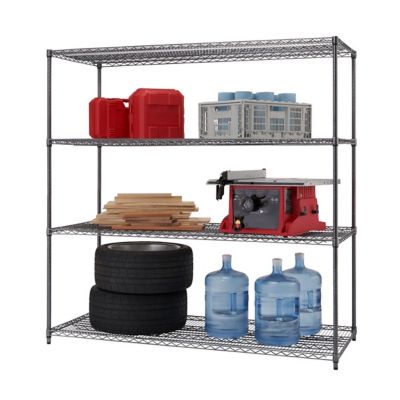
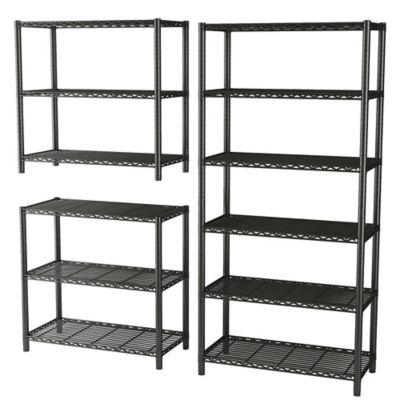
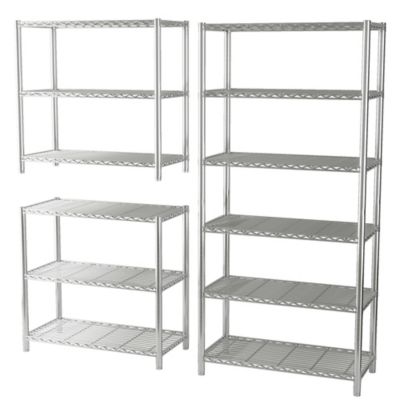
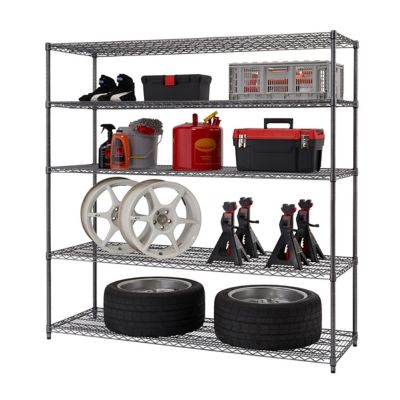
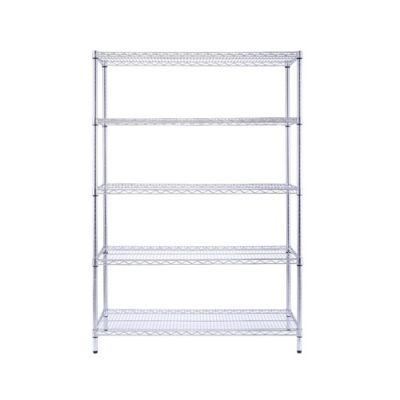
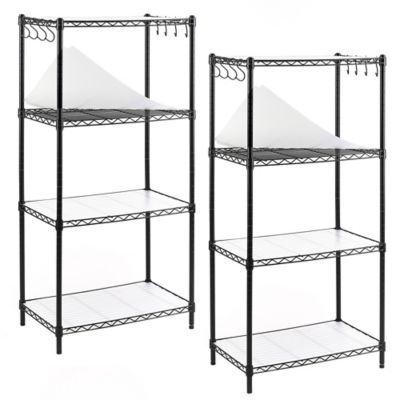
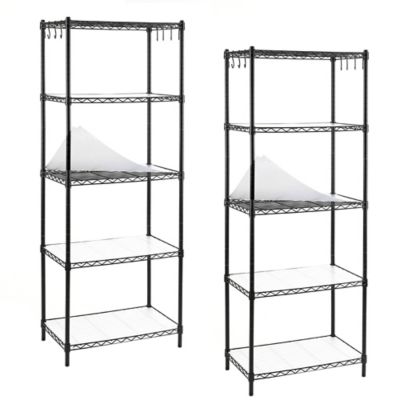
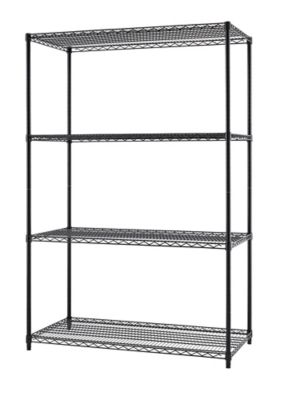
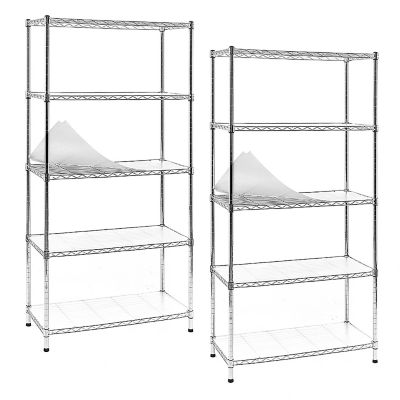
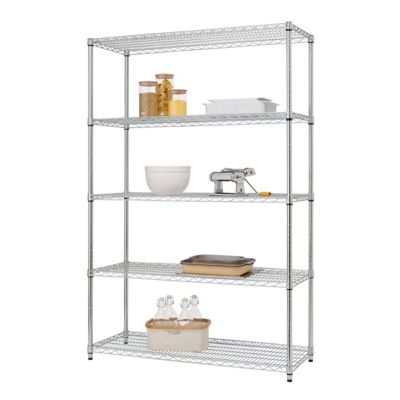
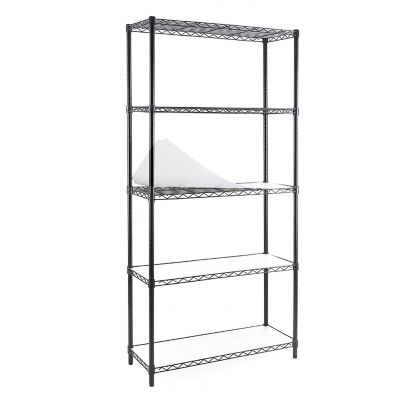
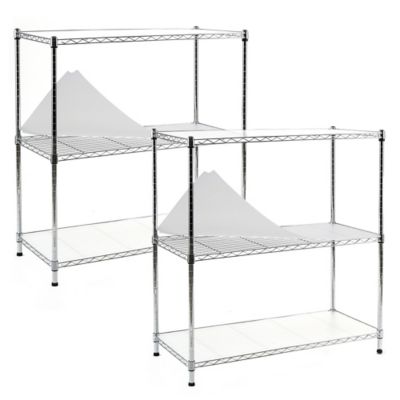
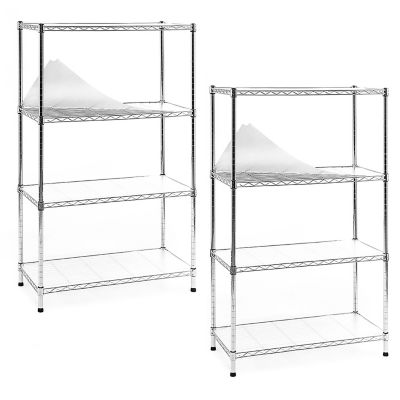
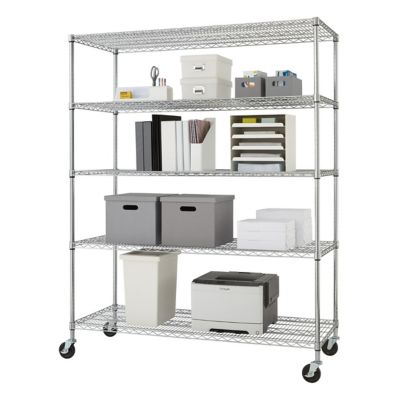
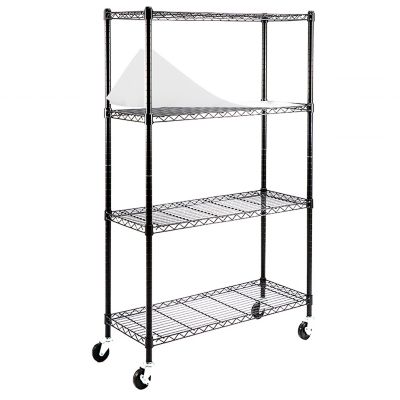
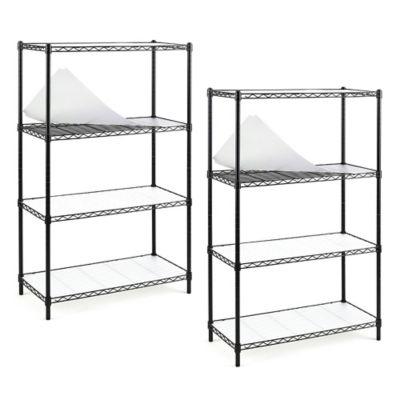
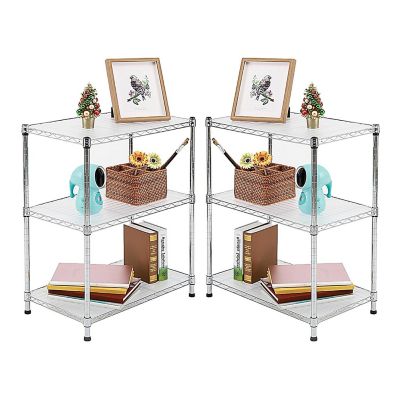
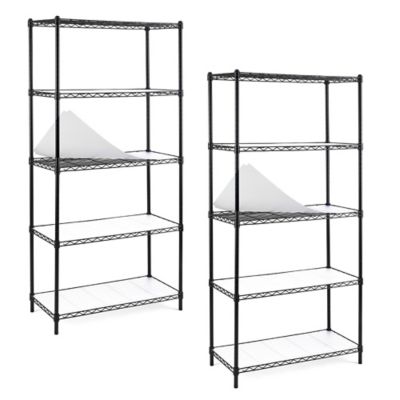
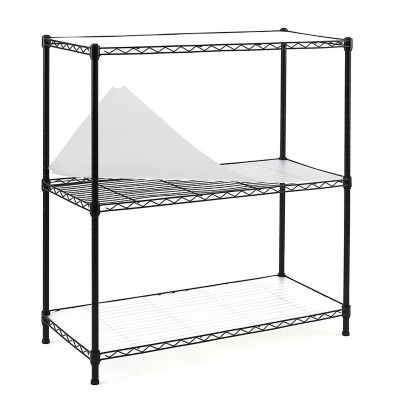
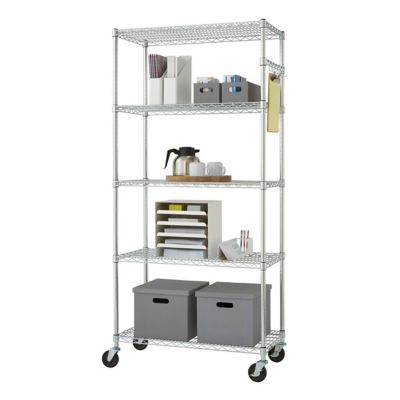
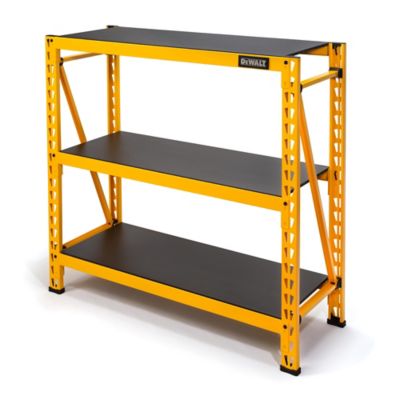
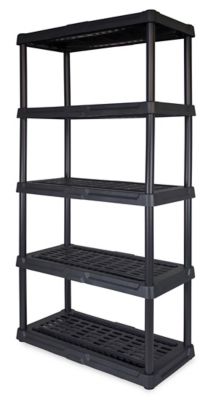
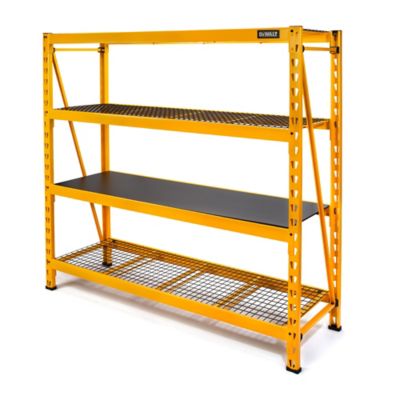
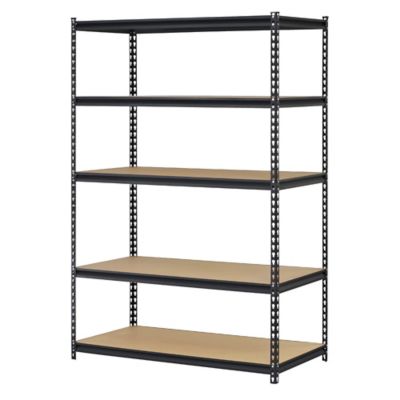
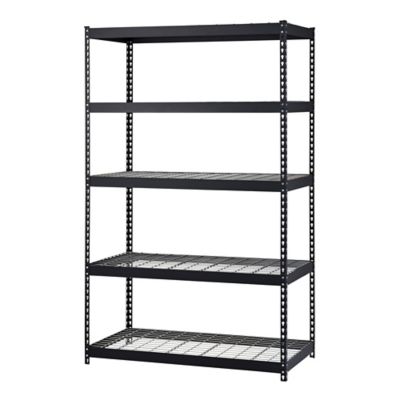
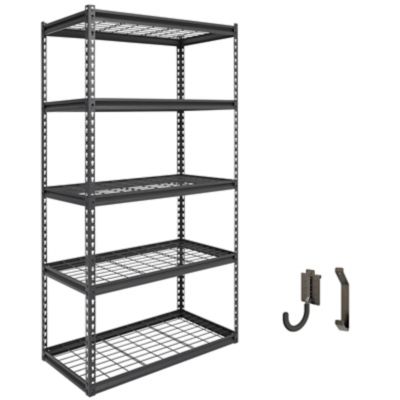
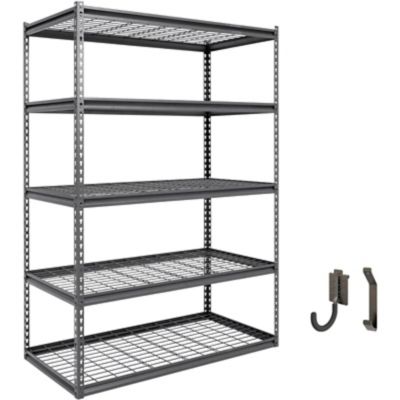
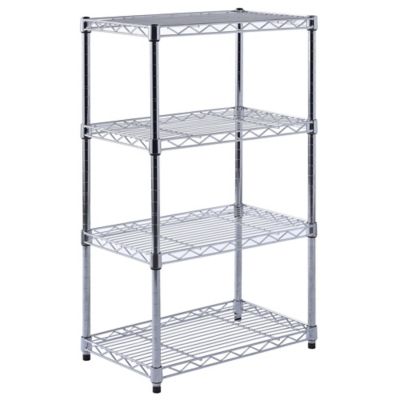
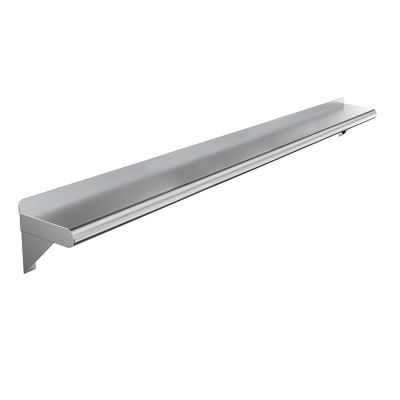
Heavy-duty wire shelving units are metal storage racks with open-grid shelves that keep tools, bins, pantry supplies, and other everyday essentials organized and within reach. Their open construction allows air to circulate around stored contents and makes it easier to see what sits toward the back of a shelf. In a garage or farm shop, that can mean a clear place for work gloves, replacement parts, and tool cases instead of another pile beside the workbench. In a pantry, utility room, or small business storage area, the same style of shelving provides room for sealed food containers, cleaning supplies, or packaged materials, with separate storage zones for things that should never share a shelf. Steel is a common material for these racks, though the metal, finish, and construction vary. Chrome-plated shelving has a bright appearance and is generally suited to dry indoor spaces. Powder-coated steel offers a painted finish, with protection depending on the coating’s condition and the environment specified by the manufacturer. Stainless steel may suit settings where moisture or frequent cleaning is a concern, but the material grade and care requirements still matter. Open wire surfaces also have a few practical limits. Narrow bottles, small hardware, and containers with little feet may not sit steadily across the gaps. Compatible shelf liners, trays, or bins can give those contents a more even resting surface, provided they do not interfere with the rack’s load requirements. A liner can help catch small spills, too, although it needs attention underneath rather than simply hiding a mess. For food-service or business settings, any required sanitation certification should match the exact shelving model and its intended application. A rack that works well for boxed supplies in a shop is not automatically suitable for every commercial food-storage task.
Fit matters just as much as shelf strength, especially where a rack shares space with a parked truck, a chest freezer, or a busy workbench. Overall width, depth, and height describe the outside footprint, but usable shelf space may be smaller because posts and shelf edges take up room. Deep shelves can hold larger totes, while shallower shelves make sense along a narrow wall where reaching the back matters more than fitting another row of containers. Enough clearance above the top shelf helps keep tall containers from becoming awkward to lift, and space around the rack keeps doorways, electrical panels, and walking paths accessible. Shelf spacing is another important difference between units. Closely spaced tiers make good use of room for short boxes and jars, while taller openings accommodate upright tool cases, buckets, and larger bins. Many wire shelving systems have shelves that reposition along grooved posts, often with split sleeves or similar fittings that support each corner. Adjustment increments and assembly methods vary, so the shelf layout needs to match the things headed for storage. For spaces that need a different arrangement,
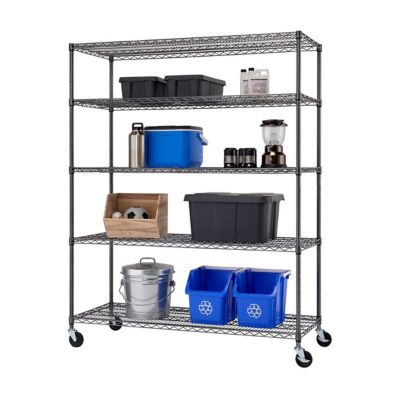
Heavy Duty Adjustable Shelves offer another way to consider storage around the height of the load rather than squeezing everything into equal gaps. Stationary feet and rolling bases serve different purposes as well. Leveling feet can help a compatible rack sit evenly on a slightly uneven floor, but they do not make an unsuitable floor safe. Casters make it possible to move a rack for cleaning or repositioning when the unit is designed for that task. They also introduce separate limits: a rack may carry substantially less weight on wheels than on feet, and its permitted moving load may differ from its parked load. Wheel locks help hold position but do not replace a level surface or proper loading. In a tight shop, room to steer and stop a loaded rack matters as much as whether it fits against the wall.
Weight capacity deserves a close look before heavy supplies go onto any wire shelving unit. A per-shelf rating is not permission to multiply that number beyond the rack’s stated total capacity, and a stationary rating does not necessarily apply to a mobile setup. Published limits commonly assume evenly distributed weight, meaning the load spreads across the shelf rather than bearing down on one small spot. A dense tool case concentrated in the middle can stress a shelf differently from several lighter bins spread across its surface. Shelf construction, post connections, bracing, and the base all contribute to how the complete unit carries weight. Heavy containers belong on lower shelves to help keep the rack stable, with lighter, easier-to-handle supplies above. Nothing should hang over an edge where a passing shoulder, cart, or extension cord could catch it. Manufacturer instructions take priority for assembly, anchoring, load placement, and movement; a tall rack may require wall restraint even when its shelves feel steady. Each support sleeve or connector needs to seat properly, and missing fittings should never be replaced with makeshift parts. Everyday care is straightforward but worth keeping up with. Wiping spills promptly, clearing dust from wire intersections, and drying surfaces after cleaning help keep the finish in good shape. Cleaning products should suit the metal and coating, since harsh chemicals or abrasive pads can damage some surfaces. Shelf liners need occasional lifting so trapped residue does not sit against the metal. Periodic checks can catch loose connections, bent wires, coating damage, or caster trouble before the rack takes another load. A shelving unit that fits the room, carries the intended weight, and keeps frequently reached supplies at a comfortable height makes the whole space easier to work in. From a neatly arranged pantry to a hard-working garage corner, practical storage starts with giving every load enough support and every task enough elbow room.