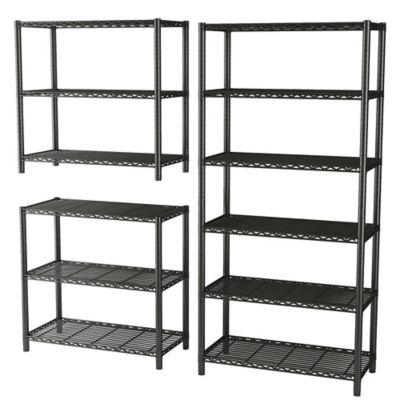
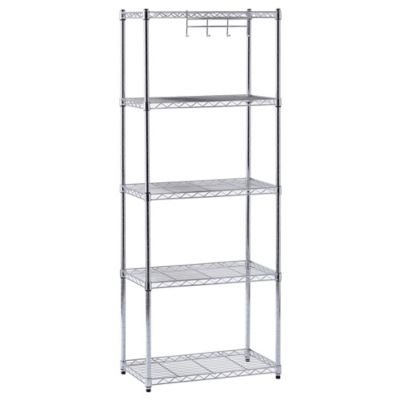
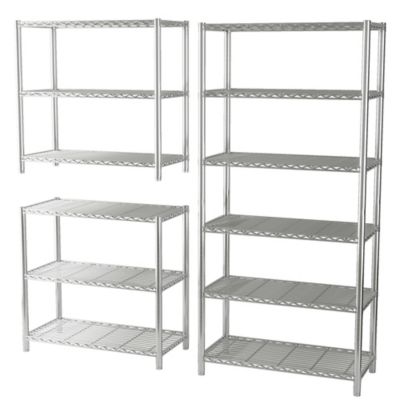
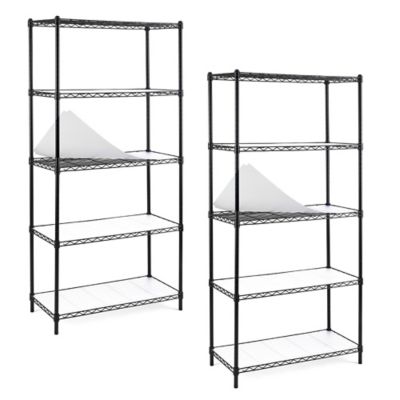
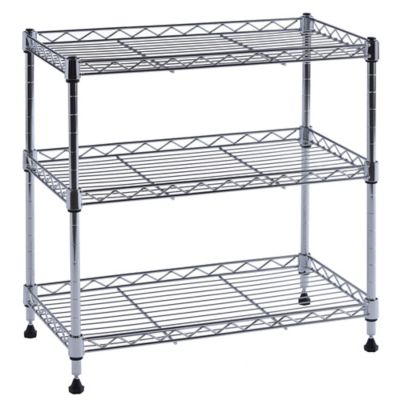
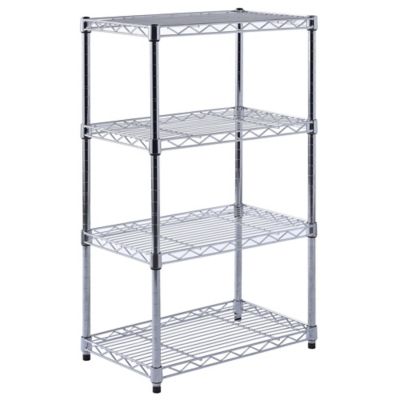
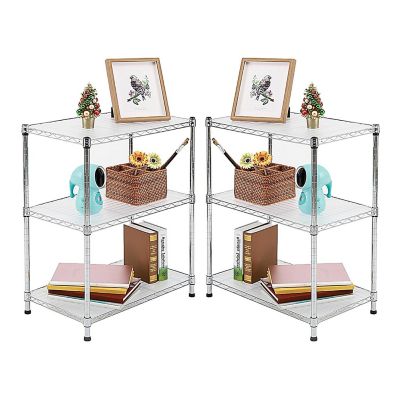
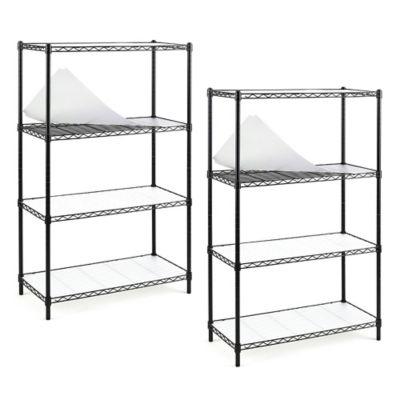
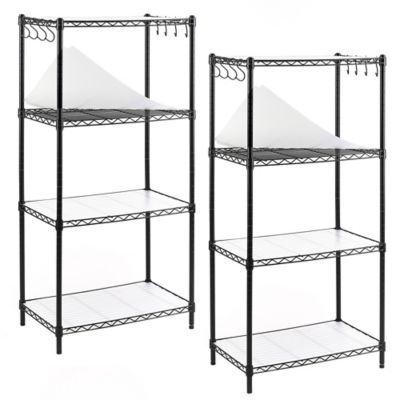
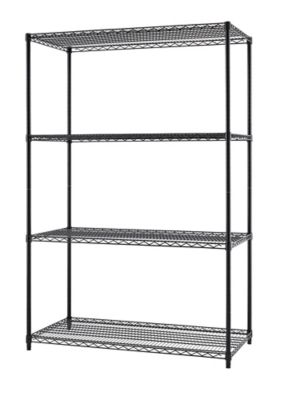
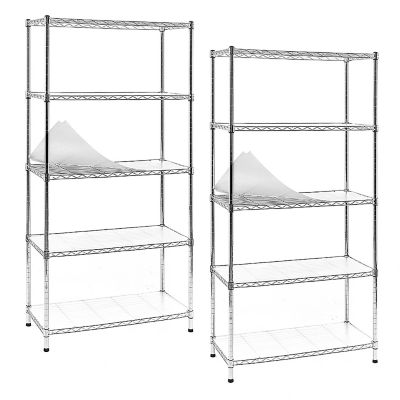
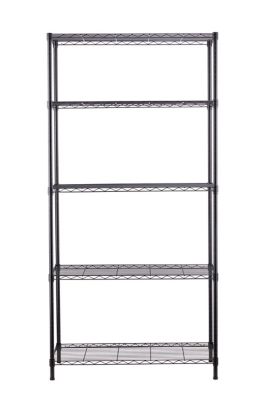
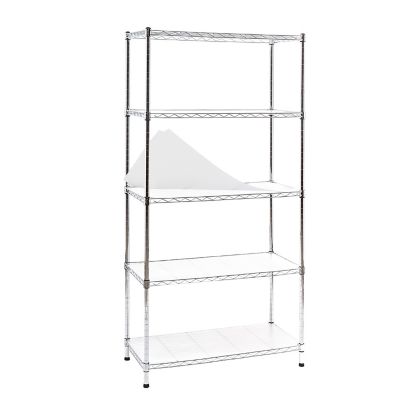
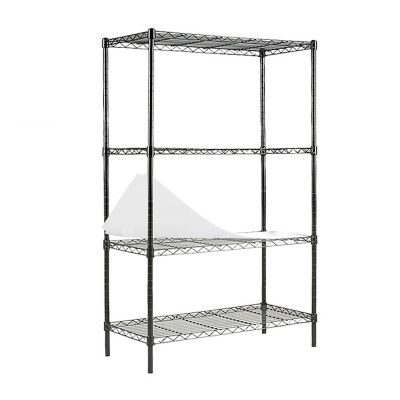
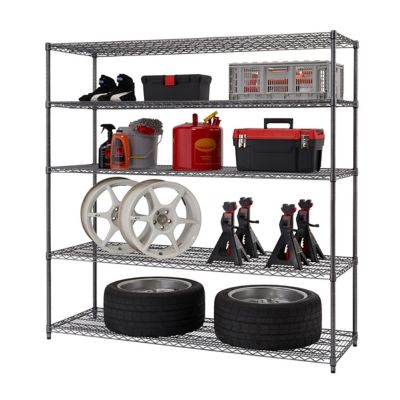
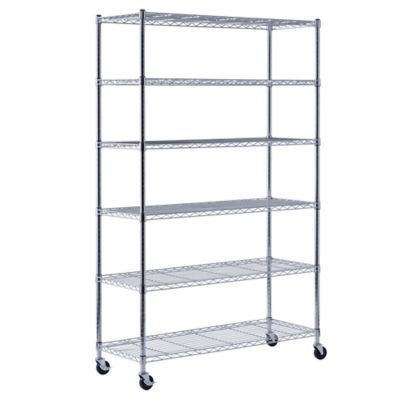
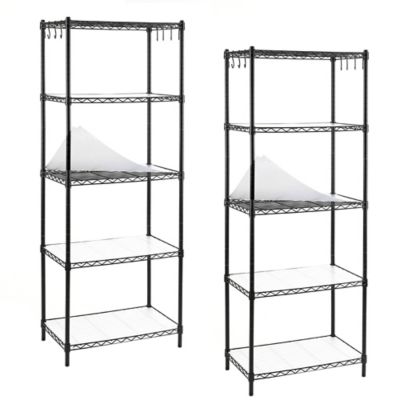
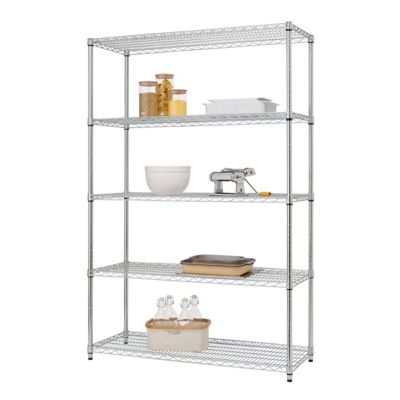
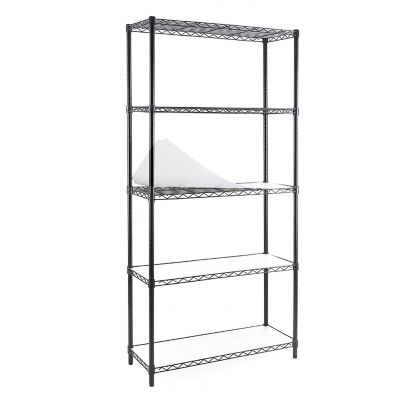
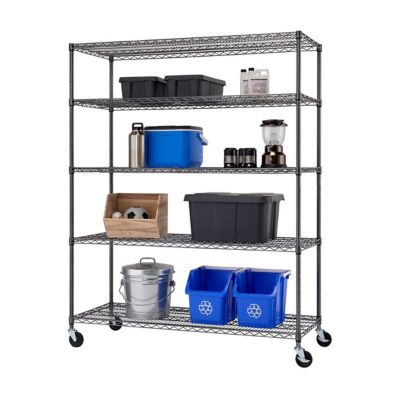
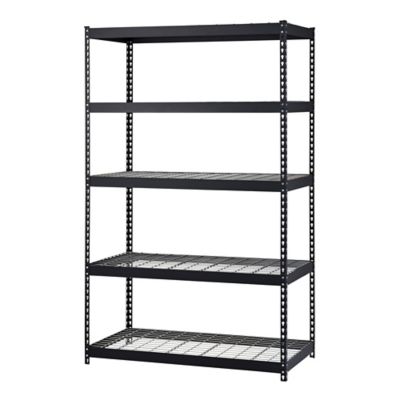
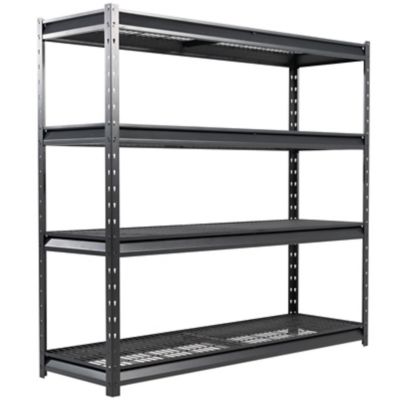
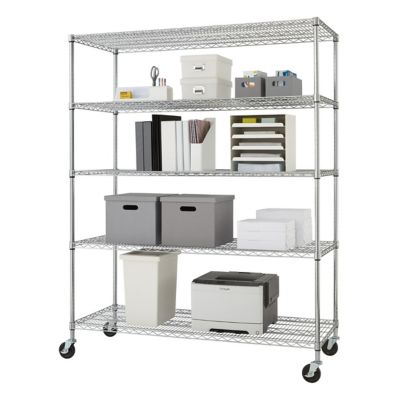
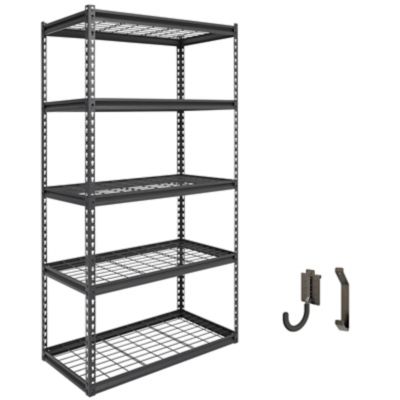
Adjustable wire shelving units bring flexible, open storage to garages, pantries, laundry rooms, workshops, and farm supply rooms. Their metal shelves attach to upright posts at different heights, giving tall containers more headroom while keeping smaller supplies from getting lost in a deep stack. The open wire design lets air circulate around stored goods and makes it easier to spot a toolbox, cleaning bottle, or bin without moving everything in front of it. Many units have posts marked at 1-inch intervals, though adjustment spacing and assembly methods vary by design. A common setup has split sleeves that fit around grooved posts, with shelf corners seating over the sleeves to hold each tier in place. Other designs have different supports, so the connection style matters when comparing shelving systems or planning to change the layout later. For a pantry, closely spaced shelves can keep canned goods and boxed staples within easy reach. In a garage or feed room, wider spacing leaves room for lidded containers, buckets, and taller equipment. The best fit starts with the unit’s full outside measurements rather than shelf dimensions alone. Post caps, wheels, handles, and other parts can add to its overall footprint or height. Enough clearance around the shelving keeps doors from catching and leaves a comfortable path for carrying a tote or pushing a cart. Shelf depth matters just as much as width: shallow shelves keep everyday supplies visible, while deeper shelves give larger containers more support. Matching shelf spacing to the containers already doing the work helps avoid wasted gaps and awkward stacks. A shelf that clears a bin by a few inches is often easier to live with than one that requires tilting the bin sideways every time it comes out. Adjustable shelving also leaves room for a different arrangement when storage needs change, whether that means making space for taller shop supplies or adding another row of smaller household containers.
Weight capacity is another important difference between adjustable wire shelving units, and the number on a shelf rating needs a little context. Manufacturers may list a maximum load for each shelf, a maximum for the complete unit, or separate limits for stationary and rolling setups. Those figures are not interchangeable. A per-shelf rating generally assumes weight is spread evenly across the surface, not concentrated beneath a heavy object with a small base. The entire rack may also have a lower total limit than the combined ratings of all its shelves. For heavier storage needs,
Heavy Duty Wire Shelving Units offer another category to consider, with the stated load limits and setup requirements remaining the deciding factors. Heavy containers belong on lower shelves, where they are easier to lift and help keep the unit’s center of gravity down. Lighter supplies fit better higher up, especially when reaching them does not require stretching or climbing on the frame. Leveling feet let a stationary unit sit evenly on a suitable floor, which helps prevent rocking. They are not a substitute for a sound, level location or any wall attachment specified by the manufacturer. Casters serve a different purpose, allowing compatible shelving to roll aside for cleaning or move between work areas. Wheel size, floor condition, and the loaded unit’s total weight all affect how manageable that movement will be. A rolling setup can have a substantially lower weight limit than the same shelving on feet, and locking casters should not be treated as protection against tipping. Clear travel paths and a load kept within the frame make mobile shelving more practical around a shop bench or utility area. Shelves are easiest to reposition when empty, with every corner supported at the same height and fully seated before supplies go back on. Correct assembly gives the frame its intended support; an extra shelf or a set of wheels needs to be compatible with that shelving system, not simply close in size.
Material and finish help determine where adjustable wire shelving belongs and how much attention it will need. Chrome-plated steel is common for dry indoor storage, while epoxy-coated steel and stainless steel may suit areas where moisture is a concern, depending on the manufacturer’s intended application. Chrome plating is a surface finish, not a promise that steel underneath cannot rust. Likewise, a coated rack needs care around scratches or chipped spots that expose the metal below. Stainless steel offers corrosion resistance, but it still benefits from routine cleaning and protection from harsh chemicals. A utility room near a sink calls for a closer look at those details than a dry closet holding towels and paper goods. For everyday care, a soft cloth, mild soap, and thorough drying are often a sensible starting point, with the maker’s directions taking priority. Abrasive pads and strong cleaners can damage some finishes. Open wire shelves also have practical tradeoffs worth considering before filling them. A narrow bottle can wobble between wires, small parts can slip through, and soft bags may sag without support. Compatible shelf liners or bins can create a steadier surface, though liners may reduce airflow and need lifting for cleaning underneath. Keeping household supplies in trays can help contain drips, while closed containers help protect feed and other stored materials from dust and pests. The shelving itself does not provide pest-proof storage, and cleaning chemicals should stay separate from food and animal feed. In a pantry or food preparation setting, any required food-service certification needs to apply to the actual unit rather than being assumed from its metal construction. Around the farm or home shop, wire shelving works well for keeping maintenance supplies, gloves, fasteners, and cleaning gear organized without hiding them behind cabinet doors. For households juggling chores, hobbies, and everyday storage, the value is straightforward: shelves that fit the space, support the load, and keep the next needed container easy to find. A sensible layout leaves breathing room between supplies, keeps frequently reached-for gear at a comfortable height, and turns an otherwise crowded corner into useful storage.