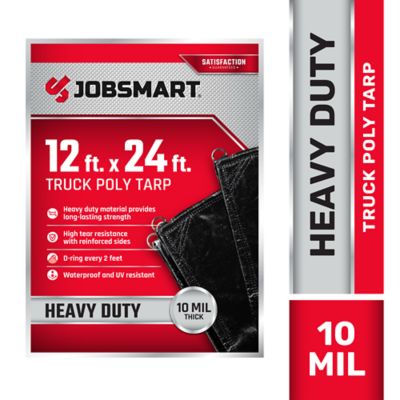
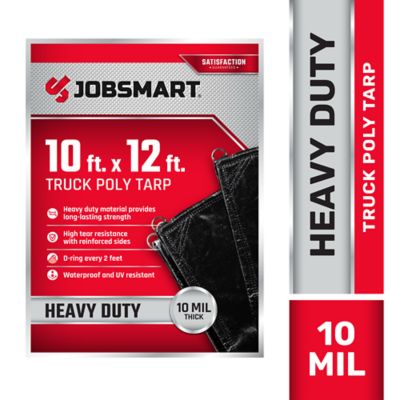
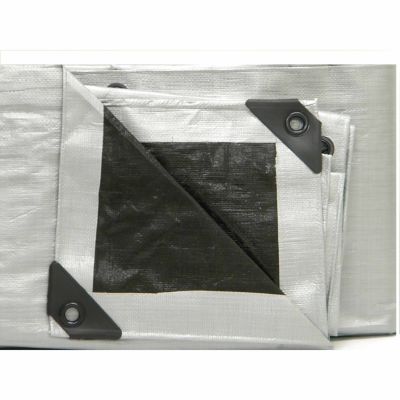
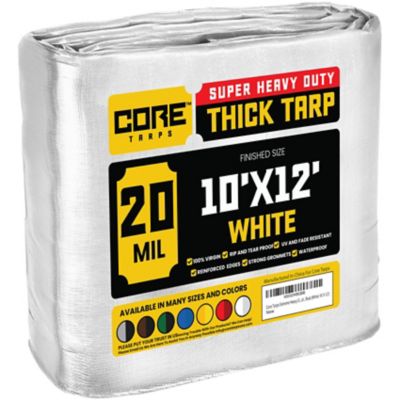
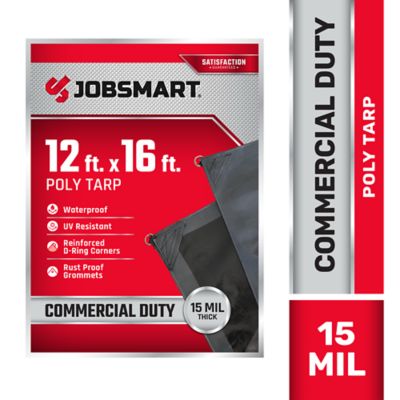
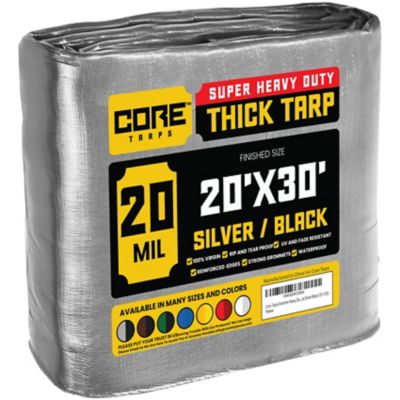
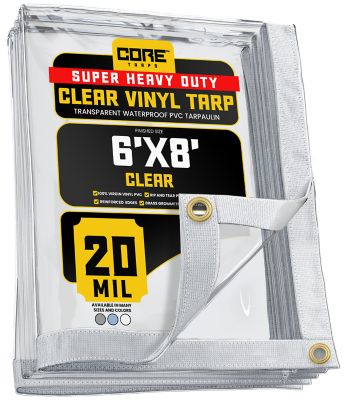
Heavy duty vinyl tarps provide substantial coverage for equipment, building materials, trailers, and other loads that need a barrier against rain, road spray, and everyday grime. These covers commonly feature a woven polyester reinforcing layer, often called a scrim, with a polyvinyl chloride, or PVC, coating. The fabric underneath helps resist stretching and tearing, while the vinyl surface sheds water and wipes clean more easily than an absorbent covering. That combination makes this category a practical fit for farmers, ranchers, contractors, truck operators, and homeowners with outdoor storage to manage. A tarp over a parked implement faces different demands than one covering lumber beside a workshop, but both benefit from strong fabric and well-supported edges. Construction details matter as much as the heavy-duty label: heat-welded seams, reinforced hems, and corrosion-resistant grommets can help a cover stand up to repeated handling when those features are included. Material weight is commonly listed in ounces per square yard, while thickness may appear in mils, with one mil equaling one-thousandth of an inch. Those measurements describe different properties, so a weight rating alone does not establish thickness or tear strength. Vinyl tarp weights can range from lighter utility fabrics around 10 ounces per square yard to substantial industrial fabrics of 40 ounces or more, though specifications differ by manufacturer and application. Heavier fabric generally adds handling weight and may take more effort to fold, lift, and pull across a load. For a cover that comes off a tractor attachment every morning, manageable weight matters alongside strength. For equipment that stays parked through the cooler months, resistance to weathering and abrasion may carry more weight in the decision. The best match depends on the job rather than the highest number on the label. A smooth coating, sound seam construction, and reinforcement where the tie-downs pull all contribute to how a vinyl tarp performs around the barnyard, at a jobsite, or beside the driveway.
Fit gives heavy duty vinyl tarps much of their usefulness. Length and width need to account for the height of the load, the amount of side coverage, and the space needed to reach suitable anchor points. A cover stretched flat across the top of a stack may leave the sides open to windblown rain, while an oversized cover can leave loose folds that catch the wind or drag through mud. Listed dimensions may refer to the fabric before hemming or to the finished tarp, so that distinction matters when coverage is close. Rectangular covers suit many equipment and material-storage tasks, but the shape underneath affects where the fabric rests and how tension travels through the edges. On a square stack of lumber, corners create pressure points; on a rounded piece of equipment, the tarp may slide unless the attachment pattern holds it evenly. Padding sharp edges helps keep vibration and rubbing from wearing through the coating. Grommet material, spacing, and edge reinforcement also deserve attention because every attachment point carries part of the strain. Brass and stainless steel are common corrosion-resistant hardware choices, but spacing and construction vary rather than following one universal standard. Evenly distributed tension helps reduce concentrated pulling at a single eyelet. Waterproof vinyl fabric can block rain through its surface, yet an entire covered load is only as protected as its seams, openings, and arrangement allow. Low spots collect water, and uncovered edges leave a path for splash. A sloped covering encourages runoff, while room for airflow can help limit condensation underneath. For stacks of firewood, that often means keeping rain off the top without enclosing damp wood on every side. Shoppers comparing material options for rain protection can also explore
Heavy Duty Waterproof Tarps. Vinyl is one material choice within that broader category, and its weight, flexibility, and surface characteristics help determine whether it suits a particular task. For highway transport, a tarp covers the load; it does not replace properly rated cargo restraints or the securement required for the vehicle and cargo.
Exposure and handling shape the working life of a heavy duty vinyl tarp long after it is first unfolded. Sunlight, repeated flapping, sharp corners, and standing water each put a different kind of strain on a cover. UV-resistant formulations can help slow deterioration from sunlight, but the level of protection varies. Mildew resistance likewise does not eliminate the need to clear away wet leaves, dirt, and other buildup. Cold-weather flexibility is especially important when a cover needs to be removed on frosty mornings or folded after outdoor work. Temperature ratings are specific to the material, and a tarp described as heavy duty should not automatically be expected to stay flexible in extreme cold or tolerate contact with hot equipment. Engines, exhaust components, and other heated surfaces need time to cool before covering. Flame resistance, where specified, is a separate property from general weather resistance and does not mean a tarp is fireproof. Resistance to oil, fuel, acids, or other chemicals also requires an explicit material rating rather than an assumption based on the vinyl coating. Around a working property, straightforward care helps keep a cover ready for its next job: loose grit can be brushed away, and many vinyl surfaces can be washed with mild soap and water when the manufacturer's care directions allow it. Harsh solvents and abrasive scrubbing can damage coatings. Thorough drying before storage helps prevent trapped moisture and odors, especially when a tarp will sit folded on a shed shelf for a while. Checking seams, hems, and grommets between jobs makes small trouble spots easier to catch before they spread under tension. A compatible vinyl repair material may address minor damage when the manufacturer permits repairs, while torn attachment points or widespread cracking can call for replacement. Whether the work involves sheltering a mower attachment, covering materials between projects, or keeping rain off equipment parked beyond the shed, the right vinyl tarp brings together suitable dimensions, manageable weight, and construction matched to the conditions.