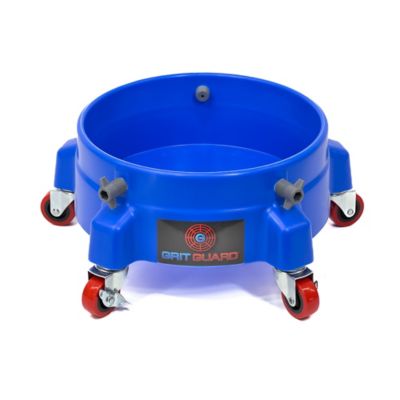
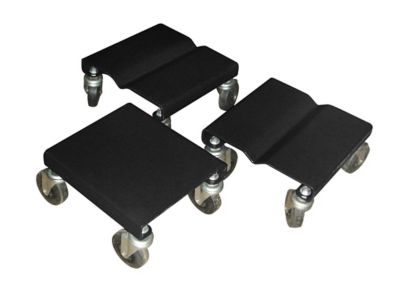
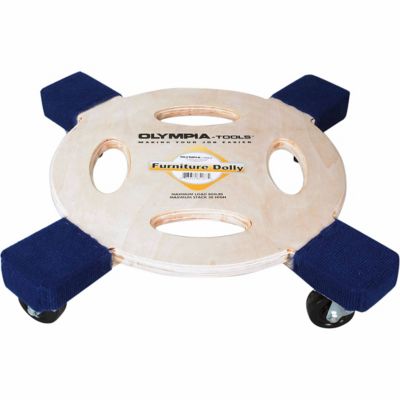
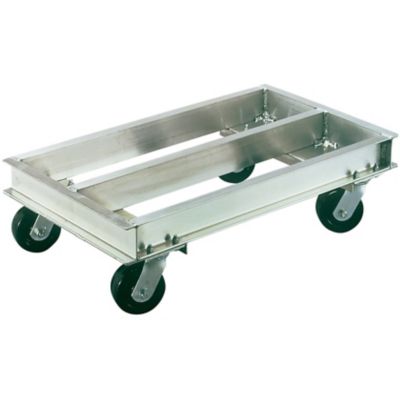
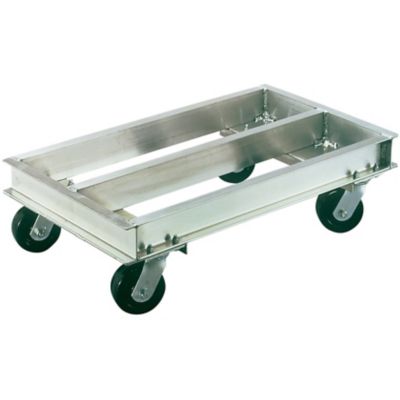
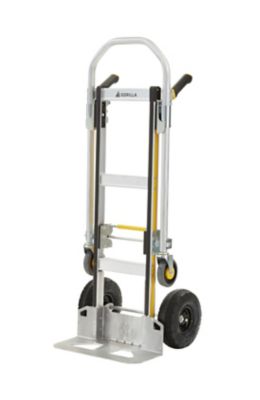
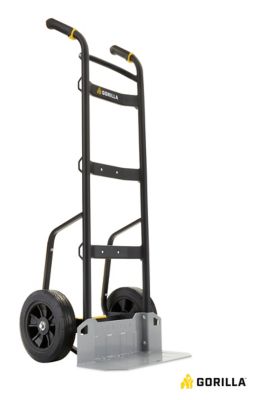
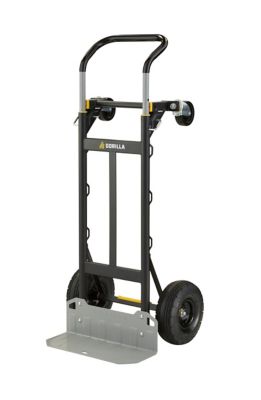
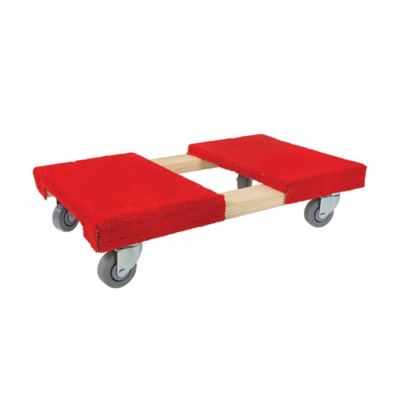
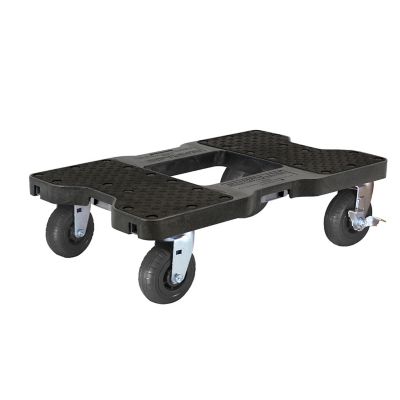
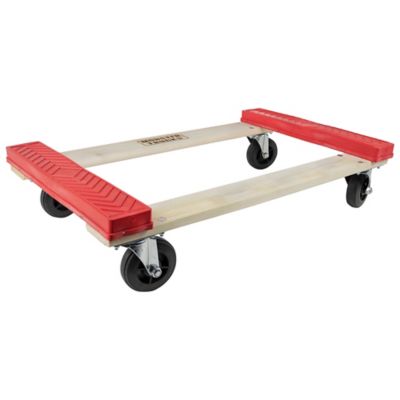
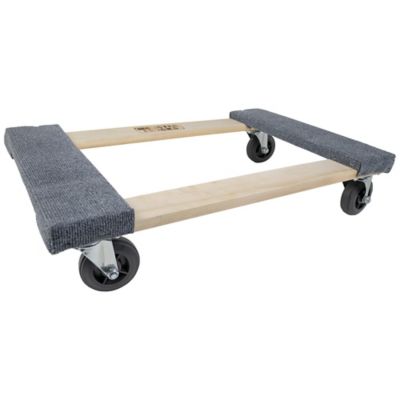
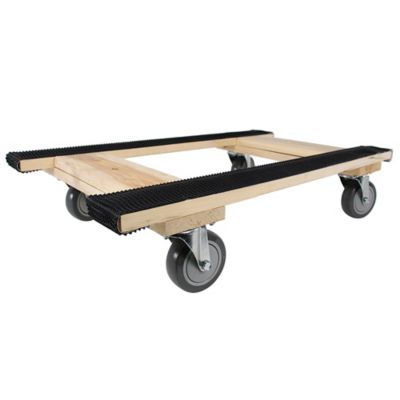
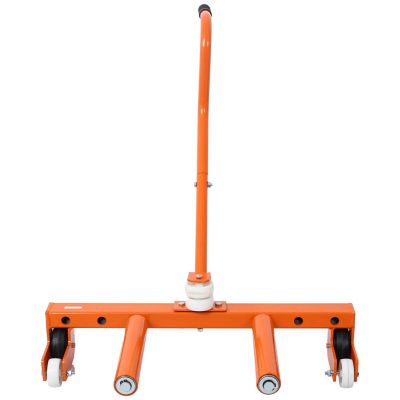
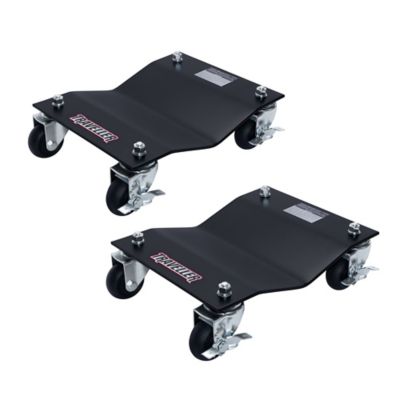
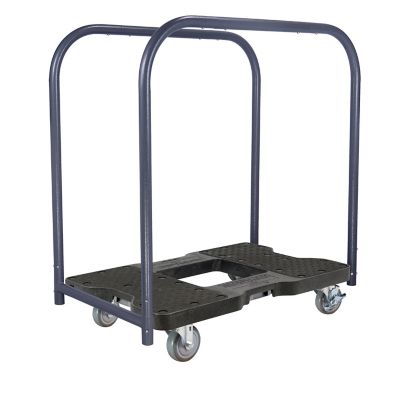
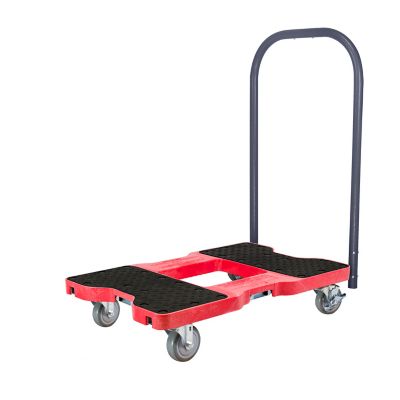
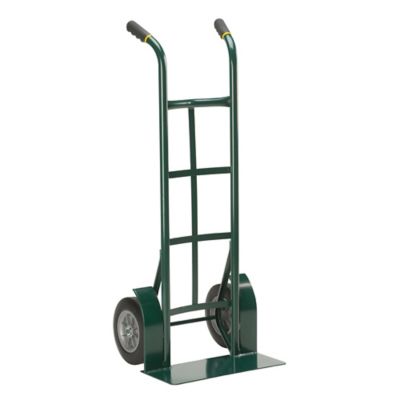
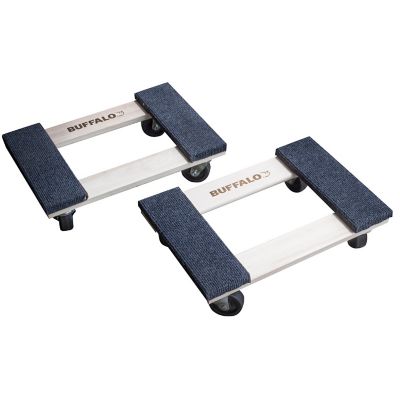
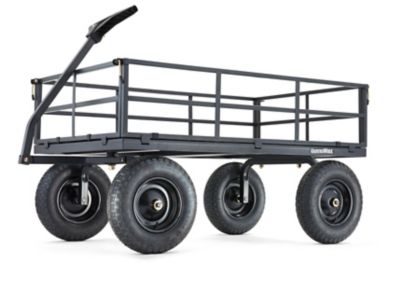
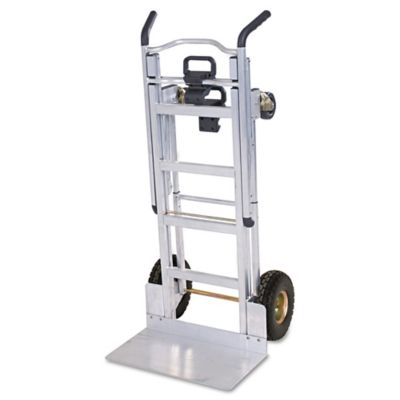
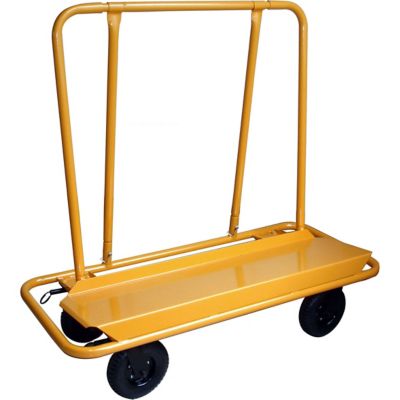
Heavy-duty dollies are wheeled platforms and upright load carriers that help move heavy equipment, appliances, furniture, and other bulky loads across suitable surfaces. Load ratings range from several hundred pounds to several thousand pounds, depending on the design, so the category covers everything from compact shop dollies to specialized industrial moving equipment. The right fit depends on more than the number on the capacity label: load shape, weight distribution, floor condition, and the route through the building all matter. A low, four-wheel platform can support a wide cabinet or a boxed load close to the floor, while an upright hand truck offers a different footprint and handling style for stacked cartons or tall equipment. Appliance-style designs may include straps, padded contact points, and frames shaped for tall, bulky loads. Around a farm shop, garage, warehouse, or rental property, these differences show up in everyday jobs, from shifting a storage cabinet away from a wall to moving packaged supplies between work areas. A dolly helps keep the load rolling instead of dragging across the floor, though loading and unloading can still call for lifting equipment or another person. Capacity applies to the complete dolly or specified moving system, not just its frame material or the size of its wheels. A heavy load with most of its weight concentrated at one corner places different demands on a platform than evenly spread boxes. Likewise, a tall load can affect balance even when its total weight falls below the stated limit. For machinery, the support points and underside clearance also influence fit; a broad deck and a set of separate machine dollies serve different purposes. Manufacturer ratings for the intended application make it easier to compare designs without assuming that every heavy-duty dolly handles the same job. That practical fit matters for maintenance crews, property owners, movers, and folks keeping a busy shop in order.
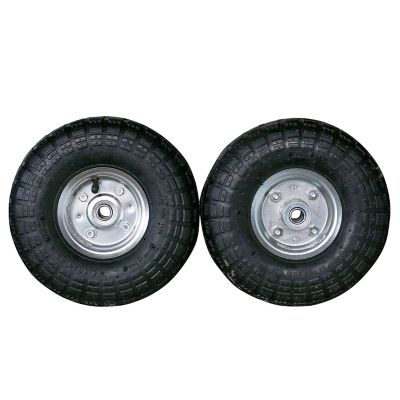
Frame construction, deck material, and wheel design all influence how a heavy-duty dolly handles a load. Welded steel frames provide substantial support for demanding shop and equipment-moving work, while aluminum designs can reduce the weight of the dolly itself when carrying it between jobs is part of the routine. Wood platforms offer a broad supporting surface, and carpeted decks or padded rails can help limit direct contact between a hard frame and a finished cabinet or appliance. Padding does not secure a load, however, and its condition matters when protecting painted or finished surfaces. Deck length and width determine how well the load sits on the platform, while deck height affects the clearance needed to get underneath it. A platform that fits the load but cannot clear the shop doorway creates a different problem, so overall width, handle height, and turning space belong in the same comparison. Wheel materials bring their own tradeoffs. Hard wheels generally roll readily on smooth, firm floors but transmit more vibration across joints. Rubber and polyurethane wheels offer different combinations of cushioning, rolling resistance, and floor contact, with performance depending on their formulation and construction. Pneumatic tires can soften travel over rougher surfaces on designs rated for that setting, though they also require attention to air pressure. Larger wheels generally negotiate small surface irregularities more readily than smaller wheels, but a wheel’s diameter alone does not establish its load capacity. Swivel casters help a platform maneuver around benches and parked equipment, while fixed wheels favor straight tracking. Some designs combine both, and others include wheel brakes or directional locks. Floor protection also depends on clean wheel treads and a surface capable of supporting the concentrated load. On a concrete shop floor, a small piece of metal caught under a wheel can interrupt an otherwise straightforward move. Thresholds, floor seams, ramps, and tight corners deserve consideration before a loaded dolly reaches them; even a short trip across the building can involve several different handling demands.
For repeated work, the details that make a dolly manageable between moves can matter as much as its carrying capacity. A handle with enough clearance for a gloved hand, a platform low enough for the intended loading method, and accessible brake controls all affect day-to-day handling. Strap attachment points and built-in restraints, where provided, help support the load-securing method specified for that design; a loose cord is not a substitute for a rated restraint. A wheel brake can help hold an unattended, unloaded platform in place on a suitable level surface, but it does not automatically make that dolly suitable for slopes or secure the load itself. Tasks that involve gathering tools, carrying smaller supplies, or keeping parts organized between workstations may be better suited to
Heavy Duty Utility Carts, which offer a different approach to everyday transport. Dollies generally focus on supporting and moving a load, while carts often add handles, shelves, or containment for loose materials. In either case, ongoing care helps preserve smooth operation. Threads, packing straps, and other debris can wrap around axles, and loose mounting hardware or a damaged caster can change how a loaded platform tracks. Routine inspection of welds, fasteners, wheel treads, bearings, padding, and straps helps reveal wear before the next move. Lubrication needs depend on the caster and bearing design, with manufacturer directions setting the maintenance schedule. Storage matters, too: an upright dolly needs a stable resting position, and a low platform needs a spot where it will not roll into a walkway or become a trip hazard. For a busy barn workshop, repair bay, or equipment room, a well-matched dolly earns its place through practical details: a deck that supports the load properly, wheels suited to the floor, manageable steering, and a clearly stated working capacity. Those features help turn awkward moves into more controlled work without treating every load or workspace alike.