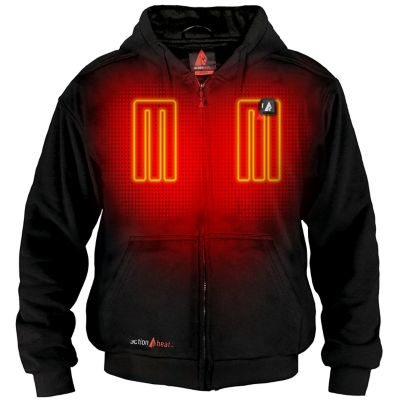
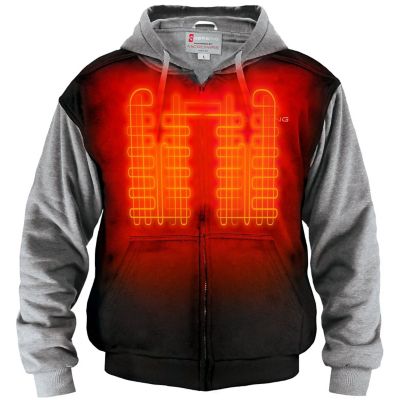
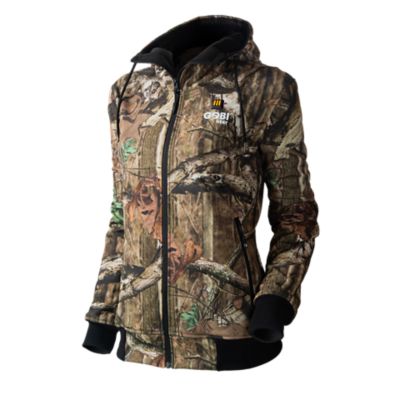
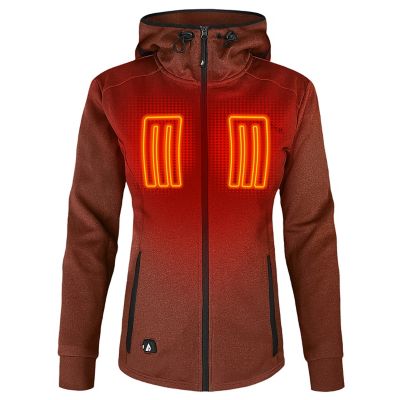
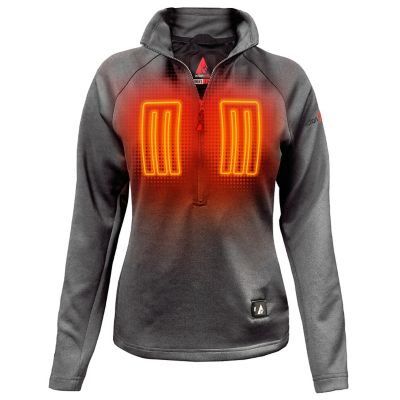
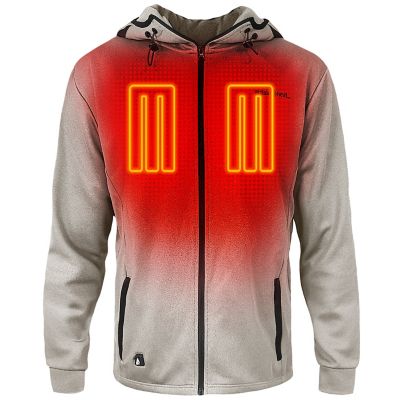
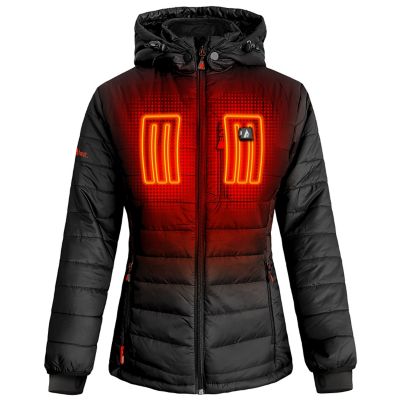
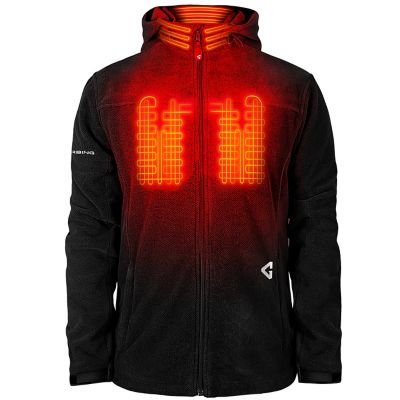
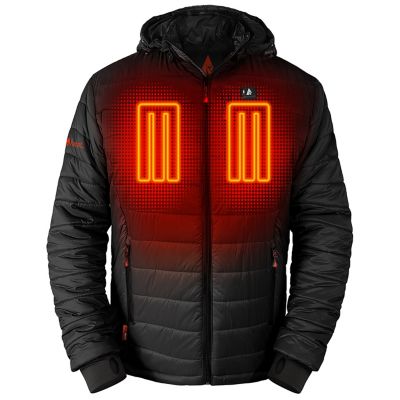
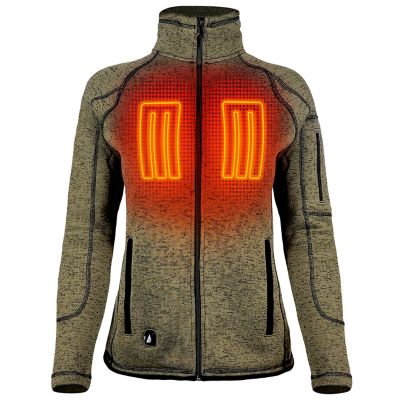
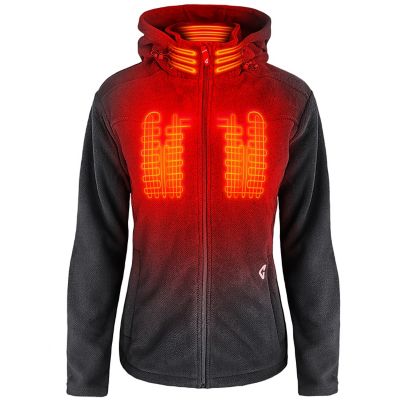
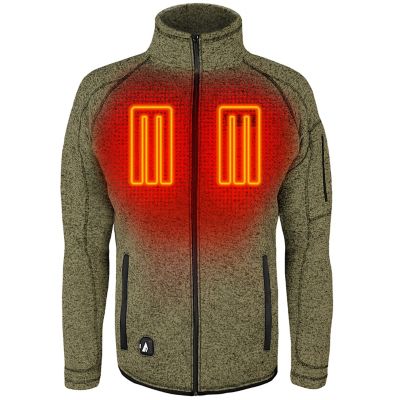
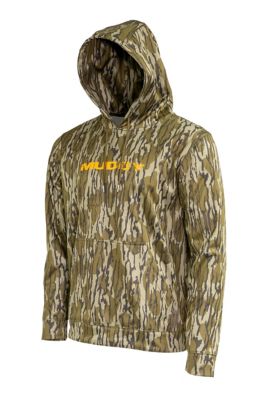
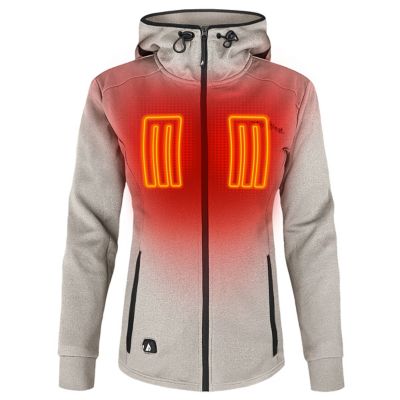
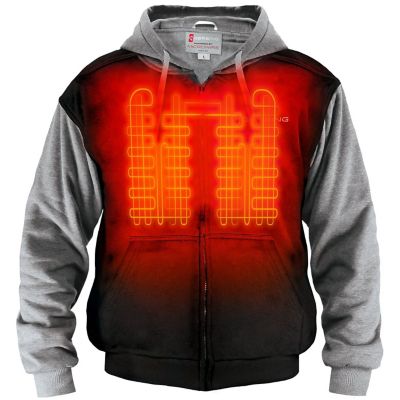
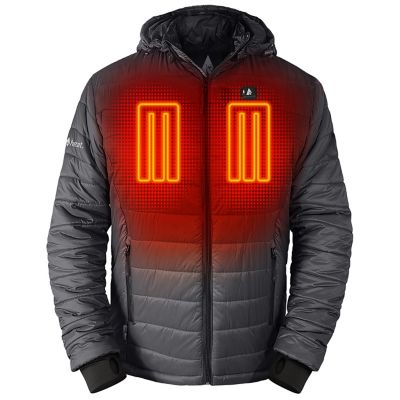
Heated hoodies combine the familiar feel of a sweatshirt with battery-powered heating elements that add warmth around the torso. Rather than depending on fabric alone to hold body heat, they deliver heat through flexible elements built into selected areas of the garment. Carbon fiber heating elements are common, and some designs feature graphene-based heating technology. Heating zones may cover the chest, upper or mid-back, shoulders, or pocket areas, depending on the construction. The number and placement of those zones matter more than a big number on its own: warmth across the back can feel especially welcome while standing at a gate, while chest heating can take the edge off a chilly walk between the house and barn. A rechargeable battery supplies the power, usually from a dedicated pocket, and controls let the wearer adjust the heat. Many heated sweatshirts have low, medium, and high settings operated through a button on the garment; other designs may offer additional controls. Higher heat generally draws more power, while a lower setting can stretch the time between charges. There is no single battery runtime that applies to every heated hoodie. Battery capacity, the selected heat level, outdoor temperature, garment fit, and additional layers all influence how long the warmth lasts and how it feels. A stated maximum runtime may reflect the lowest setting rather than a full day on high. For someone checking water troughs before daylight, waiting beside a livestock trailer, or watching a game from the bleachers, that adjustable warmth offers flexibility as activity levels change. A hoodie can stay comfortable with the heat off during a brisk walk, then provide extra warmth when the wearer stops moving. Heating is concentrated around the listed zones, though, not spread evenly through every sleeve and seam. The hood, cuffs, and fabric still do their share of keeping warmth close. Heated clothing also does not replace the layers, gloves, footwear, or protective gear that a particular job or cold-weather outing calls for.
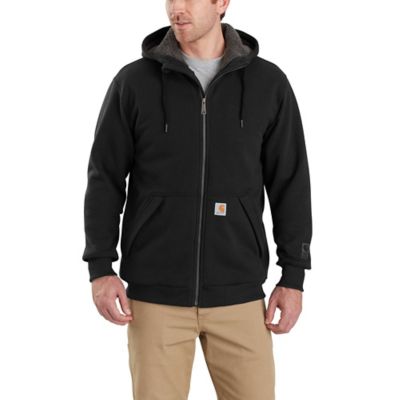
Fabric and fit shape the everyday feel of a heated hoodie just as much as its electrical components. Cotton-rich blends tend to have a familiar sweatshirt feel, while polyester blends can offer lighter weight and faster drying. Fleece interiors add softness and help hold warmth, and stretch in the fabric can make reaching, bending, and climbing into a truck less restrictive. The outer surface, stitching, pocket reinforcement, and zipper construction deserve attention on clothing that will see fence checks, feed runs, and regular trips through the wash. A smooth outer face may slide more easily beneath a jacket, while a thicker fleece can feel comfortable on its own in sheltered conditions. Wind resistance and water resistance vary, and neither should be assumed simply because the garment has a heating system. For warmth without a battery,
Thermal Hoodies rely on their fabric and construction to help retain body heat; heated styles add an adjustable source of warmth to that familiar layering approach. Fit works best when the heating areas sit reasonably close to the body without the sweatshirt feeling tight. Too much room can leave gaps between the warming panels and the wearer, while a snug fit may restrict movement or leave too little space for a base layer. Shoulder room, sleeve length, and coverage at the waist become noticeable when lifting a feed sack or reaching across a workbench. A zip-front style makes it easier to open the garment as activity picks up, while a pullover offers a familiar sweatshirt shape with fewer front openings. Ribbed cuffs and a well-fitting hem can help limit drafts. Pocket placement also affects comfort: a battery pack that rests comfortably while standing may feel different when sitting in a tractor seat or bending to latch a gate. Accessible heat controls, secure battery storage, and room for an outer coat help the garment fit into a working day. Around moving equipment, loose drawcords and dangling cords need the same attention as any other loose clothing.
Care is part of keeping a heated hoodie ready for repeated wear, because the fabric, heating elements, wiring, and battery each have different needs. Washability depends on the garment, so the care label and heating-system instructions take precedence over a general sweatshirt routine. Some heated hoodies allow machine washing on a gentle cycle after the battery is removed and connections are protected as directed; others call for a different cleaning method. Turning the power off and disconnecting the battery before cleaning is essential. Air drying is often required, and tumble drying, ironing, bleach, or dry cleaning may be restricted. Any electrical connections should be completely dry before the battery is reattached. Gentle handling matters beyond laundry day, too. Sharp folds through heating panels, hard pulls on connecting wires, and repeated pressure against a battery pocket can put strain on parts that an ordinary sweatshirt does not have. Compatible batteries and charging equipment matter, since a similar-looking connector does not establish that two components work together. Charging, storage temperature, and longer-term battery storage should follow the maker’s directions. A charged battery makes more difference than the number of heating zones when chores run past sundown, but extra runtime depends on a compatible battery setup rather than just carrying any power pack. Heated hoodies suit people who spend stretches of time outdoors without constantly moving: livestock owners, hunters waiting quietly, folks tending a garden through frosty mornings, and families cheering from the sidelines. They can also make a practical gift for someone whose day includes a cold workshop or regular walks with a pet. For gifting, familiar sweatshirt sizing, the recipient’s layering habits, and whether they prefer a zipper or pullover are useful starting points. The best match feels comfortable with the heating switched off, has controls the wearer can manage easily, and provides warmth where it is most welcome. That balance lets a heated hoodie earn its place alongside everyday work clothes rather than becoming something saved for an occasional outing.