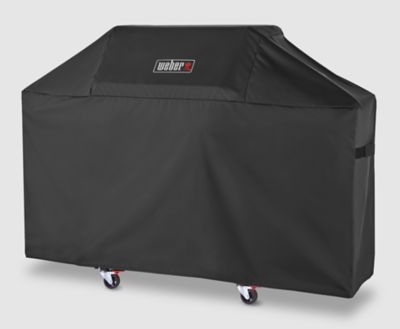
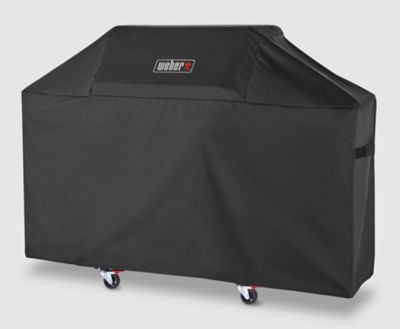
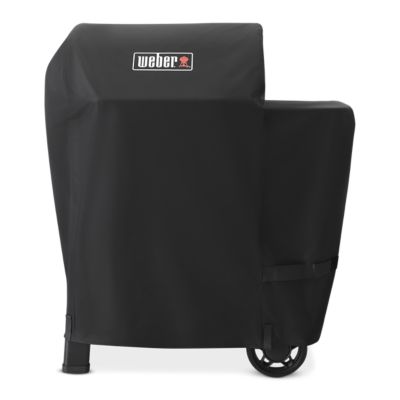
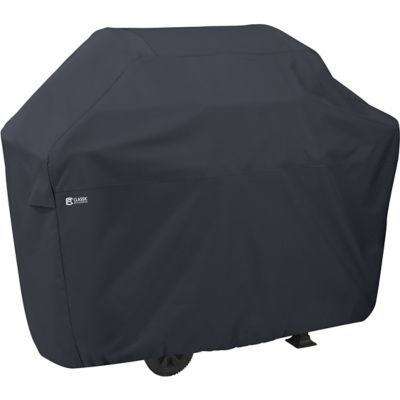
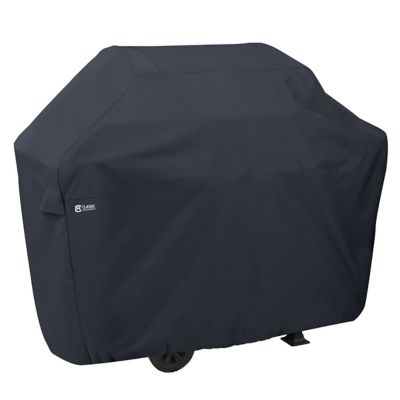
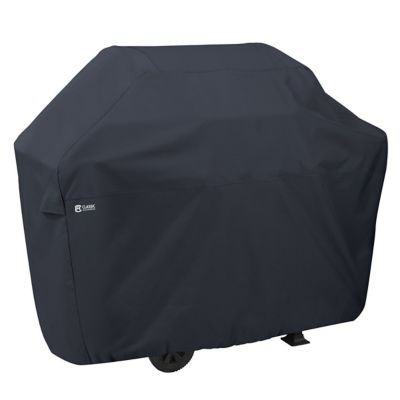
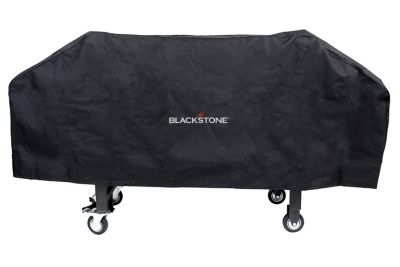
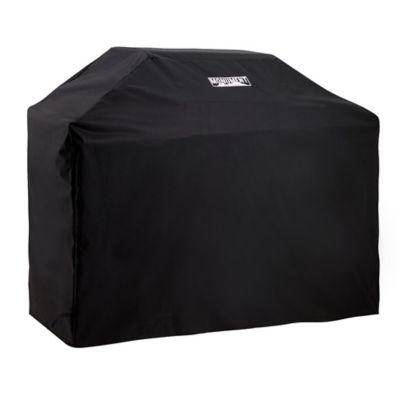
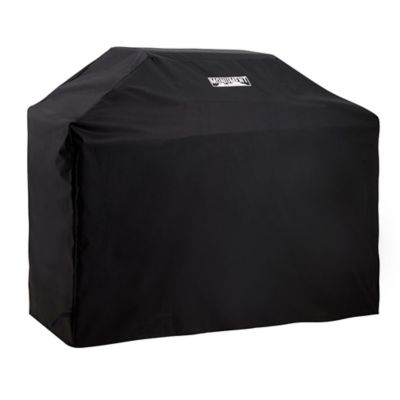
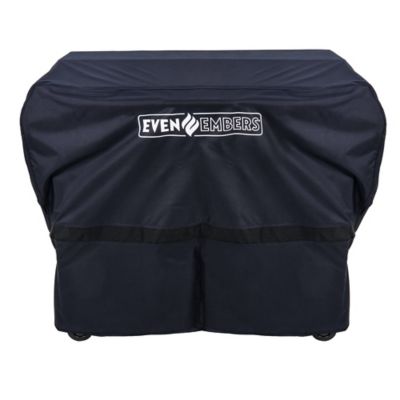
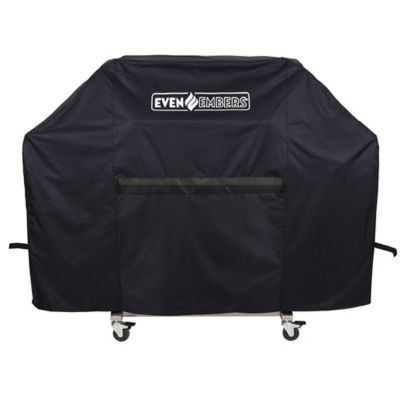
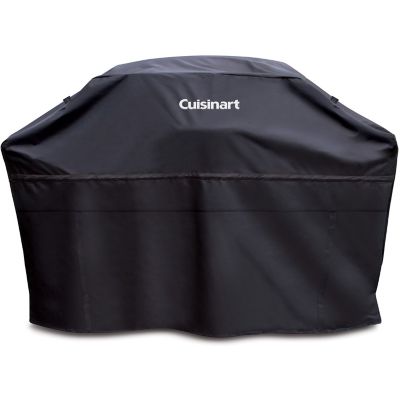
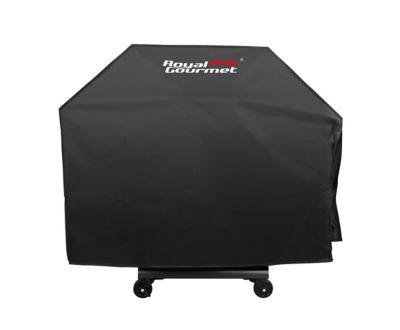
Grill covers help protect outdoor cookers from rain, sun exposure, dust, and falling debris between meals. A well-fitting cover keeps the lid, side shelves, and cooking station from collecting as much dirt, making the next backyard supper a little easier to get started. The right fit depends on the grill’s overall shape and dimensions, not just the size of its cooking grate. A round kettle needs a different cover shape than a rectangular gas grill with a tall lid and wide side tables, even when both cook enough food for the same crowd. Compact portable grills, freestanding kettles, and larger cart-style cookers each have their own proportions, so matching the cover to the complete grill matters. The model information on the grill can help confirm compatibility when a cover lists matching equipment. Overall width, depth, and height provide another useful check, especially when comparing covers intended to fit several grill shapes. Handles, fixed shelves, attached work surfaces, and other projections belong within those measurements. Folding shelves can change the footprint, but the cover needs to match the position in which the grill will actually sit. A little room makes a cover easier to pull over the lid without catching on corners; excessive slack can leave fabric hanging loose or collecting water in folds. A cover stretched tight across a handle or shelf edge may put extra stress on the seams each time it comes off. Length matters, too. Coverage around the grill body helps shield exposed surfaces, while a hem that stays clear of the ground avoids dragging through dirt and standing water. For a grill parked beside the patio, near the back porch, or along a gravel walkway, the most useful fit is one that follows the cooker’s outline without turning every removal into a wrestling match. Room around wheels and lower storage areas also helps keep routine access straightforward without requiring the cover to bunch up underneath the cart.
Material and construction determine how a grill cover handles outdoor exposure and regular handling. Polyester is a common choice because it can combine manageable weight with a flexible feel, while coatings or backing layers can add resistance to water penetration. Other cover fabrics may have a heavier, more structured feel, so the material description matters more than appearance alone. Water-resistant and waterproof are not interchangeable terms: a fabric that sheds a passing shower does not necessarily prevent water from entering through seams or sitting folds. Stitching, seam placement, and the condition of any protective coating all affect how well a cover performs. A smooth fit that lets water run off is helpful, particularly across broad lids and side shelves where loose fabric can sag. Sun-resistant fabric treatments can help limit damage from ultraviolet exposure, though no fabric stays unchanged indefinitely outdoors. Color fading, cracking backing, thinning areas, and separating seams are signs that a cover deserves a closer look. Fabric weight is only part of the picture; a thick cover with stressed stitching may not hold up as well as a lighter one that fits properly and receives regular care. Vent panels can help air circulate beneath the cover and allow trapped moisture to escape, but they do not eliminate condensation or make it a good practice to cover a damp grill. Fastening straps, buckles, elastic hems, and drawcords offer different ways to hold the fabric close to the cooker. Their placement matters because a strap is most helpful when it can fasten securely without pulling against a control knob or another projecting part. Reinforced handles can make lifting a large cover more manageable, especially when the grill has broad shelves or a high lid. For a cooking station near trees, a fabric surface that brushes clean easily can make clearing leaves, pollen, and small twigs less of a chore. The best match balances coverage, manageable handling, and construction suited to where the grill spends its downtime.
Regular care helps a cover do its job without becoming another piece of equipment that takes all afternoon to maintain. The grill needs to be completely cool before a cover goes on, with burners shut off and charcoal fully extinguished according to the grill manufacturer’s directions. A cover is not a heat shield, and even a small hot spot can damage the fabric or create a fire hazard. Keeping both the grill exterior and the inside of the cover free of grease and food residue also helps prevent grime from transferring back and forth. For routine cleaning, the care label should set the rules. Many covers call for gentle spot cleaning with mild soap and water rather than a washing machine, harsh cleaners, or abrasive scrubbing. Thorough air-drying before storage helps avoid trapping dampness in folded fabric. After a cookout, a dry storage hook or shelf gives the cover somewhere to go besides a muddy patch beside the grill. Keeping it clear of sharp tools, rough boards, and hot cooking accessories can spare the fabric needless snags and burns. Occasional checks around shelf corners, handles, seams, and fastening points help catch wear before a small tear spreads. A cover also does not replace cleaning the grill, checking its condition, or following the equipment maker’s storage recommendations. For someone who cooks burgers after chores, tends a kettle for a family gathering, or keeps a gas grill ready for a quick weeknight meal, that straightforward upkeep supports a cleaner cooking space.
Grill Covers can also make practical gifts for backyard cooks, particularly when the recipient’s grill model and dimensions are known ahead of time. Matching the shape and fastening style to the way that person cooks and stores the grill makes the gift more useful than guessing by appearance. Whether the cooker serves a household of two or anchors a table full of family and neighbors, a properly fitted cover is a practical part of looking after the equipment between meals.