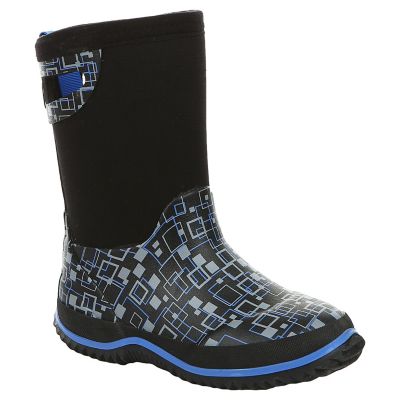
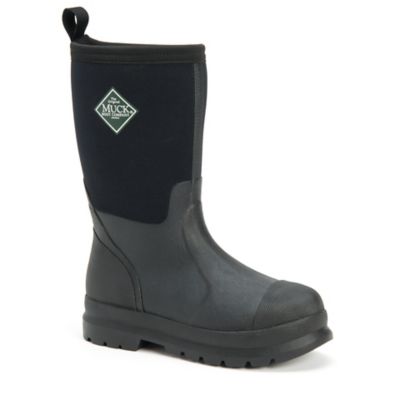
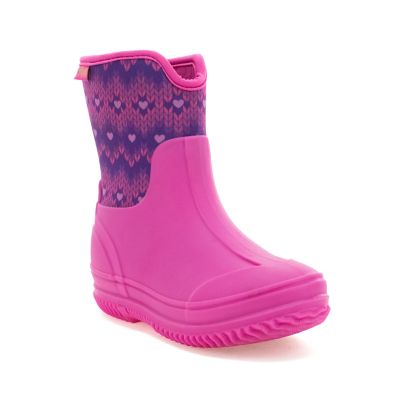
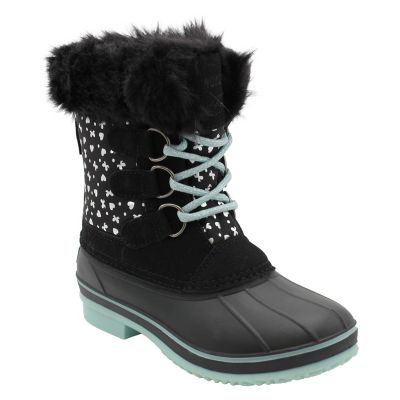
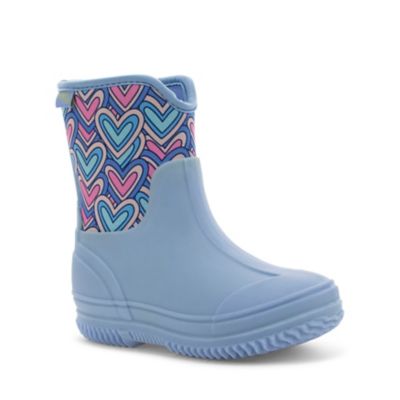
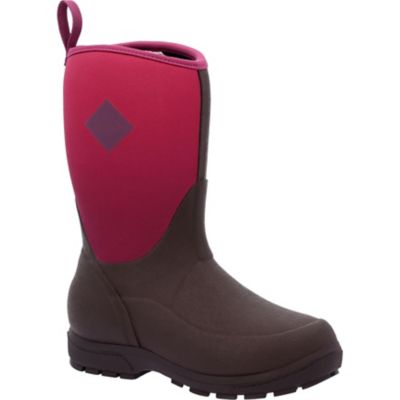
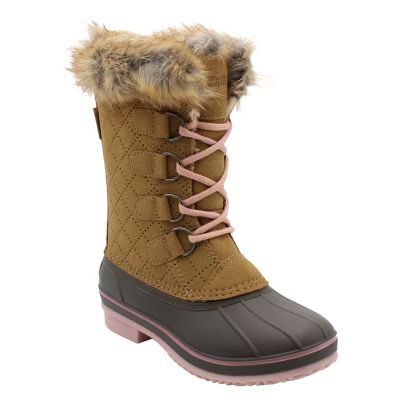
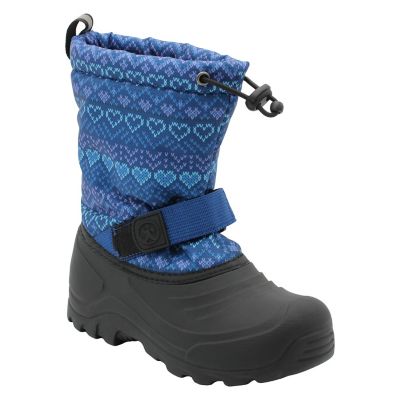
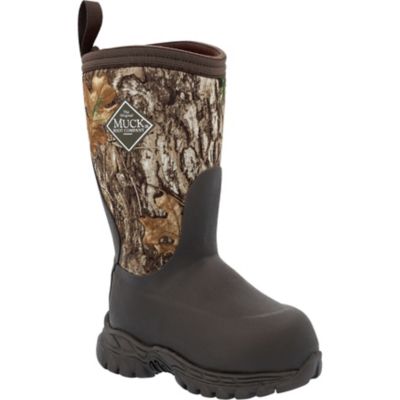
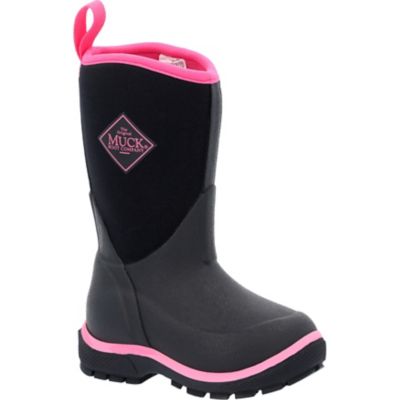
Girls' snow boots bring warmth, coverage, and traction to school mornings, sledding afternoons, and snowy walks down the lane. The right pair suits both the conditions underfoot and the way a child spends her time outside. A short walk from the house to the bus stop calls for a different balance of warmth and flexibility than a long stretch of building snow forts or tagging along for outdoor chores. Waterproof construction helps keep melting snow and slush from reaching socks, while insulation slows heat loss around the feet. Water-resistant materials can handle some moisture, but they do not provide the same protection as a boot built with a waterproof shell or membrane. Construction matters as much as the outer fabric: seams, tongue openings, and the point where the upper meets the sole can all affect how well moisture stays out. Rubber lower shells provide coverage around the foot where puddles and slush tend to collect. Nylon and other synthetic uppers can keep the shaft lighter and easier to bend, while leather sections may need care suited to their finish. Fleece linings, felt liners, and synthetic insulation each contribute to warmth, though the amount of insulation and the overall boot design vary. A taller shaft helps keep loose snow away from the ankle, especially when snow pants sit over the boot opening. A shorter shaft can feel less restrictive for everyday walking when deep snow is not part of the outing. Warmth ratings, when provided, are worth reading alongside the manufacturer's guidance rather than treating them as a promise for every child. Activity level, socks, moisture, and time outdoors all affect comfort. A girl running up a sledding hill generates more body heat than one standing beside a fence watching livestock. For both kinds of days, snow boots work best as part of an outfit that keeps the rest of the body warm and dry without making movement a struggle.
Fit makes a big difference in how girls' winter boots feel from the first step off the porch to the walk back inside. There should be room for toes to move with winter socks on, but not so much space that the foot slides forward or the heel lifts excessively. Buying several sizes ahead can leave a child working harder to keep the boots on, particularly when climbing steps or walking through packed snow. Measuring both feet and checking the size chart for the footwear helps account for differences between youth sizing systems and boot shapes. Toe shape, foot width, and space over the top of the foot matter along with length. A boot that pinches across the forefoot can feel uncomfortable even when there is enough room at the toes. Thick socks do not automatically mean warmer feet; socks that crowd the boot can make the fit too tight. Wool-blend or synthetic socks that move moisture away from the skin can be a practical choice for active play. Closures also deserve attention, especially for younger children getting dressed with a classroom full of other kids. Hook-and-loop straps offer a straightforward way to adjust the ankle, while laces allow more adjustment through the foot and shaft. Drawcord cuffs can help close the gap at the top, and pull loops give small hands something to grab. Wide openings make it easier to get feet in without folding the lining under the heel. Underneath, tread with defined edges and channels helps provide grip on snow, though no outsole can guarantee footing on ice. Flexible soles can make walking feel more natural, while reinforced toes and heels help handle scraping against sleds, porch steps, and packed trails. The overall weight matters, too. Boots should provide the coverage a child needs without making every step feel like hard work, especially when the walk home comes after a full afternoon outside.
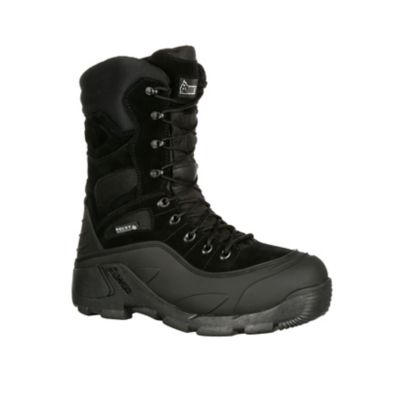
Everyday care helps snow boots stay comfortable and ready for the next outing. Snow and loose grit can be brushed away before boots come into the house, and road salt should be wiped off with a damp cloth when the material allows. Salt residue can leave marks and take a toll on some finishes if it sits for too long. Cleaning directions differ for rubber, textile, leather, and mixed-material construction, so the care label is the best place to check before adding cleaners or treatments. A waterproofing treatment should match the upper material and the manufacturer's recommendations; it cannot turn every boot into fully waterproof footwear. After a wet day, opening the shaft and loosening closures gives trapped moisture a way out. Removable liners and footbeds can dry separately when the boot is designed for that, but fixed linings should stay in place. Air-drying away from a stove, radiator, or other direct heat source helps protect adhesives, rubber, and fabric. Dry boots also make the next trip outside more comfortable, since damp linings can leave feet feeling cold even when the outer shell looks fine. Checking tread, seams, and closures from time to time can reveal wear before it becomes a problem halfway through a snow day. Packed snow caught in a strap or a frayed lace can interfere with a snug fit. Girls' snow boots can also make a thoughtful gift for a child who loves snowmen, sled runs, or helping feed animals, provided her measurements and intended activities are part of the choice. Color and pattern can make the boots feel like her own, but comfort and easy fastening are what help them earn a spot by the door. For families outfitting more than one generation for snowy walks,
Women's Lace Up Snow Boots can round out the winter footwear lineup. With the right fit, suitable weather protection, and a little care between outings, snow boots help keep attention on the fun outside rather than cold, damp feet.