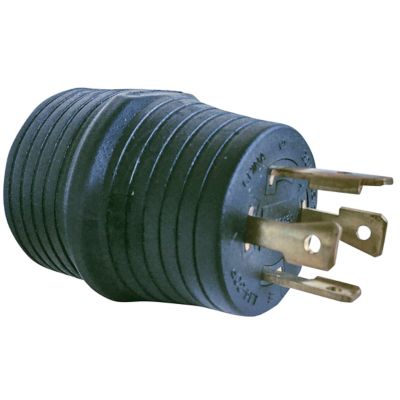
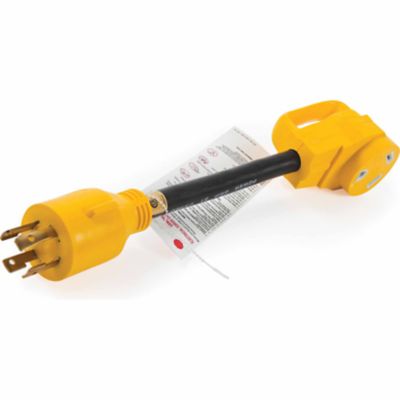
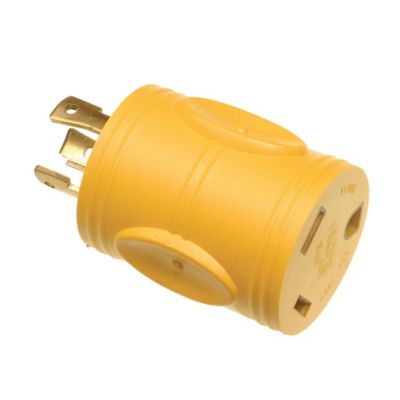
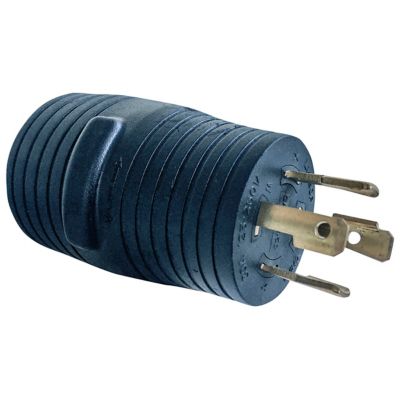
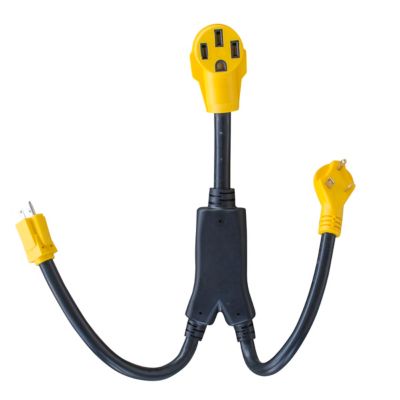
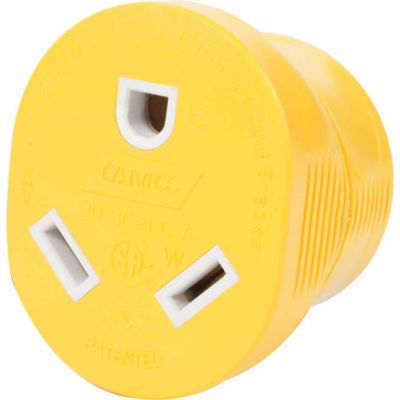
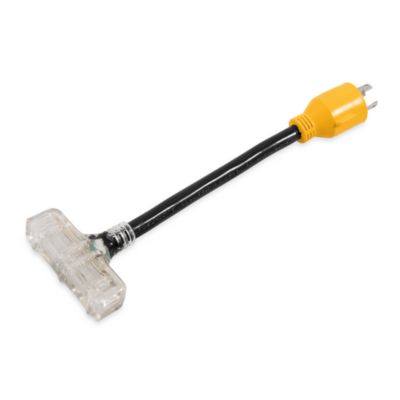
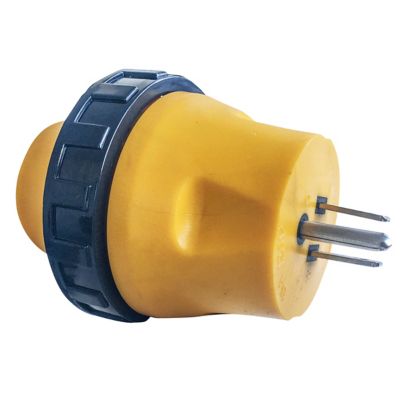
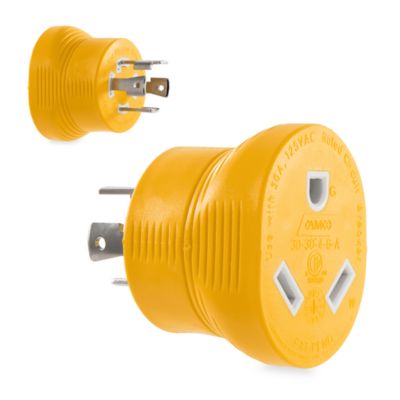
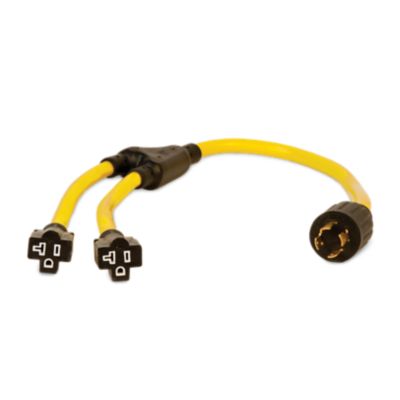
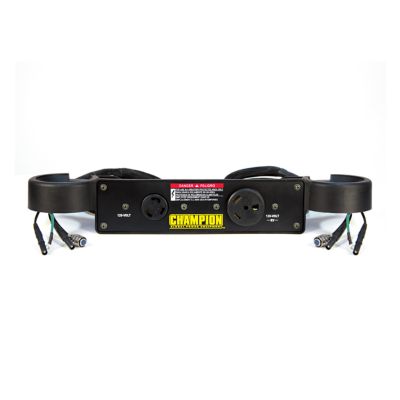
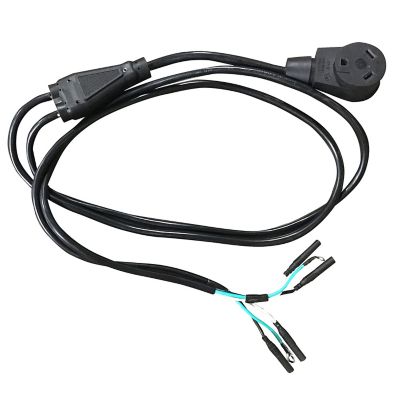
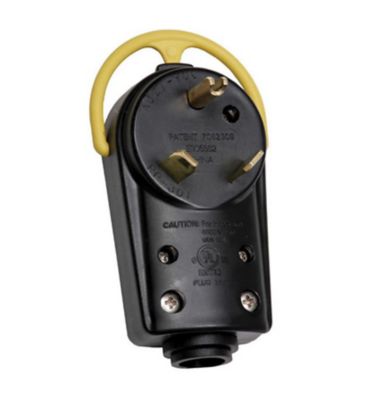
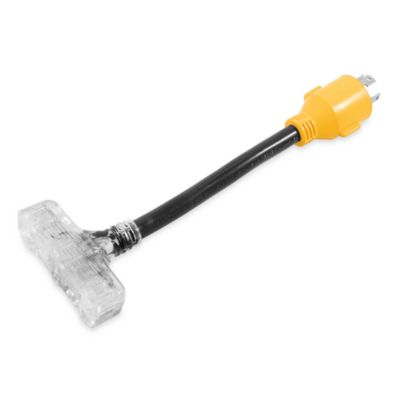
Generator adapters connect a generator’s outlet to a compatible cord or piece of equipment with a different plug configuration. They make the connection possible, but they do not increase the generator’s output, change its frequency, or automatically convert one voltage to another. That distinction matters whether the job is running tools beside a fence line, supplying power to a travel trailer, or keeping essential plug-in equipment running during an outage. The right connection starts with the outlet on the generator and ends with the electrical requirements of the equipment. Along the way, the plug pattern, voltage, amperage, grounding arrangement, and cord rating all need to match the intended setup. A connector that looks close is not necessarily a fit: straight-blade and twist-lock connections have different designs, and similar-looking receptacles can carry different voltages. NEMA designations identify standardized connector configurations, giving shoppers a more useful comparison than appearance alone. In these designations, P identifies a plug and R identifies a receptacle. For example, an L5-30P plug and a TT-30R receptacle can form an adapter for a compatible 30-amp, 120-volt generator-to-RV connection. That is a change in connector style, not a voltage conversion. RV owners, livestock owners, contractors, and folks working beyond the reach of a building’s outlets may all have a reason to keep a properly matched generator adapter with their power equipment. A short adapter can bridge the gap between a generator connection and an existing compatible extension cord without adding unnecessary cord length. A multi-outlet configuration can provide connection points for several smaller loads, provided the combined demand stays within every applicable rating. For shoppers comparing the power source along with its connections,
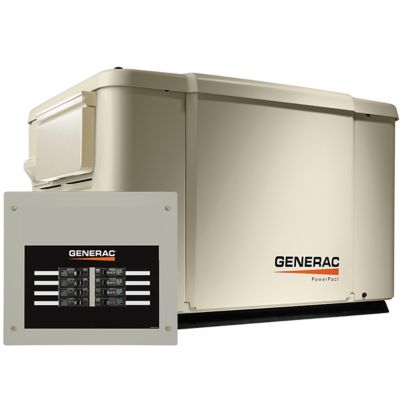
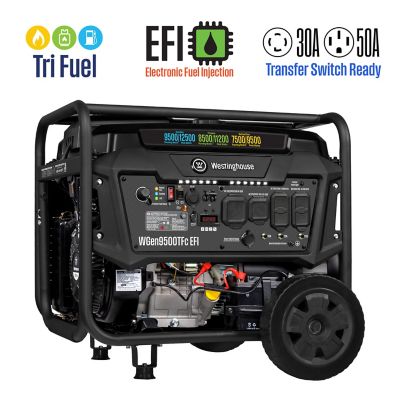
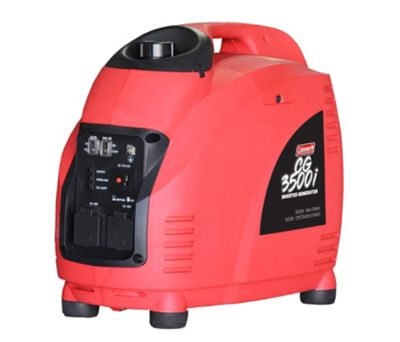
Generators For Easy Operation offers a related starting point. Choosing the generator and its connection equipment together helps avoid a setup where the engine has enough output but the outlet, adapter, or cord cannot support the load.
Generator plug adapters come in several general forms, each suited to a different connection arrangement. Compact adapters place the plug and receptacle close together, while short pigtail or dogbone adapters join the ends with a flexible section of cable. That short length can give a bulky cord connection more room around a crowded outlet panel, though the connection still needs support rather than hanging under the weight of a long cord. Twist-lock generator adapters engage with a turning motion that helps keep a properly seated connection from pulling apart unintentionally. Straight-blade connections fit equipment with matching conventional plugs, while RV generator adapters accommodate the connector patterns found on compatible recreational vehicles. Splitter adapters provide more than one receptacle, but extra outlets do not mean extra generating capacity. A work light and a battery charger may present a different load than a compressor that draws additional current when its motor starts. Both running demand and starting demand matter when sizing the entire setup. Materials also play a practical role. Copper conductors carry current, an insulating jacket surrounds the wiring, and molded connector bodies help protect the contact assemblies. Strain relief at the ends helps limit stress where the cable enters each connector. On corded adapters, conductor gauge and cable length affect electrical performance; longer cable runs can increase voltage drop, making the rating of the full cord arrangement important. Jackets intended for the working environment can help resist abrasion and other exposure described by the manufacturer. An outdoor rating does not make a connection suitable for standing water, and protective covers do not replace the need to keep electrical connections dry. Clearly marked electrical ratings and certification from a recognized testing laboratory are helpful features to compare. A sturdy-feeling housing is useful, but the markings, conductor specifications, and intended application tell more about suitability than heft alone. Around the farm, shop, or campsite, a well-matched adapter should sit securely, leave enough clearance for neighboring connections, and keep cable routing manageable without forcing a sharp bend at either end.
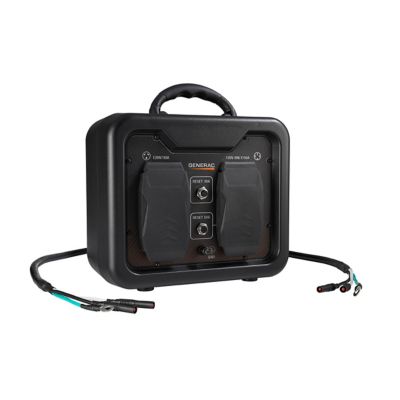
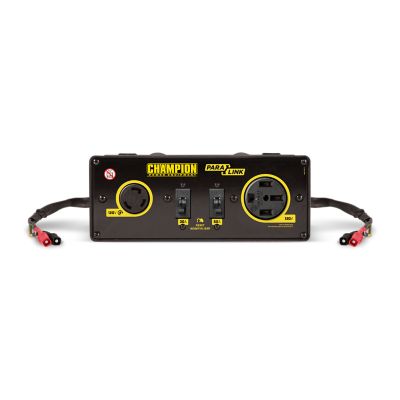
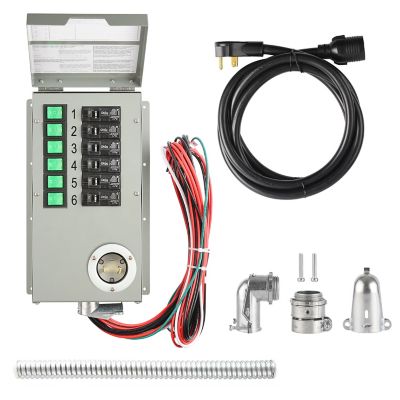
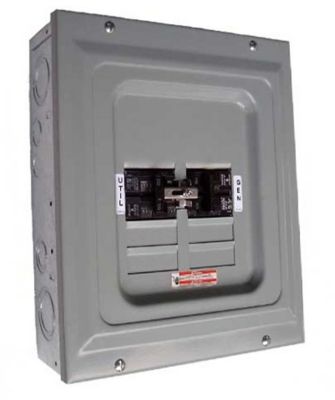
Fit and care matter just as much after the adapter leaves its storage spot. A sound connection seats fully without forcing, with no cracked housing, loose blades, exposed wire, or signs of scorching. Dirt packed around a receptacle, a cable pinched beneath equipment, or an adapter dragged across gravel can turn a handy accessory into something that needs replacement. With power disconnected, routine inspection and cleaning according to the manufacturer’s directions help keep problems visible. Storage in a dry spot, with the cable loosely coiled and the ends protected from crushing, helps limit unnecessary wear. During operation, cords and adapters belong clear of tires, sharp edges, walking paths, and hot engine parts. At a work area beyond the barn, that might mean routing a tool cord along the edge of the job rather than across the gate opening. At a campsite, it means supporting the RV connection and keeping it off the ground where practical. Electrical compatibility remains the deciding factor in every setting. A 30-amp RV connection commonly requires 120 volts, and an adapter must not expose that equipment to a 240-volt supply. Some adapters distribute a generator’s available 120-volt circuits to separate receptacles, but only through a design intended for that generator outlet and load arrangement; they are not voltage transformers. An adapter also cannot make up for a missing grounding conductor or an incompatible neutral arrangement. Equipment requirements and generator instructions should agree, including any provisions for ground-fault protection. When household wiring is involved, a cord adapter is not a substitute for an approved transfer switch or interlock arrangement installed in accordance with electrical codes by a qualified electrician. Never connect generator power to a household receptacle or through a cord with exposed male prongs at both ends. Fuel-powered generators must operate outdoors, at least 20 feet from buildings, with exhaust directed away from doors, windows, and vents. Keeping those boundaries in mind makes the role of a generator adapter straightforward: it is the correctly rated connection between a suitable power source and the equipment that needs it, whether that equipment supports chores, a jobsite, or time away in an RV.