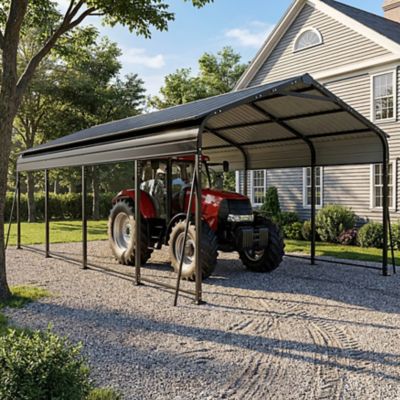
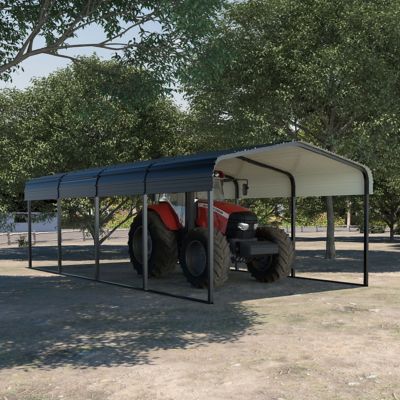
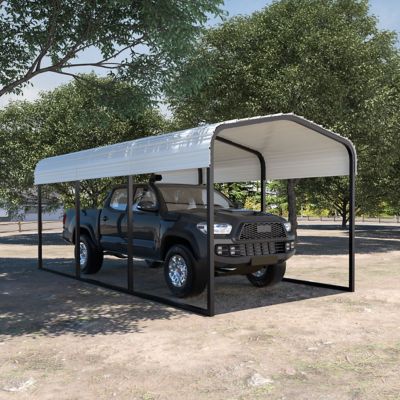
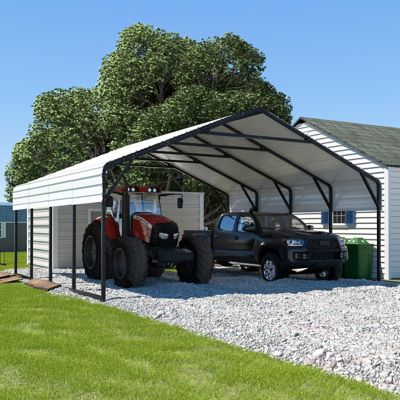
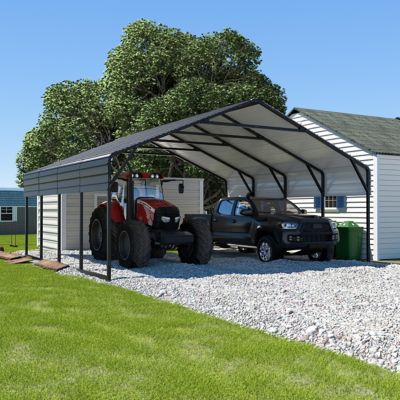
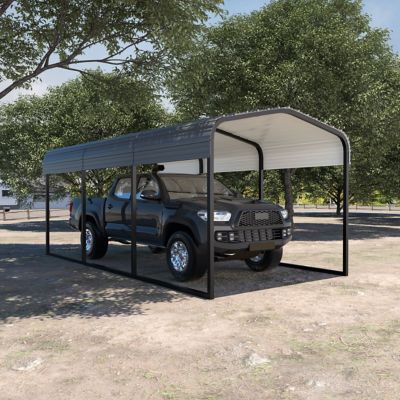
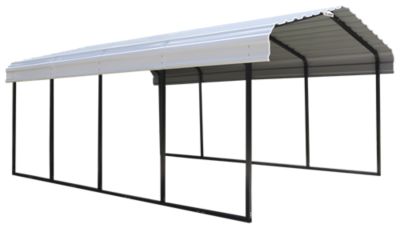
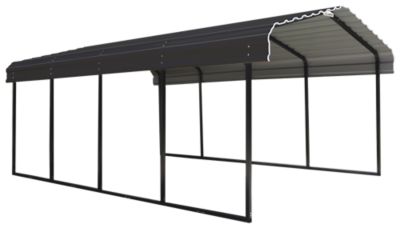
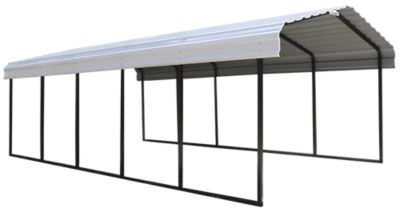
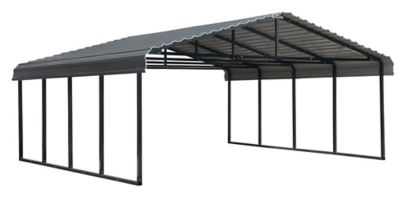
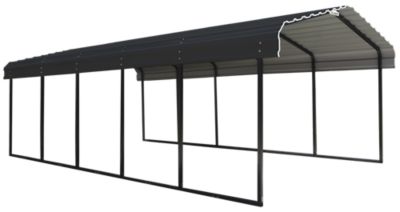
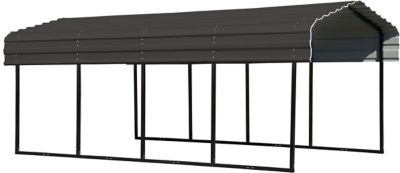
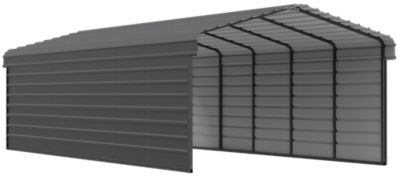
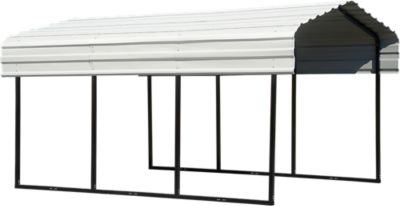
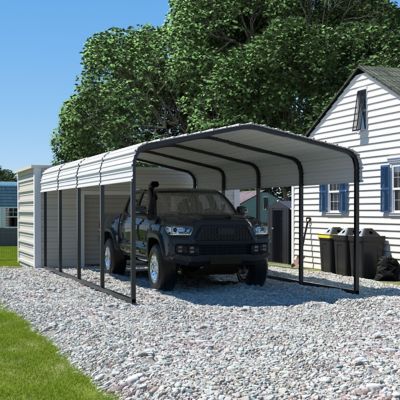
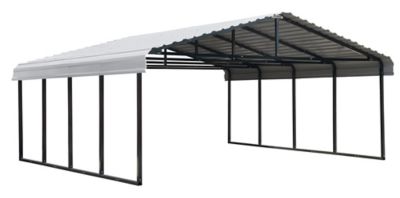
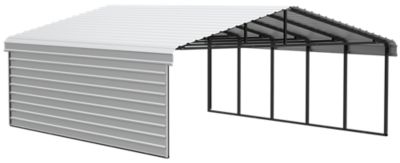
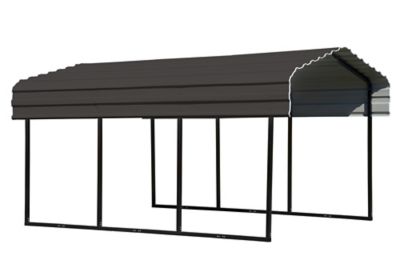
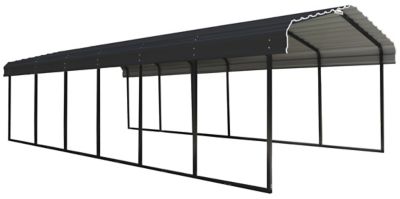
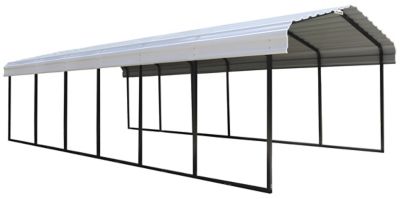
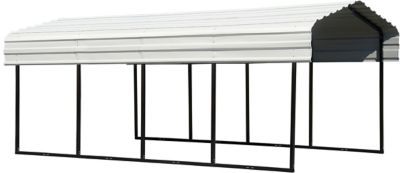
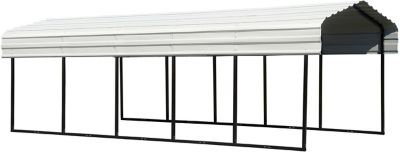
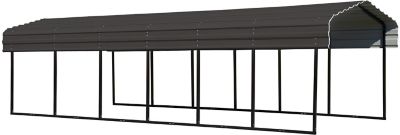
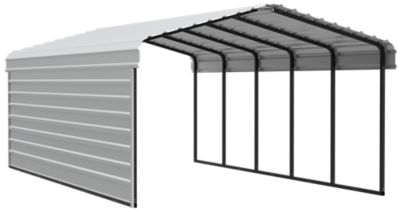
Galvanized steel carport kits bring covered parking to a driveway, farmyard or equipment area without the full enclosure of a garage. They can give a daily driver a regular parking spot, keep a fishing boat under cover between trips or provide overhead shelter for a compact tractor and mower. Galvanized steel has a zinc coating that helps protect the underlying metal from corrosion, making it a practical material for outdoor structures. That protection does not make every component maintenance-free, and the word “galvanized” alone does not tell the whole story of a kit’s construction. Frame dimensions, steel thickness, connections, bracing and roof materials all contribute to how the finished structure performs. Some kits pair galvanized framing with metal roof panels, while others have a different covering, so the frame and roof specifications deserve separate attention. Within the same steel gauge system and component type, a lower gauge number generally indicates thicker steel. A roof panel’s gauge should not be mistaken for the frame’s gauge, and neither number by itself establishes the strength of the complete carport. For a rural property, the appeal often comes down to having room to park equipment close to where the work happens. An open-sided structure makes it easier to pull a utility trailer through, reach a truck bed or get to the mower without opening garage doors. It also leaves the sides exposed, so overhead cover is not the same as enclosed storage or secure storage for tools. Single-vehicle footprints suit a car or small pickup, while wider layouts can accommodate two vehicles or a vehicle alongside equipment, depending on their actual dimensions. Taller structures may suit boats, tractors or recreational vehicles, provided the stated clearance accounts for everything above the vehicle, including roof racks, air-conditioning units and folded or raised equipment in its parked position.
A useful fit starts with the space inside the structure, not just the dimensions printed beside its name. Overall width and length may include roof overhangs, while posts and braces can reduce the usable parking area. Clear entry height is especially important: peak roof height does not necessarily describe the opening a truck or trailer must pass through. A pickup might fit neatly between the posts with its mirrors folded, yet leave little room to swing the doors open or carry feed sacks past the cab. A boat trailer needs space for its tongue and motor, and a tractor with an attachment can take up considerably more length than the tractor alone. These everyday details help distinguish a workable shelter from a tight parking spot. Access matters beyond the roofline, too. A straight approach, room to back a trailer and clearance from gates or fence corners can make the carport easier to work around. Roof style affects both appearance and water runoff. A regular-style roof commonly has rounded eaves, while an A-frame profile has a more traditional peaked shape; panel orientation is a separate detail worth checking. On a vertical-roof design, panels typically run from the ridge toward the eaves, giving water and loose debris a more direct path off the roof. Designs with panels running lengthwise behave differently, so roof shape alone should not stand in for a close look at panel layout. Wind and snow ratings also belong to the complete engineered structure, not merely its galvanized finish or panel thickness. A published rating depends on the specified framing, bracing, anchors, foundation and installation conditions, and it should match the requirements for the property’s location. Open sides still allow wind-driven rain and drifting snow to reach parked equipment. For a site with demanding exposure or local building requirements, engineering documentation and approval from the local building department matter more than broad descriptions of strength. Property setbacks, easements, overhead lines and underground utilities can also affect where a carport belongs.
The foundation and anchoring system are as important to a galvanized steel carport kit as the parts above ground. Concrete, asphalt, gravel and soil are not interchangeable anchoring surfaces, and an anchor intended for one surface may be unsuitable for another. Gravel provides a parking surface but does not, by itself, establish a structural anchoring system. A suitable installation depends on the manufacturer’s requirements, local conditions and any required foundation design. The supporting area generally needs to be level within the kit’s specified tolerances, with drainage that keeps water from collecting around the base. Concrete thickness, footing dimensions and anchor placement may need to meet engineering requirements rather than simply accommodate the vehicle’s weight. Kit contents vary, so a clear parts list helps establish whether roof panels, trim, braces, fasteners and site-appropriate anchors are included or need separate consideration. Assembly methods vary as well: slip-fit frame sections, bolted joints and screw-fastened panels each involve different steps, tools and handling needs. A packaged kit still involves sizable components, overhead work and careful alignment; equipment for safe access and enough help to handle long panels belong in the project planning. For related components,
Carport Building Materials provides a place to explore materials while keeping compatibility with the selected structure in mind. Once assembled, routine attention helps protect the carport’s service life. Periodic checks can catch loose fasteners, damaged panels, shifting supports or trouble around anchor points before those issues grow. Leaves and other debris should not remain piled against metal surfaces or block drainage paths. Cleaning methods and any treatment for scratches or cut edges should follow the manufacturer’s directions so the protective finish receives appropriate care. Added side panels, doors, shelving or hanging storage can change structural loads and should not be assumed compatible without approval. With the right footprint, documented structural capacity and proper installation, a galvanized steel carport can make everyday parking and equipment access a simpler part of keeping the property running.