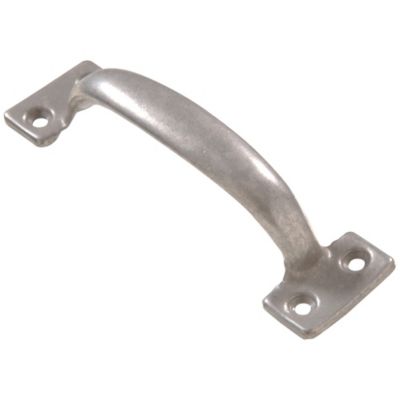
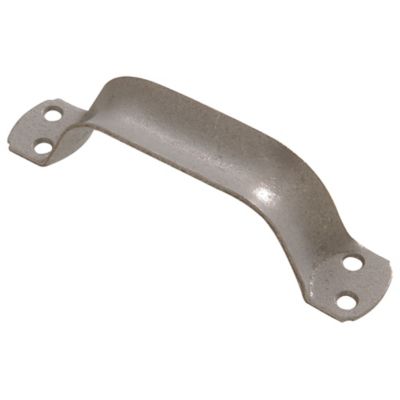
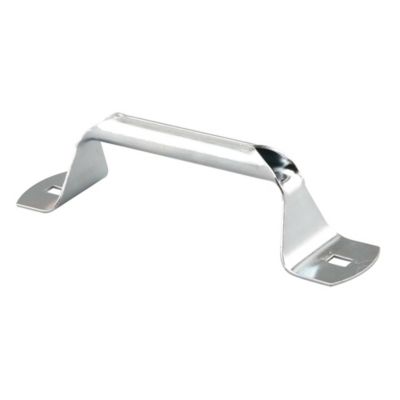
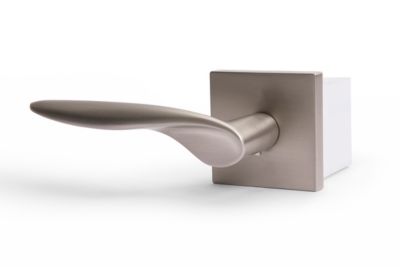
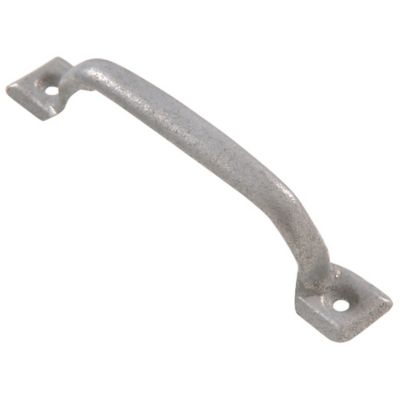
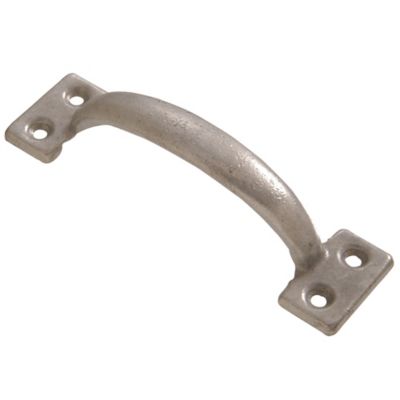
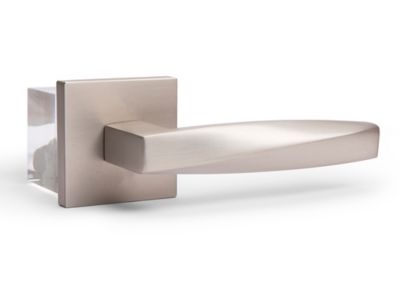
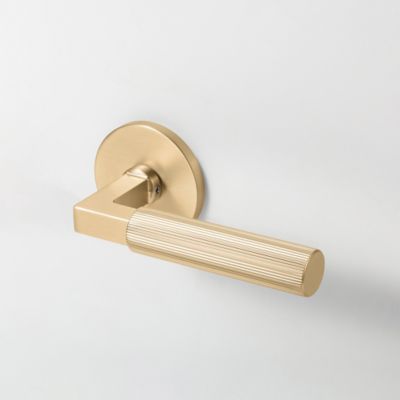
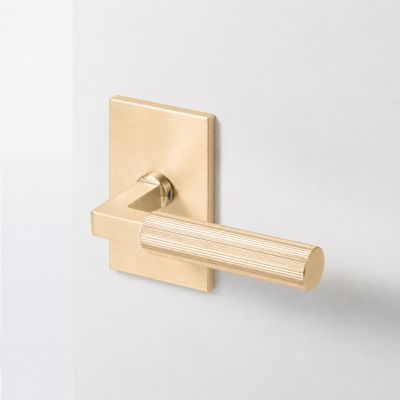
Galvanized door handles are steel or iron door hardware with a protective zinc coating that helps resist rust and corrosion. They give barn doors, shed doors, gates, and other utility entrances a firm place to grab without adding much fuss to the job. The zinc layer acts as a barrier between the base metal and its surroundings and can also provide sacrificial protection, meaning the zinc corrodes ahead of the steel beneath it. That protection makes galvanized hardware a practical consideration for outdoor entrances and work areas where occasional dampness and frequent handling are part of everyday use. The finish is usually silver-gray, though its shade and surface texture can vary with the coating process. Some surfaces have a mottled appearance, while others look more even. Those differences do not, by themselves, establish how much protection a handle provides; coating specifications and the manufacturer's intended applications matter more. On a plank barn door, the straightforward metal finish fits right in beside hinges, braces, and latch hardware. On a workshop or equipment shed, it offers the same simple look without calling much attention to itself. Fixed pulls, loop handles, and other grip shapes can serve different openings, so the shape deserves as much attention as the finish. A broad grip can feel comfortable when pulling open a storage door, while a compact profile may suit a smaller access panel. A fixed handle supplies a handhold, not necessarily a latch or lock. An entrance that must stay closed still needs an appropriate closing mechanism, and a handle alone should never be treated as security hardware. Likewise, the hinges or track carry the door's weight; a larger pull will not correct a sagging door or a dragging roller. Galvanized door handles make the most sense when their grip, mounting design, and corrosion protection match the work expected of the whole doorway, whether that means reaching the feed room several times a day or opening a tool shed for an afternoon repair.
Fit comes down to more than the overall length printed in a description. The usable grip length determines how much room a hand has, while the projection determines the space between the handle and the door face. Enough clearance for knuckles matters on any entrance, and extra room may be welcome when chores call for work gloves. Too much projection, however, can put a handle in the path of a passing wheelbarrow, a hanging lead rope, or clothing moving through a narrow aisle. The mounting-hole spacing is another important measurement, especially when replacing an existing pull. Center-to-center spacing means the distance from the middle of one mounting hole to the middle of another; it is not the same as the handle's end-to-end length. Mounting plates also need enough flat surface to sit properly without bridging a raised panel, trim edge, or uneven board joint. For a wood door, the condition and thickness of the material behind those plates help determine the right attachment method. Screws need sound wood to hold, and a thin sheet-metal skin may need backing or another attachment method specified for that door. Through-bolts with suitable washers can spread the load where the door construction and access allow them, but fastener selection should follow the handle and door manufacturers' directions. Fastener length matters on both sides of the opening: too little engagement can leave a loose connection, while an exposed point or protruding bolt can create a snag. Matching the fasteners' corrosion protection to the application helps protect the connection as well as the handle. Placement also depends on how the door moves. A sliding barn door needs room for the pull to pass nearby framing or an overlapping panel, while a swinging door needs clearance from the jamb and adjacent surfaces. Around livestock areas, smooth edges, secure mounting, and a position clear of reachable snag points deserve particular attention. The best-fitting handle feels natural in the hand and stays out of the way of the latch, the door's travel, and the people or animals passing through.
Care for galvanized door handles is generally straightforward, but the zinc surface benefits from a little consideration. Dirt and ordinary grime can usually come off with a soft cloth, water, and a mild detergent, followed by rinsing and drying as the manufacturer's care directions allow. Harsh acids, strong alkaline cleaners, and aggressive abrasives can damage the protective layer, so a wire brush or grinding wheel is not a routine cleaning tool for this finish. Areas exposed to livestock waste, fertilizer residue, or other corrosive materials may need more attention than a clean storage-room entrance. Zinc protection is helpful, not unlimited, and prolonged contact with corrosive residue can shorten its service life. A periodic check of mounting screws, bolt heads, and the surrounding door surface can catch movement before the grip starts wobbling. If a handle repeatedly loosens, the trouble may be worn mounting holes, damaged backing, or a door that takes excessive force to open rather than the handle itself. Deep scratches, exposed base metal, or red rust call for attention under the manufacturer's maintenance guidance; repair coatings are not interchangeable with the original galvanizing process. Appearance can change, too. A galvanized surface may become duller as it develops a patina, and that change alone does not necessarily mean the handle needs replacement. For shoppers comparing the look of hardware across a property, galvanized silver-gray offers a straightforward match for many farm and utility settings, while
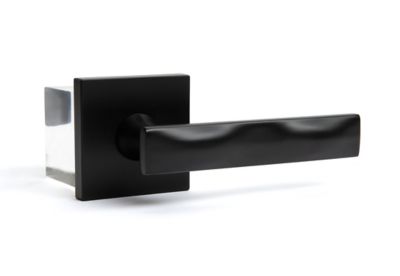
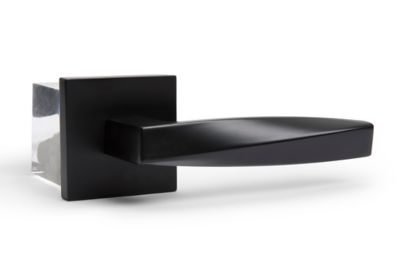
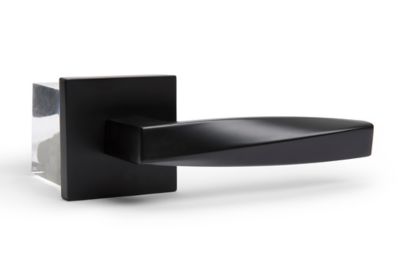
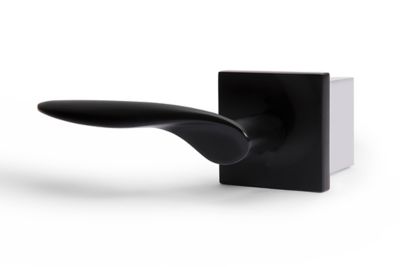
Black Door Handles provide another finish direction for a darker outline against wood or light-colored doors. Color alone does not establish outdoor suitability, so the underlying material, protective finish, and mounting requirements still deserve a close look. From a frequently opened tack-room door to a gate beside the equipment yard, the right galvanized handle combines a comfortable grip with suitable corrosion protection and a secure connection to sound material. Those practical details matter each time there is a feed scoop in one hand and a door to pull with the other.