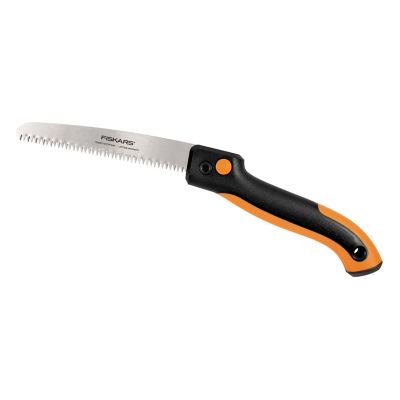
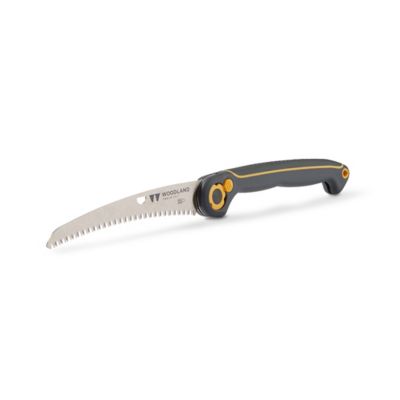
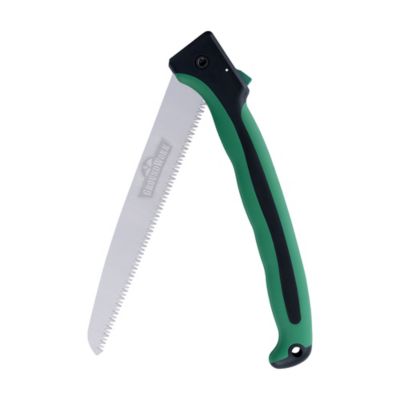
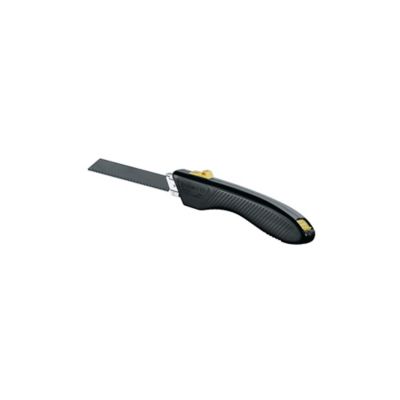
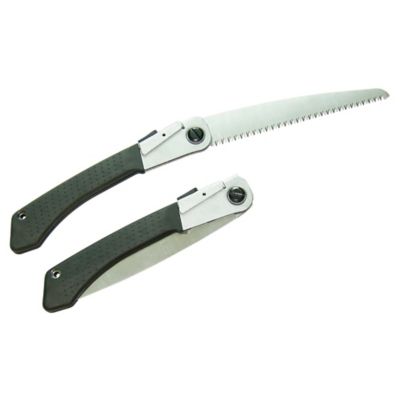
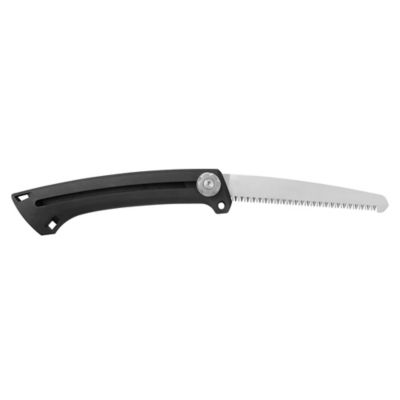
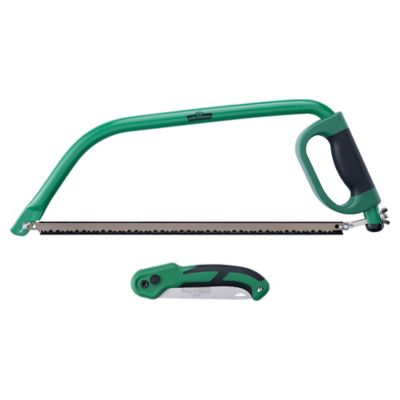
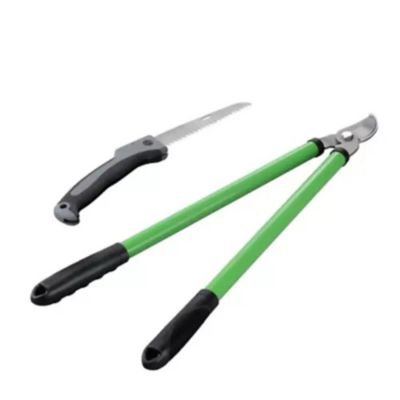
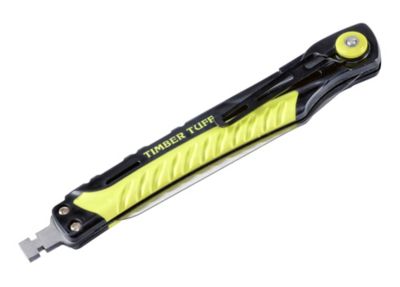
Folding saws are compact cutting tools built for work around the farm, acreage, campsite, hunting property and back forty. Their blades hinge into the handle for carrying and storage, giving you a practical way to keep a saw close without hauling a full-size frame saw through the woods. Tucked in a pack, truck box, tool bag or coat pocket, a folding saw can help clear a fallen limb from a trail, trim back brush along a fence line or cut small pieces of firewood when a knife just will not do the job. Many folks reach for one during the cooler months while checking gates, tending a hunting blind, opening an overgrown lane or gathering kindling near camp. They can also come in handy around the homestead when a branch comes down after wind or when limbs start crowding a driveway. Look at the intended cutting work first. A compact model with a shorter blade suits light pruning, trail walking and everyday carry, while a longer blade can move through larger branches with fewer strokes. Curved blades tend to hold onto wood and can make down-angle or head-high cuts feel more natural, especially when trimming living limbs. Straight blades offer a more controlled path for smaller, deliberate cuts. Folding saws are often a thoughtful gift for a landowner, camper, hunter, gardener or anyone who spends time tending a rural property. They take up little room, do not require fuel or batteries and can earn their keep from the first trip outdoors. A parent might tuck one into a teenager’s camping kit, or a neighbor might appreciate one alongside gloves and other trail-maintenance gear. Keep in mind that a folding saw is meant for branches and manageable pieces of wood, not as a substitute for a chainsaw or a full-size crosscut saw when the timber gets large.
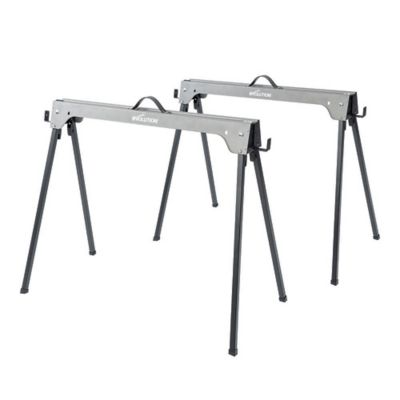
Blade teeth play a big part in how a folding saw handles different jobs. Tooth count is commonly described as teeth per inch, or TPI. Coarser patterns, often around 5 to 7 TPI, remove wood quickly and are a good match for green limbs, brush clearing and firewood preparation. Finer teeth take more time but can leave a smoother cut in dry wood and may feel easier to control on smaller branches or certain plastics. The shape and spacing of the teeth also affect how quickly chips clear from the cut, so think about whether your regular work involves fresh, sappy growth or dry, seasoned wood. Some saws are designed to cut mainly on the pull stroke. That style often pairs a thin, stiff blade with a light touch: let the teeth do the work, keep the blade in line and avoid twisting it while it is engaged in the wood. Other patterns cut on both the push and pull strokes and may feel more forgiving for someone learning the motion. Either way, steady strokes usually beat hard pressure. Start with the blade resting where you want the cut, take a few easy passes to establish a groove and then keep the handle moving in a smooth rhythm. For a branch under tension, pay attention to where it may shift as the cut opens. Stand to the side of the expected movement, keep your free hand away from the blade path and make sure the branch cannot roll onto your legs or feet. A folding lock is another important feature because it helps hold the blade open during work and keeps the teeth covered when the tool is folded. Check that the hinge and lock move cleanly, and inspect the handle for a secure grip that stays comfortable when your gloves get damp. Blade length, handle size and overall weight matter too. A small saw is easy to carry on a long walk, while a larger folding frame may offer more reach and speed when you are working through thicker wood. If you plan to cut at a workbench, pair a folding saw with
Folding Steel Sawhorses to help support material at a workable height. Keep the setup on firm, level ground, and leave room for the blade to travel without striking the stand.
Before choosing a folding saw, picture the jobs that fill your weekends. Someone clearing narrow paths through a wooded parcel may favor a light saw that slips into a pack and handles scattered limbs without weighing down the rest of the gear. A gardener pruning fruit trees or shrubs may want a curved blade with teeth suited to fresh branches and a handle that stays steady while reaching into a dense canopy. For camp chores, consider the diameter of the wood you expect to cut most often, along with the space available in your pack or truck. A folding saw can make short work of small firewood pieces, but thick logs may call for a larger frame saw or powered equipment. On a working property, it is smart to keep more than one cutting tool on hand so the tool matches the task rather than forcing a small blade through wood beyond its range. After each outing, brush away sawdust and sap, wipe the blade dry and fold it only after checking that nothing is caught around the hinge. Pine and other sticky woods can leave residue that affects the cutting motion, while damp storage may lead to rust on unprotected metal. Store the saw closed in a dry place, away from loose items that could press against the teeth. Wear eye protection when branches may snap, and use gloves that give you a firm grip without getting close to the blade. Take your time around overhead limbs, hidden fence wire and wood under tension. With the right tooth pattern, blade shape, reach and locking handle, a folding saw can become one of those simple tools you reach for before the bigger equipment comes out—whether you are opening a lane after a storm, trimming around a pasture, preparing kindling during the cooler months or packing for a weekend beyond the pavement.