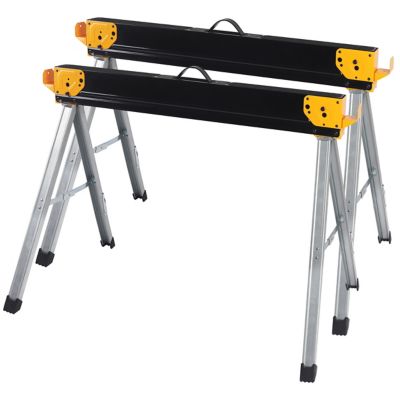
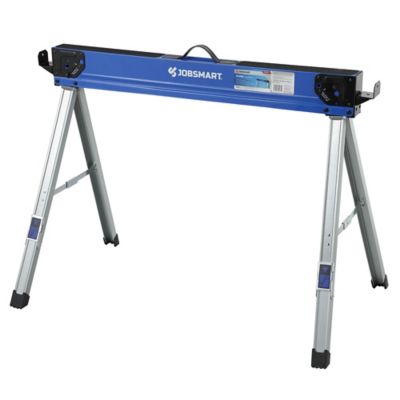
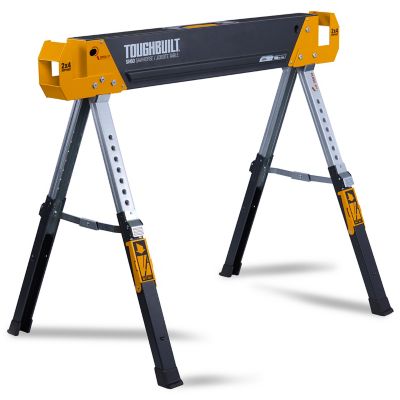
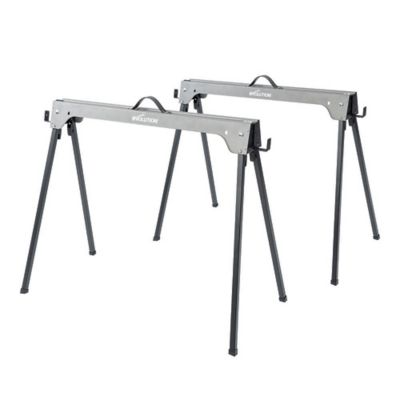
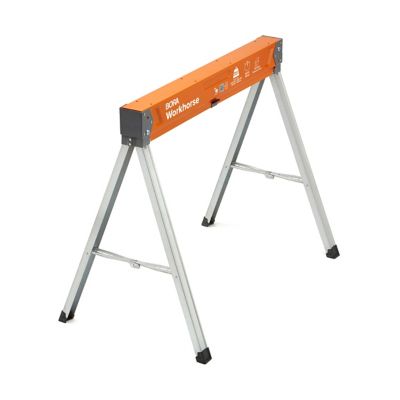
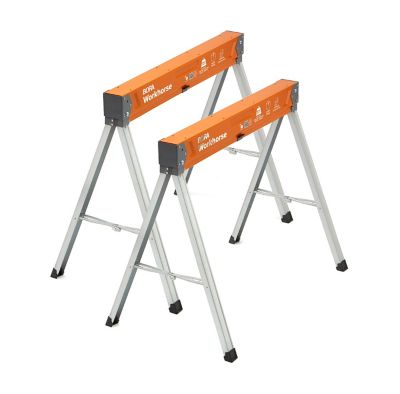
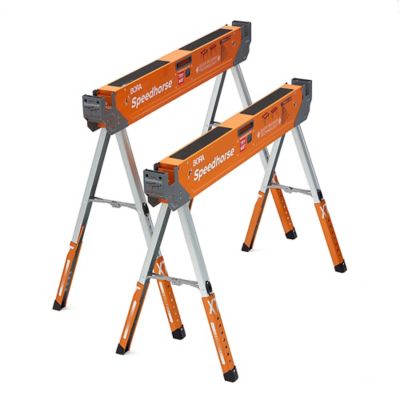
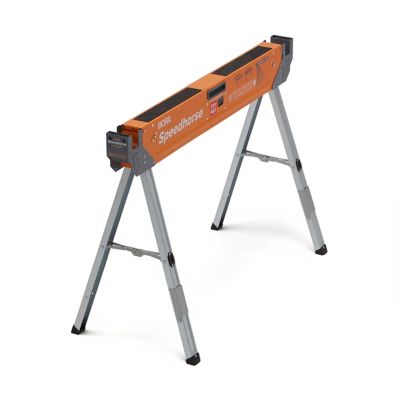
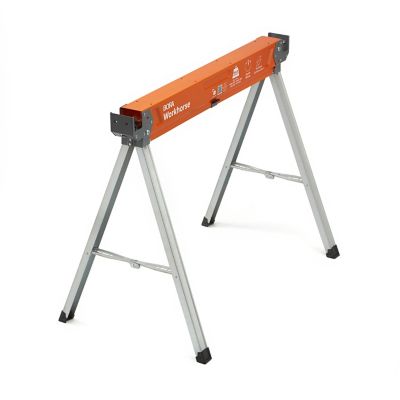
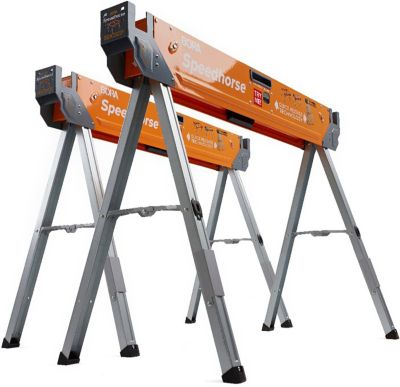
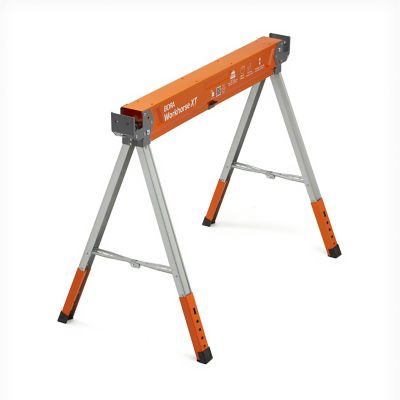
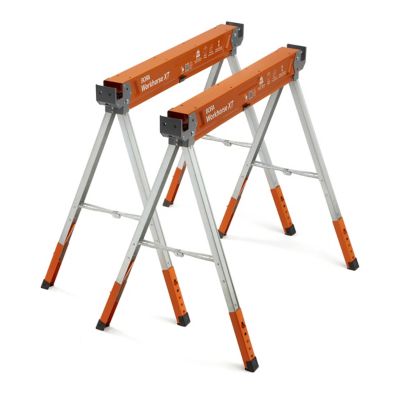
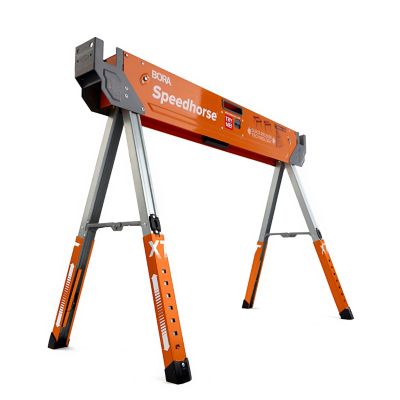
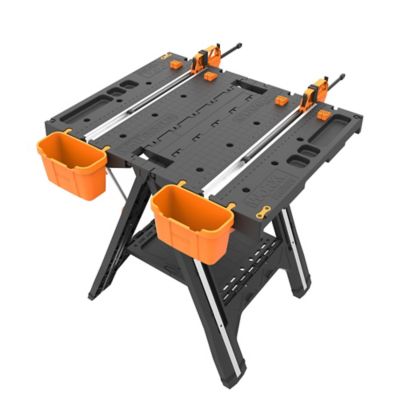
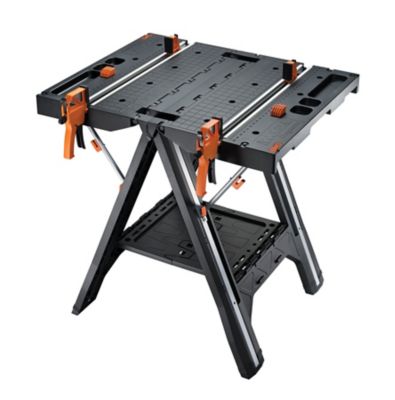
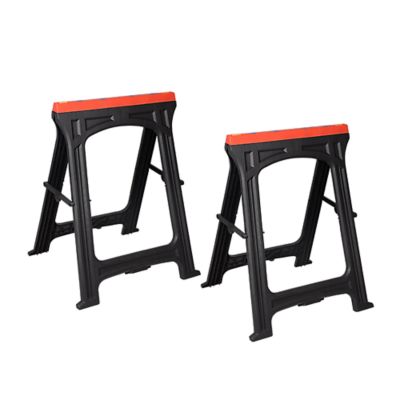
Folding steel sawhorses are portable work supports with steel frames and legs that fold inward for transport and storage. They provide an elevated base for cutting lumber, clamping workpieces and staging materials in a shop, barn or jobsite, with load limits and features that vary by design. A pair can hold fence boards for marking, support trim during assembly or carry a suitable worktop for small repair jobs. Steel construction brings rigidity to the frame, while the folding design makes it easier to clear the floor when the work is done. That combination fits a farm shop where the same bay might handle equipment repairs one day and a woodworking project the next. Frame shape, leg bracing and locking mechanisms all play a part in how the support feels under a load. Wider leg placement generally creates a broader stance, though it also takes up more floor space. Painted or powder-coated finishes help protect the steel surface, and protective feet, where fitted, can limit direct contact between metal legs and the floor. Top rails differ, too: some provide a textured contact surface, while others accommodate a replaceable wood strip or other manufacturer-approved attachment. Those details matter when supporting a finished board that needs protection from scratches or a rough plank that needs to stay put during marking. Carry handles, folded dimensions and overall weight affect how easily a sawhorse moves from the shed to the work area. A compact folded shape is handy behind a truck seat or along a shop wall, but the right fit depends on the actual storage space. The frame still needs enough room to open fully, with its legs and braces clear of nearby equipment. For folks carrying supports between buildings or moving them around a busy shop, the balance between manageable weight and a steady working stance matters as much as the size of the top rail.
Working height, support width and load capacity help distinguish folding steel sawhorses suited to different jobs. A comfortable height for marking boards may not be the same height that works well for sanding a door or assembling a large frame. Fixed-height designs keep the setup straightforward, while adjustable-height designs offer more flexibility where that feature is provided. Matching the height of paired supports helps keep long boards and sheet materials level, and the distance between supports affects how much an unsupported section can sag. A wide panel needs support arranged for its dimensions, not simply a high weight rating on the legs beneath it. Capacity ratings also need a close look because a stated limit may apply to one sawhorse, a pair or a particular load arrangement. The total load includes the workpiece, any added top, tools and other materials resting on the setup. Concentrated weight, uneven loading and sideways pressure create different demands from an evenly distributed load, so the manufacturer's stated limits and setup requirements remain important. Folding steel sawhorses are work supports, not ladders or standing platforms. For cutting tasks, the arrangement also needs clearance for the blade and support that keeps material from shifting or pinching the cut. Clamping space is another practical consideration: a broad top rail may offer plenty of contact area but leave less room for certain clamp styles. Built-in support arms, brackets or attachment points, where present, may expand the kinds of work a frame can accommodate, but their own limits still apply. Picture a long gate rail resting across two supports while its hardware locations are marked, or a cabinet door held at a comfortable height for fitting hinges. In each case, the fit comes from the whole setup: the workpiece's length, the spacing of the supports, the room for clamps and the space needed to move around the job. A narrow aisle between a tractor and a workbench calls for a different footprint than an open assembly area.
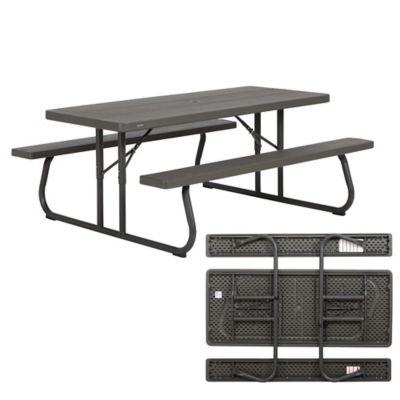
Long service life depends on both construction and everyday care. Folding joints, hinge pins, braces and leg locks take repeated movement, making their condition important alongside the thickness and shape of the steel frame. Sawdust packed into a hinge can interfere with folding, and a bent brace or loose fastener can change how the support opens and carries a load. A frame that opens smoothly and locks fully is easier to check before a project than one with binding joints or parts that no longer line up. Care generally centers on removing debris, wiping away spills and keeping folding mechanisms clear, with lubrication or finish touch-ups handled according to the manufacturer's directions. Dry storage helps limit rust, especially where a coating has been scratched. Folded supports also need a secure resting place rather than a loose stack that can slide into a walkway. Wall storage may free up floor space when the mounting arrangement is suitable for the weight and shape of the equipment. These details suit the practical rhythm of a working shop: supports come out for a task, then tuck away so the space can serve another purpose. Farmers repairing gates, carpenters handling trim, property owners building shelves and woodworkers assembling projects can all find uses for a portable steel support system. For someone setting up a first workshop, folding sawhorses can also make a practical gift when the working height, capacity and storage needs are known. They are especially handy where there is no room to leave a full-size workbench standing all the time, although any temporary work surface still needs a suitable top and a stable, properly secured arrangement. When the space also needs a separate spot to sit down for lunch or a break,
Folding Picnic Tables can complement the gathering area while keeping meals apart from cutting, clamping and repair work.