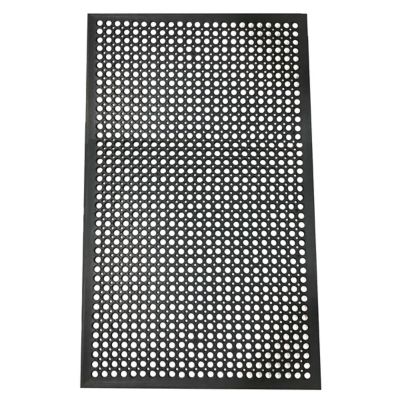
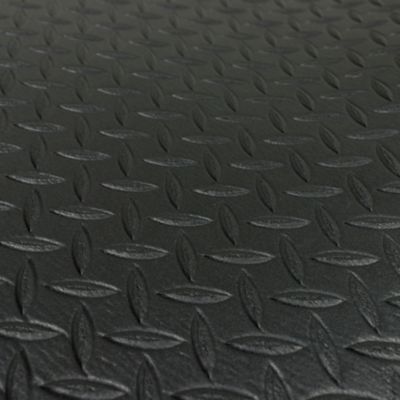
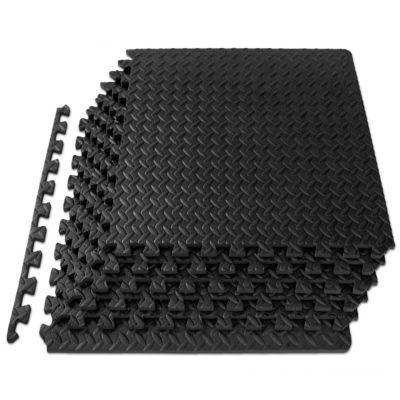
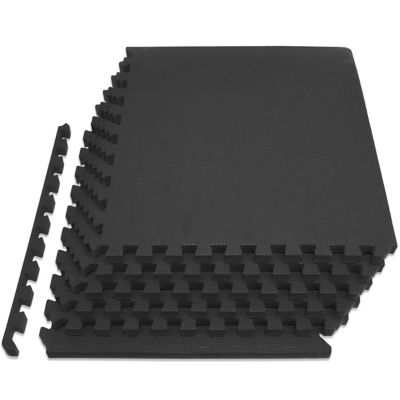
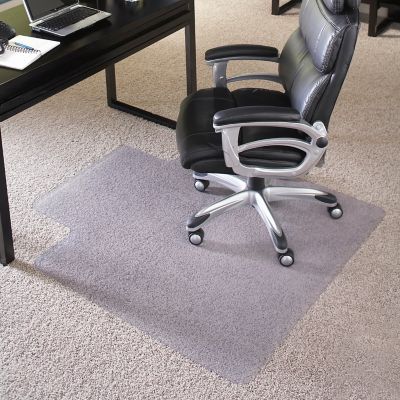
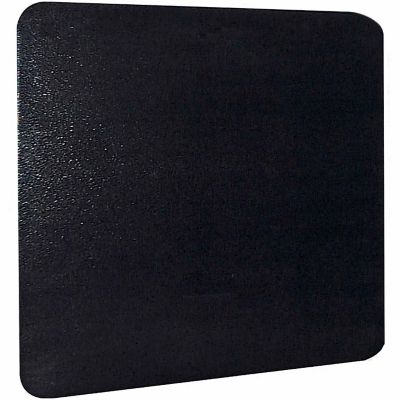
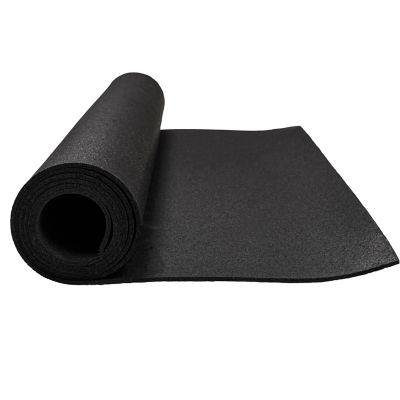
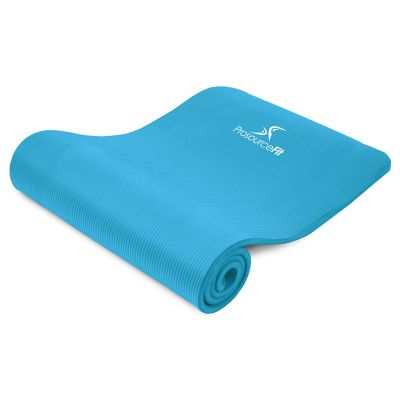
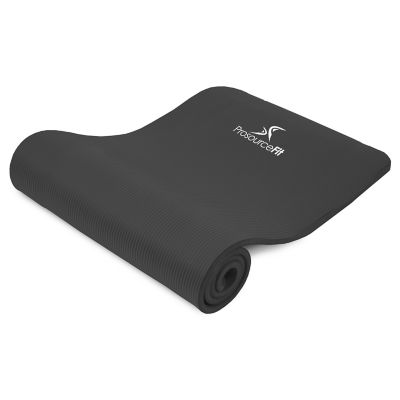
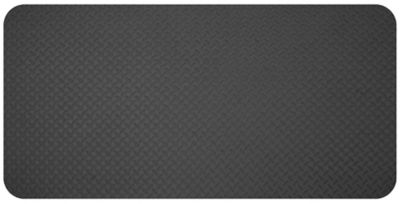
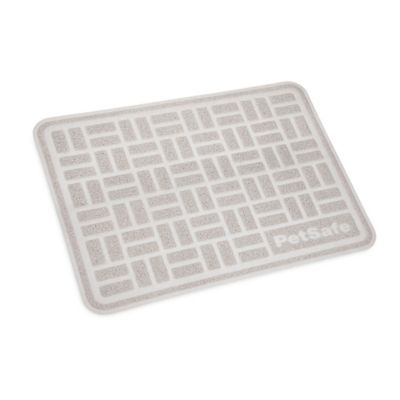
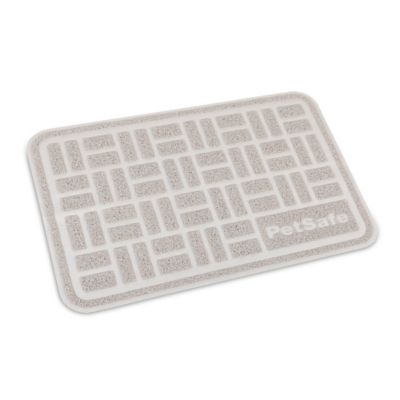
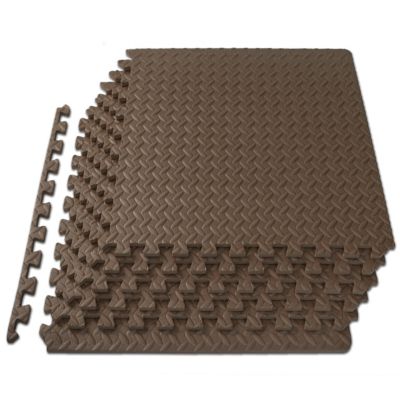
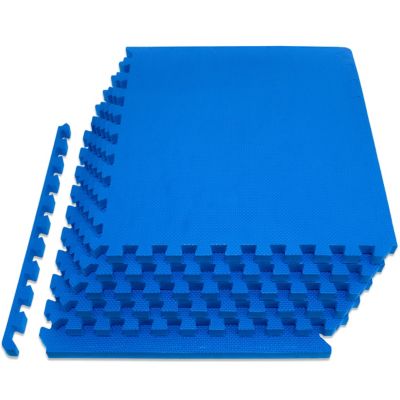
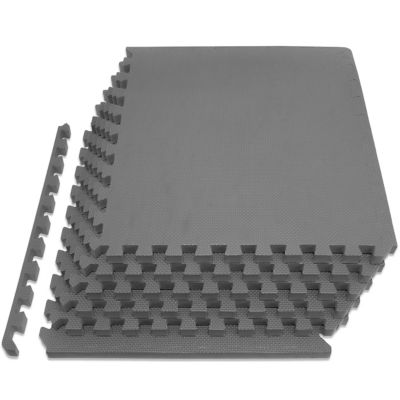
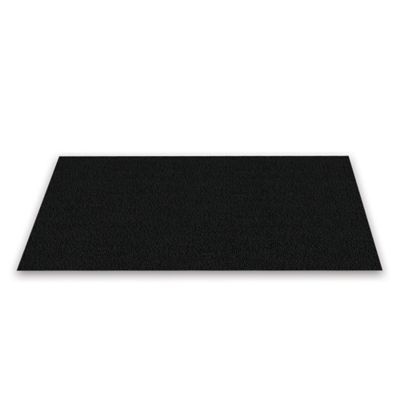
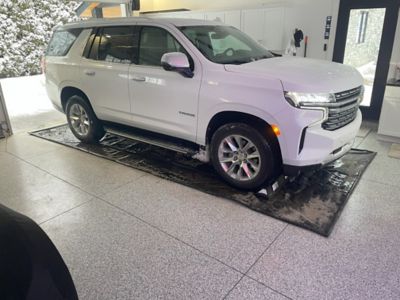
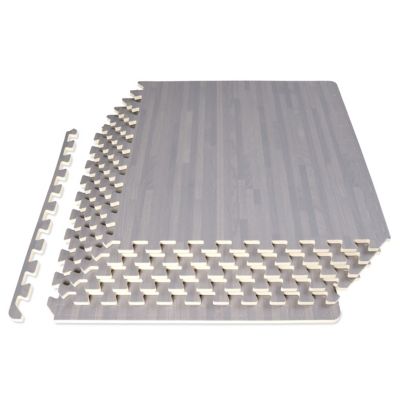
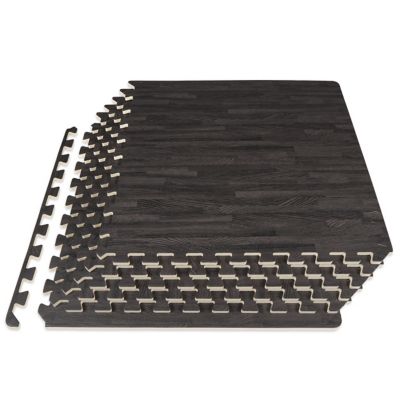
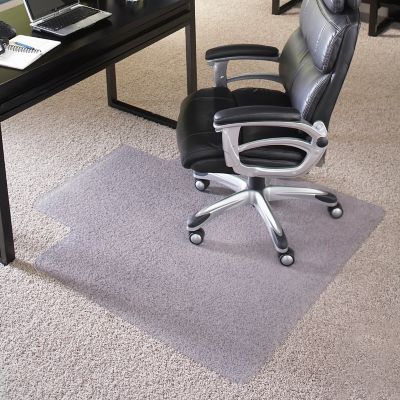
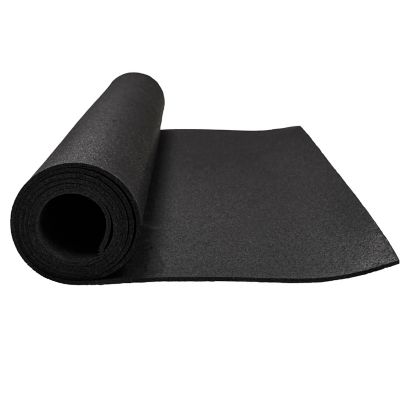
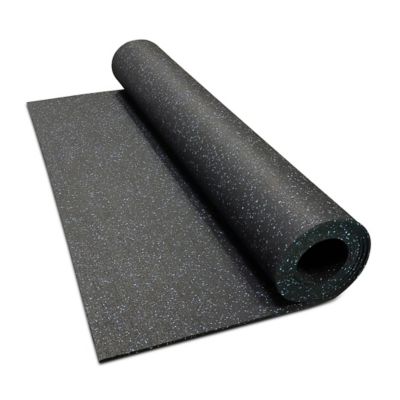
Floor protection mats put a barrier between a working floor and the boots, chair wheels, tools and equipment that cross it every day. Depending on their construction, they can help limit scratches, catch tracked-in grit, contain small spills or soften the impact of dropped objects. The right match starts with the surface underneath and the kind of wear it takes: a rolling chair on carpet calls for a different mat than a workbench on concrete or a feed station on tile. Chair mats provide a defined rolling area, entrance mats catch dirt near the door, and garage containment mats help keep liquids within a designated space. Rubber mats often suit work areas where cushioning and resistance to repeated foot traffic matter, while rigid polycarbonate chair mats provide a firm rolling surface when matched to the floor type and carpet thickness. Flexible vinyl mats can cover hard floors beneath desks, equipment or everyday work zones, with performance depending on thickness, backing and the manufacturer’s stated applications. Absorbent mats serve a different purpose, taking in certain liquids rather than simply holding them on top. An absorbent face paired with a liquid-blocking backing can help protect the floor below, but fluid compatibility and capacity still matter. Around a farmhouse entry, a mat can collect grit before it travels across the kitchen. In a farm office, it can keep chair casters from repeatedly pressing into the same patch of carpet. Beneath a potting bench or utility counter, an appropriate mat gives loose soil and drips a defined place to land. These are practical differences, not just matters of appearance. A mat that cushions your feet may not contain a spill, and one that catches drips may not support rolling equipment. Floor protection works best when the mat’s material, surface and backing all suit the job rather than asking one style to handle every chore.
Fit involves more than finding a rectangle that looks about right. A desk chair mat needs to cover the full path of the casters, including the space where the chair rolls back when someone stands up. On carpet, the mat’s support rating should account for the pile and padding beneath it; a mat intended for a firm, low-pile surface may flex too much over thicker carpet. Gripper-backed chair mats belong only on the carpet types specified by the manufacturer, while hard-floor versions need a backing suited to the particular finish. Hardwood, laminate, tile, sealed concrete and resilient flooring can react differently to prolonged contact with rubber, vinyl or other backing materials. Checking both the flooring maker’s requirements and the mat’s compatibility helps avoid staining, finish changes or trapped moisture. In a shop, coverage should extend across the actual work area without creating a raised edge in a doorway or narrow aisle. Low-profile, beveled edges can make transitions easier for boots and small wheels, though any loose, curled or shifting edge deserves attention. Thickness adds cushioning in some materials, but thicker does not automatically mean better: a soft mat may make a loaded cart harder to push, while a rigid mat may offer little relief during a long stretch at the bench. Surface texture also matters. Ribs and channels can collect debris away from the main contact surface, but deep patterns take more effort to sweep and may interfere with small casters. For vehicle bays and equipment parking areas,
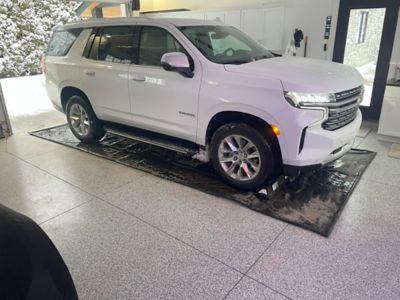
Garage Floor Protection relates to the same concerns on a larger footprint, including tire contact, fluid exposure and coverage beneath parked equipment. Raised borders help contain liquids, while flat roll-out coverings focus on broad surface coverage. Neither feature alone establishes resistance to oil, fuel, solvents or heavy loads. Those demands call for clearly stated material ratings, especially where a mower, utility cart or shop equipment will sit for extended periods.
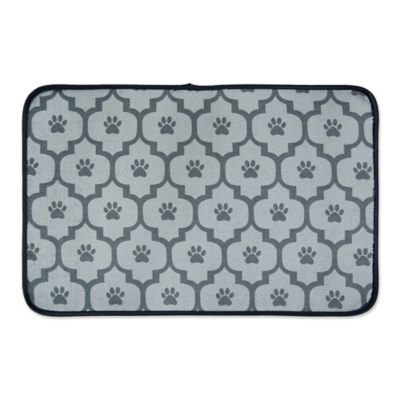
Everyday care has a big say in how well floor protection mats hold up. Fine grit beneath a mat can act like sandpaper as people walk or roll across it, so keeping the floor underneath clean matters just as much as cleaning the top. Loose debris can often be swept or vacuumed away, while washable surfaces may allow a damp wipe or a rinse with a mild cleaner, according to their care directions. Not every mat belongs under a hose, and absorbent layers, attached borders and backing materials may need different treatment. Letting both the mat and the floor dry before putting everything back helps prevent moisture from lingering out of sight. At a pet feeding area, that means checking beneath the water bowl instead of only wiping up the visible splash. Beside a workbench, it means clearing metal shavings before they work into the surface or travel on boot soles. In an equipment bay, spills need prompt attention even when a containment edge keeps them from spreading. A mat does not make flammable liquids safe to leave in place, and oil-soaked absorbent materials require handling and disposal appropriate to the substance. Long service life also depends on matching the mat to the load. Repeated pivoting, narrow equipment feet and small hard wheels concentrate force differently than ordinary footsteps. Cushioning can reduce everyday impact, but a general-purpose floor mat should not be treated as protection against every dropped tool or heavy object. Cracks, worn-through spots, separating backing and edges that no longer lie flat are signs that protection or footing may be compromised. For homeowners, pet owners, farm families and folks who spend hours in a garage or workshop, the most useful mat is one that fits naturally into the space and the cleanup routine. It leaves room for doors to swing, provides enough coverage for the task and keeps its footing without making daily chores harder. With a suitable material and regular attention underneath, floor protection mats help keep hardworking spaces easier to maintain.