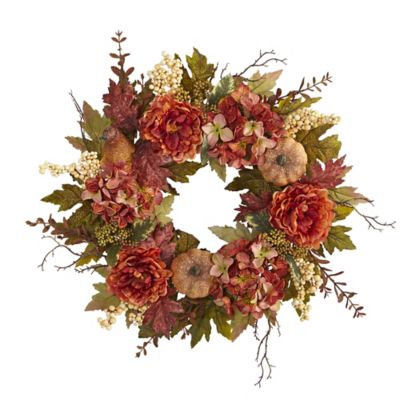
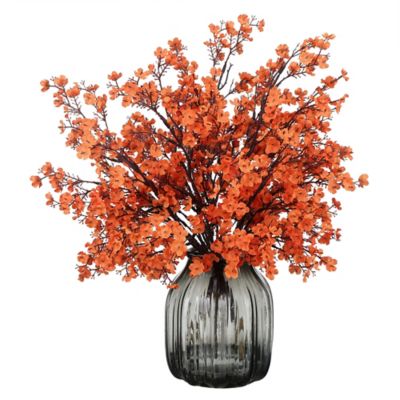
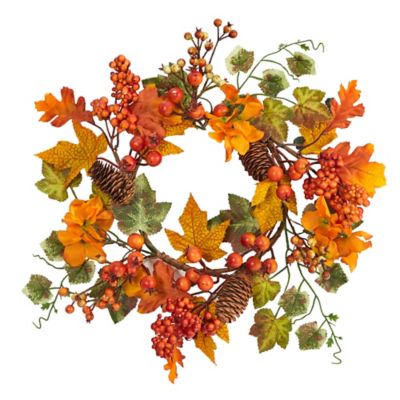
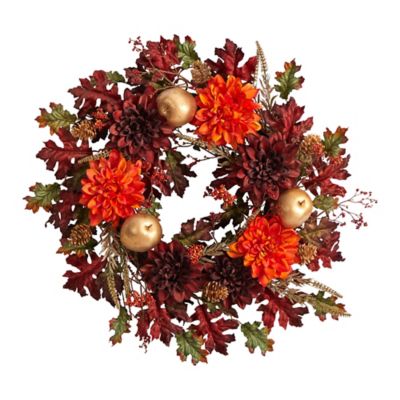
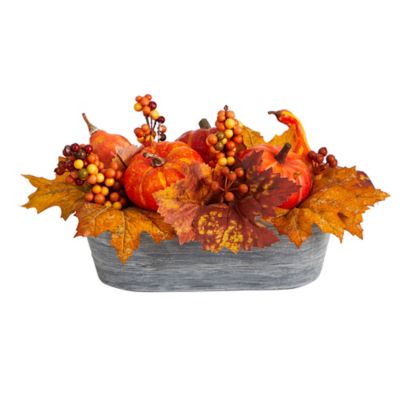
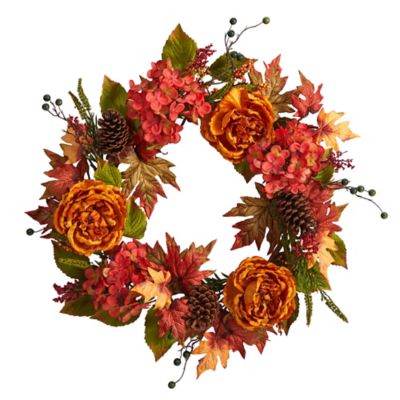
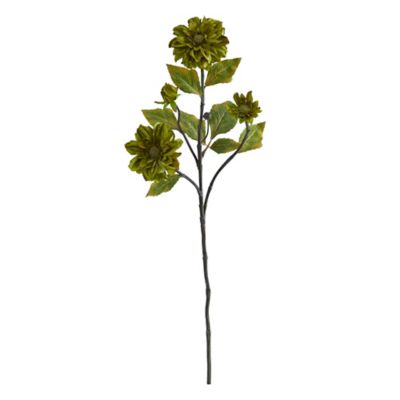
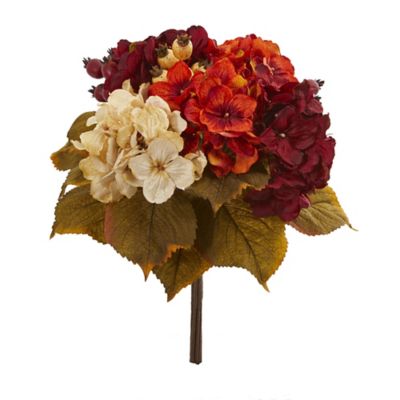
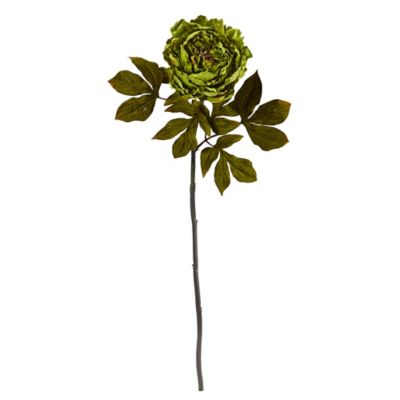
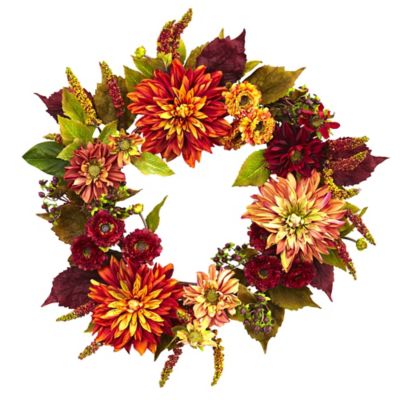
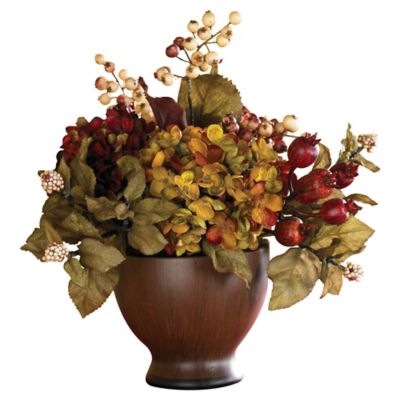
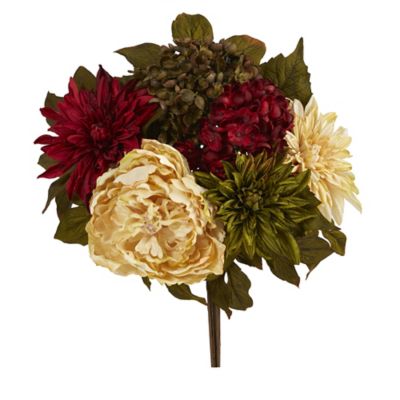
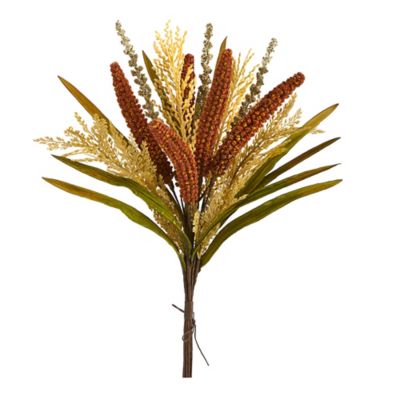
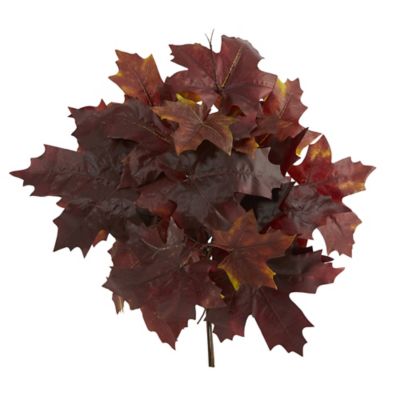
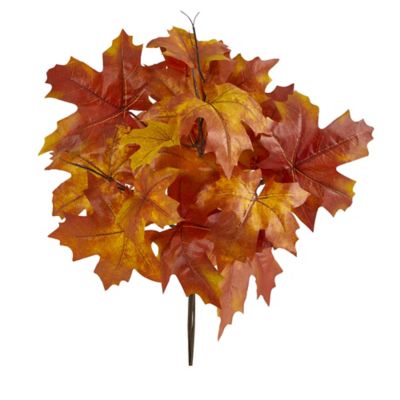
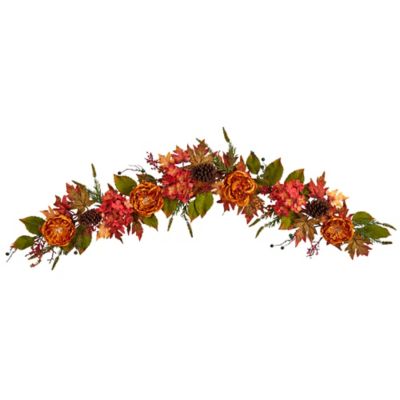
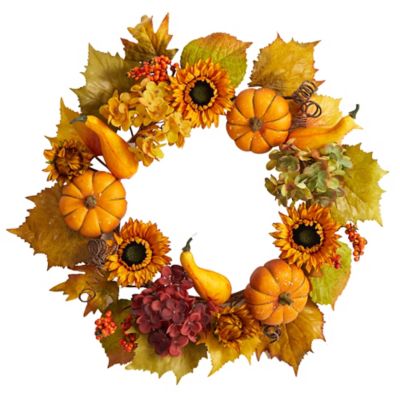
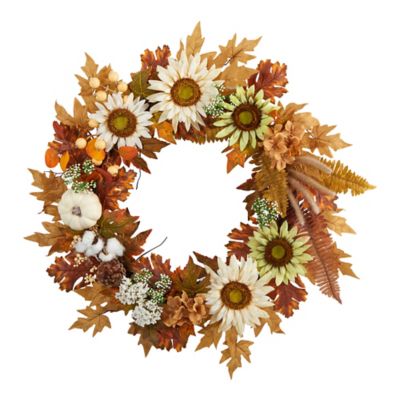
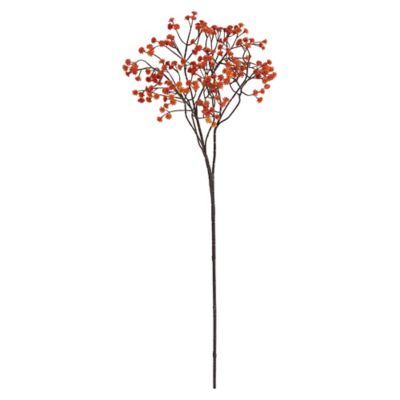
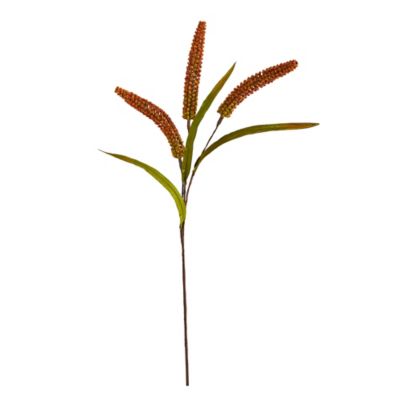
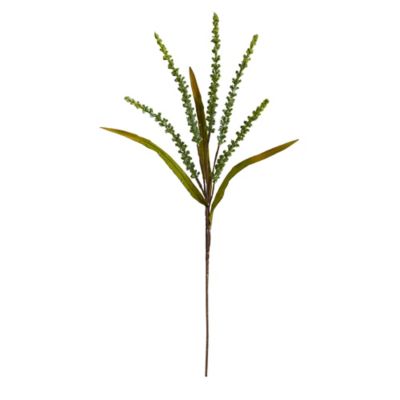
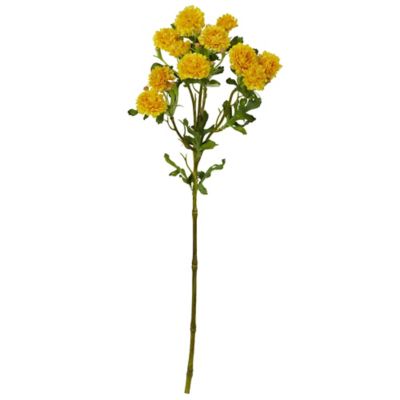
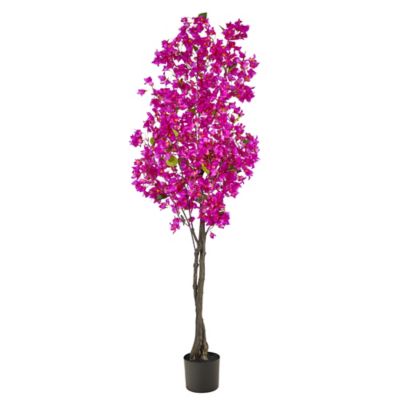
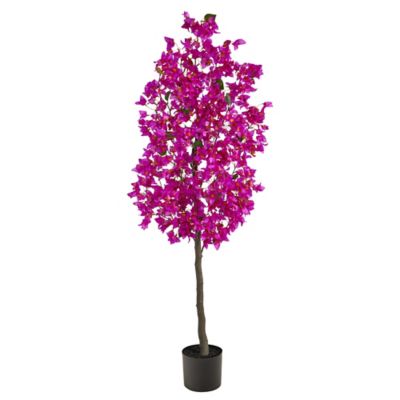
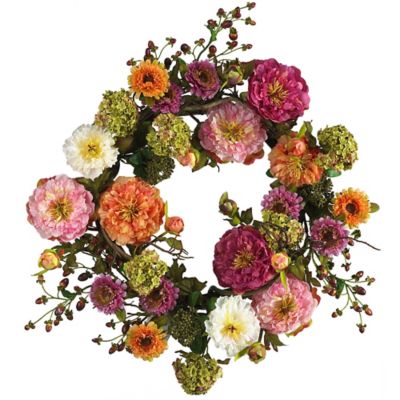
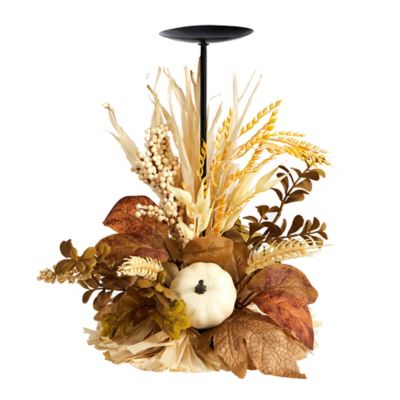
Fall artificial flowers bring the colors of a country roadside, a late-season garden, and a full harvest table into the house without watering or trimming fresh stems. Deep rust, golden yellow, burnt orange, burgundy, and soft cream all suit the season, whether the setting is a farmhouse kitchen or a small entryway just inside the back door. Sunflower shapes lend a cheerful, open look, while mum-like blooms and layered petals give arrangements a fuller appearance. Mixed foliage, seed-head accents, and branching stems add the loose, gathered feel of flowers brought in from the yard. Some arrangements lean bright and lively; others take a quieter approach with faded greens, brown leaves, and muted berry tones. That range makes it easy to carry a little fall color from the first cool evenings into the colder part of the year without making every room look tied to a single holiday. Artificial flowers also make sense in homes where the days are full of chores, work, and family coming through the door. They need no fresh water, and their color does not depend on a sunny windowsill. A handful of stems in a stoneware pitcher can brighten the kitchen counter, while a fuller bunch on a sideboard gives a gathering space a welcoming touch. For a home with wood walls, worn leather seating, or dark cabinets, lighter petals help an arrangement stand out instead of getting lost against the background. In a brighter room, deeper reds and browns bring a little weight and warmth. The best match often comes down to the room itself: a relaxed mix for a busy family kitchen, a more settled shape for a dining room, or a few branching stems where there is space for them to spread. Even a modest bunch can make a familiar corner feel ready for company without crowding out the things that belong there every day.
Materials and construction make a difference in how fall artificial flowers look, feel, and hold their shape. Fabric petals can have a soft, lightly textured finish, while molded plastic parts give leaves, centers, and smaller accents more defined edges. Polyester is common in artificial blooms, though material combinations vary, so the material description matters more than the general appearance alone. A matte finish tends to sit quietly among wood, pottery, and woven baskets; a shinier surface can catch more light near a window or lamp. Wired stems offer some flexibility for spreading branches and turning flower heads, but not every stem is meant to bend or be cut. Overall height, bloom width, and the spread of a bunch are worth checking together. A tall stem may suit a floor-standing vessel yet overwhelm a narrow shelf, and a wide spray needs room beyond the opening of its container. On a dining table, a lower arrangement keeps faces in view and leaves space for serving bowls, elbows, and the breadbasket. On an entry table, a taller shape can work well as long as it stays clear of swinging doors and the spot where keys and mail land. Container fit matters, too. A narrow neck can hold a few stems close together, while a broad opening may need floral support to keep them from leaning to one side. Lightweight blooms in a top-heavy arrangement benefit from a steady vessel, especially in a household with curious cats, active dogs, or youngsters reaching across the table. For a coordinated seasonal display,
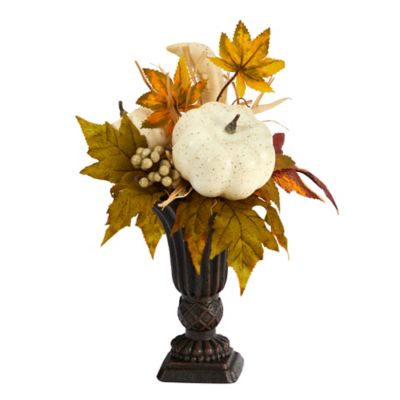
Fall Ornaments can sit alongside the flowers without needing every color or texture to match. A shared shade of copper, cream, or dark red is often enough to tie the pieces together. Leaving a little open space between accents keeps the setting comfortable rather than crowded, particularly on working surfaces that still need to handle everyday life.
Intended placement is just as important as appearance when choosing artificial fall flowers. Indoor arrangements belong where they can add color without getting in the way, such as a mantel with proper clearance from heat, a guest-room dresser, or a kitchen shelf away from the stove. Flowers meant for indoor use should not be assumed to handle an open porch simply because they contain plastic. Outdoor exposure brings moisture, wind, and sunlight, and even a roofed porch can get blowing rain. For an outdoor setting, look for stated suitability for that location and any information about resistance to fading; a sheltered position alone does not make an indoor arrangement weather-ready. Around the house, keeping petals away from open flames, heaters, and hot light fixtures helps protect both the flowers and the space around them. Routine care is usually light, but the right method depends on the materials. Gentle dusting with a soft brush can reach between layered petals, while some surfaces may allow a lightly damp cloth if the care directions permit it. Soaking can affect adhesives, finishes, or fabric coloring, so washing an entire arrangement is not a good default. After storage or shipping, stems and petals may need a little patient shaping rather than a hard pull. When the season changes, a roomy container helps prevent crushed flower heads, and keeping arrangements clean and dry before packing makes the next setup simpler. Those practical details make artificial flowers a thoughtful gift for someone who enjoys a welcoming home but would rather skip the upkeep of fresh-cut blooms. A compact arrangement can suit a host, a neighbor settling into a new place, or a family member with limited table space. For everyday use, their appeal is much the same: warm color by the doorway, a little brightness beside a favorite chair, and a table that feels inviting when supper is ready. With the right scale, placement, and care, fall artificial flowers can become a familiar part of bringing the season home year after year.