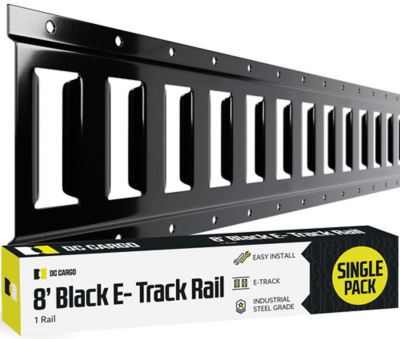
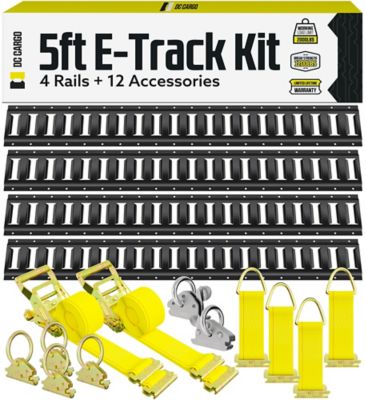
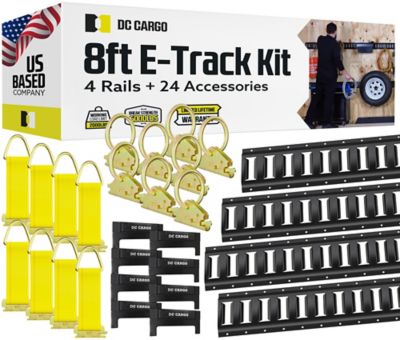
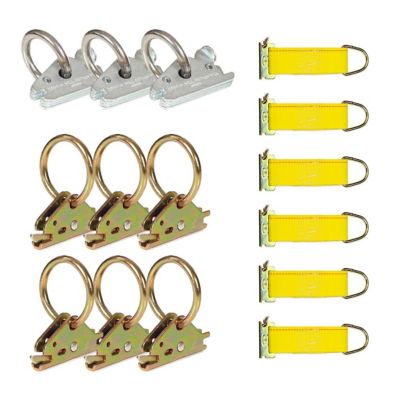
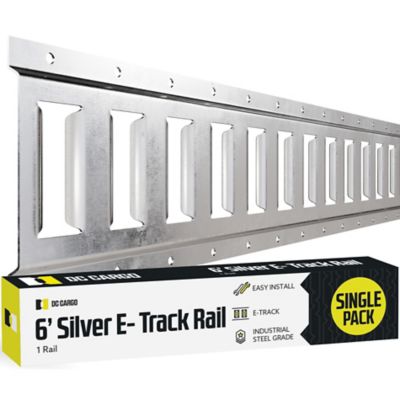
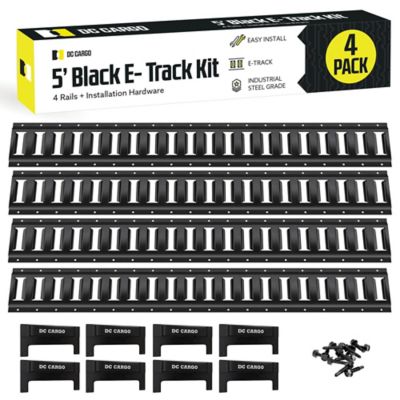
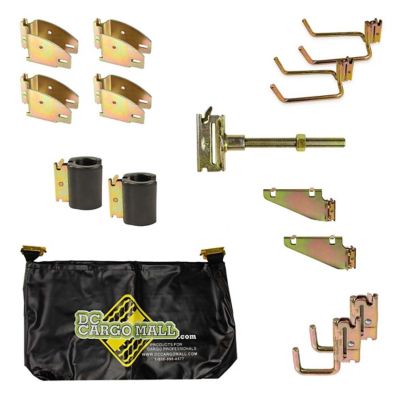
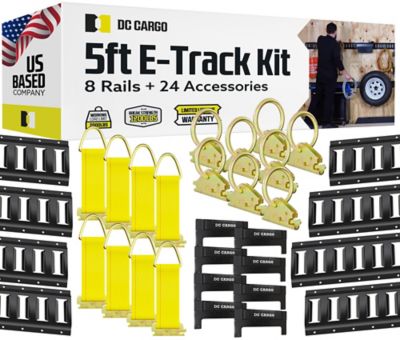
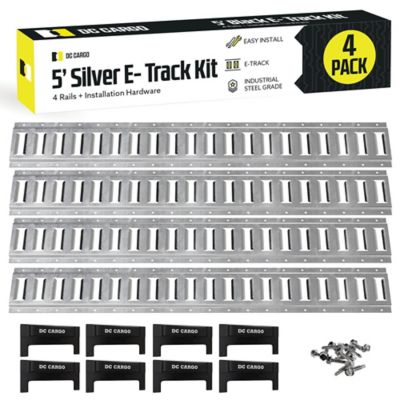
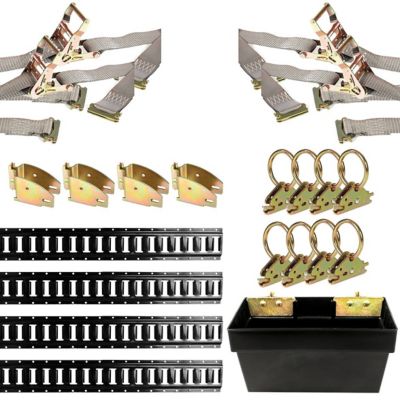
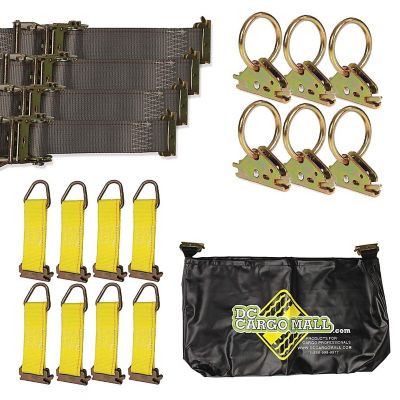
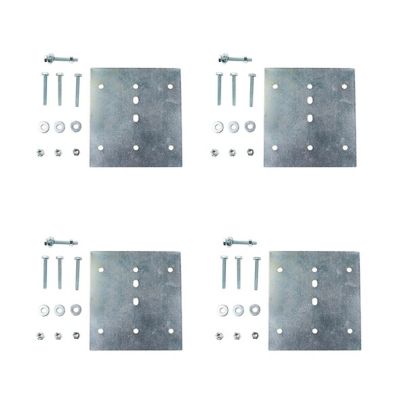
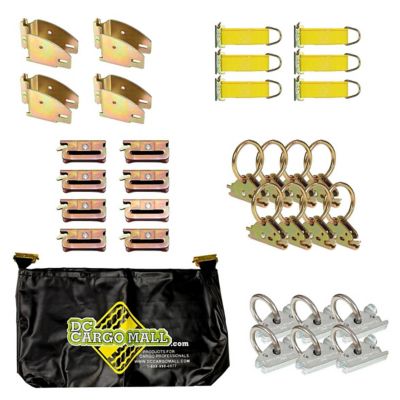
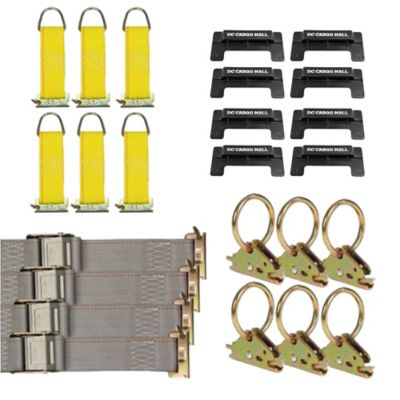
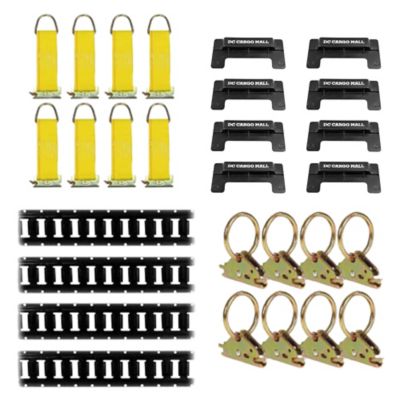
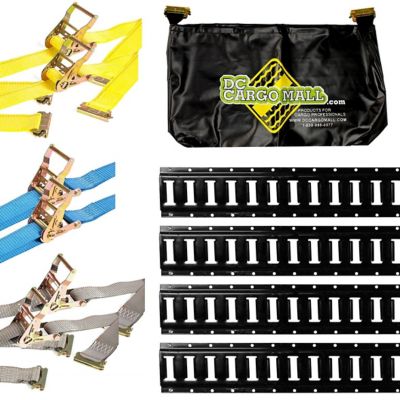
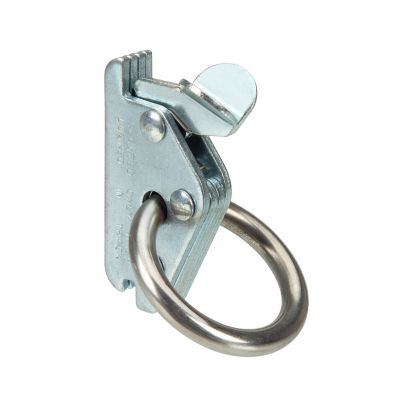
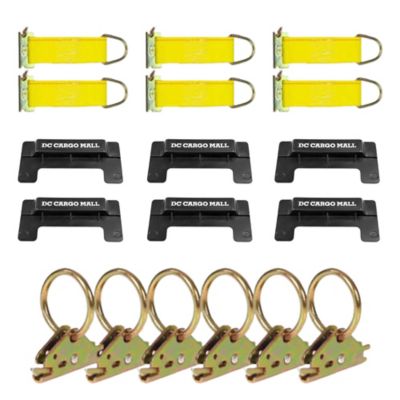
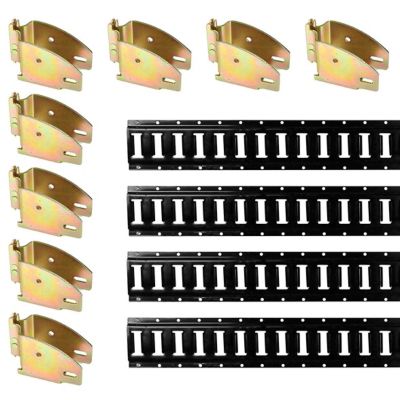
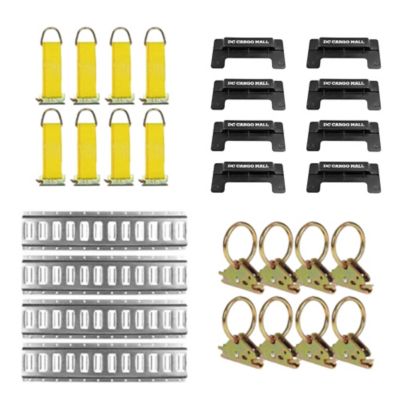
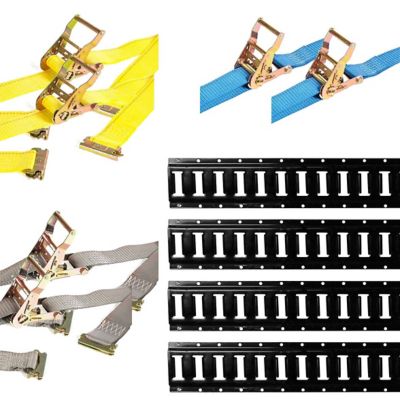
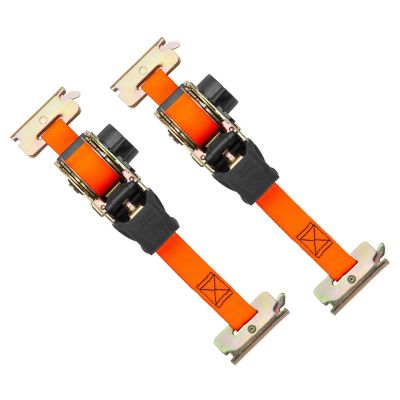
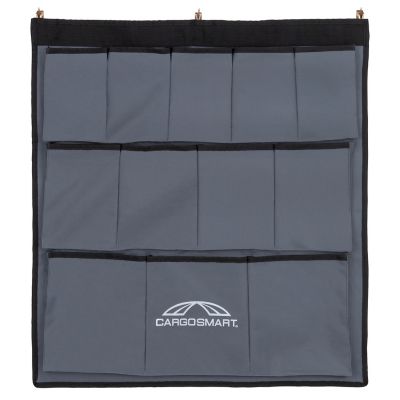
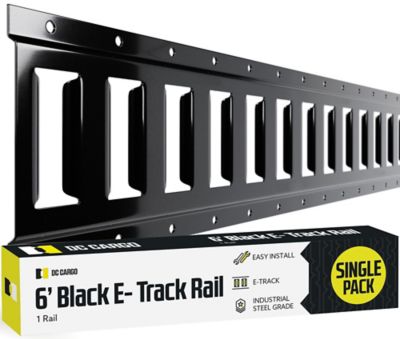
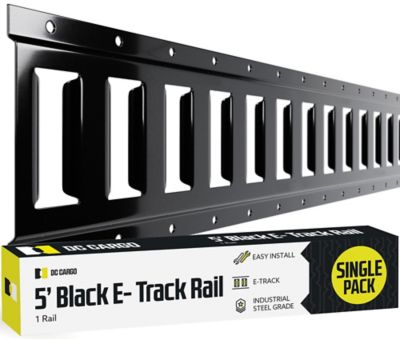
E-track kits give you a practical way to organize and hold cargo in place inside an enclosed trailer, utility trailer, truck bed, van, or garage. A typical kit brings together steel E-track rails with anchor points such as O-rings, tie-off fittings, or straps, so you can build a restraint setup around the shape and size of your load. The rails are commonly installed along a wall, floor, or both, allowing anchor points to slide or clip into place where they are needed. Short rails in the 16-inch range can fit beside a wheel well or across a narrow section of wall, while longer rails around 5 feet or more can cover a broad span in a trailer or shop. Some setups are made for general hauling, while others include hooks or holders that help keep landscaping tools, ramps, hoses, and other gear from shifting during a trip. This kind of organization can make a big difference when you are hauling a mower to a property, carrying an ATV to a hunting camp, or keeping tools from sliding around behind the tractor. It also helps clear floor space in a garage, where loose straps, extension cords, and equipment can quickly pile up during the cooler months.
Start by looking at the space where the rails will go and the jobs you expect them to handle. Measure the wall, floor, or truck bed carefully, leaving room for doors, ramps, wheel wells, cabinets, and other obstacles. A compact kit may fit a smaller van or a short trailer, while a longer rail system can make better use of a full-size enclosed trailer. Think about whether you need anchor points on one side, along the floor, or in several locations so the same trailer can carry different loads. Ratchet straps with matching fittings are helpful for equipment that needs steady downward pressure, while rings and tie-offs can provide a convenient connection point for rope or other restraint gear. Pay close attention to the working load limit listed for each rail, ring, and strap. A rail may have a break strength in the range of 4,500 to 6,000 pounds, but the working load limit is the figure that matters for everyday hauling, and the rating of the weakest component sets the practical limit for the whole setup. Heavy loads still need to be balanced, blocked, and secured at more than one point when appropriate. Before heading down a gravel road or busy highway, check that every fitting is fully seated, each strap is free of cuts or fraying, and the cargo cannot roll, tip, or slide. Recheck the load after the first few miles, especially when hauling equipment with wheels or suspension.
Installation depends on the surface and the structure behind it. Rails mounted to a wood wall or floor may call for lag screws or bolts that reach into solid framing, while metal surfaces may require self-drilling hex screws or other fasteners made for the material. Fasteners are often selected separately because trailer walls and floors vary in thickness, construction, and support. Do not rely on a thin wall panel alone when the load will be substantial; locate framing or add suitable backing so the rail has a firm foundation. Follow the rail and fastener instructions, keep the track straight, and avoid placing holes near wiring, plumbing, or fuel system components. A solid installation can turn an open trailer wall into a useful cargo management area, but it still needs routine inspection for loose hardware, bent fittings, rust, or damage after hard trips. E-track kits can suit farmers, ranchers, landscapers, contractors, trail riders, and anyone who moves equipment between home and a jobsite. They can also make a thoughtful gift for someone setting up a new trailer, organizing a farm shop, or preparing a truck for regular hauling. When you need additional straps, hooks, rings, or other matching gear, browse
X Track Accessories to round out the setup and keep hauling supplies together.