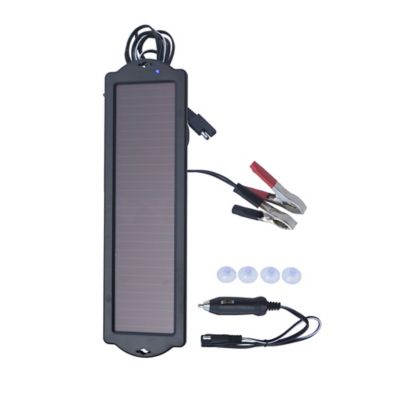
Emergency batteries provide stored electrical power when a regular power source goes down, helping keep essential equipment working through an outage, a stalled vehicle or a stretch away from an outlet. The term covers several different kinds of backup power, from replacement batteries for emergency light fixtures to rechargeable power banks, vehicle jump starters and portable power stations. Each serves a different job, and the right match depends on what needs power, how much it draws and how long it needs to run. Around a rural home or working property, that might mean keeping a phone charged while utility crews repair a line, running a compatible lamp in the kitchen or getting a pickup started before morning chores. A small power bank supplies electricity to compatible electronics, while a portable power station combines a battery with charging controls and outputs that may include USB ports, DC connections and household-style AC outlets. A jump starter delivers a short burst of high current to help crank an engine; it is not a substitute for an extended-runtime household backup system. Batteries built for emergency lighting have another role: supplying compatible fixtures when their normal electrical supply fails. These differences matter more than the broad emergency label. Battery capacity describes stored energy, while output ratings describe how much power a unit can deliver at once. For a power station running AC equipment, watt-hours offer a useful starting point for comparing energy storage, and continuous watts establish the running load it can support. Starting surge ratings matter for equipment with motors or compressors. A refrigerator, for instance, may need more power when its compressor starts than it draws while running. Actual runtime also depends on conversion losses, battery condition, temperature and the equipment’s changing demands, so a stated capacity alone does not promise a certain number of hours. For folks balancing household needs with chores out at the barn, keeping those distinctions straight makes the product descriptions far more meaningful.
Battery construction and fit determine whether a backup source belongs in a particular application. Sealed lead-acid batteries appear in some standby systems, while nickel-cadmium, nickel-metal hydride and lithium-based batteries serve various lighting, electronics and portable power applications. These chemistries differ in weight, charging requirements, storage behavior and service life, and they are not interchangeable simply because their cases look alike. A replacement battery needs to match the equipment manufacturer’s requirements for chemistry, voltage, capacity, physical dimensions, terminal arrangement and connector type. Even a battery that fits inside a compartment may have the wrong connector polarity or charging needs. For fixture replacements,
Batteries for Emergency Lighting focuses on the backup power associated with compatible emergency lighting equipment. The fixture’s documentation establishes the replacement specifications and required operating duration; a general-purpose battery should not be assumed suitable for a life-safety system. Portable emergency power has its own fit considerations. Outlet type, USB charging standards, cable connections and charger compatibility all affect which devices a unit can support. An AC outlet on a power station does not mean it can handle every appliance that plugs into a wall. High-draw heating equipment can exceed output limits or drain stored power quickly, while smaller communication and lighting loads may run considerably longer. For electronics that require AC power, inverter waveform and transfer time can also matter. Some power stations offer an automatic backup mode, but that feature does not guarantee uninterrupted operation with every device. Medical equipment requires particular care: any backup source should meet the device manufacturer’s requirements, with a separate emergency plan for power-dependent care. Vehicle jump starters likewise need an appropriate voltage and starting rating for the engine and operating conditions. Case materials, protected connections, handle design and overall weight round out the comparison. A sturdy enclosure and manageable grip matter when carrying power across a gravel drive, but outdoor-looking construction does not establish rain protection. Any resistance to water or dust should be supported by the manufacturer’s stated rating.
Emergency batteries spend much of their time waiting, making storage and upkeep just as important as performance during an outage. Rechargeable units need periodic checks and charging according to their instructions, rather than being tucked onto a shelf and forgotten until the lights go out. Some battery types benefit from a particular storage charge level, and charging intervals vary with chemistry, temperature and the electronics built into the unit. A dry storage spot within the stated temperature range helps protect the case, terminals and internal components. Excess heat can shorten battery life, while cold conditions can reduce available power; some lithium batteries also restrict charging below certain temperatures unless a suitable heating or protection system is present. During the cooler months, a battery left in an unheated shed or vehicle may perform differently from one kept within its recommended operating range. That matters when the truck has been sitting overnight or a windstorm has knocked out electricity along the road. Intact housings, clean connections and cables without cracks help support safe operation. Swelling, leakage, unusual heat or a damaged enclosure calls for stopping operation and following the manufacturer’s service or disposal directions. Loose batteries also need protection against contact with keys, tools and other metal objects that could bridge their terminals. Rechargeable batteries belong in appropriate collection or recycling programs, with handling based on their chemistry and local requirements. Unlike fuel-burning generators, battery power stations do not produce combustion exhaust during operation, though they still need proper ventilation, clearance and protection from moisture. Cooling fans may make noise, and indoor operation must follow the unit’s instructions. Portable units should never feed household wiring through a wall outlet; supplying building circuits requires equipment designed for that purpose and a properly installed transfer arrangement. For homeowners, farm families, travelers and anyone responsible for keeping essential equipment running, practical backup power starts with a battery suited to the task. Enough capacity for the intended load, compatible connections and a sensible place to keep the unit ready can make a dark kitchen, a quiet roadside or an interrupted workday a little easier to manage.