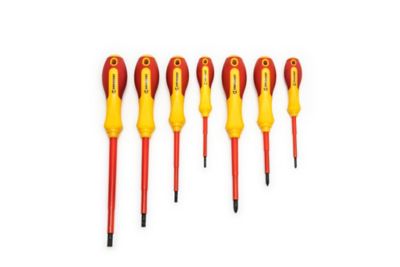
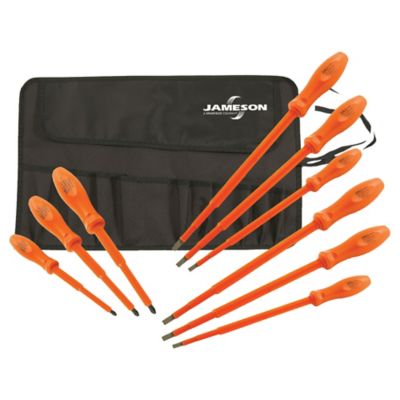
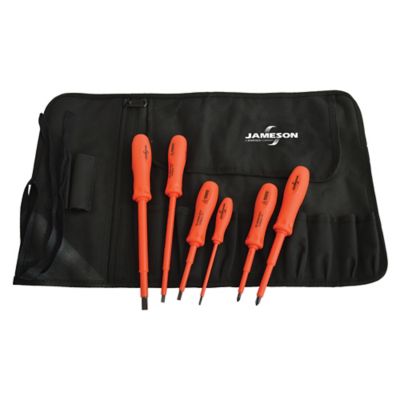
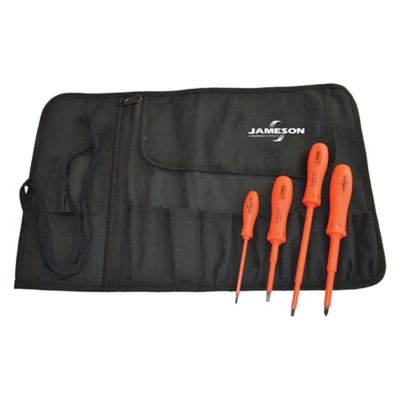
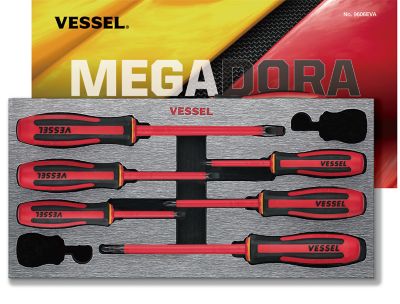
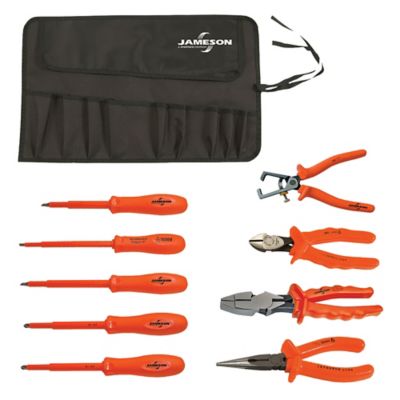
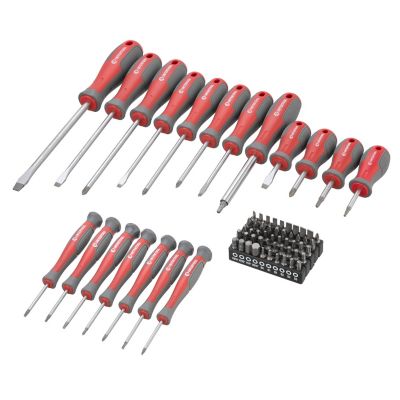
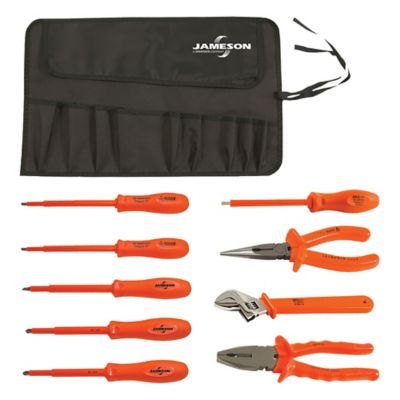
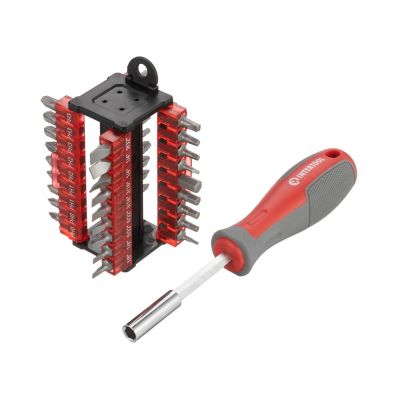
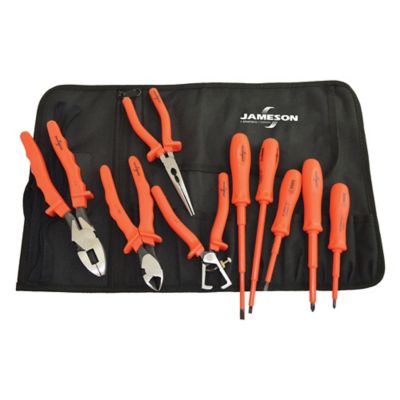
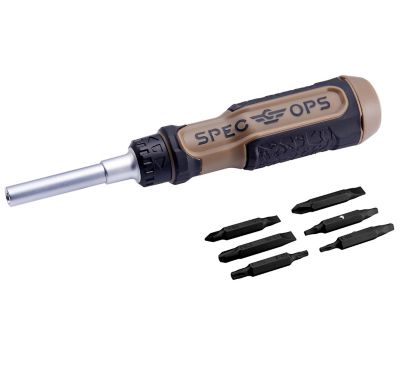
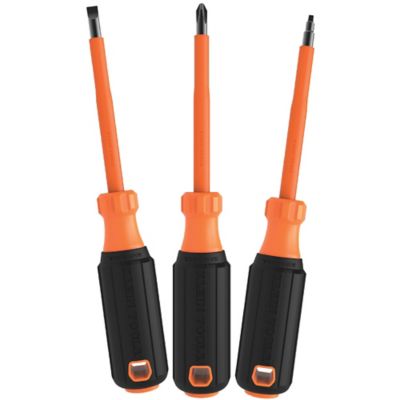
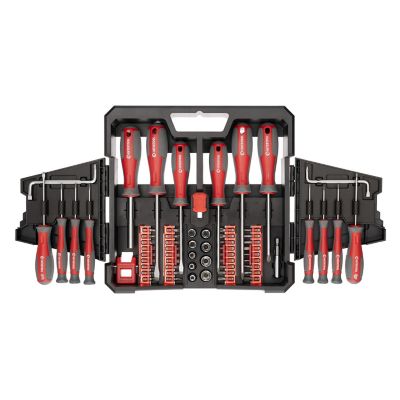
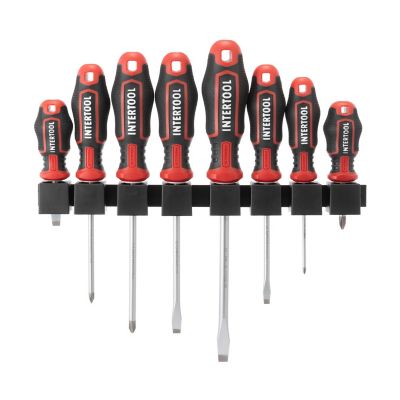
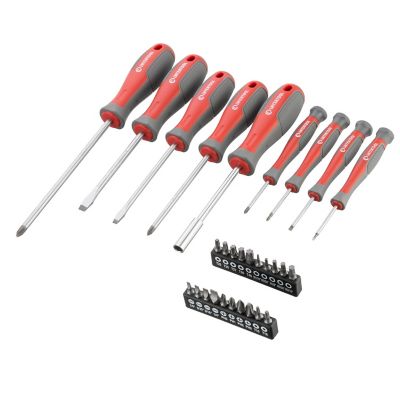
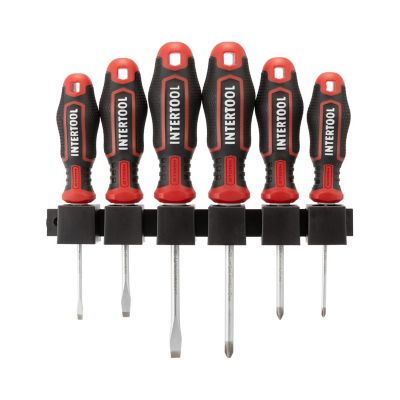
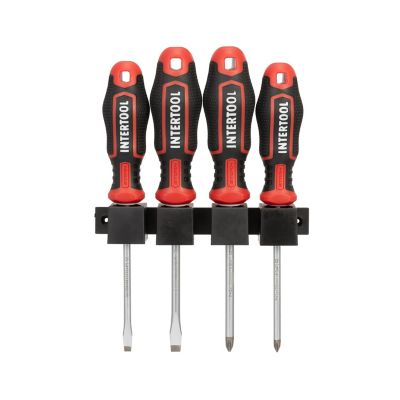
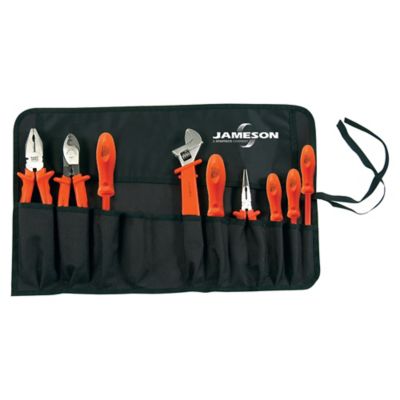
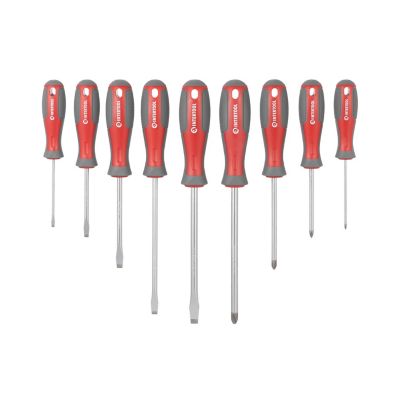
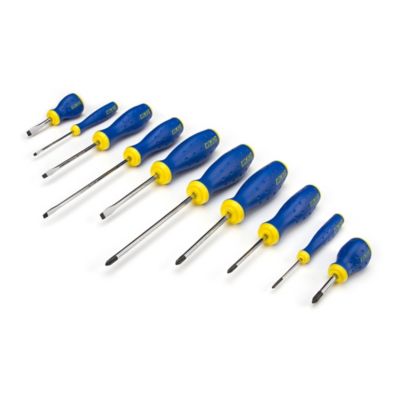
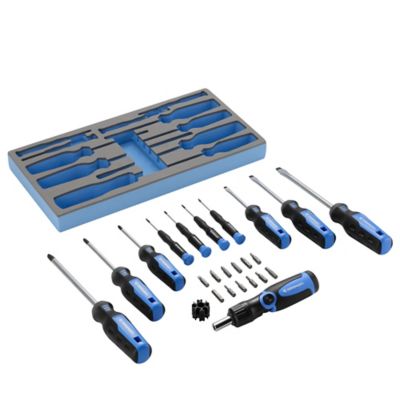
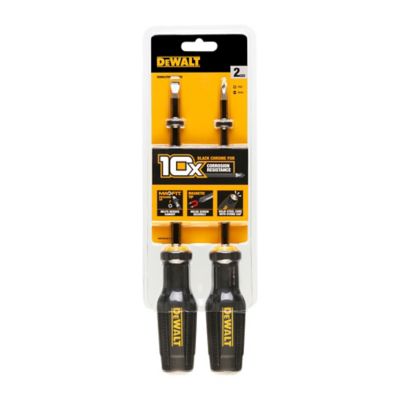
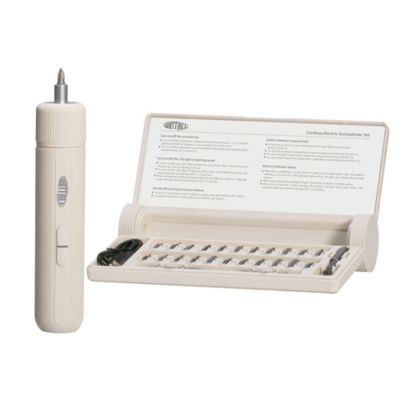
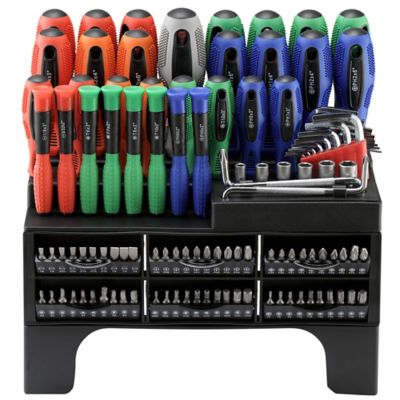
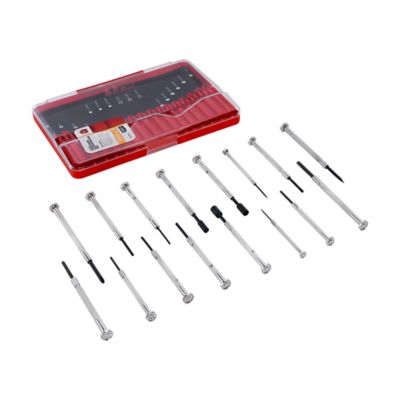
Electrician screwdriver sets bring together the tip styles and shaft lengths needed for electrical fasteners, from receptacle terminals to screws inside equipment enclosures. A practical set pairs the right tip sizes with comfortable handles and, where electrical protection is required, properly rated insulation. Slotted, Phillips, and square-drive tips cover many common electrical connections, while certain fasteners call for star-shaped or other specialty profiles. The right mix depends on the equipment and the work, not simply the number of pieces in the case. A small selection that matches the fasteners on the job can be more useful than a larger assortment with gaps in everyday sizes. Tip fit matters: a blade that is too narrow can damage a screw slot, and a mismatched cross-point driver can slip before the screw is seated. Cabinet-style slotted tips have a narrow profile that helps reach recessed screws where a wider blade shoulder might get in the way. Shaft length makes a difference, too. Short drivers fit spaces where a wall, cabinet, or nearby component limits handle clearance, while longer shafts can reach recessed fasteners without forcing the handle against the enclosure. Neither extra reach nor a larger handle takes the place of the correct tip. Around a farm shop, maintenance bench, or service truck, those details matter when several different screw sizes turn up in one repair. Clearly marked handle ends help separate similar-looking drivers at a glance, especially when they sit upright in a tool pouch. For terminal connections with a specified tightening torque, a standard screwdriver is not a substitute for the appropriate torque tool. The equipment maker’s instructions determine the required torque and tightening method. That makes an electrician screwdriver set part of a working tool kit rather than a replacement for every tool an electrical job requires.
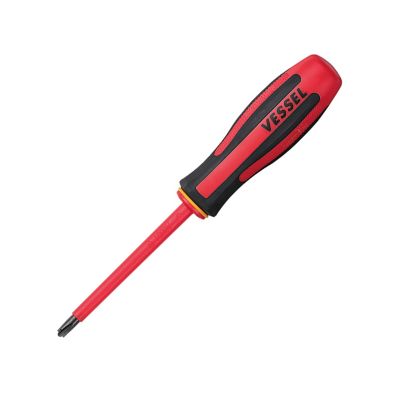
Insulation deserves a close look because a cushioned handle and an electrically insulated screwdriver are not the same thing. Rubber-like grips may improve comfort without providing a tested electrical barrier. Sets intended for electrical applications may carry a 1,000-volt AC rating, along with markings related to standards such as IEC 60900 or ASTM F1505. Those standards address insulated hand tools for electrical work; a VDE certification mark indicates testing and certification under the applicable program. Ratings and certifications should be checked for the individual tools, including any interchangeable blades or components, rather than assumed from handle color or packaging appearance. A voltage rating describes protection under specified conditions, not permission to work on an energized circuit. Electrical work belongs in qualified hands, with circuits de-energized, secured against re-energizing, and checked for absence of voltage using an appropriate tester before work begins. Insulated tools do not replace those precautions or required protective equipment. Beyond the markings, construction affects how a driver feels through a full day of fastening. Hardened steel tips resist wear, while alloy-steel shafts provide strength for their intended turning loads. Steel composition, heat treatment, and tip machining all matter more than a shiny finish alone. Some insulated drivers have multiple insulation layers that make damage easier to spot; others have slim insulated shafts for access around closely spaced terminals. Clearance still needs to match the opening, without scraping or forcing the insulation past an obstruction. Handle shape is another practical consideration. A broader grip can feel comfortable for repeated turning, while a slimmer handle may suit smaller fasteners and closer work. Textured surfaces can help with control, but the handle should still sit comfortably in the palm without hard edges pressing into the hand. Someone wearing required work gloves may prefer a different grip size than someone handling small bench assemblies. Easy-to-read size markings and distinct handle shapes can make the set simpler to work with without turning every tool change into a search.
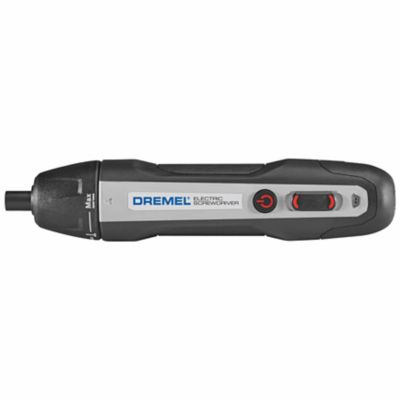
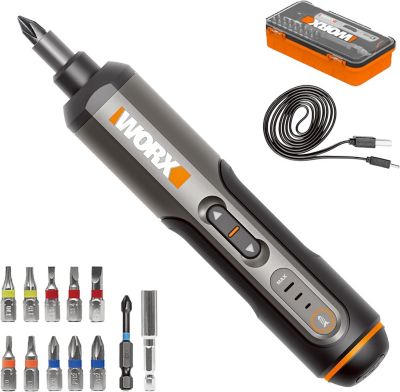
Fixed-blade and interchangeable electrician screwdriver sets offer different ways to organize the same everyday work. Fixed-blade drivers keep each tip and shaft together, so there is no separate bit to track down before tackling the next fastener. An interchangeable system can reduce the number of handles in a pouch, provided its blades lock securely and the complete assembly carries the protection required for the task. Ordinary replacement bits do not automatically preserve an insulated system’s rating. The maker’s approved combinations matter, as does keeping every locking feature clean and working as intended. A fitted case or organized tool roll gives each driver a place and helps keep insulated shafts away from loose drill bits, knife blades, and other sharp tools. It also makes a missing size easier to notice before leaving the shop. Care is straightforward but important: wipe away grime with the cleaning method the manufacturer recommends, keep tools dry, and inspect handles, shafts, tips, and insulation before each job. Cuts, cracks, exposed inner layers, loose handles, or badly worn tips are reasons to take a tool out of service. Tape and improvised coatings do not restore an electrical rating, and grinding a tip can change its fit and performance. Screwdrivers also need to stay out of jobs meant for pry bars, punches, or chisels. For working electricians, maintenance crews, and apprentices building out a required tool list, a well-matched set supports an orderly routine from the bench to the jobsite. A set can also make a practical gift for a trade-school student or qualified family member, especially when the selection follows an apprenticeship list or known tool preference rather than guesswork. For a broader look at driver styles beyond matched sets, explore
Electrical Screwdrivers. The most useful assortment is one that fits the fasteners, access space, safety requirements, and hands doing the work, with enough organization to keep the right driver easy to find.