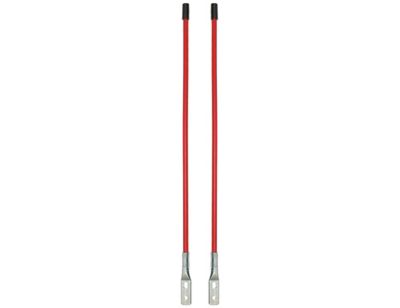
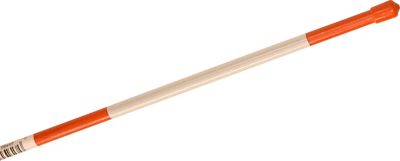
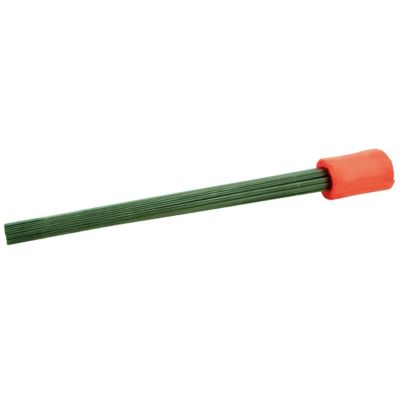
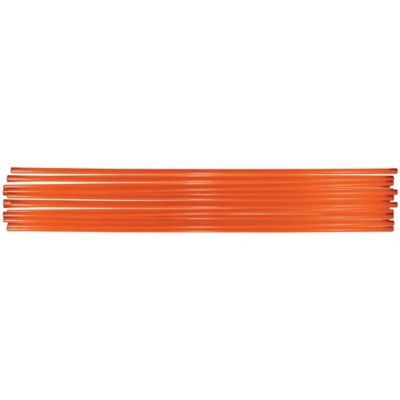
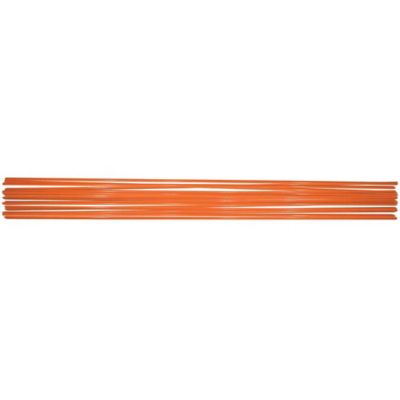
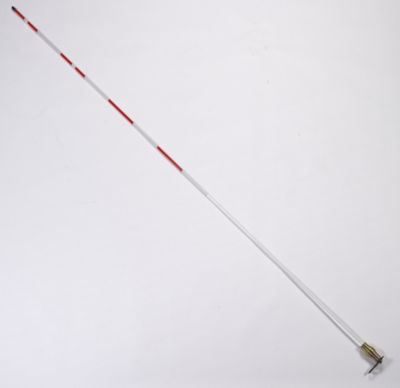
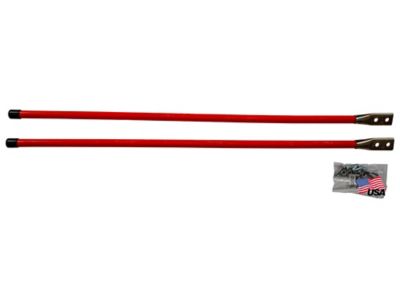
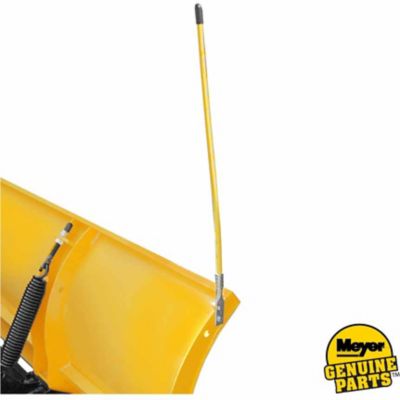
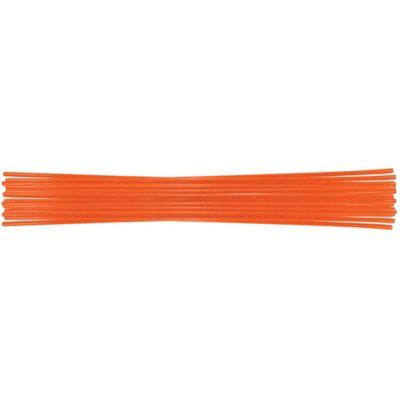
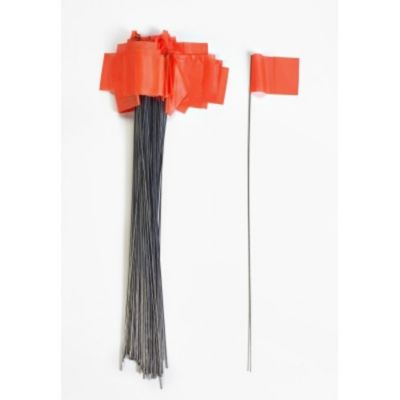
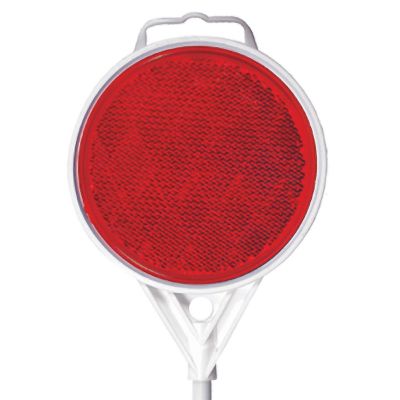
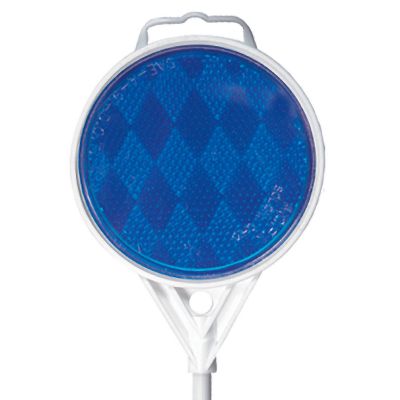
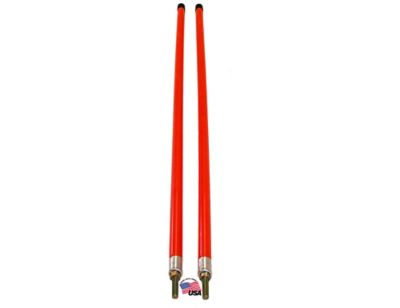
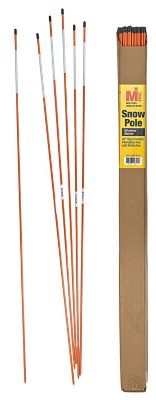
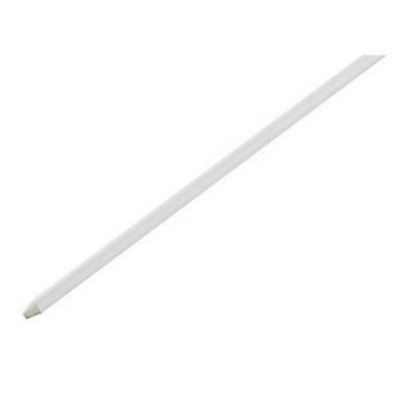
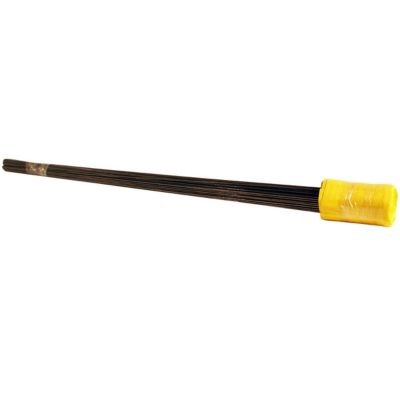
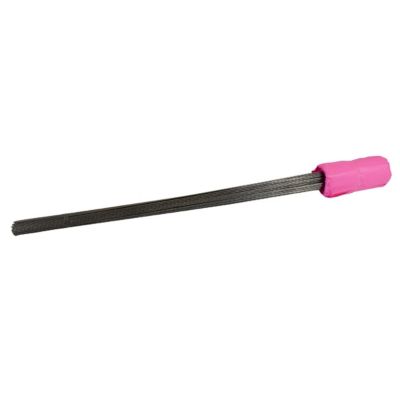
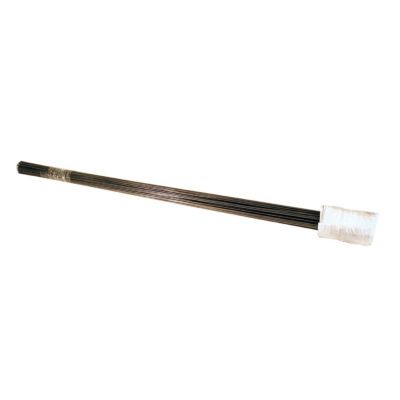
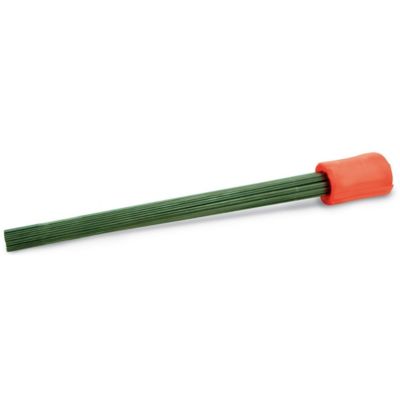
Driveway markers for snow plowing help make the edges of a driveway easy to see when snow, darkness, blowing wind, or drifting banks hide the usual landmarks. A clear line of stakes gives the person behind the plow a better view of where pavement, gravel, grass, culverts, landscaping, and other property features begin and end. They can also help protect lawns and shoulders from being scraped up when the driveway disappears under fresh snow. Bright orange fiberglass is a popular choice because it stands out against white ground, weighs very little, and has enough flexibility to bend instead of snapping when brushed by a plow or buried under heavy snow. Look for sturdy rods that are tall enough to remain visible after a deep snowfall, with reflective tape near the top for added visibility during early-morning, evening, or stormy-weather work. Wide bands or multiple sections of reflective material can catch headlights from different angles, which is especially helpful on long rural drives where the approach from the road may not be straight. A driveway marker setup can be useful for homeowners, landlords, farm families, snow-removal contractors, and anyone responsible for a cabin, hunting property, rental home, or business with an unlit entrance. It also makes a practical gift for a new homeowner or someone settling into a country property where the driveway runs past ditches, fences, ponds, mailbox posts, or other obstacles that are easy to lose sight of once winter weather arrives.
When choosing a set, consider the length and shape of the drive, the material under the surface, and the areas that need extra definition. Straight sections commonly use markers spaced about 10 to 15 feet apart, though a wide entrance, a narrow lane, or a driveway exposed to drifting snow may call for closer spacing. Curves, corners, steep sections, turnarounds, and the point where the drive meets the road deserve special attention. Two highly visible markers at each entrance corner can make the opening easier to find, while additional stakes placed closer together can trace a bend and keep a plow operator from cutting across the lawn. Add markers near culverts, bridge edges, retaining walls, large rocks, drainage channels, gates, and mailbox posts. It is generally helpful to set the stakes about 6 to 12 inches outside the actual paved, gravel, or dirt edge, leaving a small buffer so the plow blade can follow the visual line without catching the marker directly. On a gravel drive, placing stakes just beyond the loose shoulder can help show where the usable driving surface ends without inviting the blade into the grass. On paved drives, the markers can outline tight edges and landscaping that might otherwise be covered by snow. Fiberglass handles changing outdoor conditions well, but any marker can become harder to see if it is placed too low, buried by a drifting bank, or installed where tall weeds and brush block the reflective strip. Keep the top portion clear and check the line from the road as well as from the house so you can spot gaps before the first serious storm.
Installation is easiest while the ground is still workable during the cooler months but before a hard freeze turns the shoulder into a solid block. Press or tap each marker into firm soil rather than loose fill, and avoid driving it so deep that the reflective section sits close to the ground. If the soil has already frozen, is packed with gravel, or contains stubborn clay, a cordless drill with a long masonry or carbide-tipped bit can make a 6- to 12-inch pilot hole for the stake. Take care around buried utility lines, irrigation, invisible fencing, septic components, and underground lighting before drilling or digging. Walk the driveway in daylight and identify obstacles before putting in the markers, then view the finished layout from a vehicle at night to make sure the reflective surfaces are doing their job. A few extra stakes are useful for replacing one that gets pulled out, bent, or buried after a heavy snowfall, and keeping the extras in a shed or garage means the line can be repaired without waiting for the ground to thaw. Driveway markers work well alongside other property-edge improvements, including
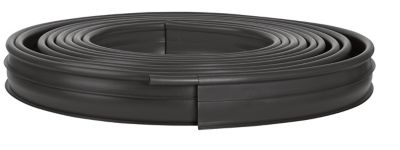
Driveway Edgings, when you want a more defined transition between the driving surface and the surrounding lawn or landscaping. Before snow arrives, trim back weeds, remove loose branches, and mark any new hazards that appeared during the year. Once winter settles in, a quick walk after major storms can uncover a leaning stake or a marker hidden behind a drift. With bright stakes placed at sensible intervals, a long country driveway becomes easier to follow, safer to plow, and less likely to leave tire tracks across the yard.