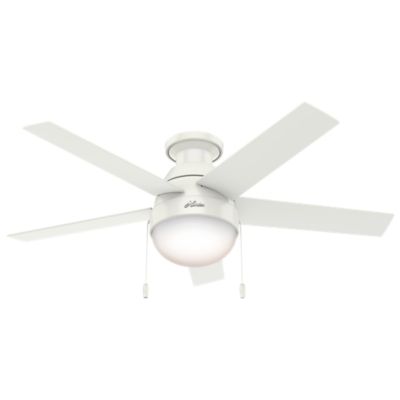
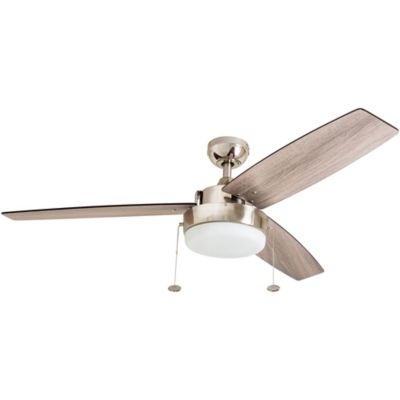
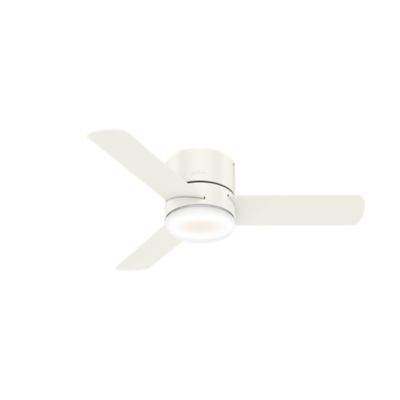
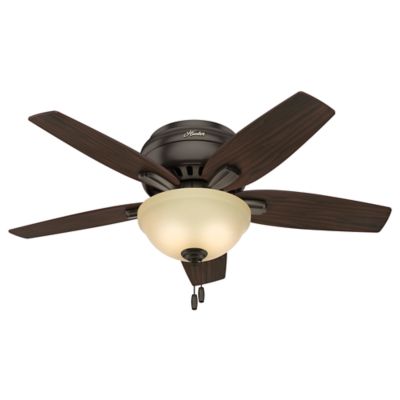
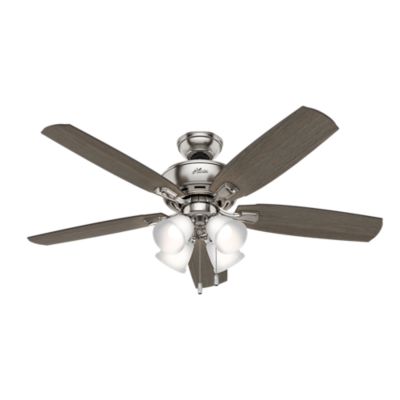
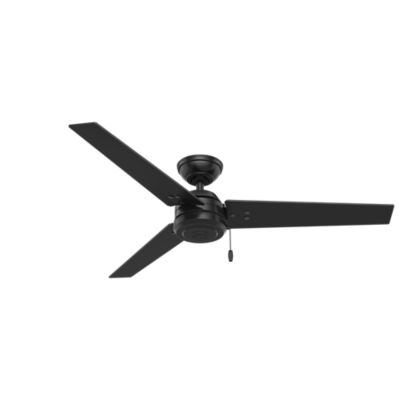
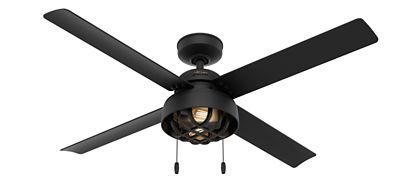
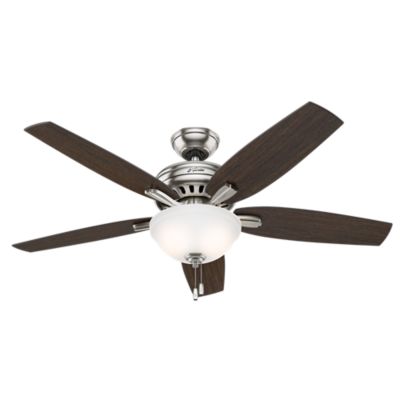
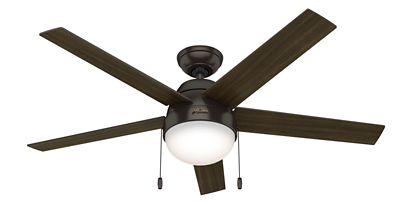
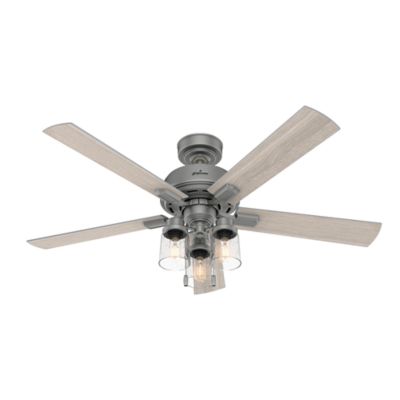
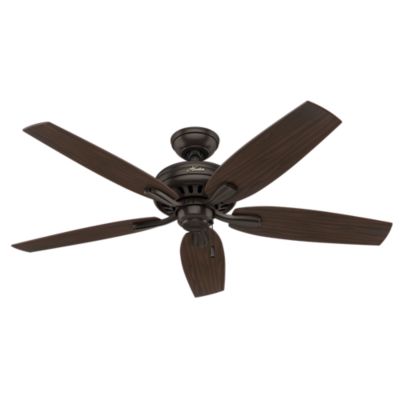
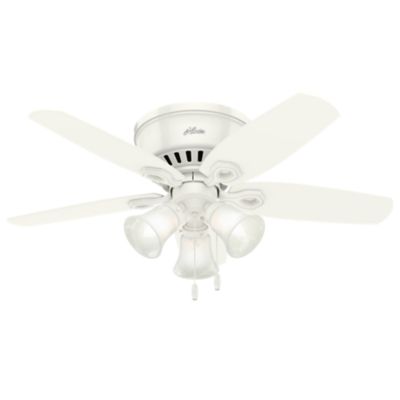
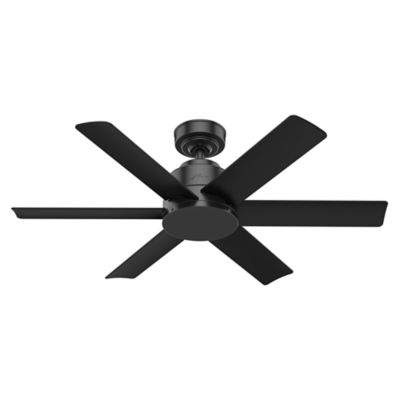
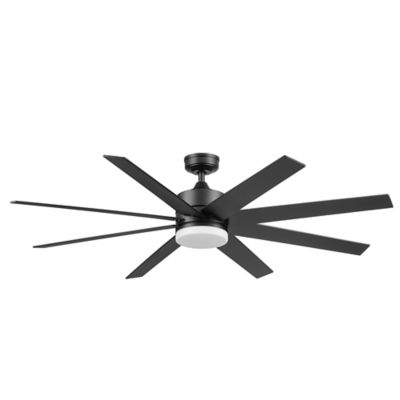
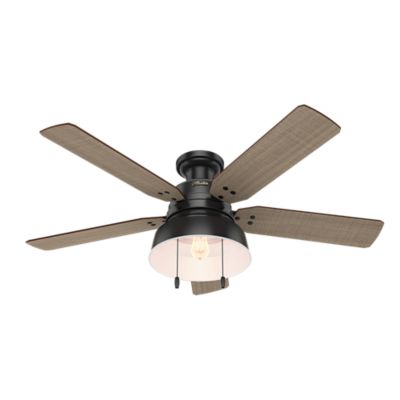
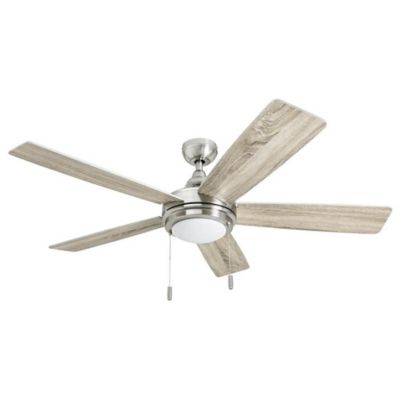
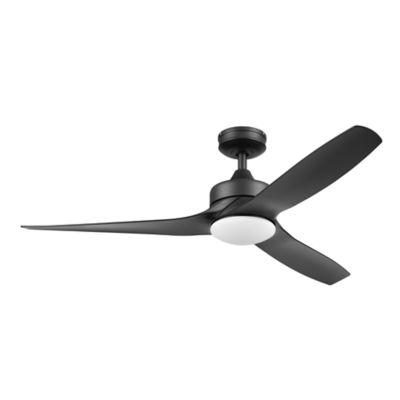
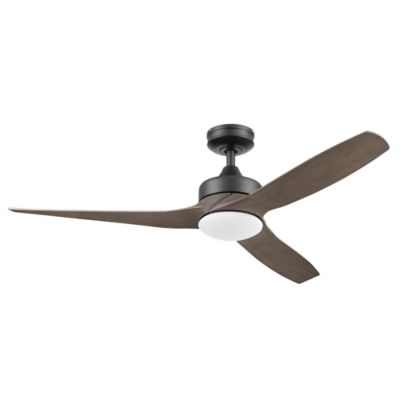
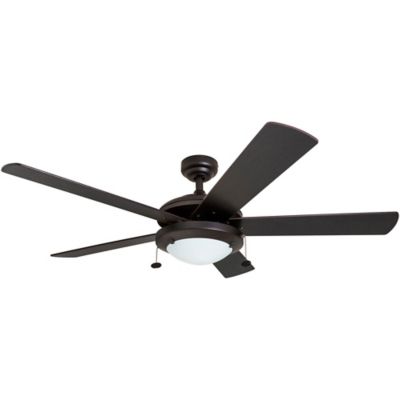
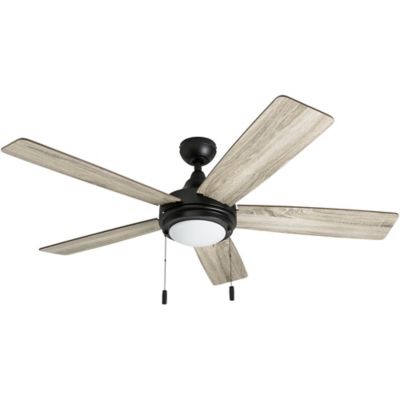
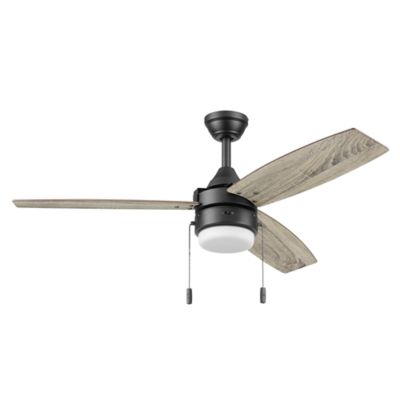
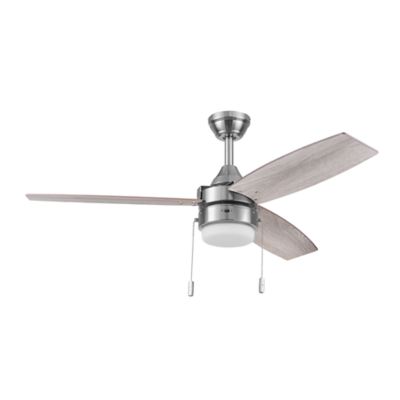
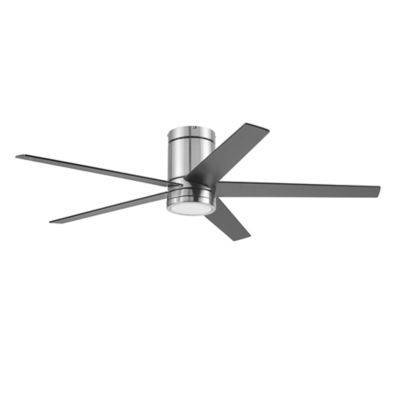
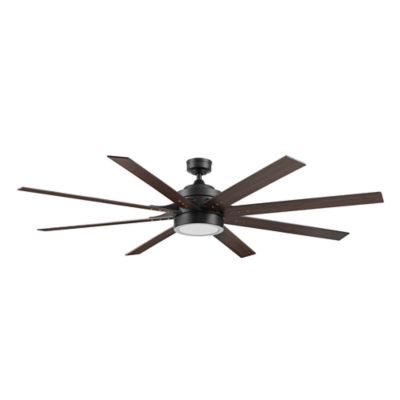
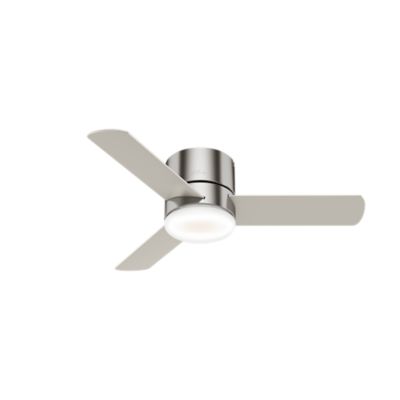
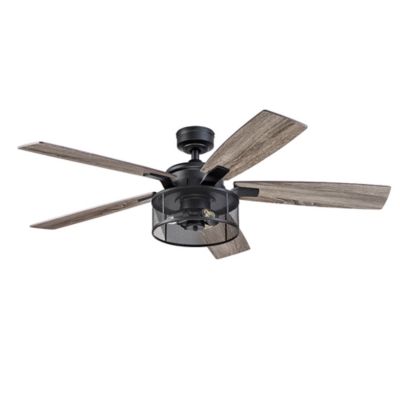
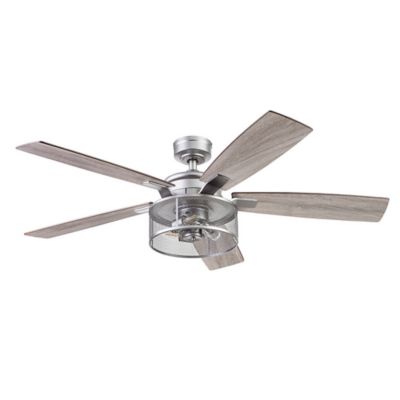
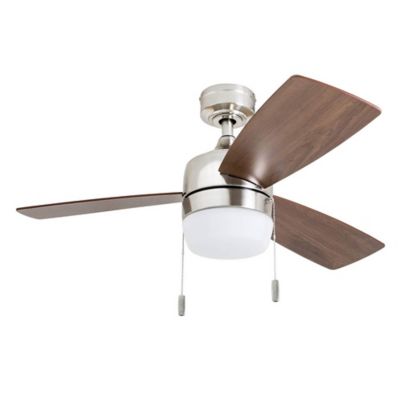
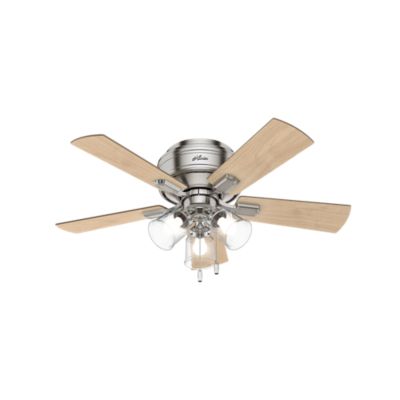
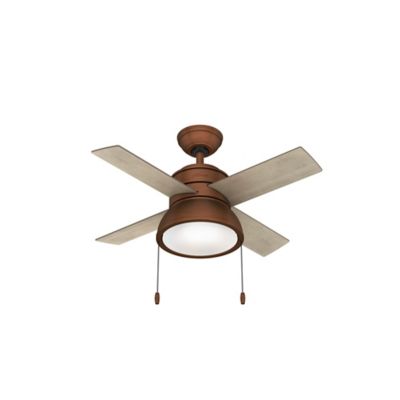
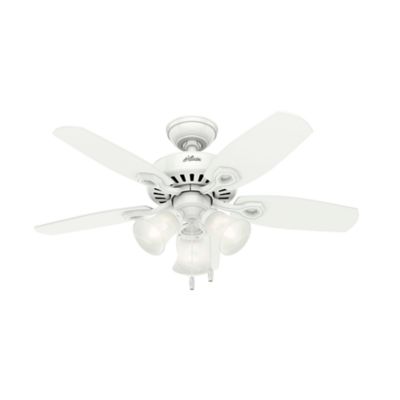
Contemporary ceiling fans for living rooms pair clean lines with steady air movement, giving a hardworking gathering space a finished look without making the ceiling feel crowded. Their simpler shapes fit just as comfortably above a big sectional in a country home as they do over a pair of armchairs in a smaller ranch house. Slim motor housings, streamlined light covers, and gently curved or straight blades help these fans blend with the room rather than compete with it. Matte black creates a clear outline against a pale ceiling and ties in nicely with dark window frames or fireplace hardware. Brushed nickel and satin nickel offer a softer metallic look alongside lamps and cabinet pulls, while wood-tone blades bring a little warmth to spaces with exposed beams, leather seating, or painted shiplap. A white finish can make a fan less noticeable overhead, especially where the ceiling is low or the room already has plenty going on. Two- and three-blade designs often have a lighter visual profile, though contemporary styles also include fans with four or five blades. Blade count alone does not tell the whole story about airflow or sound; blade shape, pitch, motor design, and operating speed all play a part. Materials matter for both appearance and everyday upkeep. Depending on the design, blades may be solid wood, engineered wood, molded plastic, or metal, each with its own weight, surface texture, and care requirements. Wood grain brings natural variation, molded blades allow smooth curves, and metal can give a space a crisp, understated edge. For an enclosed living room, a fan rated for dry indoor locations is generally the appropriate category. Rooms that open directly into other areas still need a fan selected for the actual installation environment. A coordinated finish and sensible proportions help the fixture feel at home, whether the room hosts family movie nights, neighbors stopping by, or a quiet stretch with a book.
The best-fitting contemporary living room ceiling fan depends on the room’s dimensions, ceiling height, and seating layout—not just the measurement printed beside the blade span. As a general starting point, spans around 44 to 52 inches suit many smaller to midsize living rooms, while 56- to 60-inch fans and larger designs can make sense in more spacious gathering areas. Manufacturer room-size recommendations help narrow that range because two fans with similar spans can deliver noticeably different airflow. A long living room with seating at opposite ends may call for a different arrangement than a square room centered around one sofa. In an open floor plan, the living area’s boundaries also matter: a fan positioned over the main conversation space serves that area more directly than one placed halfway between the couch and dining table. For a snug den or a separate sitting area,
Ceiling Fans for Small Rooms offers a related category to consider alongside larger living room styles. Mounting options are another important part of the fit. Flush-mount designs sit close to the ceiling, while downrod-mounted fans provide separation from taller ceilings. A sloped or vaulted ceiling may require a compatible angled mount, a particular downrod length, or both. Fan blades generally need to remain at least 7 feet above the floor and at least 18 inches from walls; the manufacturer’s installation requirements and local codes govern the final placement. Exposed beams, tall bookcases, cabinet doors, and nearby light fixtures also need room beyond the blade path. Airflow ratings, expressed in cubic feet per minute, or CFM, offer a more useful comparison than blade span alone. Checking airflow at different speeds can help distinguish a fan that provides gentle movement above a reading chair from one intended to circulate air across a broad great room. Ceiling fans move air rather than lower the room’s air temperature. A broad speed range lets the air movement suit the activity, keeping a stack of papers settled on the coffee table while still giving a busy seating area a comfortable breeze.
Lighting and controls shape how a contemporary ceiling fan works in a living room from one day to the next. A fan with an integrated LED light combines two ceiling functions in one fixture, keeping the overall profile tidy where a separate hanging light would feel crowded. Designs without lights leave illumination to floor lamps, table lamps, recessed fixtures, or wall lighting, which can work well when the room already has a layered lighting setup. For fans with lights, lumen output describes the amount of light, while color temperature describes whether that light appears warmer or cooler. A softly diffused cover can reduce the harsh view of a bright light source from a recliner directly below. Dimming is helpful for shifting between conversation and television, but that feature depends on the light, driver, and compatible controls. Integrated LED modules are not always interchangeable or replaceable, so service information matters for long-term ownership. Designs with replaceable bulbs have their own socket, wattage, and enclosure requirements. Remote controls put speed and lighting adjustments within reach of the sofa, while wall controls offer a fixed spot that everyone in the household can find. Smart-enabled fans may add app operation or voice control, depending on network and device compatibility. DC motors often provide several speed settings and lower electrical consumption, although performance varies by design. For a living room where dialogue, music, and conversation matter, quiet operation depends on proper mounting, balanced blades, and a suitable motor as much as the fan’s appearance. Installation requires a ceiling box rated to support a fan, not simply an existing light fixture box; a qualified electrician can assess wiring and mounting needs. Routine care usually means switching the fan off, following any additional power-disconnection instructions, and wiping accessible surfaces with the manufacturer-recommended cloth and cleaner. Keeping dust off the blades helps maintain their finish and limits buildup overhead. Persistent wobbling, clicking, or grinding deserves attention rather than a higher speed setting. With the right fit, accessible controls, and straightforward upkeep, a contemporary ceiling fan becomes a practical part of the room where folks spend time together.