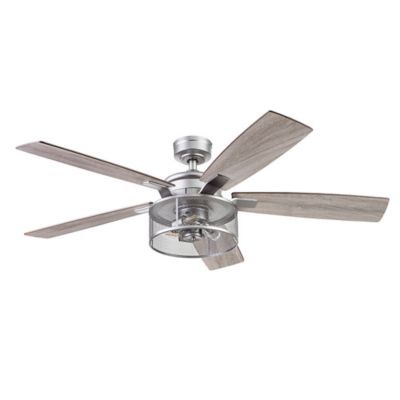
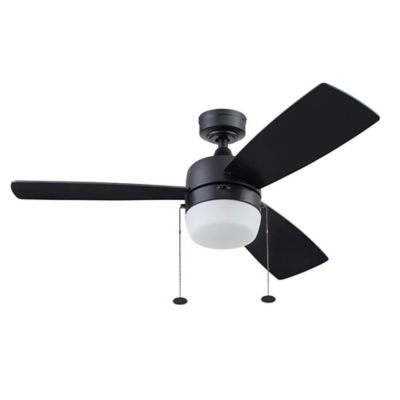
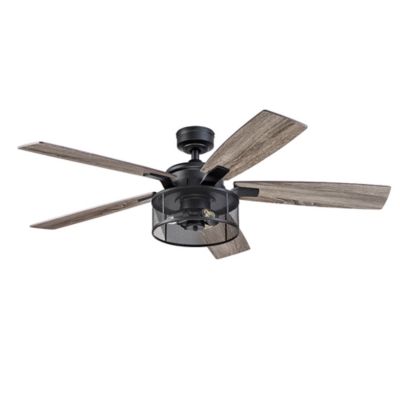
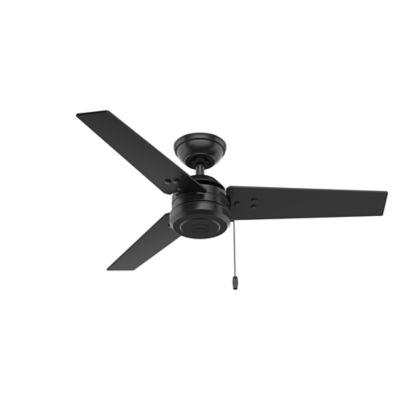
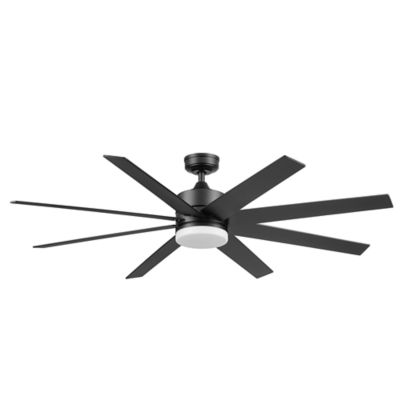
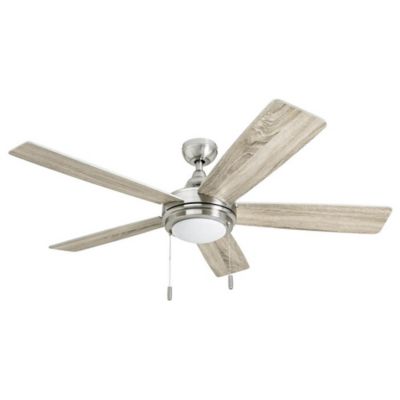
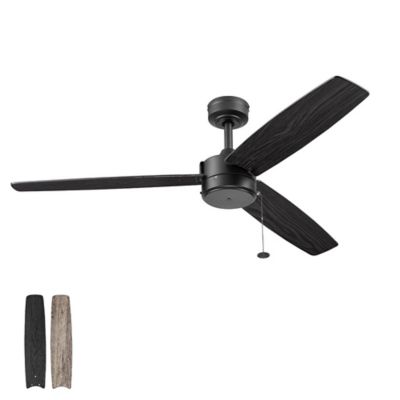
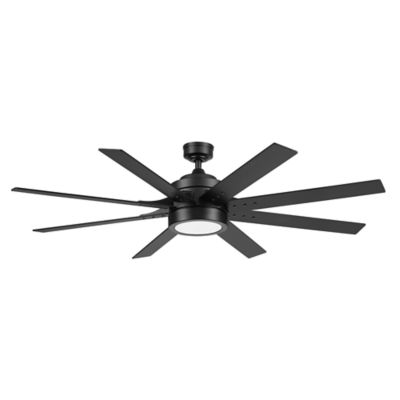
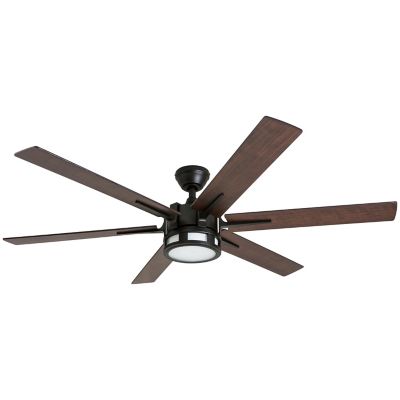
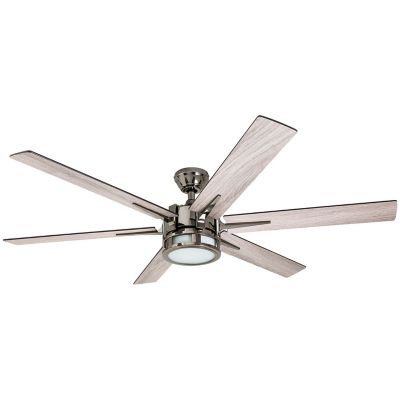
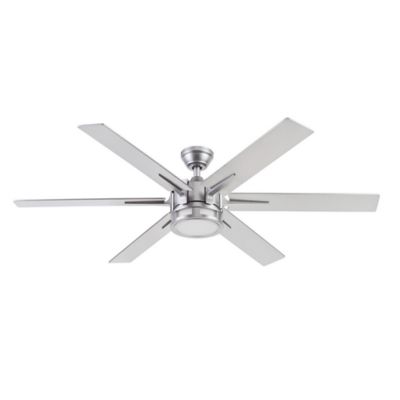
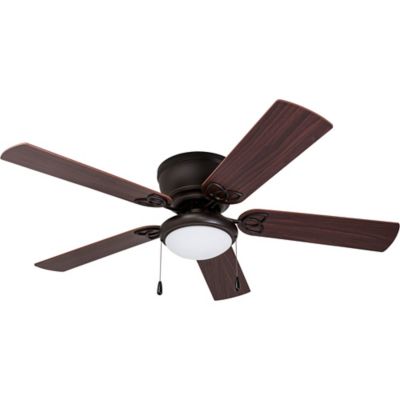
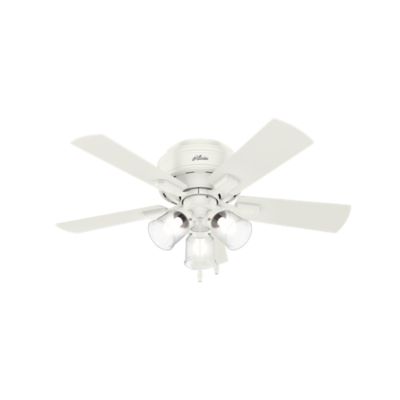
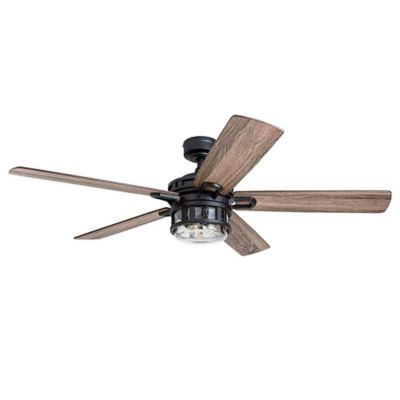
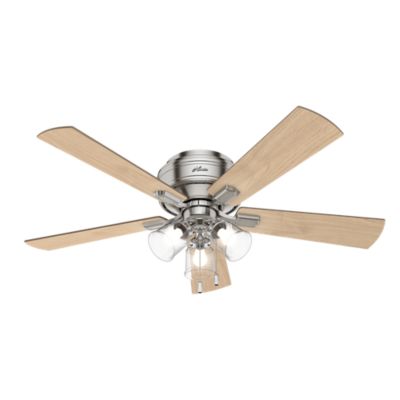
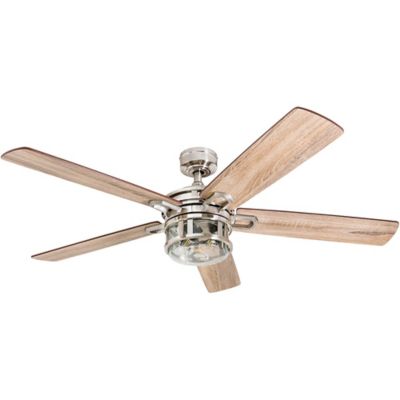
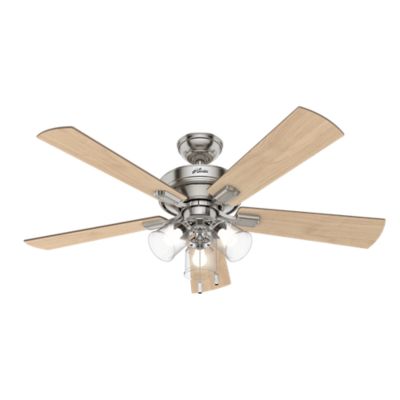
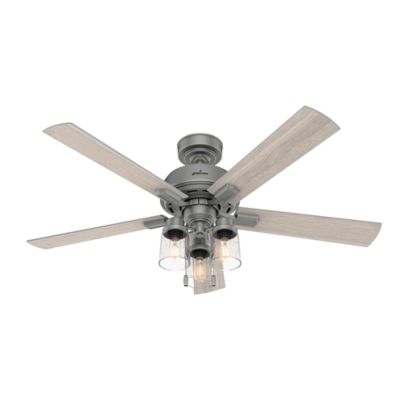
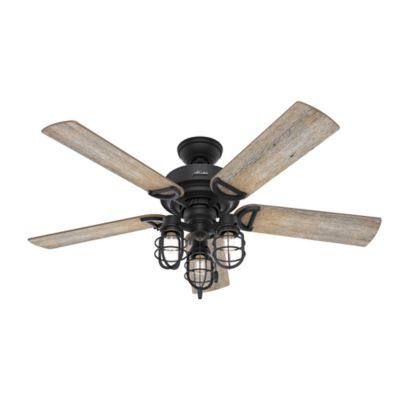
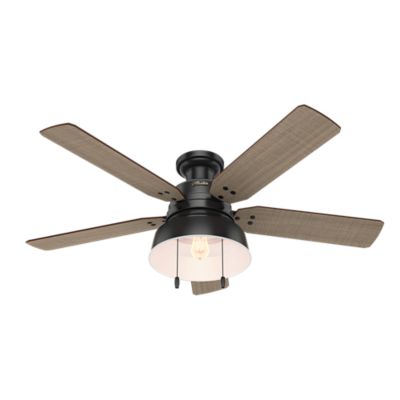
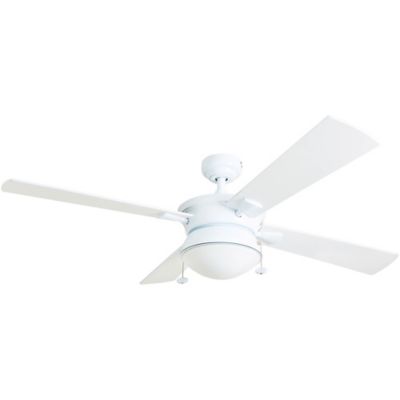
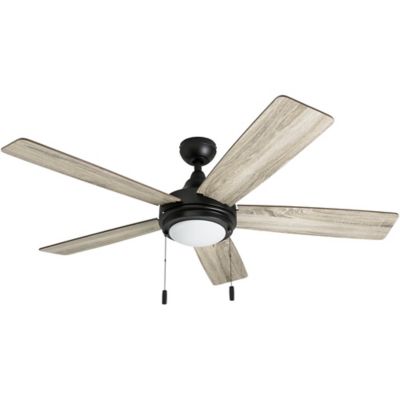
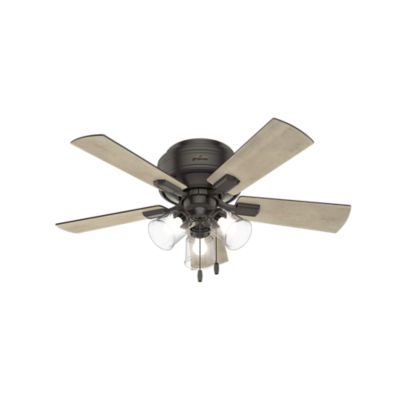
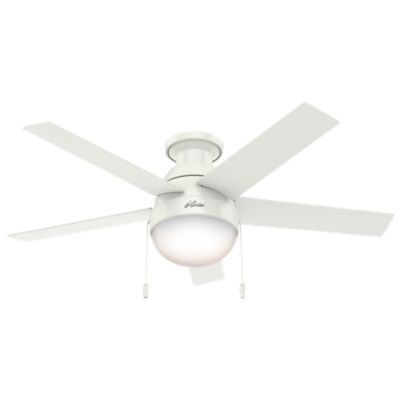
A modern farmhouse ceiling fan blends country-inspired materials and finishes with clean lines and practical air movement. Wood-look blades, matte black metal, brushed nickel, and aged bronze are common features, often paired with simple light fixtures or open metal cages. The result fits comfortably alongside a plank table, painted cabinets, exposed beams, or a favorite leather chair without making the room feel fussy. Some fans lean toward a barn-inspired look, with broad blades and darker hardware, while others have slim profiles and lighter finishes that suit a more pared-back space. Real wood, engineered wood, metal, and molded composite blades each bring a different appearance and different care needs. A wood-grain finish can add warmth to a room with white walls and dark hardware, while a solid finish keeps the ceiling from looking crowded when there are already plenty of beams or patterned surfaces. Reversible blade finishes, where offered, provide two looks within the same fan, though the material and installation requirements still matter more than appearance alone. Blade shape also changes the overall impression: broad paddle shapes have a familiar country feel, while narrow, straight blades give the fan a cleaner outline. The number of blades contributes to that look, but it is not a shortcut for judging airflow. In a living room, a fan can serve a seating area where family gathers after chores; in a bedroom, it can provide steady air movement without a large fixture dominating the ceiling. For an open kitchen and dining space, a simpler fan often sits more comfortably beside pendant lights than a design with several competing details. Matching every finish is not necessary. Repeating one element, such as black hardware or a similar wood tone, can make the fan feel at home with the furniture and fixtures already in the room.
The best fit involves more than choosing a blade color. Blade span, ceiling height, mounting style, and airflow all affect how a modern farmhouse ceiling fan works in its intended space. A compact room generally calls for a different scale than a wide gathering room, and a large fan needs enough open space around its blades to operate as intended. Airflow ratings, measured in cubic feet per minute, help describe how much air a fan moves. Comparing those ratings alongside the manufacturer's room-size recommendations is more useful than assuming a fan with extra blades will move more air. Furniture placement matters, too: a fan centered over a conversation area serves a different purpose than one positioned over an open walkway. Low-profile mounting can suit certain lower ceilings, while a downrod can bring a fan into the proper position beneath a taller ceiling. Sloped ceilings may call for a compatible adapter, and downrods and mounting hardware need to match the fan's requirements. Blade clearance should follow the manufacturer's directions and local code, with at least seven feet between the blades and the floor. A ceiling fan also needs a fan-rated electrical box and suitable structural support; a box intended only for a light fixture is not automatically enough. Professional installation is a sensible choice when wiring or ceiling support needs attention. Everyday operation deserves the same consideration as appearance. Several speed settings make it easier to adjust air movement for reading, conversation, or a busy room. A remote control can be handy beside a bed, while wall controls keep operation within reach near the doorway. Pull chains offer another straightforward option when they are accessible. Motor sound is worth considering in bedrooms and reading areas, and control compatibility matters when replacing an existing fixture. For a covered porch or another moisture-prone location, the fan's location rating—not its farmhouse appearance—determines whether it belongs there. Damp-rated and wet-rated fans have different intended applications, so the listed rating needs to match the installation space.
Lighting can make a farmhouse ceiling fan either a quiet supporting feature or a stronger focal point. A fan without a light works well where recessed fixtures, lamps, or nearby pendants already handle illumination. A fan with a light combines two functions in one ceiling location, which can be useful in bedrooms, smaller living rooms, and multipurpose spaces. Open cage designs show more of the bulb and surrounding hardware, while glass shades and diffusers can soften the appearance of the light source. Clear glass leaves the bulb visible and makes bulb shape part of the overall look; frosted glass creates a more even-looking glow. Light output, measured in lumens, matters more than bulb wattage alone when judging brightness. Dimming also depends on compatible components, including the light source and control. Replaceable bulbs and integrated LED assemblies have different maintenance arrangements, so access and replacement requirements are worth checking before installation. In connected living and dining areas,
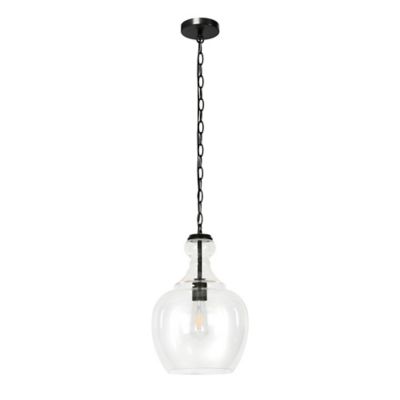
Farmhouse Style Dining Room Lighting offers a natural companion to a ceiling fan, especially when a shared metal finish or glass detail carries from one space to the next. Day-to-day upkeep helps preserve both appearance and operation. With the power off and the blades fully stopped, a soft cloth can lift dust from blades, light shades, and accessible housing surfaces according to the care directions. Wood and wood-look blades should not be soaked, and harsh cleaners can damage finishes. A kitchen-adjacent fan may need more frequent attention because airborne residue can settle on the blades. Loose hardware, wobbling, or a new sound deserves attention rather than being treated as part of normal operation. Accessible light covers and manageable blade shapes can make routine care less of a chore. Whether the setting is a ranch house living room, a guest bedroom, or a covered gathering spot, a well-matched farmhouse fan brings together useful airflow, suitable lighting, and a down-to-earth look that belongs with everyday life.